
Last updated: April 6, 2026
In this article
Can Cats Eat Swordfish? Safety Guide and Tips
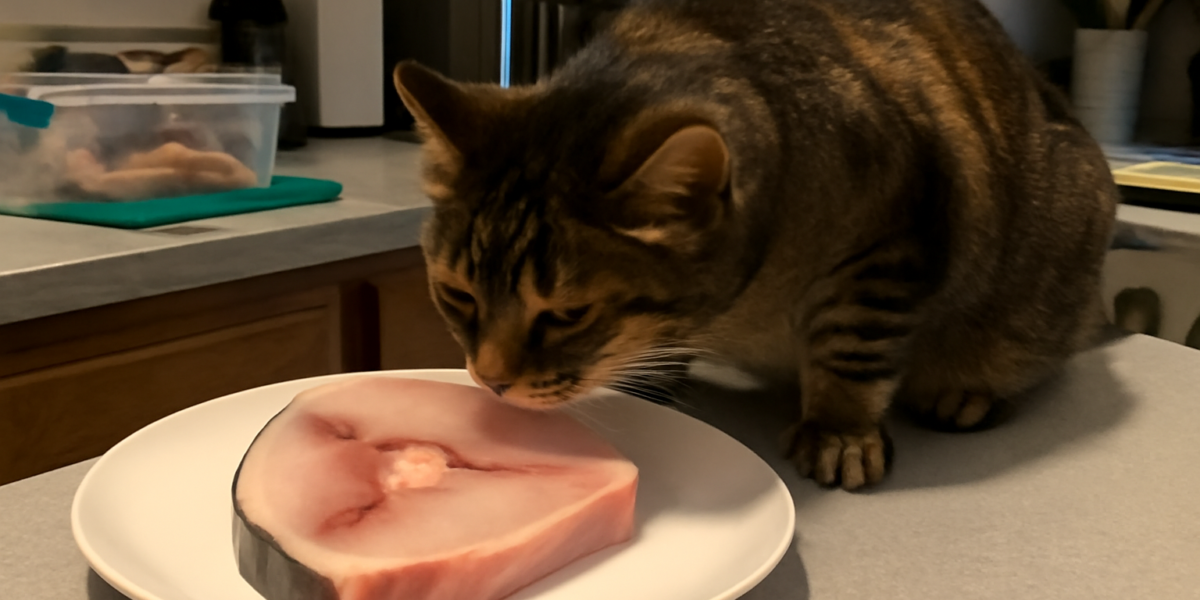
Swordfish is a prized seafood known for its firm, meaty texture and mild flavor. It grills beautifully and is a favorite at steakhouses and seafood restaurants alike. Since cats are natural fish lovers and swordfish is high in protein, it might seem like a perfect treat for your feline companion. However, there is a serious hidden danger in this particular fish that makes it one to avoid.
As obligate carnivores, cats thrive on animal protein, and fish is often a welcome part of their diet. But not all fish are created equal when it comes to feline safety. Swordfish occupies a unique position as one of the most mercury-contaminated fish commonly consumed by humans, and this mercury concern is amplified significantly when it comes to feeding it to a small animal like a cat.
Quick Answer: Can Cats Eat Swordfish?
No, swordfish is not recommended for cats. The primary concern is mercury. Swordfish is a large, long-lived predatory fish that sits near the top of the marine food chain, which means it accumulates exceptionally high levels of methylmercury through a process called bioaccumulation. The FDA lists swordfish among the fish with the highest mercury concentrations.
Mercury is a potent neurotoxin that affects the nervous system, kidneys, and other organs. Cats are particularly vulnerable because of their small body size — the mercury dose per kilogram of body weight from even a small portion of swordfish is dramatically higher for a cat than for a human eating the same fish. Chronic mercury exposure can lead to a condition called mercury poisoning, which causes neurological symptoms, kidney damage, and potentially death.
A single small taste of cooked swordfish is unlikely to cause immediate mercury poisoning in a healthy adult cat. However, there is no safe level of mercury exposure to aim for, and the risk is entirely avoidable by choosing lower-mercury fish options. If your cat has eaten swordfish once, there is no need for an emergency vet visit, but it should not become a repeated occurrence.
Nutritional Profile of Swordfish
A 100-gram serving of cooked swordfish contains:
- Calories: 172 kcal
- Protein: 28 grams — high-quality, complete animal protein
- Fat: 5.7 grams, including omega-3 fatty acids
- Omega-3 (DHA + EPA): Approximately 870 milligrams
- Selenium: 58 micrograms
- Vitamin D: 14 micrograms
- Niacin (B3): 12 milligrams
- Mercury: Average of 0.995 parts per million (ppm) — among the highest of any commercial fish
On paper, swordfish looks excellent for cats — high protein, moderate fat with beneficial omega-3 fatty acids, and rich in selenium and B vitamins. If it were not for the mercury content, swordfish would be a nutritional powerhouse for felines. Unfortunately, the mercury levels completely overshadow the nutritional benefits.
To put the mercury content in perspective, the FDA action level for mercury in fish is 1.0 ppm, and swordfish routinely tests at or near this limit. Some individual swordfish have tested well above 1.0 ppm. For a 4-kilogram cat, even a small piece of swordfish delivers a proportionally enormous mercury dose compared to what a 70-kilogram human would receive from the same piece.
Benefits and Risks of Swordfish for Cats
Benefits
- High-quality protein: Swordfish provides excellent animal-based protein with a complete amino acid profile, including taurine
- Omega-3 fatty acids: The DHA and EPA content supports brain, heart, and joint health
- Selenium: This antioxidant mineral supports immune function and thyroid health
- Vitamin D: Important for calcium absorption and bone health
- Palatability: The mild, meaty flavor and firm texture are generally appealing to cats
Risks
- Extreme mercury content: Methylmercury bioaccumulates in swordfish tissue and cannot be removed by cooking, cleaning, or any preparation method
- Neurological damage: Mercury is a potent neurotoxin that can cause tremors, loss of coordination, vision problems, and cognitive decline in cats
- Kidney damage: Mercury accumulates in kidney tissue and can cause progressive renal damage, which is especially concerning for cats already prone to kidney disease
- Cumulative toxicity: Mercury does not leave the body quickly, so repeated exposures build up over time, increasing the risk with each serving
- Thiaminase in raw fish: If served raw, swordfish contains thiaminase, an enzyme that destroys thiamine (vitamin B1), leading to deficiency
- Bones and cartilage: Swordfish bones can be a choking hazard or cause internal punctures if not carefully removed
How to Serve Swordfish Safely to Your Cat
The strong recommendation is to avoid feeding swordfish to your cat entirely and choose lower-mercury fish alternatives instead. The mercury risk is not mitigated by any preparation method — cooking, boiling, grilling, or any other technique does not reduce mercury levels in the flesh.
If your cat has already eaten a small piece of swordfish and you are wondering about immediate safety, a single exposure to a small amount is unlikely to cause acute mercury poisoning. The concern with swordfish is cumulative exposure over time. Do not make it a habit, and switch to safer fish options going forward.
If you are determined to offer your cat any amount of swordfish, limit it to a pea-sized piece that has been fully cooked (to destroy any parasites and thiaminase), with all bones and skin removed. Ensure no seasonings, butter, or sauces were used in preparation. This should be an extremely rare occurrence — no more than once every few months at the absolute maximum, and ideally never.
Never feed your cat raw swordfish. Beyond the mercury concern, raw swordfish may contain parasites and the thiaminase enzyme that destroys vitamin B1. Thiamine deficiency in cats can cause serious neurological problems, compounding the risk already posed by the mercury content.
Signs of Problems After Eating Swordfish
A single small piece of swordfish is unlikely to cause immediate visible symptoms. Mercury poisoning develops over time with chronic exposure. However, here is what to be aware of:
Acute digestive upset (within hours): Some cats may experience vomiting or diarrhea after eating fish they are not accustomed to. This is not mercury-related but rather a response to a new, rich food. These symptoms are typically mild and self-limiting.
Signs of chronic mercury exposure (developing over weeks to months with repeated exposure): Loss of coordination and balance (ataxia), tremors and muscle twitching, vision changes (dilated pupils, bumping into objects), behavioral changes (increased anxiety or aggression), difficulty walking, and progressive weakness. These neurological symptoms develop gradually and may be subtle at first.
Kidney-related symptoms: Increased thirst and urination, weight loss, reduced appetite, and vomiting. Mercury accumulates in the kidneys and can contribute to or accelerate chronic kidney disease, which is already one of the most common health issues in cats.
If your cat has been regularly consuming high-mercury fish and you notice any neurological or kidney-related symptoms, inform your veterinarian about the dietary history. Blood and urine tests can help assess mercury levels and kidney function.
Healthy Alternatives to Swordfish
Many fish provide the same nutritional benefits as swordfish without the dangerous mercury levels. Choose these lower-mercury options instead:
- Salmon: Low in mercury, high in omega-3 fatty acids, and universally loved by cats — one of the best fish choices for felines
- Sardines: Very low mercury due to their small size and short lifespan, and packed with omega-3s and calcium
- Cod: A lean, low-mercury whitefish that is gentle on the stomach and easy to prepare
- Tilapia: Very low in mercury and a good source of lean protein for cats
- Cooked shrimp: Low mercury, high protein, and a texture many cats enjoy
- Pollock: Low mercury and commonly used in commercial cat food — your cat may already eat this regularly
Looking for a fish-loving feline to join your family? Visit our adoption page to find a rescue cat who would love to be your dinner companion.
Frequently Asked Questions
Which fish have the highest mercury and should be avoided for cats?
The fish with the highest mercury levels include swordfish, shark, king mackerel, tilefish, bigeye tuna, and marlin. These are all large, long-lived predatory fish that accumulate mercury through the food chain. Cats should not be fed any of these species. Stick to smaller fish that are lower on the food chain, such as salmon, sardines, anchovies, and pollock, which have significantly lower mercury levels.
Can cooking reduce the mercury in swordfish?
No, mercury in fish cannot be reduced or removed through any cooking method. Methylmercury binds tightly to the protein in fish tissue, and no amount of heat, acid, or other treatment will release it. Grilling, baking, boiling, frying, smoking, or any other preparation method leaves the mercury content essentially unchanged. The only way to reduce mercury exposure is to choose lower-mercury fish species.
How much mercury can a cat safely consume?
There is no established “safe” mercury intake level for cats. Veterinary toxicologists recommend minimizing mercury exposure as much as possible. Given that cats commonly develop kidney disease as they age and mercury damages kidneys, any unnecessary mercury exposure is unwise. The safest approach is to choose fish known to be low in mercury and to vary protein sources so that fish does not dominate your cat’s diet.
Is canned tuna also a mercury concern for cats?
Yes, canned tuna does contain mercury, though significantly less than swordfish. Light canned tuna (skipjack) has lower mercury levels than albacore (white) tuna. While an occasional small portion of canned tuna is unlikely to cause problems, it should not be a staple of your cat’s diet due to mercury concerns, as well as the risk of thiamine deficiency and the fact that tuna lacks complete feline nutrition.
My cat ate swordfish from my plate — should I call the vet?
A single small piece of cooked swordfish is not a veterinary emergency. The mercury from one exposure will not cause acute toxicity. Make a note to avoid offering swordfish in the future, and ensure your cat’s ongoing diet does not include other high-mercury fish. If your cat experiences digestive upset, monitor and provide fresh water. There is no need for an emergency visit from a one-time swordfish exposure.
Why do cats love fish if some types are dangerous for them?
Cats are attracted to fish because of its strong aroma and high protein content, which signals a nutrient-dense food source to their carnivorous instincts. In the wild, cats would not normally encounter large ocean fish like swordfish, so they have no evolved mechanism to detect or avoid mercury. Their instinct tells them fish is food, but they cannot distinguish between safe and contaminated species. It is up to us as their caretakers to make that distinction for them.
Every cat deserves safe, nutritious meals and a loving home. If you are ready to welcome a feline companion, visit our adoption page to find wonderful rescue cats waiting for families like yours.


