
Last updated: June 13, 2026
In this article
- Cats Are Obligate Carnivores — What That Actually Means
- Is Raw Meat Safe for Cats?
- Bacterial Risks: Salmonella, E. Coli, and Other Pathogens
- Types of Raw Meat for Cats: What to Offer and What to Avoid
- Raw Diet Pros and Cons
- How to Feed Raw Meat to Cats Safely
- Commercial Raw Diets: A Convenient Alternative
- When to Avoid Feeding Raw Meat to Cats
- Frequently Asked Questions
- Final Thoughts
Quick Answer: Yes, cats can eat raw meat, but it comes with significant safety considerations. Raw meat carries bacterial risks including salmonella and E. coli that can harm both your cat and your family. If you choose to feed raw, strict hygiene practices and veterinary guidance are essential. This guide explains everything you need to know before offering raw meat to your cat.
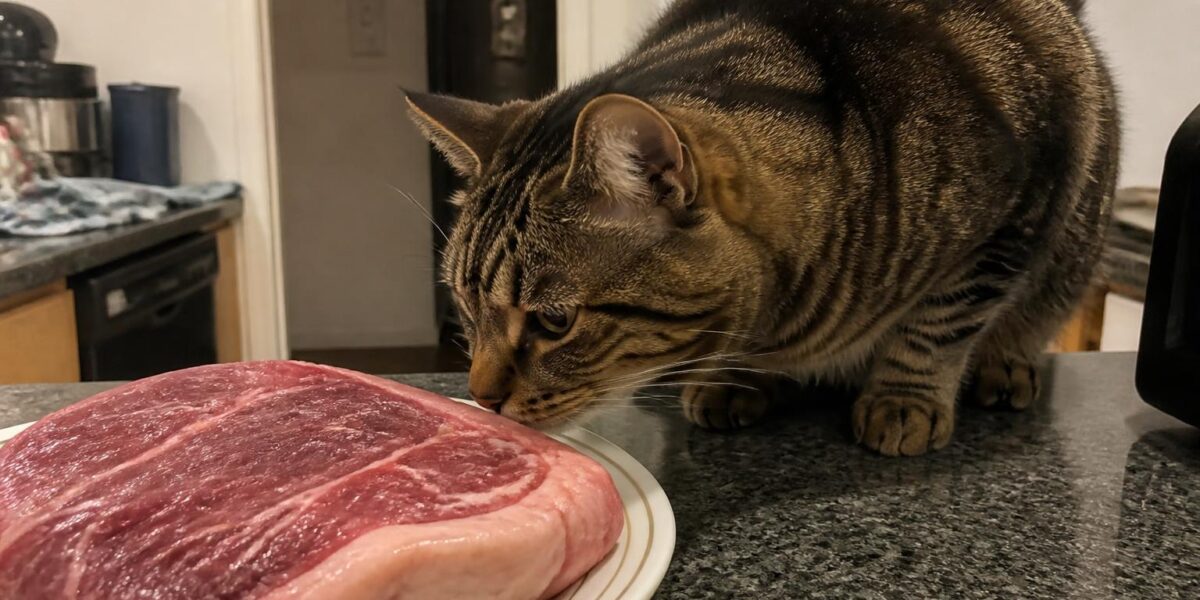
Can Cats Eat Raw Meat? Risks, Benefits & Safety Guide
The question of whether cats can eat raw meat has become one of the most debated topics in feline nutrition. Proponents argue that raw feeding mimics what cats evolved to eat in the wild. Critics counter that domesticated cats face bacterial hazards and nutritional imbalances that wild cats never encountered in quite the same way. The truth sits somewhere in between, and responsible cat owners deserve the full picture before making a decision. This guide walks through the science, the risks, and the practical steps involved in feeding raw meat to cats.
Cats Are Obligate Carnivores — What That Actually Means
Unlike dogs, which are omnivores capable of thriving on a range of foods, cats are obligate carnivores. This means their bodies are biologically designed to derive essential nutrients primarily from animal tissue. Cats require high levels of dietary protein, and they depend on specific amino acids — most notably taurine and arginine — that are found abundantly in meat but are scarce or absent in plant-based foods.
A cat’s digestive tract is shorter than that of an omnivore, which allows meat to pass through quickly before it can harbor dangerous levels of bacteria. Their stomachs produce highly acidic gastric juices (with a pH as low as 1 to 2), which helps break down raw protein and kill many pathogens. Cats also lack certain enzymes needed to efficiently process carbohydrates, which is why grain-heavy diets can sometimes lead to weight gain and digestive issues in felines.
Understanding that cats are obligate carnivores is foundational to the raw feeding conversation. Their bodies are wired for meat — but “wired for meat” does not automatically mean “immune to the risks of raw meat.” That distinction matters enormously.
Is Raw Meat Safe for Cats?
The short answer is that raw meat can be offered to cats, but it is not inherently safe without proper precautions. While a cat’s digestive system handles raw protein more efficiently than a human’s, domesticated cats are not identical to their wild ancestors. Indoor cats often have less robust immune systems than feral cats, and certain life stages — kittens, senior cats, and cats with chronic illness — make an animal more vulnerable to foodborne pathogens.
The safety of raw meat for cats depends on several factors: the freshness and quality of the meat, how it has been stored and handled, whether it has been sourced from a reputable supplier, and the individual cat’s overall health. A healthy adult cat eating fresh, human-grade raw chicken that has been properly stored is in a very different risk category than a kitten being offered meat of uncertain origin that has been sitting at room temperature.
Veterinary opinion on the topic remains divided. Some veterinarians support carefully managed raw diets, while organizations such as the American Veterinary Medical Association (AVMA) have issued position statements discouraging raw feeding due to the risk of bacterial contamination. If you are considering a raw diet for your cat, a conversation with your veterinarian should be the first step — not the last.
Bacterial Risks: Salmonella, E. Coli, and Other Pathogens
The single biggest concern with feeding cats raw meat is bacterial contamination. The two pathogens that receive the most attention are salmonella and E. coli, though listeria, campylobacter, and certain parasites such as toxoplasma gondii also pose risks.
Salmonella
Salmonella bacteria can be present on raw poultry, pork, beef, and even fish. While many cats can harbor salmonella without showing clinical signs — a phenomenon known as asymptomatic shedding — others may develop salmonellosis, which causes vomiting, diarrhea, fever, and lethargy. The greater concern is that a cat shedding salmonella in its feces can transmit the bacteria to human household members, particularly children, elderly adults, and immunocompromised individuals. Handling raw meat and cleaning litter boxes both become potential exposure points.
E. Coli
Certain strains of Escherichia coli, particularly E. coli O157:H7, are found in raw beef and other meats. In cats, E. coli infection can cause gastrointestinal distress, urinary tract infections, and in severe cases, systemic illness. As with salmonella, the risk extends beyond the cat itself to the humans who share the home. Contaminated food bowls, countertops, and hands all serve as transmission routes if hygiene protocols are not followed rigorously.
Parasites and Other Concerns
Raw pork and wild game carry a risk of parasites such as trichinella and toxoplasma. Raw fish, particularly freshwater species, can contain parasites as well as thiaminase, an enzyme that destroys vitamin B1 (thiamine) and can lead to neurological problems if raw fish is fed regularly. Freezing meat at sufficiently low temperatures for extended periods can reduce parasite risk, but it does not eliminate all bacterial hazards.
Types of Raw Meat for Cats: What to Offer and What to Avoid
Not all raw meats carry the same level of risk or nutritional value for cats. Here is a breakdown of common options.
- Raw chicken — One of the most commonly fed raw meats for cats. Chicken is lean, affordable, and well-tolerated by most felines. Chicken necks and wings can also provide dental benefits and calcium from the bones. However, poultry has a higher rate of salmonella contamination than some other meats, so sourcing and freshness are critical.
- Raw turkey — Similar in nutritional profile to chicken and generally well-accepted by cats. Turkey is slightly leaner and can be a good alternative for cats that need lower fat content in their diet.
- Raw beef — A nutrient-dense option that provides excellent levels of taurine, iron, and B vitamins. Beef carries a lower salmonella risk than poultry but can harbor E. coli, so quality sourcing matters.
- Raw rabbit — Considered one of the closest proteins to a cat’s natural wild diet. Rabbit is lean, highly digestible, and lower in common allergens. It is often recommended for cats with food sensitivities. Availability and cost can be limiting factors.
- Raw lamb — A rich protein source that many cats enjoy. Lamb is higher in fat than chicken or rabbit, so it may not be ideal for overweight cats but works well for active or underweight animals.
- Raw fish — Should be offered only occasionally and never as a staple. Raw fish carries parasite risk, may contain thiaminase, and certain species accumulate heavy metals. Small amounts of sushi-grade salmon or sardines can be a treat, but fish should not form the foundation of a raw diet.
- Raw pork — Generally not recommended due to the risk of parasites (including trichinella) and the fact that pork is more difficult for some cats to digest. If offered at all, it should be frozen for an extended period first to reduce parasite viability.
Regardless of the protein source, raw meat for cats should always be fresh, human-grade, and free of added seasonings, marinades, or preservatives. Never feed your cat raw meat that you would not be comfortable handling yourself.
Raw Diet Pros and Cons
The debate around raw feeding generates strong opinions on both sides. Here is an honest look at the potential advantages and disadvantages.
Potential Benefits of a Raw Diet for Cats
- Higher protein, lower carbohydrate intake — Raw diets typically align more closely with a cat’s biological needs as an obligate carnivore.
- Improved coat and skin condition — Many raw feeders report shinier fur, less shedding, and fewer skin issues.
- Better dental health — Chewing raw meaty bones can help reduce plaque and tartar buildup compared to soft commercial foods.
- Smaller, less odorous stools — Cats on raw diets often produce less waste because more of the food is digestible and bioavailable.
- Increased hydration — Raw meat contains significantly more moisture than dry kibble, which can benefit cats prone to urinary or kidney issues.
- Fewer fillers and artificial additives — A well-formulated raw diet avoids the grains, by-products, and synthetic preservatives found in many commercial cat foods.
Potential Risks and Drawbacks
- Bacterial contamination — Salmonella, E. coli, and other pathogens pose risks to the cat and every human in the household.
- Nutritional imbalance — Feeding plain raw meat without proper supplementation can lead to deficiencies in calcium, essential fatty acids, vitamins, and minerals. A diet of muscle meat alone is not nutritionally complete.
- Cost and time commitment — Sourcing, preparing, portioning, and storing raw food takes considerably more effort and expense than scooping kibble.
- Bone hazards — While raw bones are generally safer than cooked bones (which splinter), there is still a risk of choking, dental fractures, or gastrointestinal obstruction if bones are too large or too hard.
- Cross-contamination in the home — Raw meat preparation requires dedicated cutting boards, bowls, and cleaning protocols to prevent spreading bacteria to kitchen surfaces and other foods.
- Lack of long-term clinical studies — While anecdotal evidence from raw feeders is plentiful, large-scale, peer-reviewed studies comparing raw and commercial diets over a cat’s full lifespan remain limited.
How to Feed Raw Meat to Cats Safely
If you decide to introduce raw meat into your cat’s diet, following strict safety protocols is non-negotiable. These guidelines help minimize bacterial risk and nutritional gaps.
- Consult your veterinarian first. Discuss your cat’s age, health status, and any pre-existing conditions. Your vet can help you determine whether raw feeding is appropriate and may recommend blood work to establish a health baseline.
- Use only fresh, human-grade meat. Purchase from reputable butchers or suppliers. Meat labeled for human consumption is held to higher safety standards than pet-grade products.
- Transition gradually. Start by offering small amounts of raw meat alongside your cat’s current food. A sudden switch can cause digestive upset. Most cats need one to two weeks to adjust.
- Ensure nutritional completeness. Raw muscle meat alone is not a balanced diet. A complete raw meal should include muscle meat, organ meat (particularly liver and kidney), ground bone or a calcium supplement, and a source of essential fatty acids. Many raw feeders follow an 80/10/10 ratio — 80 percent muscle meat, 10 percent bone, and 10 percent organ meat (with half of that being liver).
- Practice rigorous hygiene. Wash your hands thoroughly before and after handling raw meat. Use dedicated cutting boards and bowls that are cleaned with hot, soapy water after every use. Disinfect any surfaces the raw meat has touched. Remove uneaten raw food from your cat’s bowl within 20 to 30 minutes to prevent bacterial growth at room temperature.
- Store raw food properly. Keep raw meat frozen until you are ready to thaw it. Thaw in the refrigerator — never on the counter. Use thawed portions within 24 to 48 hours. Pre-portioning into individual meal sizes before freezing makes daily feeding much more manageable.
- Monitor your cat’s health. Watch for changes in weight, coat quality, energy levels, stool consistency, and overall demeanor. Schedule regular veterinary checkups to catch any nutritional deficiencies or health changes early.
Commercial Raw Diets: A Convenient Alternative
For cat owners who want to provide the benefits of raw feeding without the complexity of preparing meals from scratch, commercial raw diets offer a middle ground. These products come in several forms — frozen raw patties, freeze-dried raw nuggets, and dehydrated raw formulas — and are designed to be nutritionally complete and balanced according to standards set by the Association of American Feed Control Officials (AAFCO).
The main advantages of commercial raw diets include convenience, consistency, and the fact that reputable manufacturers conduct pathogen testing on their products. High-pressure processing (HPP) is used by some brands to reduce bacterial loads while preserving the raw nutritional profile. Freeze-dried raw foods are shelf-stable and easy to store, making them a practical option for travel or for owners who are uncomfortable handling frozen raw meat daily.
However, not all commercial raw products are created equal. Look for brands that clearly list their ingredients, specify the protein source, include organ meat and bone content, and carry an AAFCO nutritional adequacy statement. Avoid products with vague ingredient descriptions such as “meat by-products” or those that add excessive plant-based fillers. Price is another consideration — commercial raw diets tend to cost significantly more per serving than traditional kibble or canned food.
If you are exploring different breeds and their dietary preferences, our cat breeds directory can help you understand breed-specific nutritional tendencies.
When to Avoid Feeding Raw Meat to Cats
While many healthy adult cats can tolerate a properly managed raw diet, there are specific situations where raw feeding is not recommended or should be approached with extreme caution.
- Kittens under 12 weeks of age — Young kittens have developing immune systems that are less equipped to handle bacterial exposure. Their rapid growth also demands precise nutritional balance that is difficult to achieve with a homemade raw diet.
- Senior cats with weakened immune systems — Older cats, particularly those with chronic kidney disease, diabetes, or cancer, are more susceptible to foodborne illness. The potential risks outweigh the benefits in most cases.
- Immunocompromised cats — Cats on immunosuppressive medications, undergoing chemotherapy, or living with feline immunodeficiency virus (FIV) or feline leukemia virus (FeLV) should not be fed raw meat unless a veterinarian specifically advises otherwise.
- Households with vulnerable humans — If your home includes infants, elderly individuals, pregnant women, or anyone with a compromised immune system, the cross-contamination risks of raw feeding become a more serious concern for the entire household.
- Cats with a history of pancreatitis or inflammatory bowel disease — These cats often require carefully controlled, easily digestible diets. Raw feeding may aggravate their conditions rather than improve them.
- When you cannot commit to proper preparation and hygiene — Raw feeding done carelessly is far more dangerous than not doing it at all. If you do not have the time, space, or resources to handle raw meat safely every day, commercial cooked or canned diets are a healthier choice for your cat.
If your cat falls into any of these categories and you are still drawn to the idea of a more natural diet, speak with your veterinarian about high-protein, grain-free commercial options that offer many of the same nutritional benefits without the bacterial risks.
Frequently Asked Questions
Can cats eat raw chicken every day?
Cats can eat raw chicken regularly, but it should not be the sole protein in their diet. Rotating between chicken, beef, turkey, and rabbit helps ensure a broader spectrum of nutrients. Daily raw chicken is acceptable only as part of a nutritionally complete and balanced meal plan that includes organ meat, bone, and appropriate supplements.
Will raw meat make my cat aggressive?
No. There is no scientific evidence that feeding raw meat causes behavioral changes or aggression in cats. This is a common myth. A cat’s behavior is influenced by genetics, socialization, environment, and health — not by whether its food is raw or cooked.
Can I feed my cat raw meat from the grocery store?
You can, as long as the meat is fresh, human-grade, and has been stored at proper temperatures. Avoid meat that is close to its expiration date, has been previously frozen and thawed multiple times, or shows any signs of discoloration or off odor. Grocery store meat is generally acceptable, though some raw feeders prefer sourcing from local butchers or specialty suppliers for greater transparency about handling practices.
How much raw meat should I feed my cat per day?
Most adult cats require roughly two to four percent of their body weight in raw food per day, split into two meals. A 10-pound cat would eat approximately three to six ounces of raw food daily. Kittens and highly active cats may need more. Your veterinarian can help determine the right portion size based on your cat’s weight, age, and activity level.
Is a raw diet better than canned food for cats?
Not necessarily. High-quality canned food provides excellent nutrition with significantly less preparation, lower bacterial risk, and guaranteed nutritional completeness. A well-formulated raw diet may offer some additional benefits in terms of ingredient transparency and reduced processing, but a premium canned diet is a perfectly healthy choice for the vast majority of cats.
Can I mix raw meat with dry kibble?
This is a topic of debate. Some veterinarians advise against mixing raw and kibble in the same meal because they digest at different rates, which could theoretically create a favorable environment for bacterial growth in the gut. Others consider occasional raw topping on kibble to be low risk. If you want to offer both, feeding them at separate meals is generally the safer approach.
Final Thoughts
So, can cats eat raw meat? Yes — but the answer comes with important caveats. Cats are obligate carnivores, and their bodies are built to process animal protein efficiently. However, domesticated cats face bacterial risks that their wild counterparts managed through constant immune exposure. A raw diet can work well for many healthy adult cats when it is nutritionally balanced, prepared with strict hygiene, and supervised by a veterinarian. For cats with compromised health or for households where meticulous food safety is impractical, high-quality commercial diets — whether canned, freeze-dried, or cooked — remain an excellent and safer alternative.
Whatever you decide, the goal is the same: giving your cat the best possible nutrition for a long, healthy life. If you are ready to welcome a new feline family member, browse our adoptable cats to find your perfect match. And for breed-specific dietary insights, explore our cat breeds directory for detailed profiles on dozens of popular breeds.
For the full picture, see our complete guide to the human foods cats can eat safely.
Not sure what to keep away from your cat? See our complete list of foods toxic to cats.


