
Last updated: April 10, 2026
In this article
Raw Chicken for Cats: A Complicated Answer
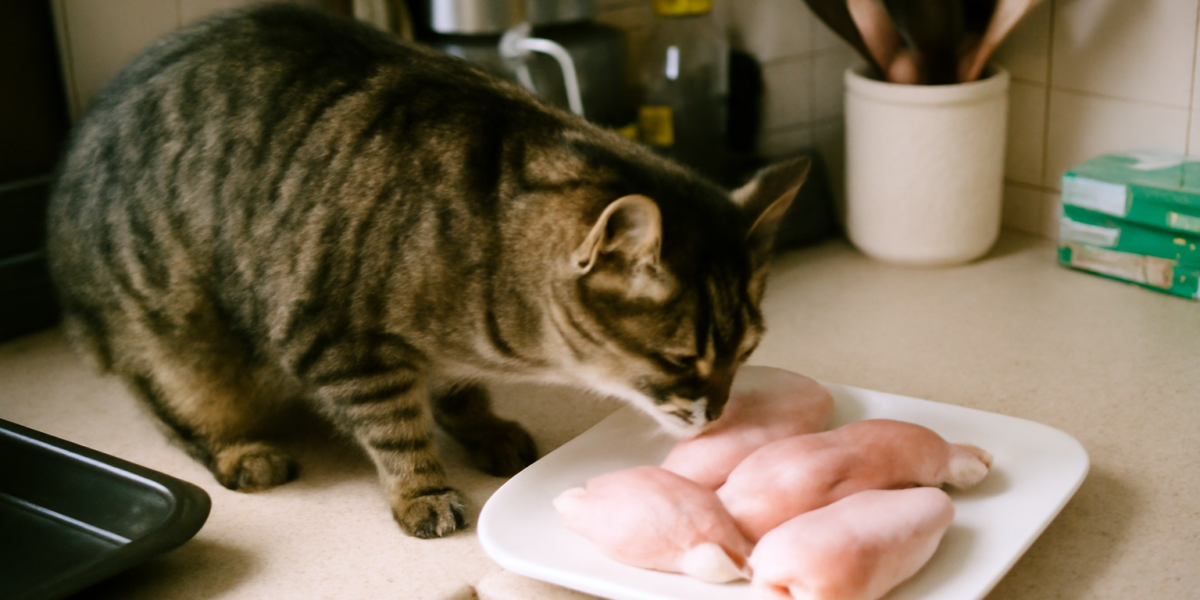
Can cats eat raw chicken? Technically, cats can digest raw chicken, but veterinary organizations strongly advise against it due to significant bacterial contamination risks including Salmonella and Campylobacter. While proponents of raw feeding point to cats’ ancestral diet of raw prey, the commercially processed raw chicken available at grocery stores is very different from a freshly caught bird, and the health risks to both your cat and your family are real.
Cats are obligate carnivores with a digestive system designed to process animal protein. Their shorter digestive tract and more acidic stomach environment do provide some natural protection against foodborne bacteria. However, “some protection” does not mean immunity. Studies have found that cats fed raw diets frequently shed Salmonella in their stool even when showing no symptoms, creating a household health hazard.
If you are considering a raw diet for your cat, the safest approach is to consult your veterinarian and, if you proceed, use commercially prepared raw food that has undergone safety processing rather than handling raw chicken from the grocery store yourself.
The Bacterial Risks of Raw Chicken
Raw chicken is one of the most commonly contaminated raw proteins available at retail. Understanding the specific risks helps you make an informed decision about whether to feed it to your cat.
Salmonella is found in a significant percentage of retail chicken products. Studies by the USDA have found Salmonella on roughly 25 percent of chicken parts tested. Infected cats may develop salmonellosis with symptoms including vomiting, diarrhea (sometimes bloody), fever, and lethargy. Some cats become asymptomatic carriers, shedding the bacteria in their feces for weeks without showing any illness, which poses a risk to human household members.
Campylobacter is another common contaminant in raw poultry and can cause diarrhea, abdominal pain, and fever in cats. Like Salmonella, it is also zoonotic, meaning it can transfer from your cat’s environment to human family members.
E. coli, including potentially dangerous strains, can contaminate raw chicken and cause gastrointestinal illness in cats. Cats that eat contaminated meat may spread E. coli through their stool, saliva, and the surfaces they contact.
Listeria monocytogenes is another concern, particularly for immunocompromised humans in the household. Cats can carry and shed this bacterium after consuming contaminated raw meat.
The risk extends beyond your cat. Young children, elderly individuals, pregnant women, and immunocompromised people in your household face increased risk of illness from bacteria shed by a raw-fed cat. The litter box, food bowls, and any surfaces your cat licks become potential transmission points.
Nutritional Considerations
Raw chicken does offer nutritional value for cats. It is high in protein, contains essential amino acids like taurine (critical for feline heart and eye health), and provides moisture that supports hydration. These are genuine benefits of animal protein in a cat’s diet.
However, raw chicken alone does not constitute a complete and balanced diet. Cats require specific ratios of:
- Protein and fat from animal sources
- Taurine, which is found in muscle meat and organ meat
- Calcium and phosphorus in proper ratios, requiring bone content
- Vitamins A, D, and E from organ meats and supplementation
- Essential fatty acids including arachidonic acid
Feeding raw chicken breast alone provides protein but lacks adequate calcium, certain vitamins, and the complete nutrient profile cats need. Long-term feeding of unbalanced raw diets can lead to serious nutritional deficiencies. Cats fed exclusively chicken breast without bone or organ meat may develop calcium deficiency, leading to metabolic bone disease over time.
Commercially prepared raw cat foods are formulated to be nutritionally complete, with proper ratios of muscle meat, organ meat, bone, and supplements. If raw feeding appeals to you, these products are a much safer starting point than DIY raw preparation, though they still carry some bacterial risk.
Raw Chicken Bones: An Additional Risk
Some raw feeding advocates suggest offering raw chicken bones as a natural source of calcium and dental health benefits. While raw bones are less likely to splinter than cooked bones, they are not risk-free for cats.
Potential bone-related hazards include:
- Choking, especially with larger pieces that a cat tries to swallow whole
- Tooth fractures from biting hard bone
- Esophageal or intestinal obstruction from bone fragments
- Constipation from consuming too much bone material
- Intestinal perforation, though rare, is a life-threatening emergency
If you choose to offer raw bones under veterinary guidance, small chicken wing tips or neck pieces appropriate for your cat’s size are generally considered the safest options. Always supervise bone consumption and never leave your cat alone with raw bones. Remove any bone that begins to splinter or break into sharp pieces.
Safer Alternatives to Raw Chicken
If you want to incorporate chicken into your cat’s diet without the bacterial risks of raw feeding, several safer options provide similar nutritional benefits.
Plain cooked chicken is the simplest alternative. Boil, bake, or poach boneless chicken breast or thigh meat without seasoning, oil, butter, garlic, or onion. Shred or dice it into small pieces appropriate for your cat’s size. Cooked chicken can be offered as an occasional treat or used as a food topper to entice picky eaters.
Freeze-dried raw chicken treats undergo a process that reduces bacterial load while preserving much of the nutritional profile of raw meat. These commercially produced treats are a middle ground between raw and cooked options.
High-quality commercial cat foods, both wet and dry, use chicken as a primary ingredient and are formulated to be nutritionally complete. Premium brands cook the chicken during processing, eliminating bacterial concerns while retaining protein value. For other protein options your cat might enjoy, see our guide on cooked shrimp for cats.
If you want your cat to experience the texture and enrichment benefits of raw-style feeding, look for commercially prepared raw cat food that has been high-pressure processed (HPP) to reduce bacterial contamination. These products are available frozen at many pet stores and combine the raw feeding philosophy with improved safety measures.
Safe Handling If You Choose to Feed Raw
If after consulting your veterinarian you decide to feed raw chicken, strict hygiene protocols are essential to minimize risk to your cat and family.
Purchase the freshest chicken possible from reputable sources. Use it immediately or freeze it promptly. Thaw frozen chicken in the refrigerator, never at room temperature. Keep raw chicken separated from other foods in your refrigerator, stored on the lowest shelf in a sealed container.
Preparation hygiene rules include:
- Use dedicated cutting boards and utensils for raw meat preparation
- Wash your hands thoroughly with hot soapy water for at least 20 seconds after handling raw chicken
- Clean and sanitize all surfaces that contacted raw chicken
- Discard any uneaten raw food after 20 to 30 minutes at room temperature
- Wash your cat’s food bowl after every raw meal with hot soapy water
Scoop the litter box daily and wash your hands afterward, as raw-fed cats may shed bacteria in their stool. Avoid allowing your cat to lick your face or food preparation surfaces, especially after a raw meal. Our cooked chicken feeding guide provides a much simpler and safer approach to adding chicken to your cat’s diet.
Frequently Asked Questions
Do veterinarians recommend raw chicken diets for cats?
The majority of mainstream veterinary organizations, including the American Veterinary Medical Association (AVMA) and the American Animal Hospital Association (AAHA), advise against raw meat diets for pets due to the documented risks of bacterial contamination and nutritional imbalances. Some holistic veterinarians support properly formulated raw diets. If you are interested, work with a veterinarian experienced in raw feeding to ensure the diet is nutritionally complete and the risks are managed.
Can raw chicken give my cat worms or parasites?
Yes, though the risk is lower with commercially processed chicken than with wild-caught prey. Toxoplasma gondii is a particular concern in raw meat for cats. Cats are the definitive host for this parasite, meaning they can become infected and shed the organism in their feces. Freezing chicken at minus 4 degrees Fahrenheit for at least three days before feeding can reduce some parasite risk, but it does not eliminate bacterial concerns.
Is raw chicken safer for cats than raw fish?
Both carry bacterial risks, but raw fish introduces additional concerns including thiaminase enzymes that destroy vitamin B1 (thiamine) and higher mercury or heavy metal contamination in certain fish species. Neither raw chicken nor raw fish is considered safe without proper handling and preparation. Cooked versions of both are significantly safer options for your cat.
How much raw chicken can a cat safely eat?
If you choose to feed raw chicken as a treat rather than a complete diet, limit it to no more than ten percent of your cat’s daily caloric intake. For an average ten-pound cat, this would be roughly one to two tablespoons of raw chicken. This is not enough to cause nutritional imbalance but still carries bacterial risk. Always handle and serve it following strict hygiene protocols.
Can kittens eat raw chicken?
Kittens are more vulnerable to foodborne illness than adult cats because their immune systems are still developing. Most veterinarians strongly advise against feeding raw meat to kittens. A high-quality kitten-formulated commercial food provides complete nutrition with minimal safety risk. If you plan to transition to a raw diet eventually, wait until your kitten is at least one year old and consult your vet about the transition. Visit our cat care hub for more nutrition guidance.


