
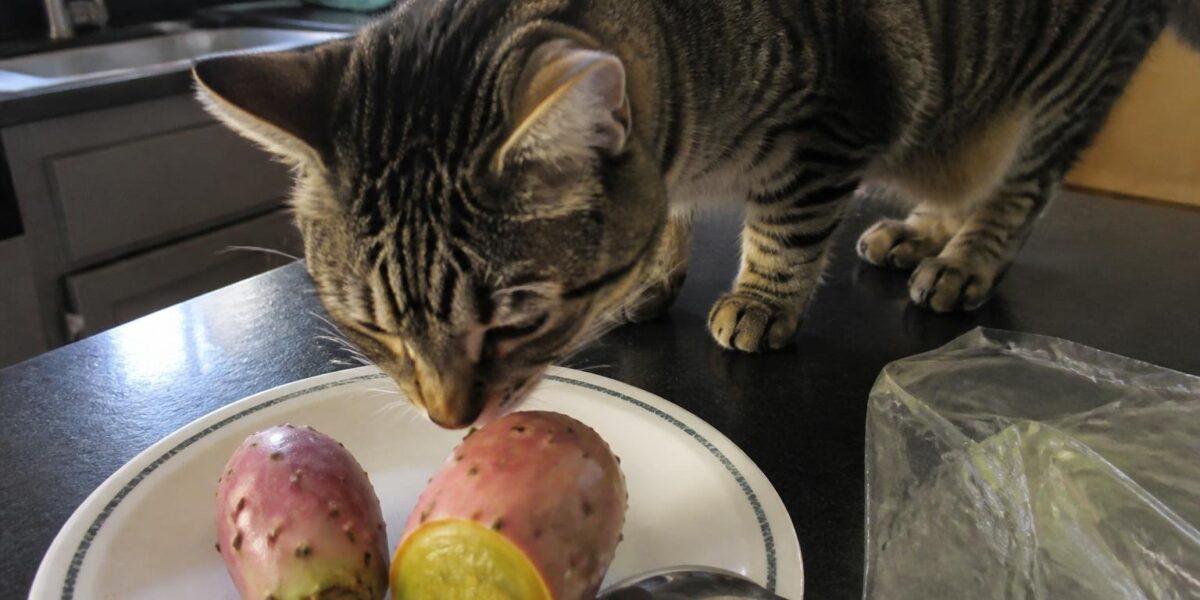
Can Cats Eat Prickly Pear? The Short Answer
Prickly pear flesh is not toxic to cats, so a tiny taste of the peeled, de-seeded fruit won’t harm a healthy cat — but it offers an obligate carnivore no real benefit, and the spines and seeds make it more trouble than it’s worth. Prickly pear is the sweet fruit of certain cactus plants, and cats simply aren’t designed to eat or benefit from sugary plant matter. Since cats can’t taste sweetness, the fruit holds no genuine appeal for them either.
In this article
- Can Cats Eat Prickly Pear? The Short Answer
- Why Prickly Pear Isn’t Worth It for Cats
- The Spines and Seeds Are Hazards
- How Much Prickly Pear Can a Cat Have?
- Better Treats for a Carnivore
- Keeping Cactus Plants Out of Reach
- Reading Your Cat’s Curiosity About Fruit
- When to Call the Vet
- Frequently Asked Questions
So can cats eat prickly pear? A small amount of the prepared flesh is safe in the sense that it isn’t poisonous, but it’s an unnecessary, sugary treat, and the fruit comes with real physical hazards. The tiny spines (called glochids) and the hard seeds must be completely removed. Honestly, the easiest and safest choice is to skip it.
Why Prickly Pear Isn’t Worth It for Cats
Cats are obligate carnivores whose nutrition comes from animal protein and fat. They lack the taste receptors to detect sweetness, so fruit — including prickly pear — doesn’t serve a purpose in their diet.
For a cat, prickly pear provides:
- Natural sugar that’s nothing but empty calories.
- Fiber that can upset a carnivore’s digestion in any quantity.
- Vitamins and antioxidants that a complete cat food already supplies.
There’s simply no nutritional gap that this cactus fruit fills for a cat. A small taste is harmless curiosity at most, not something your cat needs.
It’s tempting to think that because prickly pear is touted as a healthy, antioxidant-rich fruit for people, it must be good for cats too. With an obligate carnivore, that reasoning falls apart. A cat’s body is built so specifically around animal protein and fat that the wellness benefits humans seek from fruit simply don’t translate. Prickly pear won’t boost your cat’s immunity or improve their coat — those come from a proper diet and attentive care. All it adds is sugar they can’t taste and a fiddly hazard from spines and seeds, so the kindest choice is to skip it and feed what your cat actually needs.
The Spines and Seeds Are Hazards
Prickly pear stands out from other fruits because of its physical dangers. The skin is covered in glochids — tiny, hair-like spines that can lodge in the mouth, tongue, paws, or skin and cause real irritation and pain. The fruit also contains many hard seeds.
If you ever offer a taste, you must:
- Carefully peel away all skin and remove every glochid spine.
- Remove all the seeds, which are hard and a choking or digestive hazard.
- Offer only a small piece of the soft inner flesh.
Given how fiddly and risky the preparation is, many owners reasonably decide prickly pear just isn’t worth offering. Never let a cat near the whole, unpeeled fruit, and keep cactus plants out of reach. And as with other exotic fruits, skip any prickly pear that’s been turned into juice, syrup, candy, or jelly — these are concentrated in sugar and make an already-pointless treat worse for a carnivore.
How Much Prickly Pear Can a Cat Have?
Very little, and only if your cat is interested and the fruit is properly prepared:
- Offer no more than a small, pea-sized piece of peeled, de-seeded flesh, as a one-off taste.
- Don’t make it a recurring treat — there’s no benefit to repeat servings.
- Skip it entirely for diabetic, overweight, or sensitive-stomached cats.
The sugar is the main reason to keep amounts tiny. Even a little sugary fruit can loosen stools or upset a carnivore’s stomach, and it adds calories that don’t belong in a cat’s diet. If your cat isn’t interested, that’s completely normal — most cats won’t be.
Better Treats for a Carnivore
If you want a treat your cat will truly enjoy and benefit from, choose meat or fish over fruit. These foods fit a cat’s biology and deliver protein their body can use.
See our guides on whether cats can eat chicken and whether cats can eat beef heart for protein- and taurine-rich options. If you’d still like to offer an occasional safe fruit, our notes on whether cats can eat bananas explain another sugary-but-non-toxic option and the same moderation rules.
Keeping Cactus Plants Out of Reach
For prickly pear, the plant itself can be as much of a concern as the fruit, especially if you keep cacti as houseplants or have them growing in the yard. A curious cat brushing against or batting at a prickly pear pad can pick up those tiny glochid spines in their paws, face, or mouth.
To keep your cat comfortable and spine-free, take a few simple precautions:
- Place cacti well out of reach, on high shelves or in rooms your cat doesn’t access.
- Supervise outdoor time if you have prickly pear growing in the garden.
- Store harvested fruit securely, not on a low counter where a cat can investigate.
- Check your cat’s paws and face if you ever see them pawing, drooling, or licking excessively near a cactus.
Embedded glochids are genuinely irritating and can be tricky to remove, so prevention really is the kindest approach. If spines do get lodged, especially around the mouth or eyes, call your veterinarian rather than trying to dig them out yourself.
Reading Your Cat’s Curiosity About Fruit
If your cat seems interested in your prickly pear, it’s worth remembering that the interest almost certainly isn’t about taste. Cats can’t detect sweetness, so the sugary appeal that makes the fruit a treat for us is lost on them entirely.
What actually attracts a cat is usually the texture, the moisture, the novelty, or simply the desire to share whatever you’re eating. A cat poking at a piece of fruit is being a cat, not signaling a nutritional gap. You can respond safely by:
- Offering a tiny, peeled, de-seeded, spine-free piece once, if you wish — never routinely.
- Redirecting their attention to a meat or fish treat that suits their biology.
- Giving them play or affection, which is often what they were really seeking.
If your cat investigates and walks away, that’s perfectly normal and exactly what you’d expect from a carnivore who has no need for fruit.
When to Call the Vet
A small taste of properly prepared prickly pear flesh rarely causes harm. But contact your veterinarian if your cat eats a large amount, swallows seeds, or — importantly — gets glochid spines stuck in the mouth, paws, or skin, which can cause pain and irritation. Also watch for repeated vomiting, diarrhea, lethargy, or signs of a blockage like straining or refusing food.
For everyday treats, the simplest path is to leave the cactus fruit out of the bowl and stick to foods cats are designed to eat. Your veterinarian is always the best resource if you’re unsure whether a human food is safe.
Frequently Asked Questions
Is prickly pear poisonous to cats?
The ripe flesh isn’t toxic, but the fruit offers no benefit to a carnivore and carries hazards from its tiny spines and hard seeds. Only a tiny taste of fully peeled, de-seeded flesh is appropriate, if any.
Are prickly pear spines dangerous to cats?
Yes. The glochid spines can lodge in the mouth, tongue, paws, or skin and cause pain and irritation. Always remove all spines and skin before offering any flesh, and keep whole fruit away from your cat.
Can cats eat prickly pear seeds?
No. The seeds are hard and present a choking and digestive hazard. Remove every seed before offering any flesh.
My cat got into a prickly pear — what should I do?
Check the mouth and paws for embedded spines and call your veterinarian, especially if your cat is pawing at its face or drooling. Also watch for vomiting or diarrhea if any fruit was eaten, and seek care if symptoms persist.
Are prickly pear cactus pads safe for cats?
The pads carry the same glochid spines as the fruit and aren’t a suitable food for cats. Keep cactus plants out of reach so your cat can’t brush against or chew them and pick up irritating spines.
Can cats have prickly pear juice or syrup?
No. These are concentrated in sugar and offer a carnivore nothing. If you want to let a curious cat sample the fruit at all, only a tiny piece of peeled, de-seeded, spine-free flesh is appropriate.


