
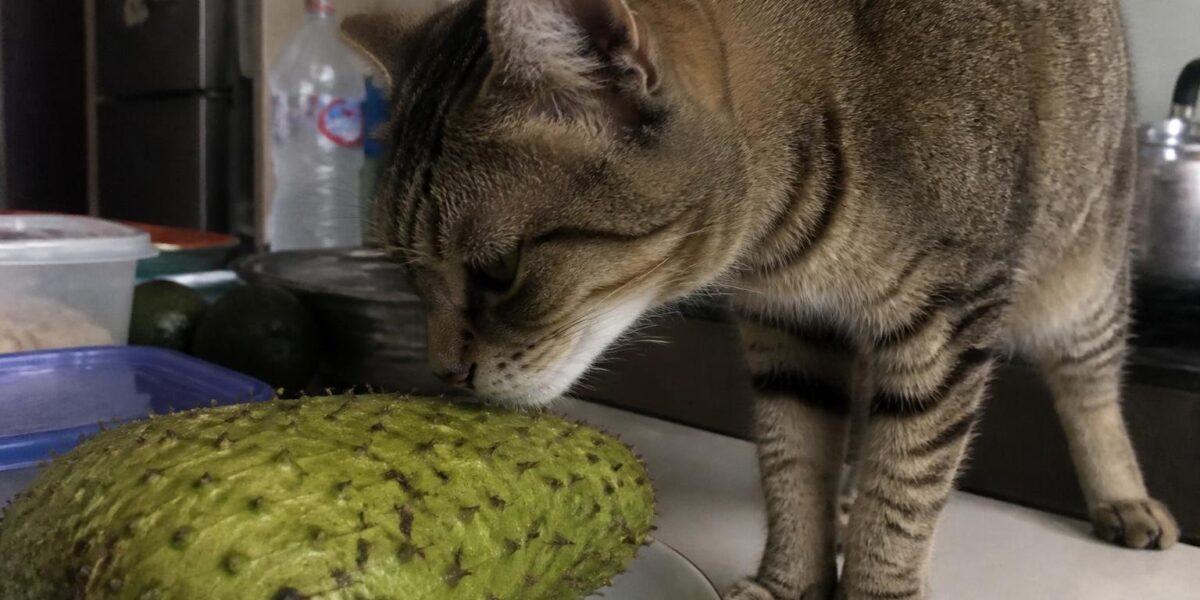
Can Cats Eat Soursop? The Short Answer
The flesh of ripe soursop is not toxic to cats, so a tiny taste won’t harm a healthy cat — but soursop offers an obligate carnivore nothing worthwhile, and the seeds are a part you must always avoid. Soursop (also called graviola) is a sweet, custardy tropical fruit, and cats simply aren’t built to digest or benefit from sugary plant matter. They can’t even taste sweetness, so the fruit holds no real appeal for them.
In this article
So can cats eat soursop? A small bite of the seedless white flesh is safe in the sense that it isn’t poisonous, but it’s an unnecessary, sugary treat that’s best kept to a rare nibble at most. The seeds, in particular, should never be eaten, since they’re inedible and a choking hazard. Here’s what you need to know.
Why Soursop Doesn’t Suit a Cat’s Diet
Cats are obligate carnivores. Their digestive systems and nutritional needs revolve around animal protein and fat, not fruit. Because they lack sweet taste receptors, the sweetness that makes soursop a treat for humans means nothing to a cat.
For your cat, soursop offers:
- Natural sugar that adds empty calories with no benefit.
- Fiber that can upset a carnivore’s stomach if given in any real amount.
- Vitamins that a complete cat food already supplies in proper balance.
In short, there’s no nutritional gap that soursop fills for a cat. A tiny taste is harmless curiosity, not nourishment.
People often reach for tropical fruits like soursop because of their reputation as antioxidant-rich superfoods, and it’s natural to want to share something you think is healthy. But that reasoning doesn’t carry over to cats. A cat’s body is so specialized for digesting and using animal tissue that the wellness benefits humans seek from fruit simply don’t apply. Soursop won’t strengthen your cat’s immune system or improve their coat — those come from a proper diet and good care. All it adds is sugar your cat can’t even taste, so the most loving choice is to meet their real needs with appropriate food.
The Seeds Are the Real Concern
While the ripe flesh is fine in tiny amounts, soursop seeds should never be given to your cat. The seeds are hard, inedible, and present a genuine choking and digestive hazard. They’re also not something you want a curious cat batting around and accidentally swallowing.
If you ever offer a small piece of soursop flesh, follow these rules:
- Remove every seed completely before serving.
- Offer only the soft, ripe white flesh, never unripe fruit or skin.
- Keep the rest of the fruit out of your cat’s reach.
And never share soursop that’s been turned into juice, smoothie, ice cream, or any sweetened preparation — added sugar only makes an already-pointless treat worse. Most soursop products marketed to people are heavily sweetened or concentrated, which makes them an even poorer choice for a cat than the plain fresh fruit would be. If your cat is going to taste soursop at all, it should be a tiny piece of fresh, ripe, seedless flesh and nothing else.
How Much Soursop Can a Cat Have?
Very little, and only if your cat is genuinely interested. A sensible approach:
- Offer no more than a small, pea-sized piece of seedless ripe flesh as a one-time taste.
- Don’t repeat it regularly — there’s nothing for your cat to gain.
- Avoid it entirely for diabetic, overweight, or sensitive-stomached cats.
The sugar is the limiting factor. Even a small amount of sugary fruit can cause loose stools or an upset tummy in a carnivore, and over time it contributes calories that don’t belong in a cat’s diet. If your cat sniffs and walks away, that’s completely normal. There’s no reason to encourage a cat to eat fruit they instinctively avoid, and doing so offers them no benefit. A cat’s lack of interest in sweet, sugary foods is simply their carnivore biology working exactly as it should.
Better Treats for Your Cat
If you want to give your cat a treat they’ll actually enjoy and benefit from, reach for meat or fish instead of fruit. These match a cat’s natural diet and provide protein their body can put to use.
See our guides on whether cats can eat chicken and whether cats can eat salmon for protein-rich, cat-appropriate options. If you’re set on the occasional fruity nibble, our notes on whether cats can eat apples cover another safe-but-unnecessary fruit, with the same emphasis on tiny portions and removing seeds.
A Note on Soursop Supplements and Products
Soursop (graviola) shows up not just as fresh fruit but in teas, juices, extracts, and supplements marketed to people for various wellness claims. It’s important to keep all of these away from your cat.
Concentrated soursop products are a different matter from a nibble of fresh flesh. They can contain compounds in far higher amounts than the fruit itself, and there’s no established safe use for them in cats. Some soursop preparations, particularly the leaves and seeds and certain extracts, contain natural compounds that aren’t something you want your cat ingesting. The safe approach is simple:
- Never give your cat soursop tea, juice, extract, or supplements.
- Don’t assume a “natural” product is safe for pets — many aren’t.
- Stick to, at most, a tiny taste of plain fresh flesh if your cat is curious.
If you take soursop supplements yourself, store them securely out of your cat’s reach, just as you would any other supplement or medication.
Reading Your Cat’s Interest in Fruit
If your cat seems curious about your soursop, it’s natural to wonder whether to share. But that interest usually isn’t about flavor — cats can’t taste sweetness, so the sweet-custardy quality that makes soursop appealing to us means nothing to them.
What draws a cat in is typically the texture, the moisture, the novelty, or simply wanting to share whatever you’re eating. A cat investigating a piece of soursop is being a curious cat, not expressing a dietary need. You can respond safely by:
- Offering a tiny, seedless, pea-sized piece of flesh once, if you like — never as a habit.
- Redirecting them to a meat or fish treat they’ll genuinely benefit from.
- Giving them play or attention, which is often the real motivation.
And if your cat sniffs and turns away? That’s the most natural outcome of all, and there’s no reason to encourage fruit a carnivore doesn’t need.
When to Contact the Vet
A small taste of soursop flesh rarely causes any trouble. But reach out to your veterinarian if your cat eats a large amount, swallows a seed, or develops repeated vomiting, diarrhea, lethargy, or signs of a blockage such as straining or refusing food. A swallowed seed in particular could pose a choking or obstruction risk.
For day-to-day treats, the simplest and healthiest choice is to skip fruit and stick to foods cats are designed to thrive on. When in doubt about any human food, your vet can give you clear, individualized advice.
Frequently Asked Questions
Is soursop toxic to cats?
The ripe flesh isn’t toxic to cats, but the seeds should never be eaten, and the fruit offers no nutritional value to an obligate carnivore. Limit any sampling to a tiny, occasional taste of seedless flesh.
Can cats eat soursop seeds?
No. Soursop seeds are hard, inedible, and a choking and digestive hazard. Remove all seeds before offering any flesh, and keep whole fruit out of your cat’s reach.
Why isn’t soursop good for cats?
Cats are carnivores that can’t taste sweetness and don’t need fruit. Soursop’s sugar adds empty calories, its fiber can upset digestion, and its vitamins are already covered by a complete cat diet.
My cat ate some soursop — should I worry?
A small amount of seedless flesh is usually harmless. Watch for vomiting or diarrhea, and call your veterinarian if your cat ate a lot, swallowed a seed, or seems unwell.
Can cats have soursop juice or smoothies?
No. Soursop drinks and smoothies are typically loaded with added sugar and may include other ingredients that don’t suit cats. Keep all soursop juices, teas, and supplements away from your cat — at most, a tiny taste of plain fresh flesh is acceptable.
Is graviola the same as soursop?
Yes, graviola is another name for soursop. Be especially cautious with graviola supplements and extracts marketed for wellness, as these are concentrated and not appropriate for cats. Stick to fresh fruit only, in tiny amounts, if anything.


