
Last updated: March 26, 2026
In this article
- Is Watermelon Safe for Cats?
- Nutritional Benefits of Watermelon for Cats
- Watermelon and Cat Hydration
- Are Watermelon Seeds Dangerous for Cats?
- Is Watermelon Rind Safe for Cats?
- How to Serve Watermelon to Your Cat
- How Much Watermelon Can a Cat Eat?
- Frozen Watermelon Treats for Cats
- Frequently Asked Questions
Quick Answer: Yes, cats can eat watermelon — the seedless flesh only, in small amounts. Always remove seeds and rind before offering any to your cat. Watermelon is non-toxic, hydrating, and safe as an occasional treat for most healthy cats.
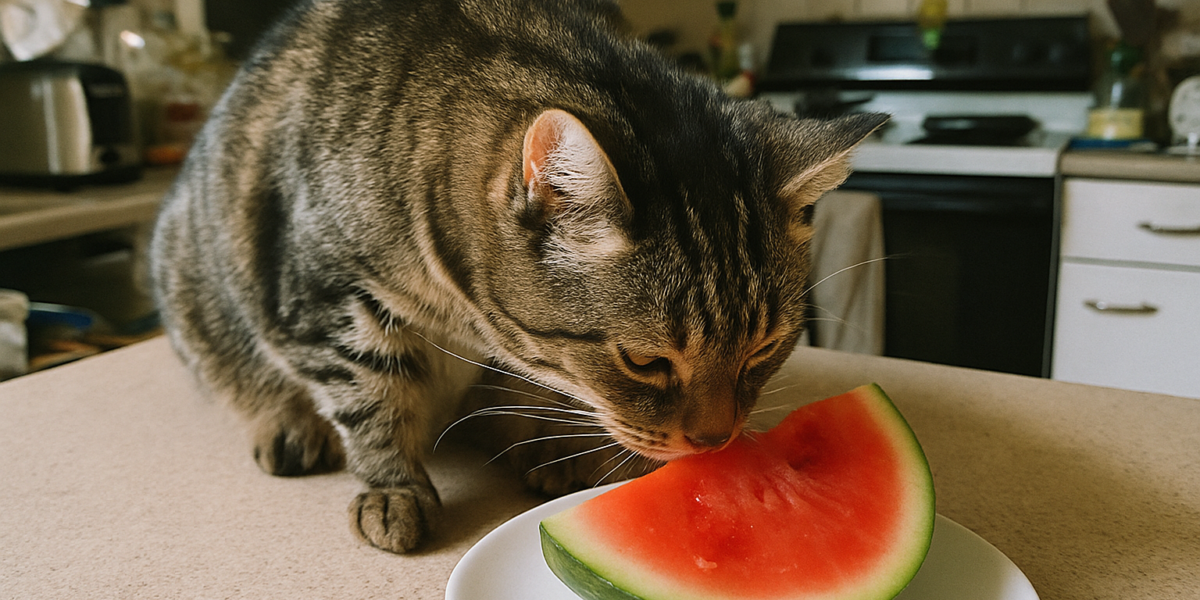
If you have ever caught your cat sniffing curiously at a slice of watermelon on the counter, you are not alone. Plenty of cat owners wonder whether sharing a bite is harmless or something to worry about. Can cats eat watermelon? The short answer is yes — the red flesh of the watermelon is safe for cats and is not listed as toxic by any major veterinary authority. But cats are obligate carnivores, which means their bodies are built to run on animal protein, not fruit. Watermelon will never be a nutritional cornerstone for your cat the way it might be a refreshing snack for you. Still, as an occasional treat offered in the right way, it can be a perfectly safe option — and some cats genuinely seem to enjoy it. This guide walks through everything you need to know, from the real benefits to the parts of the fruit you should always keep away from your cat.
Is Watermelon Safe for Cats?
Yes. Watermelon flesh is considered safe for cats by veterinarians and animal health organizations. It contains no compounds that are toxic to felines — no allium chemicals, no persin, no xylitol, and none of the substances that make certain fruits and foods dangerous for cats. If you are asking can cats eat watermelon from a toxicity standpoint, you can set that worry aside.
That said, “safe” and “ideal” are different things. Cats are obligate carnivores, meaning their digestive systems are optimized for processing meat. They lack certain taste receptors for sweetness that humans and dogs possess, so your cat may not even find watermelon appealing. Some cats will take a curious lick and walk away. Others will nibble happily at a small piece. Neither response is a concern.
The parts of the watermelon that do raise safety issues are the seeds and the rind, both of which should be completely removed before offering any to your cat. As long as you serve only the seedless red flesh in small pieces, watermelon is a perfectly acceptable occasional treat. If you are considering adding a feline companion to your household, explore our adoption page to find cats looking for their forever homes.
Nutritional Benefits of Watermelon for Cats
Watermelon is not nutritionally empty, even for an obligate carnivore. The flesh contains vitamin A, which supports healthy vision, skin, and coat — all things that matter for cats. It also provides vitamin C, though cats produce their own vitamin C internally and do not rely on dietary sources the way humans do. Small amounts of potassium, which supports muscle and heart function, are present as well.
The fruit also contains lycopene, a potent antioxidant responsible for the deep red pigment of the flesh. Lycopene has been studied extensively in human nutrition for its potential anti-inflammatory and cardiovascular benefits. While research on lycopene in cats is limited, antioxidants in general play a role in cellular health across species.
Perhaps the most practical nutritional fact about watermelon is what it does not contain in excess. It is low in calories, contains virtually no fat, and has minimal protein. For a cat that needs to manage its weight, a small cube of watermelon is a far better treat option than a calorie-dense commercial cat treat — provided your cat actually wants to eat it. Not every cat will show interest, and that is completely normal.
It is worth emphasizing that no fruit or vegetable can replace the essential amino acids, taurine, and animal-based nutrients that cats require from their primary diet. Watermelon is a supplement to an already complete and balanced feline diet, never a substitute for any part of it.
Watermelon and Cat Hydration
This is where watermelon genuinely shines as a cat treat. Watermelon is approximately 92 percent water, making it one of the most hydrating whole foods available. And hydration is a real concern for many cat owners.
Cats evolved in arid environments and have a naturally low thirst drive compared to dogs and humans. Many cats, particularly those fed primarily dry kibble, live in a state of mild chronic dehydration without their owners realizing it. Chronic under-hydration contributes to urinary tract issues, kidney stress, and concentrated urine that can lead to crystal formation and blockages — problems that are unfortunately common in domestic cats.
Offering a small piece of watermelon on a warm day is one easy way to sneak extra water into your cat’s system. It is not a replacement for fresh water, wet food, or a cat water fountain, but it can complement your overall hydration strategy. Some cats who routinely ignore their water bowl will lick at or eat a piece of chilled watermelon with enthusiasm, simply because the texture and mild flavor are different enough to catch their interest.
If your cat tends to avoid drinking water, try offering a small cube of watermelon and see how they respond. It is a low-risk experiment that could provide a meaningful hydration boost during hot months.
Are Watermelon Seeds Dangerous for Cats?
Yes, watermelon seeds are a genuine concern for cats and should always be removed before serving. The risk is twofold.
First, watermelon seeds — particularly the mature black seeds found in seeded varieties — pose an intestinal blockage risk. Cats are small animals with narrow digestive tracts. Even a handful of seeds swallowed in one sitting could clump together and create an obstruction, particularly in smaller cats or kittens. An intestinal blockage is a veterinary emergency that often requires surgical intervention, so this is not a theoretical risk to be dismissed.
Second, watermelon seeds contain trace amounts of cyanogenic compounds, which can release small amounts of cyanide when crushed or digested. In practical terms, a cat would need to consume a very large number of thoroughly chewed seeds for this to become a toxicity issue, so it is less of an immediate danger than the blockage risk. But it is one more reason to simply remove the seeds entirely rather than hope for the best.
The simplest solution is to buy seedless watermelon. Despite the name, seedless watermelon does contain small, soft, white seed coats — but these are immature, soft enough to pass through a cat’s system without issue, and do not carry the same blockage or chemical risks as the mature black seeds. If you are using a seeded variety, take the extra minute to pick out every visible seed before offering a piece to your cat.
Is Watermelon Rind Safe for Cats?
No. The watermelon rind — the firm, pale-green to dark-green outer layer — should not be given to cats. While it is not toxic in the way that certain plants or chemicals are, the rind presents several practical problems that make it unsuitable for feline consumption.
The rind is extremely tough and fibrous. Cats do not have the jaw strength or the type of molars needed to effectively break down this kind of plant matter. Large pieces of rind, if swallowed, can cause choking or become lodged in the esophagus or intestinal tract. Even if a cat manages to swallow a chunk of rind, it is difficult to digest and can cause vomiting, diarrhea, or abdominal discomfort as the digestive system struggles to process it.
The rind also tends to collect and concentrate any pesticide residues from the growing and shipping process. Watermelon rinds are not typically washed as thoroughly as the flesh is prepared, since people generally do not eat them. This adds an unnecessary chemical exposure risk for your cat.
To keep things simple: cut the flesh away from the rind entirely, and discard the rind where your cat cannot access it. If your cat has already eaten a small piece of rind, watch for vomiting, diarrhea, or signs of discomfort over the next 12 to 24 hours. A small piece will likely pass without incident, but contact your veterinarian if symptoms develop or your cat seems lethargic or in pain.
How to Serve Watermelon to Your Cat
Serving watermelon to a cat is straightforward, but a little preparation goes a long way toward keeping things safe and enjoyable.
Start by choosing seedless watermelon whenever possible. Cut a section of the red flesh away from the rind entirely — do not try to serve a wedge and expect your cat to eat only the right parts. Cut the flesh into very small pieces, roughly half an inch or smaller. Cats have small mouths and tend to bite off what they can manage, but smaller pieces reduce the choking risk and make it easier for your cat to eat at their own pace.
Offer one or two small pieces initially, especially if this is your cat’s first time trying watermelon. Watch how your cat responds. Some cats will eat the piece eagerly. Others will lick the juice and leave the flesh. A few will sniff it and walk away entirely. All of these reactions are normal. Do not force watermelon on a cat that shows no interest — obligate carnivores have every reason to prefer meat-based treats, and that preference is biologically sound.
If your cat does enjoy watermelon, keep servings small and occasional. A few small pieces once or twice a week during warm months is a reasonable frequency. Always serve watermelon at room temperature or chilled — never frozen solid in a form that could be a choking hazard without proper preparation. To explore the wide variety of cat breeds and their unique dietary tendencies, visit our cat breeds directory.
How Much Watermelon Can a Cat Eat?
Cats are much smaller than dogs, and their caloric needs are correspondingly lower, so portion sizes for watermelon should be quite modest. The general veterinary guideline is that treats of any kind should comprise no more than ten percent of a cat’s daily caloric intake. For an average ten-pound indoor cat consuming roughly 200 calories per day, that means no more than 20 calories from treats — and a cup of diced watermelon contains about 46 calories.
In practical terms, one to three small cubes of watermelon — each roughly half an inch — is a reasonable serving for most adult cats. This provides a hydration boost and a bit of variety without meaningfully displacing the balanced nutrition your cat needs from their regular food.
Cats with diabetes should avoid watermelon or only have it in extremely limited amounts and with veterinary approval. While watermelon is relatively low in sugar compared to many fruits, it still contains natural fructose that can affect blood glucose levels. Cats with kidney disease, digestive sensitivities, or other chronic conditions should also be cleared by a vet before trying any new treat, watermelon included.
If you notice loose stools, vomiting, or any digestive upset after your cat eats watermelon, discontinue offering it and let their system settle. Some cats simply do not tolerate fruit well, and that is perfectly fine — they are carnivores first and foremost.
Frozen Watermelon Treats for Cats
Frozen watermelon treats can be a fun, enriching way to offer your cat a cooling snack during warm weather. The key is to prepare them in a way that is safe for a small animal with a different chewing style than a dog.
The simplest approach is to cut watermelon flesh into very small cubes — about a quarter inch — and freeze them on a parchment-lined tray. Once frozen, these tiny cubes are small enough that a cat can lick and nibble at them without a choking risk. The frozen texture encourages slower eating and provides a satisfying sensory experience that many cats enjoy.
For a slightly more involved treat, blend seedless watermelon flesh into a smooth puree and pour it into silicone mini ice cube molds or even into the wells of a silicone candy mold. Freeze until solid. These small frozen bites can be offered one at a time and will melt relatively quickly, giving your cat a lickable, cooling treat that also provides hydration.
Another option is to mix a small amount of watermelon puree with water and freeze it in a shallow dish or lick mat. This creates an interactive enrichment activity — your cat works at licking the flavored ice as it melts, which provides mental stimulation along with hydration. Enrichment feeding is increasingly recognized as important for indoor cats who may lack the environmental stimulation they would encounter outdoors.
Avoid adding sugar, honey, dairy, or any other ingredients to frozen watermelon treats. Cats are lactose intolerant as adults, and added sweeteners provide no benefit and can cause digestive upset. Keep it simple — pure watermelon flesh and water are all you need. Never offer large frozen chunks that could pose a choking hazard, and always supervise your cat when introducing any new treat format for the first time.
Frequently Asked Questions
Can kittens eat watermelon?
Kittens can technically eat a tiny amount of watermelon flesh, but it is generally not recommended for very young kittens who are still developing their digestive systems. Kittens under six months old should focus entirely on kitten-specific food formulated to support their rapid growth. If your kitten is older than six months and you want to offer a taste, a single very small piece is sufficient. Watch for any digestive upset afterward, and do not make it a regular habit until the kitten is fully grown.
Can cats eat watermelon every day?
It is best to limit watermelon to an occasional treat rather than a daily one. While the flesh is safe, daily consumption could contribute more sugar and fiber than a cat’s system is designed to handle over time. Two to three times per week during warm months is a reasonable frequency for cats that enjoy it. Their primary nutrition should always come from a complete, balanced cat food formulated for obligate carnivores.
Why does my cat not like watermelon?
Cats lack the taste receptors that detect sweetness. A gene mutation in domestic cats means they cannot perceive sweet flavors the way humans and many dogs do, so the primary appeal of watermelon — its sweetness — is essentially invisible to them. If your cat sniffs a piece of watermelon and walks away, that is their biology working exactly as it should. There is no nutritional reason to encourage a cat to eat fruit, and a cat that shows no interest in watermelon is not missing anything essential.
What should I do if my cat ate watermelon seeds?
If your cat swallowed a few watermelon seeds, do not panic. One or two seeds will most likely pass through the digestive tract without causing problems. Monitor your cat for the next 24 hours, watching for signs of vomiting, diarrhea, loss of appetite, lethargy, or straining in the litter box. If any of these symptoms appear, or if your cat consumed a larger number of seeds, contact your veterinarian promptly. For kittens or very small cats, even a few seeds warrant a call to your vet as a precaution.
Is watermelon-flavored cat food or treats safe?
Be cautious with any artificially flavored products. Watermelon-flavored human foods and drinks often contain xylitol, artificial sweeteners, and other additives that can be toxic to cats. If you want to offer watermelon, stick to the real fruit — fresh, seedless, rind-free flesh is always the safest option. If a commercial cat treat lists watermelon as an ingredient and is specifically formulated for cats, check the full ingredient list and verify it does not contain anything harmful before offering it.
Can cats eat other types of melon?
Yes, most melons are safe for cats in small amounts. Cantaloupe and honeydew are both non-toxic and can be offered following the same guidelines as watermelon — seedless, rind-free, in small pieces. Interestingly, many cats seem more attracted to cantaloupe than watermelon, possibly because cantaloupe produces volatile compounds similar to those found in certain amino acids that cats can detect. As with watermelon, keep portions small and treat any melon as an occasional snack, not a dietary staple.


