
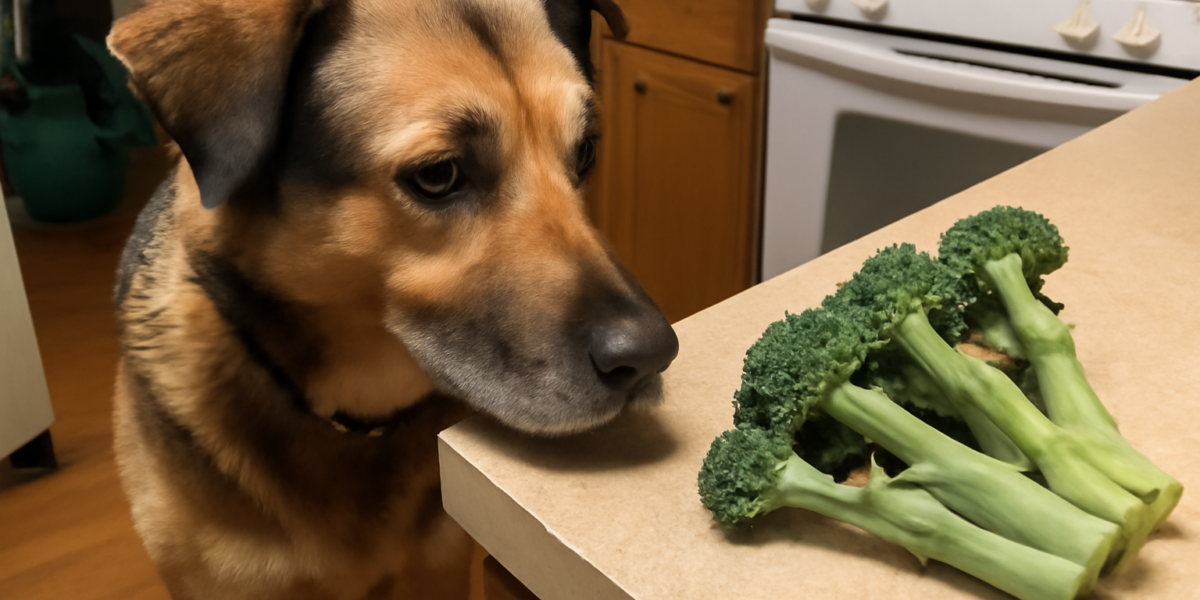
Can Dogs Eat Broccoli Stems? Safe With Proper Prep
Yes, dogs can eat broccoli stems when they are properly prepared. Broccoli stems are not toxic to dogs and actually contain valuable fiber, vitamins, and minerals. However, raw broccoli stems present a real choking hazard due to their dense, hard texture, and the preparation method matters significantly for safety. Cooked, softened broccoli stems cut into appropriate-sized pieces are a safe and nutritious occasional treat for most dogs.
In this article
Many people discard broccoli stems, but they are arguably the safest part of the broccoli plant for dogs. The florets contain higher concentrations of isothiocyanates — compounds that can cause gastrointestinal irritation in dogs at higher doses — while the stems contain fewer of these compounds. This makes properly prepared broccoli stems a surprisingly good vegetable treat option.
The primary concerns with broccoli stems are the choking risk from hard, raw pieces and the potential for gas and digestive upset if fed in large quantities. Both issues are easily managed with proper preparation and portion control. Let’s walk through exactly how to make broccoli stems safe and enjoyable for your dog.
Nutritional Benefits of Broccoli Stems for Dogs
Broccoli stems provide a respectable nutritional profile that complements your dog’s regular diet when offered as a small supplement or treat.
Fiber: Broccoli stems are an excellent source of dietary fiber, containing about 2.5 grams per 100 grams of raw stem. Fiber supports digestive regularity and can help dogs with mild constipation. The fiber in broccoli stems also promotes the growth of beneficial gut bacteria, supporting overall digestive health.
Vitamin C: While dogs produce their own vitamin C and do not require dietary supplementation, the additional antioxidant support from broccoli stems may benefit dogs under stress, recovering from illness, or exercising heavily. Vitamin C also supports immune function and collagen production.
Vitamin K: This vitamin is essential for proper blood clotting. Broccoli stems provide a meaningful amount, though dogs on blood-thinning medications should avoid significant dietary vitamin K changes.
Potassium: This mineral supports proper muscle and nerve function, and broccoli stems provide a good amount. Dogs on diets restricted in potassium (due to kidney disease, for example) should avoid high-potassium vegetables.
Low calorie: At roughly 30 calories per 100 grams, broccoli stems are one of the lowest-calorie treat options available. This makes them an excellent choice for overweight dogs who still deserve treat variety without the caloric impact of typical dog treats.
The Choking Hazard: Why Preparation Matters
Raw broccoli stems are dense, woody, and tough — particularly the thick outer layer of larger stems. Dogs who eat quickly (and most dogs eat very quickly) may bite off large chunks and swallow them without adequate chewing. A chunk of raw broccoli stem can become lodged in the throat, causing choking, or pass into the esophagus where it can create discomfort and potential obstruction.
The risk is highest for:
- Small dogs: Their smaller airways and esophagus make them more vulnerable to choking on any hard food item
- Fast eaters: Dogs who gulp food without chewing are at higher risk for any choking hazard
- Senior dogs: Older dogs may have weakened teeth or reduced chewing ability
- Brachycephalic breeds: Flat-faced breeds like Bulldogs, Pugs, and Boston Terriers have compromised airways that make choking more dangerous
Cooking broccoli stems eliminates most of the choking risk. Steamed or boiled stems become soft enough that even a hastily chewing dog can break them down safely. Cutting cooked stems into appropriate-sized pieces for your dog’s size provides an additional safety layer.
How to Prepare Broccoli Stems for Dogs
Follow these preparation steps to make broccoli stems safe and appealing for your dog:
- Wash thoroughly: Rinse the broccoli stem under running water to remove dirt, pesticide residues, and bacteria. If the stem is particularly thick, consider peeling away the tough outer layer, which is the most fibrous and hardest to digest.
- Cut into pieces: Slice the stem into pieces appropriate for your dog’s size before cooking. For small dogs, dice into half-inch cubes. For medium dogs, one-inch pieces work well. Large dogs can handle slightly larger pieces, but avoid giving a whole stem.
- Cook until tender: Steam for 5 to 7 minutes or boil for 8 to 10 minutes until the pieces are fork-tender. They should be soft enough to easily mash with a fork. Do not overcook to mush — some texture is fine and actually helps with dental cleaning.
- Cool completely: Let the cooked pieces reach room temperature before offering them to your dog. Hot vegetables can burn the mouth and throat.
- Serve plain: No salt, butter, oil, cheese, garlic, onion, or any other seasoning. Plain cooked broccoli stem is the only safe preparation for dogs.
If you prefer to offer raw broccoli stem, only do so with very thin slices or small, finely diced pieces for large dogs with good chewing habits. Even then, supervise your dog while they eat to watch for choking. For small and medium dogs, always cook broccoli stems before serving.
Portion Guidance by Dog Size
Broccoli — including the stems — should make up no more than 10 percent of your dog’s daily food intake. The isothiocyanate concern (discussed below) is the primary reason for this limit. Within that 10 percent guideline, here are recommended portions for can dogs eat broccoli stems:
Small dogs (under 20 pounds): One to two tablespoons of cooked, diced broccoli stem per serving. Offer no more than two to three times per week. For very small dogs under 10 pounds, start with one tablespoon and observe tolerance.
Medium dogs (20 to 50 pounds): Two to four tablespoons of cooked broccoli stem per serving. This can be offered as a meal topper or standalone treat two to three times per week.
Large dogs (50 to 90 pounds): A quarter cup to a third cup of cooked broccoli stem per serving. Large dogs can generally handle broccoli well, but watch for gas — the most common side effect.
Giant breeds (over 90 pounds): Up to half a cup of cooked broccoli stem per serving. Even large and giant breeds should stay within the 10 percent daily dietary limit.
Always introduce broccoli stems gradually if your dog has not eaten them before. Start with half the recommended portion and increase over several days. This gives your dog’s digestive system time to adjust and allows you to identify any sensitivity before larger amounts are consumed.
The Isothiocyanate Factor
Broccoli contains isothiocyanates, naturally occurring plant compounds that give cruciferous vegetables their distinctive slightly bitter taste. In humans, isothiocyanates are studied for potential cancer-fighting properties. In dogs, they can cause gastrointestinal irritation at higher intake levels.
Research suggests that when broccoli exceeds 10 percent of a dog’s daily diet, isothiocyanates can cause mild to moderate gastric irritation, resulting in gas, nausea, or diarrhea. At very high levels (more than 25 percent of diet — which is an unrealistic amount for most situations), severe gastrointestinal distress is possible.
The good news is that broccoli stems contain lower concentrations of isothiocyanates than the florets. This makes stems a somewhat safer choice than broccoli crowns for dogs. Cooking also reduces isothiocyanate content, adding another margin of safety when you steam or boil the stems before serving.
At the small portion sizes recommended in this article, isothiocyanate toxicity is not a realistic concern. Stick to the serving guidelines, and the fiber and vitamin benefits far outweigh any isothiocyanate risk.
If you are exploring other vegetable treats for your dog, our articles on sweet potato skin for dogs and corn on the cob safety cover other common produce items. And for more general nutrition guidance, visit our dog care blog or explore our adoption resources if you are welcoming a new pup into your home.
Frequently Asked Questions
Can dogs eat raw broccoli stems?
Dogs can eat raw broccoli stems, but only in very small, finely diced pieces and only for dogs who chew their food thoroughly. Raw stems are a choking hazard due to their hard, dense texture. Cooking is strongly recommended, especially for small dogs, fast eaters, and brachycephalic breeds. Steam or boil stems until fork-tender for the safest option.
Are broccoli stems or florets safer for dogs?
Broccoli stems contain fewer isothiocyanates — the compounds that cause gastrointestinal irritation — than the florets. This makes stems technically the safer part of the broccoli plant for dogs. However, both stems and florets are safe in small amounts when properly prepared. The main concern with stems is the choking hazard when served raw, which cooking eliminates.
Can broccoli stems cause gas in dogs?
Yes, broccoli stems can cause gas in some dogs. Cruciferous vegetables contain complex sugars (raffinose) that can ferment in the digestive tract, producing gas. The effect varies between individual dogs. Start with small portions to gauge your dog’s tolerance, and reduce the amount if you notice excessive flatulence or bloating.
How often can I give my dog broccoli stems?
Two to three times per week is a reasonable frequency for most dogs. The key is keeping total broccoli intake under 10 percent of your dog’s daily diet at each serving. If you are also feeding other cruciferous vegetables, reduce the broccoli stem portion accordingly to avoid cumulative gas and digestive effects.
Can I use frozen broccoli stems for my dog?
Yes, frozen broccoli is a convenient option. Cook frozen broccoli stems according to the same guidelines — steam or boil until fork-tender. Some dogs enjoy frozen broccoli pieces as a cold, crunchy treat on hot days, but be aware of the choking risk with hard frozen pieces. Thawing and cooking is the safest approach, particularly for smaller dogs.


