
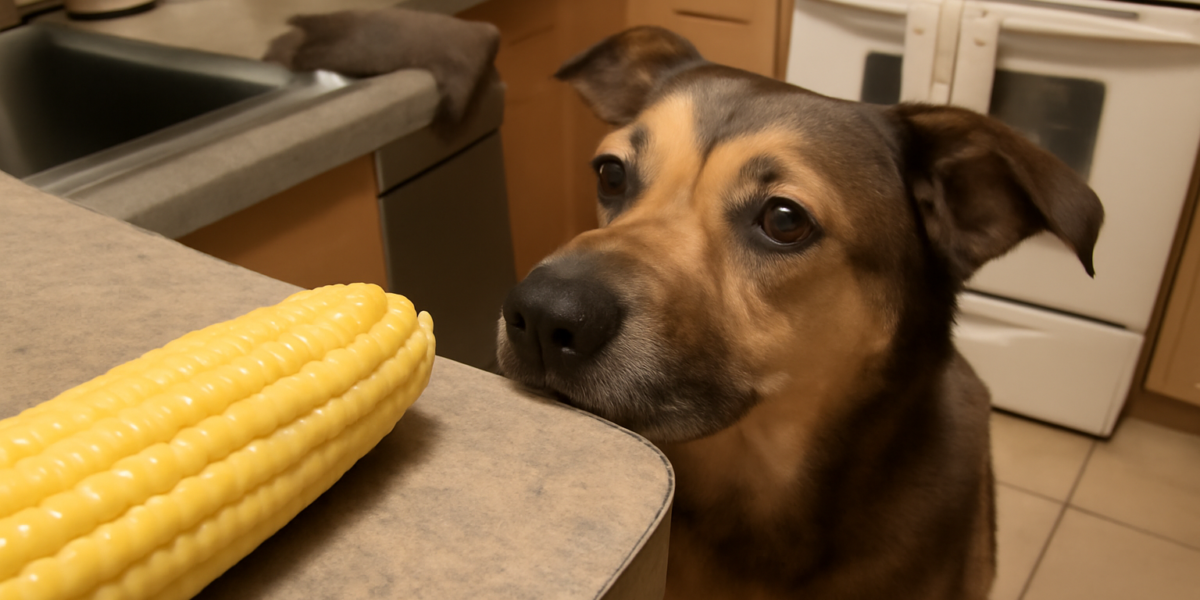
Can Dogs Eat Corn on the Cob? A Dangerous Distinction
Here is the critical distinction every dog owner needs to understand: corn kernels are safe for dogs, but the cob is extremely dangerous. Can dogs eat corn on the cob? No — the cob itself poses a serious risk of intestinal obstruction that frequently requires emergency surgery. Dogs who swallow chunks of corn cob or an entire cob may face a life-threatening blockage that can turn fatal without prompt veterinary intervention.
In this article
This is one of the most common summertime veterinary emergencies. Backyard barbecues, picnics, and outdoor meals create the perfect scenario — a discarded corn cob sitting on a plate or in an open trash can is an irresistible target for most dogs. The sweet residue on the cob makes it smell delicious, and many dogs will swallow large pieces before their owner even realizes what happened.
Understanding why the cob is so dangerous, knowing the warning signs of obstruction, and taking preventive measures can literally save your dog’s life. Let’s break this down thoroughly.
Why Corn Cobs Are So Dangerous
The corn cob is made of a dense, fibrous material that dogs cannot digest. Unlike food that breaks down in the stomach and passes through the intestines, a corn cob maintains its shape and size as it moves through the digestive tract. This is what makes it a perfect candidate for causing an obstruction.
The Obstruction Mechanism
When a dog swallows a piece of corn cob, the fibrous material absorbs moisture and can actually swell slightly in the stomach and intestines. As the cob piece moves into the narrower sections of the small intestine, it can become wedged, creating a complete or partial blockage. A complete obstruction prevents any food, fluid, or gas from passing through, creating a backup that leads to distension, pain, and potentially tissue death.
The intestinal wall around the blockage can lose blood supply, leading to necrosis (tissue death). If the intestinal wall ruptures, stomach and intestinal contents leak into the abdominal cavity, causing peritonitis — a severe, life-threatening infection. The timeline from obstruction to tissue death can be as short as 24 to 48 hours, making this a genuine emergency.
Size Does Not Matter as Much as You Think
Some owners assume that only small dogs are at risk, but dogs of all sizes can suffer from corn cob obstruction. Large dogs may swallow bigger pieces or even an entire cob, which can lodge in the stomach or at the junction between the stomach and small intestine. Medium and small dogs can obstruct on even small chunks of cob.
A dog’s ability to chew the cob into smaller pieces does not eliminate the risk. Unlike bone, which some dogs can crunch into small fragments, corn cob tends to break into medium-sized chunks that are still large enough to cause blockages. The fibrous structure resists being broken down further by stomach acid and digestive enzymes.
Symptoms of Corn Cob Obstruction
Symptoms of intestinal obstruction may appear anywhere from a few hours to several days after ingestion, depending on where the cob piece lodges and whether the obstruction is complete or partial. Knowing these signs allows you to seek veterinary care before the situation becomes critical.
Watch for these warning signs:
- Vomiting: Often the first symptom. May start as occasional retching and progress to persistent, forceful vomiting. The dog may vomit undigested food, bile, or just liquid.
- Loss of appetite: A dog with an obstruction typically refuses food, even high-value treats they would normally devour.
- Abdominal pain: Your dog may whine, pace restlessly, assume a hunched or prayer position, resist being touched around the belly, or show signs of general discomfort.
- Lethargy: Decreased energy, reluctance to play, and unusual sleepiness are common as the obstruction progresses.
- Changes in stool: Initially, your dog may strain to defecate or produce small, thin stools. A complete obstruction may result in no stool production at all.
- Bloated abdomen: The abdomen may appear swollen or feel tight and distended.
- Dehydration: Vomiting and inability to keep fluids down leads to rapid dehydration, indicated by dry gums, sunken eyes, and reduced skin elasticity.
If your dog has eaten corn on the cob and shows any combination of these symptoms, do not wait — seek veterinary care immediately. Early intervention significantly improves outcomes and may allow for less invasive treatment options.
What to Do If Your Dog Eats a Corn Cob
Time is critical when your dog ingests a corn cob. Here is a step-by-step response plan:
- Assess the situation: Try to determine how much cob your dog ate and how long ago. Did they eat a small piece or a large section? This information helps your veterinarian plan their response.
- Call your veterinarian immediately: Even if your dog seems fine initially, call your vet. They may recommend an emergency visit for X-rays or may advise monitoring based on the amount ingested and your dog’s size.
- Do not induce vomiting without veterinary guidance. Depending on the size of the cob piece and your dog’s size, vomiting could potentially cause the piece to lodge in the esophagus.
- Do not take a wait-and-see approach: Obstruction symptoms can take 24 to 72 hours to appear, and by then, tissue damage may already be occurring. Proactive veterinary assessment is always safer.
- Watch for symptoms: If your vet advises home monitoring, watch for vomiting, appetite loss, lethargy, abdominal pain, and changes in stool for at least 72 hours.
Treatment for corn cob obstruction depends on the location and completeness of the blockage. If the cob was recently ingested and is still in the stomach, endoscopic removal may be possible. If it has moved into the intestines and is causing obstruction, surgery is typically required. The surgical procedure (enterotomy or, in severe cases, intestinal resection) carries its own risks and recovery time but is lifesaving when obstruction occurs.
How to Safely Share Corn With Your Dog
While the cob is off-limits, plain corn kernels are perfectly safe for most dogs and many enjoy them. Corn is not toxic to dogs and provides some dietary fiber, vitamins, and a small amount of protein. Here is how to share corn safely.
Remove kernels from the cob: Use a knife to slice kernels off the cob before offering them to your dog. This completely eliminates the obstruction risk while letting your dog enjoy the taste of corn.
Keep it plain: Do not add butter, salt, seasonings, or toppings. Plain corn kernels are what your dog should receive. Buttered corn adds unnecessary fat, and seasonings like garlic salt are actively harmful.
Portion by dog size:
- Small dogs (under 20 pounds): One to two tablespoons of corn kernels
- Medium dogs (20 to 50 pounds): Two to four tablespoons
- Large dogs (over 50 pounds): Up to a quarter cup
Corn is relatively high in carbohydrates and should be an occasional treat, not a daily addition. Some dogs do not digest corn well and may experience gas or loose stools. Introduce corn gradually and observe your dog’s response.
Canned corn (without added salt or sugar) and frozen corn (thawed) are also safe options. Baby corn, which is consumed whole including the tiny cob, is generally safe for dogs as the miniature cob is soft and digestible — unlike a mature corn cob.
Prevention Tips for Corn Cob Safety
Preventing access to corn cobs is the most effective strategy. These practical tips are especially important during grilling season and outdoor eating events.
- Dispose of corn cobs in a trash can with a secure, dog-proof lid
- Never leave plates with corn cobs unattended where your dog can reach them
- At barbecues and picnics, designate a dog-free eating zone or keep your dog leashed away from food areas
- Alert guests and family members that corn cobs are dangerous for dogs
- When composting, ensure your compost bin is inaccessible to your dog — corn cobs decompose slowly and remain a risk for weeks
- After grilling or eating corn outdoors, do a quick sweep of the area for dropped cobs or pieces before letting your dog roam freely
If you have children, teach them early that sharing corn on the cob with the dog is not allowed, and explain why in age-appropriate terms. Kids are often the most enthusiastic food-sharers, and a brief education can prevent a scary emergency.
For more safe food options for your dog, check out our articles on broccoli stems for dogs and sweet potato skin safety. If you are thinking about adopting a dog, learning about common food hazards beforehand is one of the best ways to prepare for your new companion.
Frequently Asked Questions
Can a small piece of corn cob pass through a dog?
Some very small pieces may pass through a large dog’s digestive system without causing obstruction, but there is no way to predict this reliably. Even small pieces can lodge in narrower sections of the intestine. Never assume a piece will pass safely — always consult your veterinarian if your dog ingests any amount of corn cob.
How long after eating a corn cob will symptoms appear?
Symptoms of intestinal obstruction typically appear within 12 to 72 hours after ingestion. Vomiting may begin within a few hours, while more serious obstruction symptoms like complete appetite loss, abdominal distension, and inability to pass stool may take one to three days to develop. Monitor closely for at least 72 hours.
Is corn on the cob more dangerous than other foreign objects?
Corn cobs are particularly dangerous because of their size, density, inability to be digested, and tendency to absorb moisture and swell. Unlike some objects that may pass through or be broken down by stomach acid, corn cobs maintain their structure throughout the digestive tract. They are consistently among the most common causes of intestinal obstruction in dogs.
Can dogs eat popcorn?
Plain, air-popped popcorn without butter, salt, or seasoning is safe for dogs in small amounts. Avoid unpopped kernels, which can be a choking hazard and hard on teeth. Movie-theater-style popcorn loaded with butter and salt is not appropriate for dogs due to the excessive fat and sodium content.
My dog loves corn — is it nutritious for them?
Corn provides some dietary fiber, B vitamins, and small amounts of protein and antioxidants. It is used as an ingredient in many commercial dog foods. While not as nutritionally dense as meat-based foods for dogs, corn kernels (removed from the cob) are a safe, enjoyable occasional treat. Dogs with grain allergies or sensitivities should avoid corn entirely.


