
Last updated: April 8, 2026
In this article
Can Dogs Eat Carob? Safety Guide and Tips
If you have ever browsed the dog treat aisle, you have probably noticed carob-coated biscuits, carob chips, and carob-flavored treats marketed specifically for dogs. Carob has earned a strong reputation as the go-to chocolate alternative for our canine companions, and for very good reason. Unlike real chocolate, which contains compounds that are toxic to dogs, carob is completely safe and even offers some nutritional benefits.
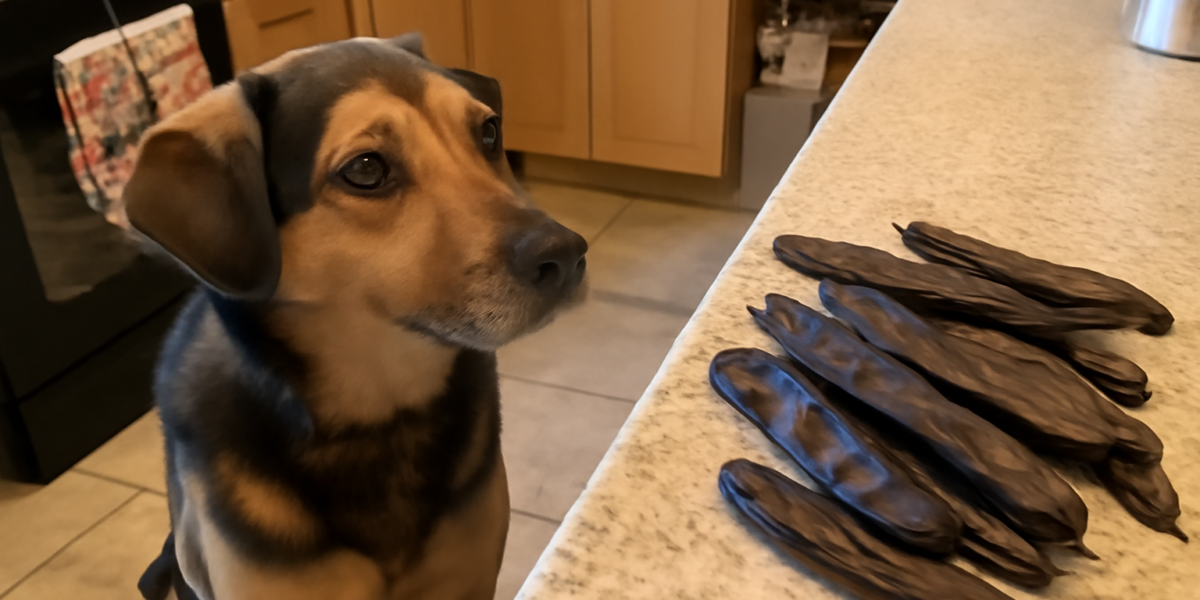
Carob comes from the pods of the carob tree (Ceratonia siliqua), native to the Mediterranean region. The pods are dried, roasted, and ground into a powder that looks remarkably similar to cocoa powder and has a naturally sweet, mild flavor reminiscent of chocolate. This similarity in appearance and taste, combined with its safety for dogs, has made carob the gold standard for dog-safe chocolate-style treats.
Quick Answer: Can Dogs Eat Carob?
Yes, carob is safe for dogs and is one of the best chocolate substitutes available for pets. Carob contains no theobromine and no caffeine — the two compounds that make chocolate dangerous for dogs. It is naturally sweet, which means it does not require as much added sugar, and it provides fiber, vitamins, and minerals that offer genuine nutritional value.
Carob is so well-regarded for canine safety that it is used extensively in commercial dog treat manufacturing. Carob chips, carob coatings, and carob powder are all commonly found in premium dog treats and bakery items. This widespread use in the pet food industry is a strong indicator of its safety profile.
The primary caution with carob is moderation. While carob itself is safe, it does contain natural sugars and calories. Overfeeding carob treats can contribute to weight gain and digestive upset, just as overfeeding any treat can. Additionally, some carob products marketed for humans may contain added sugar, dairy, or other ingredients that are not ideal for dogs. Choosing plain carob powder or dog-specific carob products is the safest approach.
Nutritional Profile of Carob
Carob offers a surprisingly robust nutritional profile, particularly compared to the empty calories found in many treat ingredients. Here is the approximate breakdown for two tablespoons (about 15 grams) of carob powder.
- Calories: Approximately 25 to 35 calories per two tablespoons
- Fiber: About 4 grams — impressively high for such a small serving
- Sugar: Approximately 3 to 5 grams of natural sugars
- Protein: Roughly 1 gram
- Fat: Less than 0.5 grams — very low in fat
- Calcium: Good amounts, significantly more than cocoa powder
- Iron: Moderate amounts supporting red blood cell health
- Potassium: Moderate amounts supporting heart and muscle function
- Magnesium: Small amounts supporting enzyme function
- Manganese: Trace amounts
- Vitamin A: Small amounts
- B Vitamins: Including riboflavin and niacin
- Theobromine: None — this is the key safety advantage over chocolate
- Caffeine: None
The high fiber content is particularly notable. Carob provides substantially more fiber than cocoa powder, which can support healthy digestion in dogs. The calcium content is also impressive and exceeds that of cocoa, making carob not just a safer alternative but arguably a more nutritious one for dogs.
Benefits and Risks of Carob for Dogs
Benefits
- Zero Theobromine and Caffeine: The most significant benefit of carob is what it does not contain. Unlike chocolate, carob has no theobromine or caffeine, making it completely safe for dogs in this regard. This is why it has become the standard chocolate substitute in the pet industry.
- High Fiber Content: Carob is rich in dietary fiber, which supports healthy digestion, promotes regular bowel movements, and can help manage both diarrhea and constipation. The fiber also promotes a feeling of fullness.
- Naturally Sweet: Carob has a natural sweetness that requires less added sugar in treats and products. This means carob-based dog treats can be flavorful without being sugar-laden.
- Rich in Calcium: The calcium content in carob supports strong bones and teeth. This is particularly beneficial for growing puppies and senior dogs.
- Low in Fat: With less than 0.5 grams of fat per serving, carob is much leaner than chocolate, reducing the risk of pancreatitis and weight gain.
- Tannin Content: Carob contains tannins that may have mild antimicrobial and anti-diarrheal properties, potentially supporting gastrointestinal health.
Risks
- Sugar Content: While lower in sugar than many treats, carob does contain natural sugars that can contribute to weight gain and dental issues if overconsumed. Moderation is still important.
- Caloric Addition: Carob treats add calories to your dog’s daily intake. As with any treat, they should not exceed 10 percent of total daily calories.
- Human Carob Products: Carob chips and bars marketed for human consumption often contain added sugar, dairy, oils, and other ingredients that are not ideal for dogs. Always choose plain carob powder or dog-specific carob products.
- Digestive Upset from Excess: While the fiber in carob supports digestion in normal amounts, excessive consumption can cause gas, bloating, diarrhea, or stomach discomfort.
- Confusion with Chocolate: Because carob products look similar to chocolate, there is a risk of confusion. Always store carob and chocolate products separately and label them clearly to prevent accidentally giving your dog real chocolate.
- Allergic Reactions: Though very rare, some dogs may be sensitive to carob. As with any new food, introduce it gradually and watch for any adverse reactions.
How to Serve Carob Safely to Your Dog
Carob can be served to your dog in several forms, and its versatility makes it a fun ingredient for homemade dog treats. Here are the best ways to incorporate carob into your dog’s treat rotation.
Carob powder is the most versatile form. You can mix a small amount into your dog’s food as a flavor enhancer, use it in homemade dog treat recipes, or create a simple carob drizzle by mixing the powder with a small amount of warm water or coconut oil. Dog-specific carob chips can be used as training treats or mixed into homemade treat recipes.
For a simple carob treat, melt dog-safe carob chips and drizzle over plain dog biscuits, freeze the coated treats, and serve once firm. You can also make carob “pudding” by mixing carob powder with plain yogurt or mashed banana for a creamy, dog-safe dessert.
Portion guidelines by dog size:
- Small dogs (under 20 lbs): Up to one teaspoon of carob powder or a few carob chips as a treat, two to three times per week
- Medium dogs (20-50 lbs): Up to one tablespoon of carob powder or a small handful of carob chips, two to three times per week
- Large dogs (over 50 lbs): Up to two tablespoons of carob powder or a moderate handful of carob chips, two to three times per week
Always choose unsweetened carob powder and carob products formulated for dogs rather than human carob confections, which may contain added sugars and dairy.
Signs of Problems After Eating Carob
Carob is one of the safest treat ingredients for dogs, and problems are uncommon when served in appropriate amounts. However, as with any food, overconsumption or individual sensitivity can cause issues.
The most common problem from eating too much carob is digestive upset. Symptoms include loose stools, diarrhea, gas, bloating, and decreased appetite. The high fiber content that is beneficial in small amounts can become problematic in excess, drawing water into the intestines and causing loose stools. These symptoms typically resolve within 24 hours once the carob passes through the system.
If your dog consumed human carob products containing dairy, watch for signs of lactose intolerance including gas, bloating, diarrhea, and stomach gurgling. Products with added sugar can cause the typical sugar overload symptoms of hyperactivity, followed by lethargy and potential digestive upset.
Allergic reactions to carob are very rare but possible. Symptoms would include itching, hives, facial swelling, vomiting, or difficulty breathing. Discontinue carob and consult your veterinarian if you observe any allergic symptoms.
One important safety note: if you are using carob treats alongside chocolate products in your household, always double-check that you are giving your dog the carob and not the chocolate. The similar appearance of carob and chocolate products can lead to dangerous mix-ups.
Healthy Alternatives to Carob
While carob is already one of the healthier treat options for dogs, having a variety of choices keeps things interesting and provides a range of nutritional benefits.
- Peanut butter: Xylitol-free peanut butter is a classic dog treat ingredient that provides protein, healthy fats, and a flavor that most dogs adore. Use it in moderation due to its caloric density.
- Banana: Naturally sweet and rich in potassium, banana can be mashed and frozen or used in homemade treat recipes as a natural sweetener.
- Pumpkin puree: Low in calories and high in fiber, plain pumpkin is excellent in dog treats and provides beta-carotene and digestive support.
- Blueberries: Antioxidant-rich and naturally sweet, blueberries can be used fresh, frozen, or incorporated into homemade treats.
- Sweet potato: Naturally sweet when cooked, sweet potato provides fiber, vitamins, and a satisfying texture. Dehydrated sweet potato slices make excellent chewy treats.
- Unsweetened applesauce: A versatile ingredient for homemade dog treats that adds moisture, natural sweetness, and a pleasant flavor that most dogs enjoy.
Want to spoil a deserving dog with homemade carob treats? Visit our adoption page to find a four-legged friend who would love to be your taste tester.
Frequently Asked Questions
Is carob really safe for dogs unlike chocolate?
Yes, carob is genuinely safe for dogs. The reason chocolate is dangerous for dogs is that it contains theobromine and caffeine, both of which dogs metabolize very slowly, leading to toxic buildup. Carob contains neither of these compounds. It comes from an entirely different plant — the carob tree — and only resembles chocolate in appearance and somewhat in flavor. It is a completely different food from a safety perspective.
Can I use carob chips as training treats?
Yes, carob chips make excellent occasional training treats. They are small, easy to handle, and most dogs find them very appealing. However, they should not be your everyday training treat due to their sugar and calorie content. Use them for special training sessions or as high-value rewards, and use lower-calorie treats for everyday training.
Can puppies eat carob?
Yes, carob is safe for puppies that are fully weaned and eating solid food. Start with very small amounts — a tiny pinch of carob powder mixed into food or a single small carob chip. The high fiber content may cause loose stools in puppies if too much is given, so introduce it gradually. Puppies enjoy the sweet flavor and it can be a useful training motivator.
Is carob powder the same as carob chips?
Carob powder is the pure ground form of roasted carob pods and is the most natural form of carob. Carob chips are made from carob powder combined with other ingredients such as palm kernel oil, soy lecithin, and sometimes sugar to create a chip that melts like chocolate. For dogs, unsweetened carob powder is the cleanest option, though dog-specific carob chips are also formulated to be safe.
Can dogs with diabetes eat carob?
Dogs with diabetes should have carob only under veterinary guidance. While carob has a lower glycemic index than chocolate and many other sweets, it still contains natural sugars that affect blood glucose levels. The fiber content may help moderate blood sugar spikes, but diabetic dogs need carefully controlled diets, and any treats should be approved by their veterinarian.
Where can I buy carob products for dogs?
Dog-specific carob products are available at most pet stores, pet bakeries, and online pet retailers. You can find carob-coated biscuits, carob chips formulated for dogs, and plain carob powder in health food stores. When buying carob powder from a regular store, choose unsweetened varieties with no added ingredients. When buying carob chips, opt for those specifically labeled for dogs to avoid added sugars and dairy.
Carob is one of the best news stories in canine nutrition — a treat ingredient that looks and tastes like chocolate but is completely safe for dogs. Its natural sweetness, high fiber content, impressive mineral profile, and zero theobromine make it an ideal choice for homemade dog treats and a trusted ingredient in commercial dog products. If you would love to bake carob treats for a grateful canine companion, check out the wonderful dogs available on our adoption page.


