
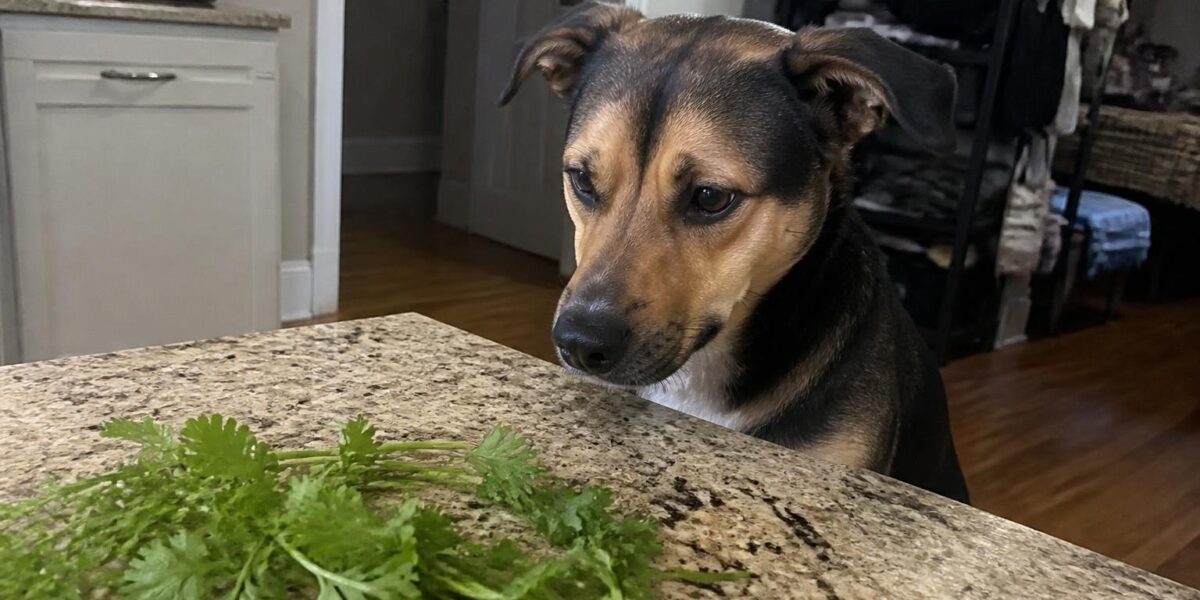
Can Dogs Eat Cilantro? The Short Answer
Yes, dogs can eat cilantro, and it is safe in small amounts. Cilantro is non-toxic to dogs and even offers a few gentle health perks, from vitamins to fresher breath. A sprinkle of this fresh herb over your dog’s food is a harmless, healthy addition for most dogs.
In this article
- Can Dogs Eat Cilantro? The Short Answer
- The Health Benefits of Cilantro for Dogs
- How to Serve Cilantro to Your Dog
- Safe Serving Size
- Creative Ways to Add Cilantro to Your Dog’s Diet
- Cilantro Myths and Facts
- When Cilantro Might Cause Problems
- Growing Dog-Safe Herbs at Home
- When to Talk to Your Veterinarian
- Frequently Asked Questions
As with any herb, the key word is moderation. Cilantro is meant to be a garnish, not a meal. A small amount adds flavor and nutrients without overwhelming your dog’s digestive system.
If your dog has a sensitive stomach or a history of food reactions, introduce cilantro slowly and check with your veterinarian if you have any concerns.
The Health Benefits of Cilantro for Dogs
Cilantro (also known as coriander leaf) is more than just a flavorful herb. In small amounts, it can offer your dog some real benefits:
- Vitamins A, C, and K — support vision, immune health, and healthy blood clotting.
- Antioxidants — help combat inflammation and support overall cell health.
- Digestive support — cilantro has traditionally been used to soothe upset stomachs and ease gas.
- Fresher breath — the herb can help neutralize odors, giving your dog’s breath a cleaner smell.
If you like adding herbs to your dog’s bowl, cilantro fits right in with other dog-safe greens like parsley, basil, and mint. All are safe in small, garnish-sized amounts.
How to Serve Cilantro to Your Dog
Cilantro is easy to add to your dog’s diet. Here is how to do it safely:
- Wash it thoroughly to remove dirt, pesticides, or residue.
- Chop it finely so it mixes easily into food and is simple to digest.
- Sprinkle a small amount over your dog’s regular meal.
- Serve it fresh and plain — never as part of a seasoned dish with onion, garlic, lime juice, or salt.
Avoid feeding cilantro that has been part of human dishes like salsa or guacamole. Those often contain onions, garlic, and other ingredients that are toxic or harmful to dogs.
Safe Serving Size
Cilantro should be a tiny accent, not a portion. As a guide:
- Small dogs — a pinch of finely chopped cilantro.
- Medium dogs — up to half a teaspoon.
- Large dogs — up to a teaspoon.
Start with a very small amount the first time, and watch how your dog responds over the next day. If all goes well, you can offer cilantro occasionally as a flavorful, nutrient-rich garnish.
Because cilantro is so low in calories, it will not throw off your dog’s diet the way a rich treat might, but the same moderation principle still applies. A garnish is meant to add a little flavor and a small nutrient boost, not to replace any part of a balanced meal. If your dog simply does not care for the taste of cilantro, there is no need to push it, since plenty of other dog-safe herbs and vegetables offer similar benefits. The goal is variety and enjoyment, not forcing any single food.
Creative Ways to Add Cilantro to Your Dog’s Diet
Once you know cilantro is safe in small amounts, there are several easy, dog-friendly ways to work it in. The goal is always a light garnish, never a heaping serving.
- Sprinkle it over meals — a pinch of finely chopped cilantro stirred into your dog’s regular food adds flavor and a small nutrient boost.
- Mix it into homemade treats — blend a little into dog-safe biscuit or pupsicle recipes.
- Freeze it into ice cubes — chopped cilantro frozen in water makes a refreshing summer treat.
- Pair it with other safe foods — a little cilantro alongside carrots or green beans makes a fresh, low-calorie snack.
The trick is to keep cilantro as a small accent. Dogs do not need much to get the benefit, and a little goes a long way both in flavor and in nutrition.
Cilantro Myths and Facts
Cilantro sometimes gets a bad reputation because it is an herb, and many herbs and seasonings are unsafe for dogs. It helps to separate fact from fiction.
One common myth is that all herbs are dangerous for dogs. In truth, while some — like onion and garlic relatives — are toxic, plenty of leafy culinary herbs such as cilantro are perfectly safe in small amounts. Another myth is that cilantro detoxifies heavy metals in dogs; there is no solid evidence for this, so do not rely on cilantro for any medical purpose.
The realistic takeaway is that cilantro is a safe, mildly beneficial garnish, not a cure-all. Use it for a little flavor and a small vitamin boost, and lean on your veterinarian for any genuine health concerns.
When Cilantro Might Cause Problems
Cilantro is safe, but too much of any new food can upset a dog’s stomach. Overfeeding cilantro may lead to:
- Vomiting
- Diarrhea
- Excess gas
These symptoms are usually mild and temporary. Some dogs simply do not like the taste of cilantro, and that is fine too — there is no need to force it.
If your dog shows signs of an allergic reaction such as itching, swelling, or persistent digestive upset, stop offering cilantro and contact your veterinarian. While herb allergies are uncommon in dogs, every dog is different.
Growing Dog-Safe Herbs at Home
If your dog enjoys a sprinkle of cilantro, you might consider growing your own. A small herb garden gives you a fresh, pesticide-free supply and lets you control exactly what your dog eats.
Cilantro grows easily in pots or garden beds and does well on a sunny windowsill. Because you are growing it yourself, you can skip chemical sprays and simply rinse the leaves before snipping a little for your dog’s bowl. Harvest the outer leaves regularly to keep the plant producing.
Cilantro pairs nicely with other dog-safe herbs in a home garden, so you can rotate what you offer for variety. Just remember that even home-grown herbs are garnishes, not meals — a small pinch is all your dog needs. Keep curious dogs from grazing on entire plants, since a large amount of any herb can upset the stomach.
When to Talk to Your Veterinarian
Cilantro is safe enough that you rarely need professional input just to share a pinch. Still, there are moments when a quick word with your veterinarian is wise.
Check in with your vet if your dog has a sensitive stomach, a history of food allergies, or a chronic health condition that affects diet. It is also worth asking before adding any new food if your dog is on a special prescription diet, since even small additions can matter for some conditions.
And if your dog ever shows a worrying reaction after eating cilantro — persistent vomiting, diarrhea, swelling, or signs of an allergic response — stop offering it and contact your vet. These reactions are uncommon with a mild herb like cilantro, but every dog is an individual, and your veterinarian knows your dog’s history best.
Frequently Asked Questions
Is cilantro toxic to dogs?
No, cilantro is non-toxic and safe for dogs in small amounts. It only causes problems if your dog eats a very large quantity.
Can cilantro freshen my dog’s breath?
Yes, cilantro can help neutralize odors and may give your dog’s breath a fresher smell. It is not a substitute for dental care, though.
Can dogs eat cilantro stems?
Yes, both the leaves and tender stems are safe. Just chop them finely so they are easy to chew and digest.
Can dogs eat coriander seeds?
Coriander seeds (the spice form) are generally safe in tiny amounts, but stick to fresh cilantro leaves and ask your vet before offering the seeds. The leaves are easier to digest and the more common way to share this herb with your dog.
How much cilantro can a dog eat?
Cilantro should be a garnish, not a portion. A pinch for small dogs and up to a teaspoon for large dogs is plenty. Too much of any herb can cause mild digestive upset, so keep it small and occasional rather than a daily heaping serving.
Can dogs eat cilantro from restaurant dishes?
It is best not to. Restaurant dishes like salsa, guacamole, and curries often contain onions, garlic, salt, lime, and spices that are harmful or toxic to dogs. Only offer plain, washed cilantro you have prepared yourself.
Is cilantro good for a dog’s breath?
Cilantro can help neutralize odors and may freshen your dog’s breath a little, thanks to its natural compounds. It is a nice bonus, but it is no replacement for regular tooth brushing and dental care, which remain the best way to keep your dog’s mouth healthy.


