
Last updated: June 13, 2026
In this article
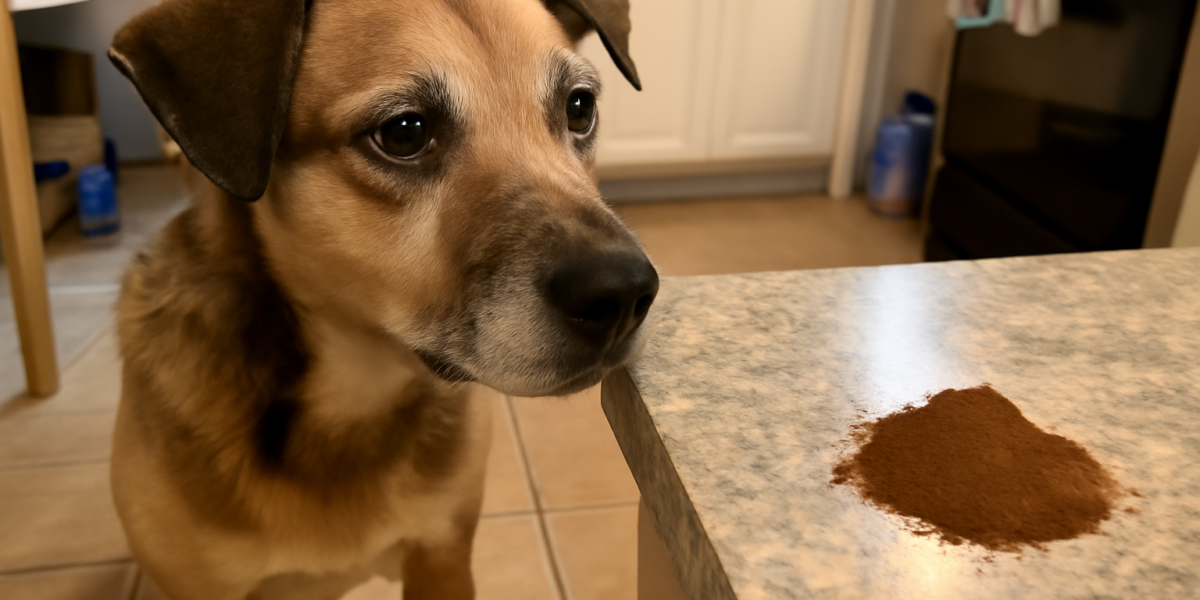
You are baking oatmeal cookies, a dusting of cinnamon on the counter, and your dog is nearby with an interested nose. The question arrives quickly: can dogs eat cinnamon? Unlike some kitchen staples that are outright toxic to dogs, cinnamon does not belong in the same category as grapes or chocolate. But “not immediately toxic” is not the same as “safe to share freely.” The type of cinnamon, the form it takes, and the amount involved all change the picture significantly. Here is a thorough look at what you actually need to know.
Quick Answer: Small amounts of cinnamon are not toxic to dogs, but the spice is not recommended in large quantities. Trace amounts found in a baked treat are unlikely to cause harm, but regular feeding, large doses, or any exposure to cinnamon essential oil can cause real problems. It is best treated as an occasional, incidental ingredient rather than a deliberate supplement.
Is Cinnamon Safe for Dogs?
The American Society for the Prevention of Cruelty to Animals (ASPCA) does not list cinnamon as a toxic substance for dogs, and the Pet Poison Helpline classifies it as only mildly toxic at typical exposure levels. That classification means a dog who sniffs a cinnamon stick or eats a small piece of cinnamon toast is not facing an emergency. For most healthy adult dogs, incidental contact with cinnamon is not going to result in a veterinary crisis.
However, “not acutely toxic” leaves considerable room for harm. Cinnamon contains compounds that irritate the mucous membranes of the mouth, throat, and digestive tract, particularly at higher concentrations. It also raises a specific concern depending on which type of cinnamon your household uses. Whether can dogs eat cinnamon is truly a safe question to answer with a casual yes depends entirely on dose, form, and frequency. For additional guidance on foods that are and are not appropriate for your dog, explore our dog care blog.
Risks of Cinnamon for Dogs
There are three distinct risk categories every dog owner should understand before deciding how to handle cinnamon in a household with pets.
Oral and digestive irritation. Cinnamon contains cinnamaldehyde, the compound responsible for its sharp, warming flavor. In dogs, cinnamaldehyde can irritate the lining of the mouth, tongue, and esophagus, leading to drooling, coughing, gagging, or pawing at the face. Higher doses can cause vomiting and diarrhea. Small dogs are more vulnerable to these effects than large breeds simply because the same quantity represents a larger dose relative to body weight.
Coumarin in cassia cinnamon. Most cinnamon sold in North American grocery stores is cassia cinnamon, which contains significantly higher levels of coumarin — a naturally occurring compound that can cause liver damage with repeated or high-dose exposure. Ceylon cinnamon, sometimes called “true cinnamon,” contains far less coumarin. If a dog is regularly exposed to cinnamon as an ingredient, the type matters.
Powder inhalation. Loose ground cinnamon is a real inhalation hazard for curious dogs. A dog investigating an open spice jar or a spilled container of cinnamon can inhale the fine powder, causing coughing, choking, and bronchospasm. In severe cases, inhalation can trigger breathing difficulties that require veterinary attention. Keep cinnamon containers out of reach.
Cinnamon Sticks vs Ground Cinnamon vs Oil
The form of cinnamon matters as much as the amount when assessing risk for dogs.
Cinnamon sticks are the least immediately dangerous form. A dog who chews on one is unlikely to consume enough active compounds to cause significant harm, though the stick can splinter and pose a choking or obstruction risk for small dogs. Ground cinnamon is more concentrated per volume and carries the inhalation risk described above. Even a small amount deposited on food delivers a higher dose of cinnamaldehyde than a brief interaction with a whole stick. Cinnamon essential oil is in an entirely different category and should be treated as a genuine toxin. Essential oils are highly concentrated — cinnamon oil is roughly 50 to 100 times more potent than the ground spice — and can cause severe oral burns, vomiting, dangerously low blood sugar, and liver toxicity even in small quantities. Keep cinnamon oil completely away from dogs, whether in diffusers, topical products, or cooking preparations.
What If My Dog Ate Cinnamon?
The appropriate response depends on what form was consumed and approximately how much.
If your dog ate a small amount of ground cinnamon from a baked good or licked a light dusting from a counter, monitor the dog for the next few hours. Mild drooling, a brief coughing fit, or temporary digestive upset are the most likely outcomes and typically resolve on their own. Offer fresh water freely and watch for any worsening of symptoms.
If your dog consumed a significant quantity of ground cinnamon — more than a teaspoon for a small dog, or more than a tablespoon for a large dog — contact your veterinarian or an animal poison control line. Symptoms to watch for include persistent vomiting, diarrhea, mouth ulcers or visible redness inside the mouth, lethargy, or changes in breathing. These signs suggest a more serious level of irritation or systemic reaction.
If your dog had any contact with cinnamon essential oil — whether by ingesting it, having it applied to the skin, or being exposed through a diffuser in an enclosed space — treat this as an urgent situation and call your veterinarian immediately. The ASPCA Animal Poison Control Center can be reached at 888-426-4435. When you call, have on hand the product name, the approximate amount, and your dog’s weight and age. Do not wait for symptoms to develop before seeking guidance when essential oil exposure is involved.
Can Cinnamon Benefit Dogs?
The internet contains a fair amount of enthusiasm about cinnamon as a natural supplement for dogs, and some of those claims have at least a partial basis in research — though the evidence is thinner than advocates often suggest.
Cinnamon does have documented anti-inflammatory and antioxidant properties in laboratory studies. Some research in humans and rodents suggests it may help regulate blood sugar and improve insulin sensitivity. A few small studies have explored similar effects in dogs. These findings have led some integrative veterinary practitioners to recommend trace amounts of Ceylon cinnamon for dogs with inflammatory conditions or early metabolic concerns.
The honest assessment is that the research is preliminary. No established veterinary organization currently recommends cinnamon supplementation as a treatment for any canine condition, and the dose required to produce measurable benefits may overlap uncomfortably with the dose that causes irritation. If you are curious about whether cinnamon might benefit your individual dog, that conversation belongs with your veterinarian rather than a spice rack. Self-supplementing a dog with cinnamon based on online recommendations is not something current evidence supports.
Frequently Asked Questions
Can dogs eat cinnamon rolls or cinnamon-flavored pastries?
Not advisably, and not because of the cinnamon alone. Cinnamon rolls and similar baked goods are high in sugar, fat, and refined carbohydrates that are genuinely harmful to dogs in regular or large quantities. Many commercial cinnamon pastries also contain nutmeg — which is toxic to dogs — as well as raisins, which are severely toxic. Even in products that do not contain those additional ingredients, the fat and sugar load makes cinnamon rolls a food to keep away from dogs entirely. The cinnamon itself may be the least of the concerns.
Is Ceylon cinnamon safer for dogs than cassia cinnamon?
Yes, Ceylon cinnamon is the safer option if cinnamon is going to be present in a dog’s environment or diet. It contains substantially less coumarin than cassia, reducing the liver-related risk associated with repeated exposure. Ceylon cinnamon is typically labeled as “true cinnamon” or “Sri Lankan cinnamon” and is available in specialty grocery stores and online. Standard grocery-store cinnamon in North America is almost always cassia. If you are baking treats specifically for your dog, choosing Ceylon cinnamon over cassia is a reasonable precaution.
How much cinnamon is too much for a dog?
There is no single established toxic threshold because it varies by dog size, cinnamon type, and the form consumed. As a general reference point, veterinary sources suggest that more than one teaspoon of ground cinnamon per 10 pounds of body weight can begin to cause noticeable irritation and digestive distress. For a 10-pound dog, that means even moderate amounts matter. In practice, the safest approach is to treat cinnamon as a trace ingredient at most — something that might be present in a small piece of a dog-safe baked good — rather than a deliberate addition to your dog’s food.
Can dogs eat cinnamon-flavored dog treats?
Many commercially produced dog treats include cinnamon as a flavoring ingredient at levels specifically formulated to be safe for dogs. These products are generally fine, assuming you follow the serving size on the packaging and the treat does not contain any other problematic ingredients. The distinction between a purpose-formulated dog treat and a human food that happens to contain cinnamon matters here. Dog treats are designed with canine tolerances in mind; human cinnamon products are not. When in doubt, check the ingredient list and consult your veterinarian if the product contains unfamiliar additives.
For the full picture, see our complete guide to the human foods dogs can eat safely.


