
Last updated: May 4, 2026
In this article
Can Dogs Eat Acai? Safety Guide and Tips
Acai berries have surged in popularity as a superfood for humans, celebrated for their high antioxidant content, healthy fats, and rich nutritional profile. Whether blended into smoothie bowls, mixed into supplements, or eaten as frozen puree, acai has become a health food staple. But can your dog safely enjoy this trendy berry alongside you?
Despite acai’s impressive health credentials for humans, this is one superfood that does not translate well to canine nutrition. Acai berries contain theobromine, the same toxic compound found in chocolate that makes it dangerous for dogs. While the concentration is lower than in dark chocolate, the presence of this compound means acai is best kept away from your four-legged friend. This guide explains the risks in detail and offers safer alternatives.
Quick Answer: Can Dogs Eat Acai?
No, acai is not recommended for dogs. The primary concern is that acai berries contain theobromine, a methylxanthine compound that dogs metabolize much more slowly than humans. While a single acai berry is unlikely to cause a medical emergency in a large dog, the risk increases with quantity, and there is no good reason to expose your dog to a known toxin when safer berry options are readily available.
Beyond theobromine, most commercial acai products, including acai bowls, smoothies, juices, and supplements, contain added sugars, sweeteners, and other ingredients that are not suitable for dogs. Some acai products may also contain xylitol, an artificial sweetener that is extremely toxic to dogs even in tiny amounts.
If your dog has accidentally consumed a small amount of plain acai, monitor them for symptoms such as restlessness, vomiting, diarrhea, or rapid breathing. Contact your veterinarian if you are unsure about the amount consumed or if any symptoms develop.
Nutritional Profile of Acai
Acai berries are undeniably nutrient-dense for humans. A 100-gram serving of acai puree contains approximately:
- Calories: 70 kcal
- Total fat: 5 grams (primarily healthy monounsaturated and polyunsaturated fats)
- Carbohydrates: 4 grams
- Fiber: 2 grams
- Protein: 1 gram
- Vitamin A: 750 IU
- Calcium: 35 mg
- Iron: 0.6 mg
- Anthocyanins (antioxidants): Very high concentration
- Theobromine: Present in measurable amounts
The antioxidant content of acai is genuinely remarkable. Anthocyanins, the pigments that give acai its deep purple color, are powerful antioxidants that fight oxidative stress and inflammation in humans. Acai also contains healthy omega fatty acids, including omega-3, omega-6, and omega-9, which support cardiovascular health.
However, none of these nutritional benefits justify the risk of theobromine exposure for dogs. The same antioxidants, healthy fats, and fiber can be obtained from dog-safe fruits and berries that do not carry the theobromine concern. Nutritional value must always be weighed against safety, and in this case, the safety concerns outweigh the benefits.
Benefits and Risks of Feeding Acai to Dogs
Theoretical Benefits
While acai does contain nutrients that could theoretically benefit dogs, the risks make pursuing these benefits through acai inadvisable. For the sake of completeness, the potential nutritional positives include:
- Antioxidants: Could support cellular health and reduce inflammation, which may benefit aging dogs or those with chronic conditions.
- Fiber: Supports digestive regularity and gut health.
- Healthy fats: Could contribute to skin and coat health.
All of these benefits can be achieved through safer foods that do not contain theobromine.
Significant Risks
- Theobromine toxicity: This is the primary and most serious risk. Theobromine affects a dog’s central nervous system, cardiovascular system, and kidneys. Dogs lack the enzyme efficiency to metabolize theobromine quickly, meaning it accumulates in their system. Symptoms of theobromine poisoning include restlessness, hyperactivity, vomiting, diarrhea, rapid breathing, elevated heart rate, muscle tremors, seizures, and in severe cases, cardiac arrest. The toxic dose of theobromine in dogs is approximately 20 mg per kilogram of body weight for mild symptoms and 40 to 50 mg per kilogram for severe symptoms.
- Added sugars in commercial products: Acai bowls, juices, and smoothies typically contain significant amounts of added sugar, which contributes to obesity, dental problems, and diabetes in dogs.
- Xylitol in sugar-free products: Some acai products marketed as sugar-free or low-calorie use xylitol as a sweetener. Xylitol is one of the most dangerous substances a dog can ingest, causing rapid insulin release, hypoglycemia, liver failure, and potentially death within hours.
- Granola and other bowl ingredients: Acai bowls are commonly topped with granola, chocolate chips, coconut flakes, honey, and other ingredients that add calories, sugar, and potential toxins.
- Digestive upset: The high fat content and fiber in acai, combined with a dog’s unfamiliarity with the fruit, can cause stomach upset, vomiting, and diarrhea even without theobromine-related toxicity.
- Seeds and pit fragments: Whole acai berries have large seeds that pose a choking hazard and can cause intestinal obstruction in dogs.
How to Serve Acai Safely to Your Dog
The safest approach is simply not to feed acai to your dog. There is no preparation method that removes theobromine from acai, and no amount of acai is considered reliably safe for canine consumption by veterinary consensus.
If your dog has accidentally consumed acai, here is what to do:
- Determine what and how much was consumed: A single acai berry is less concerning than a full acai bowl with chocolate and granola toppings. Try to estimate the quantity as accurately as possible.
- Check for additional toxic ingredients: If the product was an acai bowl or smoothie, identify whether it contained chocolate, xylitol, macadamia nuts, or grapes, as these dramatically increase the risk.
- Contact your veterinarian: Call your vet or the ASPCA Animal Poison Control Center (888-426-4435) to report what your dog ate and get specific guidance based on your dog’s size and the amount consumed.
- Monitor closely: Watch for vomiting, diarrhea, restlessness, rapid breathing, increased heart rate, or muscle tremors for at least 12 to 24 hours after ingestion.
- Provide fresh water: Keep clean water available to help your dog stay hydrated and assist their body in processing the theobromine.
Do not attempt to induce vomiting unless specifically directed to do so by a veterinarian. Improper vomiting induction can cause additional complications including aspiration pneumonia.
Signs of Problems After Eating Acai
Theobromine poisoning symptoms in dogs can appear within two to four hours of ingestion and may last up to 72 hours due to the slow metabolization rate. Watch for the following symptoms in order of typical progression:
- Early signs (2-4 hours): Restlessness, hyperactivity, excessive panting, increased thirst and urination, mild vomiting or diarrhea.
- Moderate signs (4-12 hours): Rapid heart rate (tachycardia), elevated blood pressure, abdominal discomfort, more severe vomiting and diarrhea.
- Severe signs (12+ hours or with large doses): Muscle rigidity, tremors, seizures, irregular heart rhythm (cardiac arrhythmia), difficulty breathing, collapse.
The severity of symptoms depends on the amount of acai consumed relative to your dog’s body weight. Small dogs are at much greater risk than large dogs because a smaller amount of theobromine can reach toxic levels more quickly. Brachycephalic breeds, those with flat faces like Bulldogs and Pugs, may also be more vulnerable due to their compromised respiratory systems.
Any dog showing neurological symptoms such as tremors, seizures, or disorientation after consuming acai needs immediate emergency veterinary care. Treatment may include induced vomiting (if within the first one to two hours), activated charcoal to reduce absorption, IV fluids, anti-seizure medication, and cardiac monitoring.
Healthy Alternatives to Acai
The good news is that there are many dog-safe berries and fruits that provide antioxidants and other health benefits without the theobromine risk:
- Blueberries: Often called a superfood for dogs, blueberries are packed with antioxidants, vitamin C, vitamin K, and fiber. They are low in calories and small enough to serve as training treats. Most dogs enjoy them fresh or frozen.
- Strawberries: Rich in vitamin C, manganese, and antioxidants, strawberries are a sweet, safe treat for dogs. Remove the stems and cut large berries into smaller pieces for small dogs.
- Raspberries: These berries contain anti-inflammatory properties and are lower in sugar than many other fruits. Feed in moderation, as they contain trace amounts of xylitol naturally, though not enough to be harmful in normal serving sizes.
- Cranberries: Safe for dogs and sometimes recommended for urinary tract health. Many dogs find them too tart to eat plain, but they can be mixed into food.
- Watermelon (seedless): A hydrating, low-calorie treat that is rich in vitamins A, B6, and C. Remove all seeds and rind before serving.
These fruits provide the antioxidant and nutritional benefits that make acai appealing for humans, but in forms that are genuinely safe for dogs. For more ideas on safe foods for your dog, check out our guide on whether dogs can eat toasted bread for another common household food.
Frequently Asked Questions
How much theobromine is in acai compared to chocolate?
Acai contains significantly less theobromine than chocolate. Dark chocolate contains approximately 130 to 450 mg of theobromine per ounce, while milk chocolate contains about 44 to 58 mg per ounce. Acai berries contain theobromine in lower concentrations, but the exact amount varies by source and preparation. The key difference is that even lower concentrations of theobromine pose a risk to dogs because they metabolize it so slowly. The half-life of theobromine in dogs is approximately 17.5 hours, compared to 6 to 10 hours in humans.
Can dogs eat acai bowls?
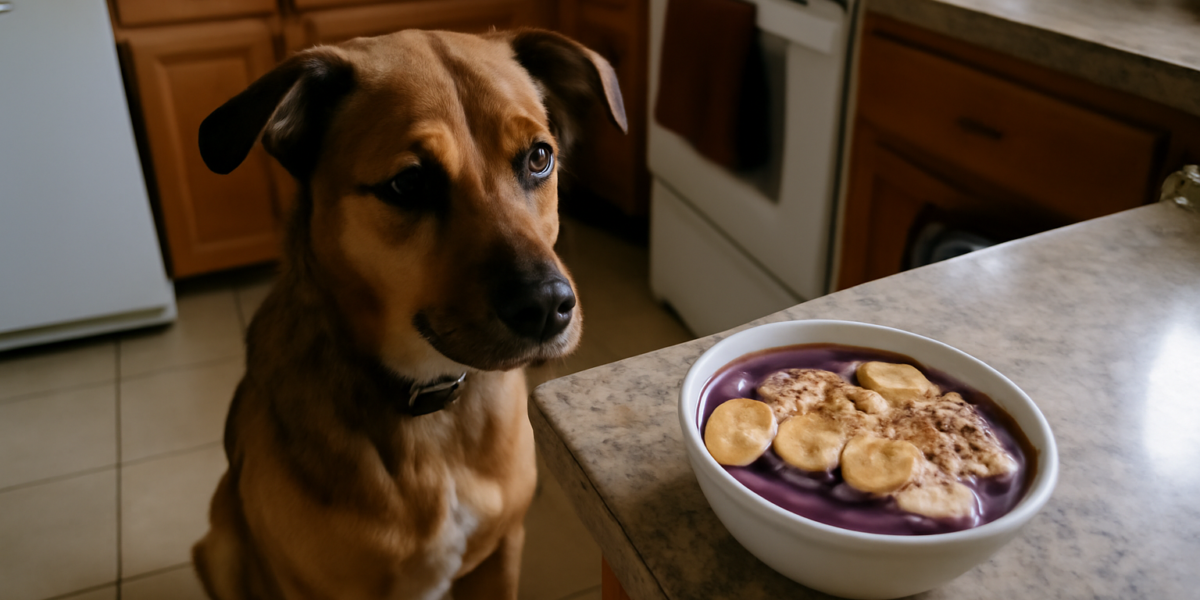
No, dogs should not eat acai bowls. Beyond the acai itself, acai bowls typically contain a combination of ingredients that are problematic for dogs. Common toppings include granola with added sugar, honey, chocolate chips or cocoa nibs (additional theobromine), coconut, and various fruits that may include grapes, which are toxic to dogs. The cumulative effect of these ingredients makes acai bowls a particularly risky food for canines.
My dog licked my acai smoothie. Should I be worried?
A few licks of an acai smoothie are unlikely to cause serious problems for most dogs, especially medium to large breeds. However, if the smoothie contained additional chocolate, cocoa powder, or xylitol-sweetened ingredients, the risk increases substantially. Monitor your dog for any signs of restlessness, vomiting, or diarrhea over the next several hours. If you are concerned about the amount consumed or the ingredients in the smoothie, a quick call to your veterinarian can provide peace of mind and specific guidance for your dog’s size and health status.
Are acai supplements safe for dogs?
Acai supplements designed for human consumption should not be given to dogs. These products often contain concentrated forms of acai, which means higher concentrations of theobromine per serving. They may also contain additional ingredients, fillers, or sweeteners that are not safe for dogs. If you are interested in providing your dog with antioxidant supplementation, speak with your veterinarian about supplements specifically formulated for canine use.
What berries are toxic to dogs?
Besides acai, several berries should be avoided by dogs. Grapes and their dried form, raisins, are highly toxic and can cause acute kidney failure in dogs. Holly berries, mistletoe berries, juniper berries, and pokeweed berries are all toxic. Baneberries, Virginia creeper berries, and yew berries are also dangerous. When foraging or walking in nature with your dog, keep them away from wild berries unless you can positively identify them as safe. Stick to well-known safe options like blueberries, strawberries, and raspberries from trusted sources.
Can dogs eat frozen acai puree packets?
No. Frozen acai puree contains the same theobromine as fresh acai berries. Freezing does not neutralize or reduce the theobromine content. Additionally, some commercial frozen acai packets contain added sugars or guarana, which is another source of caffeine that is harmful to dogs. Keep all acai products out of your dog’s reach, whether fresh, frozen, dried, or powdered.
Keeping your dog safe means knowing which foods to avoid and which to embrace. If you are ready to give a rescue dog the safe, loving home they deserve, visit our adoption page and find your perfect companion today.


