
Last updated: May 6, 2026
In this article
- Cat Purring Meaning Goes Beyond Happiness
- How Cats Purr
- The Content Purr
- The Stress and Self-Soothing Purr
- Purring in Pain or Illness
- The “Solicitation Purr”
- Possible Health Benefits of Purring
- Kitten Purring and Mother-Kitten Bonding
- When a Cat Stops Purring
- Reading Purring in Multi-Cat Households
- What Purring Tells You About Trust
- Frequently Asked Questions
Cat Purring Meaning Goes Beyond Happiness
Cat purring meaning is one of the most charmingly misunderstood pieces of feline communication. The cultural shorthand says “purring cat = happy cat,” but the science is more nuanced and more interesting. Cats purr when content, certainly — but they also purr when frightened, stressed, injured, in labor, nursing, near death, and during self-soothing in any number of contexts.
Understanding the full range of purring helps you read your cat accurately. A cat purring on your lap during slow blinks is content. A cat purring in a carrier with pinned ears and dilated pupils is coping. The vocalization is the same; the meaning depends entirely on context — body posture, eyes, ears, environment, and what just happened in the room.
This guide walks through how purring works, the contexts in which cats purr, and what the research suggests about the possible health benefits of the purr itself. For broader cat communication, see our companion guide to reading cat body language.
How Cats Purr
The mechanism of the purr is still being studied, but the leading model points to a neural oscillator in the brain that signals the laryngeal muscles to twitch the glottis open and closed at roughly 25 to 150 times per second. Air moving over the vibrating glottis on both inhale and exhale produces the continuous purr — which is why purring sounds so steady, unlike other vocalizations that pause for breath.
This means purring is largely an involuntary, low-effort sound. Cats can produce it across many emotional states, which is part of why a single interpretation does not fit. Domestic cats purr; many smaller wild cats also purr. The big cats that roar (lions, tigers, leopards, jaguars) generally do not purr the same way.
The Content Purr
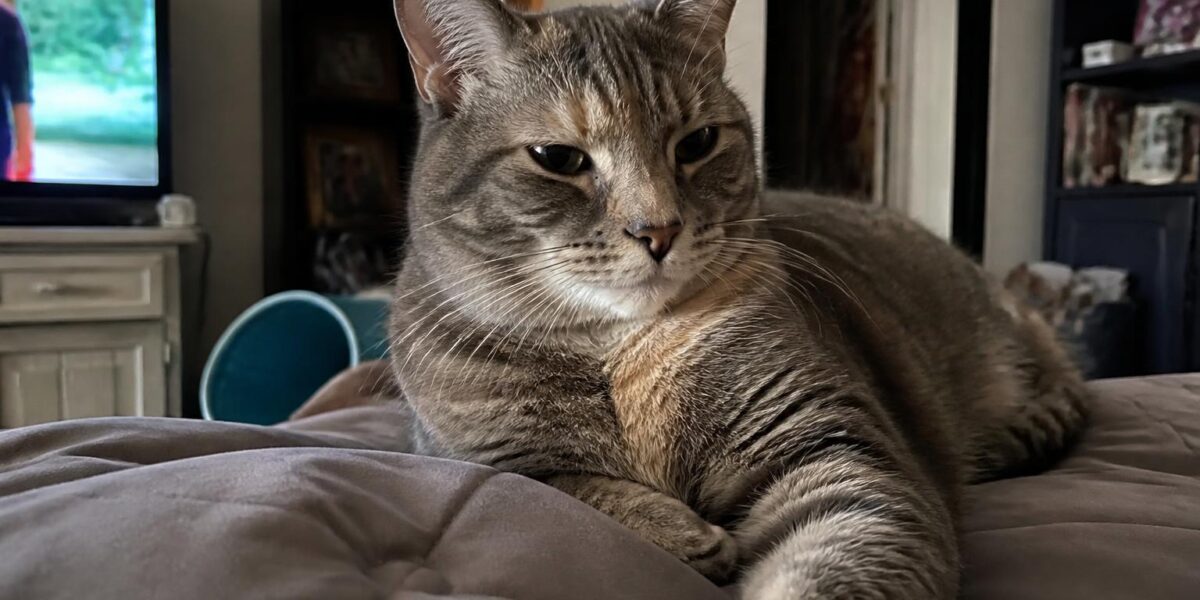
The classic context: a cat curled up on your lap, slow blinking, kneading with the front paws, with a soft body and forward-or-neutral ears. This purr is paired with affiliative body language and usually appears during low-stakes social moments — petting, lap time, sleep before bedtime, or after a meal.
The content purr is the one most owners recognize. It is also the one most often generalized to cover all purring, which is where the confusion starts. The kneading and slow blinks are doing more of the “I am content” communication than the purr itself.
The Stress and Self-Soothing Purr
Cats also purr when frightened, in pain, or in unfamiliar high-stakes situations. Veterinary teams see this regularly: a cat who arrives at the clinic, gets removed from the carrier, sits stiffly on the exam table — and purrs the entire time. The purr in this context is self-soothing, similar to a human humming or rocking under stress.
The body language gives the situation away. Stress purring usually pairs with dilated pupils, ears slightly back or pinned, a tense crouched body, hidden paws under the body, and sometimes panting or open-mouth breathing. Recognizing the difference matters because well-meaning owners sometimes assume “she’s purring, she must be okay” when the cat is actually struggling. Our piece on vet visit anxiety in cats covers low-stress vet visit strategies in detail.
Purring in Pain or Illness
Cats also purr when injured, ill, or near the end of life. This is one of the more striking features of purring and one of the reasons researchers have proposed possible analgesic or healing functions for the vocalization itself. A cat hit by a car, a cat in labor, a cat with chronic illness — all may purr through the experience.
Practically, this means purring should never reassure you that your cat is fine. If your cat is purring but eating less, hiding more, hunched, walking stiffly, or showing any other behavior change, schedule a vet visit. Cats hide pain remarkably well, and behavior is often the first visible symptom of a medical issue.
The “Solicitation Purr”
Researchers have described a particular kind of purr — the solicitation purr — that cats use to ask for food or attention from humans. Acoustic analysis suggests this purr embeds a higher-frequency component (around 220–520 Hz) that humans tend to find harder to ignore, in a similar register to a human infant’s cry.
Many cat owners experience this without naming it. The morning purr that gets you out of bed, the dinner-time purr at your ankles, the lap-please purr on the couch — these often have a slightly more urgent or piercing quality than the relaxed couch purr. Cats appear to learn which version of their purr is most effective at moving humans, and they use it strategically.
Possible Health Benefits of Purring
The frequency range of cat purring (roughly 25–150 Hz) overlaps with frequencies that some research has suggested may promote bone density and tissue healing. This has led to the popular hypothesis that cats purr partly to self-medicate, which may help explain why they purr when injured.
The evidence here is suggestive rather than conclusive. The clinical literature on vibration therapy in humans uses overlapping frequencies for some applications, and the consistency of feline purring across emotional contexts is consistent with a self-regulation function. We cannot say cats purr to heal themselves with certainty, but the hypothesis has more behind it than pure folklore.
Kitten Purring and Mother-Kitten Bonding
Kittens begin purring within the first week of life, before their eyes are open, and use the purr to communicate with the mother during nursing. The mother purrs back — a low, steady vibration that helps the kittens locate her and may provide comfort and warmth signaling. Purring is one of the earliest, most foundational sounds in a kitten’s social world.
This early developmental role helps explain why purring becomes such a flexible communication tool in adult cats. The same vocalization that calmed a kitten with its mother continues to function as a self-regulation and social-bonding signal across the lifespan.
When a Cat Stops Purring
If a cat who normally purrs during petting suddenly stops, take it seriously. Sudden cessation of purring during interactions can signal pain, illness, or stress. Pair it with the rest of the body language: ears slightly back, hunched posture, hiding more, eating less, or grooming changes are all worth a vet check.
Some cats simply purr less than others — there is significant individual variation, and a few cats are nearly silent purrers. Baseline matters more than absolute volume. Know your cat’s normal pattern so you can spot meaningful changes.
Reading Purring in Multi-Cat Households
In multi-cat homes, listen for who purrs and when. A cat who only purrs when alone with you and goes silent when a housemate enters the room may be telling you the social dynamic is uncomfortable. Combined with the bullied cat moving away when the other enters, ear flicks, or guard behavior at the food bowl, silent stress patterns are real.
Add separated key resources, vertical space, and structured solo time with each cat. The Five Pillars of a Healthy Feline Environment from the AAFP and ISFM emphasize multiple separated resources as a foundation for low-stress multi-cat life. Our companion piece on redirected aggression in cats covers what to do when stress between housemates spills over.
What Purring Tells You About Trust
A few feline sounds get confused with purring before we get to the trust question. Trills and chirps — short upward inflections often used as greetings — sound vaguely purr-adjacent but are distinct vocalizations and almost always positive. Wheezing or snoring during sleep can also be mistaken for purring; both are normal in many cats but worth a vet check if they are new or accompanied by labored breathing. Brachycephalic breeds (Persians, Himalayans, Exotic Shorthairs) are more prone to noisy breathing that can sound like a constant low purr. If you are unsure, record a short video and show it to your vet.
A new cat in your home who begins to purr in your presence after days or weeks of silence is showing you the relationship is moving in a positive direction. Pair purring with slow blinks, raised greeting tail, and willingness to eat in your presence — these together are the building blocks of feline trust.
For shy or under-socialized cats, do not chase the purr. Sit nearby, soften your eyes, blink slowly, and let the cat approach when ready. Many shy cats begin to purr first in their safe space (often a hiding spot) before they feel safe purring in the open. Patience pays off.
Frequently Asked Questions
Do cats only purr when they are happy?
No. Cats purr in many emotional states, including content relaxation, stress, fear, illness, injury, labor, and self-soothing. Always read purring along with the rest of the body language to understand what the cat is communicating.
Why does my cat purr at the vet?
Vet-visit purring is usually self-soothing under stress, not contentment. Pair it with the rest of the body — pinned ears, dilated pupils, tense body — to confirm. Low-stress vet visit strategies can help reduce overall stress.
Can purring really heal injuries?
The frequency range of feline purring (25–150 Hz) overlaps with frequencies that some research suggests may benefit bone density and tissue healing. The evidence is suggestive rather than conclusive, but the hypothesis is plausible and consistent with cats purring through illness.
What is a solicitation purr?
A solicitation purr is a purr cats use to request food or attention from humans. It includes a higher-frequency component that humans tend to find harder to ignore, in a register similar to an infant cry.
Should I worry if my cat suddenly stops purring?
A sudden change from a normally purring cat to a silent one warrants attention. Combined with hiding, hunched posture, reduced grooming, or appetite changes, schedule a vet visit. Cats hide pain well, and behavior changes are often the first visible symptom.
Do all cats purr?
Most domestic cats purr, but with significant individual variation in volume and frequency. A few cats are nearly silent purrers. Big cats that roar — lions, tigers, leopards, jaguars — generally do not purr the same way as domestic cats.


