
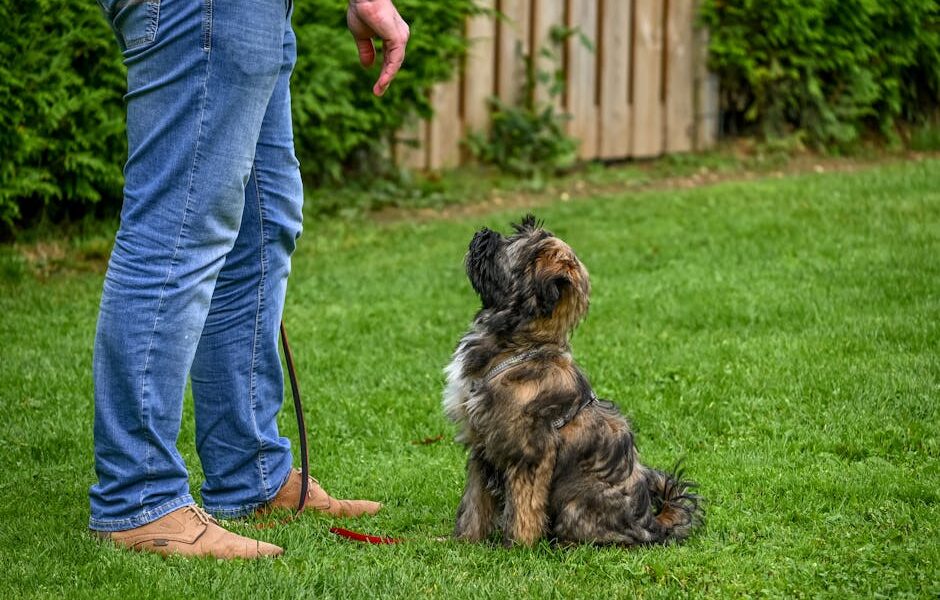
What the Chin Rest Is and Why It Matters
The chin rest is a deceptively simple behavior with outsized impact on a pet’s cooperative-care fluency. The pet places their chin on the handler’s open palm, on a padded surface, or on a designated target, and holds the position. While the chin is down, handling and procedures may proceed. When the pet lifts the chin, the procedure pauses. This single behavior creates the foundation for ophthalmoscope exams, ear inspections, oral medication administration, eye-drop tolerance, and a vast range of head-and-face procedures.
In this article
- What the Chin Rest Is and Why It Matters
- The Stages of Chin Rest Training
- The Reinforcement Strategy
- The Stop Signal: Honoring the Chin Lift
- Layering In Real Procedure Stimuli
- Realistic Timelines by Behavior
- Chin Rest for Cats
- Common Troubleshooting Issues
- How the Chin Rest Connects to Other Cooperative Care Behaviors
- Frequently Asked Questions
The chin rest as a companion-animal husbandry behavior was pioneered substantially by Chirag Patel, BSc CCAB, a UK-based behaviorist and trainer whose Domesticated Manners work transformed how trainers and pet owners approach consent-based handling. Patel’s training built on applied behavior analysis foundations developed by Dr. Susan Friedman, PhD, whose Behavior Works framework remains a touchstone for cooperative-care practitioners worldwide.
What makes the chin rest powerful is the explicit consent system it embeds. The pet voluntarily offers chin contact as the start signal, and chin lift is honored as the stop signal. This consistency teaches the pet that participation is genuinely their choice, which is the psychological foundation of all cooperative care training.
The Stages of Chin Rest Training
Chin rest training progresses through identifiable stages, each built on the previous. The first stage is hand-target chin touch — the pet brushes their chin against your open palm, even briefly, and is immediately reinforced. Most pets reach this stage within a few sessions because the behavior is intuitive and the reward is clear.
The second stage is duration shaping. Brief chin touches extend to held chin contact — first one second, then three, then five, then ten. You progress slowly, reinforcing successful longer holds and accepting that some sessions will plateau or regress. Duration shaping is the most common place for handlers to push too fast; resist that impulse.
The third stage is distraction tolerance. The held chin rest now coexists with mild distractions — a hand approaching, a brief touch elsewhere on the body, a gentle sound. Each new distraction is introduced at the lowest possible intensity and gradually built. The fourth stage is trigger introduction — the actual handling or procedure stimuli (eye-drop bottle approach, otoscope cone, oral syringe touch) layered in carefully and slowly.
The Reinforcement Strategy
Chin-rest reinforcement starts with high frequency and very high value. Every chin touch in the early sessions earns an immediate marker (click or “yes”) followed within a fraction of a second by a high-value treat. Real food works better than dry kibble for almost every pet — small bits of chicken, freeze-dried liver, squeeze-tube paste, or low-calorie meat treats keep motivation high. See our low-calorie training treat strategy for managing caloric load.
As duration extends, you can reinforce during the hold rather than only at the end. This keeps the pet engaged with the position rather than counting seconds toward release. For longer holds, deliver one treat midway and another at the end — the pet learns that the position itself, not just the release, is the source of reward.
The marker matters enormously. Whether you use a clicker (see clicker training for dogs and clicker training for cats) or a precise verbal marker (see marker training for dogs), consistency in timing creates the precision that makes chin-rest training work. The marker fires the instant the chin makes contact and is followed by the treat in less than a second.
The Stop Signal: Honoring the Chin Lift
The discipline that separates true cooperative-care training from approximations is the absolute honoring of the chin-lift stop signal. When the pet lifts the chin, you stop whatever you were doing — no matter how close to completion. You wait. You reposition. The pet re-offers the chin rest when they are ready, and you may proceed again with smaller criteria.
This will feel slow and frustrating early on, especially for handlers accustomed to traditional restraint-based handling. The temptation to push through “just one more second” is real, and giving in to it is the single most common reason cooperative-care training fails. The pet learns that the stop signal is meaningless, withdraws cooperation, and the framework collapses.
When you honor the stop signal consistently, the pet learns within weeks that their agency is real. Counterintuitively, pets who have been respected through their stop signals routinely tolerate procedures their previously-restrained selves could not have endured. The trust-and-agency framework is more efficient than coercion, not less.
Layering In Real Procedure Stimuli
Once a stable chin rest with mild distractions is in place, you begin layering in the actual procedure stimuli. For eye-drop tolerance: first an empty dropper bottle moves into the pet’s peripheral vision while the chin is on the target, then closer, then briefly touching the side of the eye area without dispensing, then a real drop is dispensed but not into the eye, then finally a real drop is administered. Each step is reinforced; each step is rolled back if the pet exits the chin rest.
For ear exam tolerance: a finger touches near the ear while chin is rested, then a finger lifts the pinna briefly, then an otoscope cone approaches without insertion, then a brief insertion, then a sustained inspection. The same principle applies to oral exam, ophthalmoscope, ear-cleaning, and other head-and-face procedures.
For each procedure context, plan the progression in advance. Write out the steps from “low criteria” to “full procedure” and progress only as fast as the pet’s success rate allows. If you see chin lift or arousal climb (panting, tense body, ears back), back up immediately. See our desensitization protocol for dogs and desensitization protocol for cats for the broader systematic-desensitization framework that underpins this work.
Realistic Timelines by Behavior
A basic chin rest (the pet places chin on hand and holds for a few seconds without distraction) typically reaches fluency in two to six weeks of brief daily sessions. A chin rest tolerant of mild handling distractions (a hand touching the shoulder, a brief noise) takes another two to four weeks. A chin rest stable enough for real eye-drop administration with a confident pet may take six to twelve weeks of consistent layered training.
For pets with prior negative associations — pets who have experienced restraint trauma, post-injury procedures, or generalized vet-visit anxiety — timelines lengthen. Fearful adopted dogs and previously feral or under-socialized cats may need many months of careful work to reach reliable chin-rest fluency. That is not a failure; it is an honest accounting of where the pet starts.
Generalizing a fluent chin rest from the home training context to the veterinary clinic environment is its own progression. Many pets who chin-rest beautifully at home will not chin-rest at the clinic on the first attempt because the environment is too arousing. Plan to rehearse the chin rest in increasingly clinic-like environments — driveway, parked car, lobby, exam room before staff enter — over time.
Chin Rest for Cats
Cats can learn chin-rest behaviors just as reliably as dogs, though the training framework benefits from some species-specific adaptations. Cats often respond particularly well to chin rests on a padded surface (a folded towel, a low platform) rather than on a handler’s hand. Pairing the chin-rest target with stationary platform work — see our cat target training stationary guide — produces a robust behavior chain.
Reinforcement timing matters even more for cats than for dogs because feline attention windows are shorter and cats are quicker to disengage when sessions become tedious. Keep sessions to three to five minutes, end on a success, and use high-value rewards your cat rarely receives elsewhere. The cat clicker training basics framework is the natural pairing.
Cat chin-rest behaviors unlock a wide range of procedures: ophthalmoscope, ear inspection, oral exam, periodontal assessment, and gentle palpation around the head and neck. For chronically-monitored cats — hyperthyroid patients, CKD patients, diabetic patients on regular bloodwork — the investment in cooperative care pays dividends for years.
Common Troubleshooting Issues
The most common troubleshooting issue is duration plateau. The pet chin-rests for 3 seconds reliably but cannot hold for 5 seconds. The fix is rarely “demand longer holds”; it is usually “reinforce more during the hold and rebuild from 2 seconds with a higher rate of reinforcement.” Frequency of reinforcement is the engine that drives duration.
Another common issue is chin rest collapse when a new context is introduced. The pet holds beautifully on the carpet but lifts immediately in the kitchen. This is normal — behaviors do not generalize automatically across environments. Plan to rehearse the chin rest in many environments before expecting it at the clinic.
A third common issue is loss of consent signal clarity when the handler is rushed or stressed. If you are running late for a vet appointment and try to push the chin-rest through despite mounting arousal, you will damage the training. When in doubt, accept a worse outcome at this visit and protect the long-term training investment for future visits.
How the Chin Rest Connects to Other Cooperative Care Behaviors
A fluent chin rest is the launching pad for the rest of the cooperative-care curriculum. From a chin rest, you can build into body-target behaviors for body positioning, voluntary blood draw protocols for chronic bloodwork, and muzzle conditioning for welfare-insurance situations.
Many practitioners teach chin-rest first and use it as the anchor for everything else. A pet who has internalized “chin down means handling can proceed, chin up means it stops” can generalize that concept to many procedures with relatively little additional training. The lifetime payoff of an early-trained chin rest is enormous, especially for pets likely to need frequent veterinary care.
For pets newly adopted from a rescue, especially those with anxiety or handling histories, chin-rest work alongside positive reinforcement dog training foundations should be on the new-adopter to-do list in the first month at home.
Frequently Asked Questions
How long until my pet will chin rest for a real veterinary procedure?
For a confident, food-motivated pet without prior trauma, expect six to twelve weeks of consistent short daily sessions. For pets with anxiety histories, expect three to six months or longer. Generalize from home to clinic gradually.
My pet has no interest in chin rest. What now?
Almost always the issue is reinforcement value — the rewards are not motivating enough — or criteria progression that is too fast. Switch to higher-value treats and back up to easier criteria. If problems persist, consult a credentialed trainer.
Should I use a clicker or a verbal marker for chin rest training?
Either works. The principle is consistency and timing. Choose one and use it the same way every time. Clickers tend to be more precise; verbal markers are more convenient.
Can my older dog or cat still learn a chin rest?
Yes. Older pets retain learning capacity. Adjust for any joint or cervical sensitivity by using a low padded surface rather than a raised handler’s hand, and shorten sessions to accommodate older pets’ shorter focused-attention windows.
What if my pet learns the chin rest at home but refuses at the clinic?
This is the most common generalization failure. The fix is environmental rehearsal — practice chin rest in the driveway, parked car, lobby, and exam room before staff enter. Pair with pre-visit pharmaceuticals if anxiety remains elevated.


