
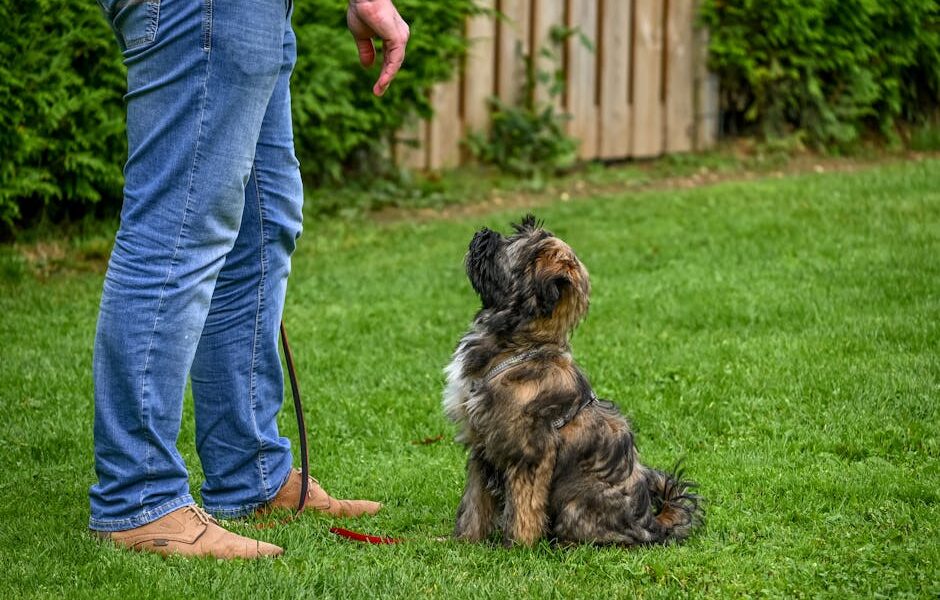
What a Body Target Is
A body target extends the cooperative-care framework beyond head-and-face procedures by teaching the pet to actively place a specific body part — a shoulder, a hip, a flank — against the handler’s hand or against a padded target as the cooperative-handling position. Where the chin rest handles ophthalmoscope, ear, and oral procedures, the body target handles nail trimming, subcutaneous injection prep, abdominal palpation, ultrasound, auscultation, and a wide range of body-positioning needs.
In this article
- What a Body Target Is
- The Most Common Body Target Variations
- The Training Sequence: From Hand Target to Body Target
- Reinforcement Timing and Position Tolerance
- Body Target for Nail Trims
- Body Target for Subcutaneous Injections
- Body Target for Veterinary Diagnostic Procedures
- Species and Temperament Adaptations
- When Body Target Plus Chin Rest Combine
- Realistic Timelines and Expectations
- Frequently Asked Questions
Body-target behaviors emerge from the same applied behavior analysis lineage that produced chin-rest training — Dr. Susan Friedman, PhD’s framework at Behavior Works, Chirag Patel’s chin-rest and Bucket Game protocols, and the work of Deborah Jones and Laura Monaco-Torelli on cooperative canine care. Together, chin rest plus body target form the two pillars of practical cooperative-care training, and most pets benefit from learning both.
The defining principle remains the same: consent-based handling. The pet voluntarily places the body part against the target as the start signal, and removing the body part — stepping away, pulling the hip back, repositioning — is the stop signal that the handler honors absolutely. This is positive reinforcement work; aversive coercion has no place in cooperative care training.
The Most Common Body Target Variations
Several body-target behaviors are widely used and worth teaching as part of a complete cooperative-care curriculum. The shoulder-target — the pet places their shoulder against your hand or a padded surface — supports lateral palpation, side-of-body skin checks, and a range of head-down handling needs. It is often paired with chin rest for procedures requiring both head and body stability.
The hip-target — the pet places their hip against your hand or a side-target — supports subcutaneous injection prep at common SQ sites (between the shoulder blades or on the lateral chest wall), tail-area examination, and posterior body palpation. For diabetic pets requiring daily insulin injections, hip-target work transforms the experience from a daily forced restraint into a daily voluntary presentation.
The side-target or lateral body position — the pet voluntarily lies on their side against a padded surface — supports ultrasound, longer auscultation, abdominal palpation, and (with additional training) some recumbent procedures. This is more advanced and takes longer to fluency than shoulder or hip target alone.
The Training Sequence: From Hand Target to Body Target
Body-target training builds naturally from a fluent hand target, which is itself a foundational behavior in positive reinforcement dog training and cat stationary target training. The pet first learns to touch their nose to your open palm on cue. From this hand-target foundation, you extend the concept: instead of touching the nose, the pet touches their shoulder.
The shaping progression typically looks like this: First, you present your hand at shoulder height while the pet is standing. They are likely to nose-touch initially because that is the trained behavior. You ignore the nose touch (no marker, no reward) and wait. Many pets, after a few unsuccessful nose touches, will offer different body parts. The moment the shoulder makes incidental contact with your hand, you mark and reward.
From that incidental contact, you shape duration, then add cue. Over a few sessions, the pet learns that pressing their shoulder against your hand earns the reward. From there, you shape duration, add a verbal cue, and gradually transfer the target from your hand to a padded surface that can stand alone.
Reinforcement Timing and Position Tolerance
As with chin rest, the marker timing is the engine that drives precision. The instant the body target makes contact, the marker fires (clicker or verbal “yes”), and the reward arrives within a fraction of a second. See our clicker training for dogs and marker training for dogs guides for foundational technique.
Body-target duration shaping mirrors chin-rest duration shaping. Start with brief contact (one second), reinforce, build to three seconds, then five, then ten. Reinforce during the hold rather than only at the end so the pet learns that the position itself is rewarding. If you see the pet’s arousal climb (panting, weight-shifting, head-turning away), you have likely asked for too much duration; back up and rebuild with a higher reinforcement rate.
One species-specific note: cats often hold body targets best when paired with a stationary platform — the cat steps onto a low platform and the chin rests or body targets a side surface. This combination behavior unlocks much of the cat-specific cooperative-care curriculum. See our cat clicker training basics and clicker training for cats guides for the platform-work framework.
Body Target for Nail Trims
Nail trimming is one of the most universally hated handling procedures, and body-target work transforms it. The traditional approach — restrain the dog or cat, hold the paw forcefully, clip — produces a pet who increasingly resents nail trims over time. A body-target approach trains the pet to voluntarily present a paw for handling and trimming, with chin or body remaining on a target as the consent signal.
The progression: First, the pet learns a paw-target — touching a paw to your hand or a low surface. From paw-target, you build paw-handling tolerance — your hand cups the paw briefly, then longer, then with light squeeze of individual digits. Clipper introduction comes only after paw-handling tolerance is fluent. You start with the clippers visible but not touching, then touching the side of the paw without clipping, then a single nail clip, then progressively more.
For pets with established nail-trim trauma, see our dog nail trimming fear protocol and cat nail trimming tips guides for desensitization frameworks specific to this trigger. The work overlaps substantially with body-target cooperative care.
Body Target for Subcutaneous Injections
Owners of diabetic pets, pets receiving long-term immunotherapy, allergy desensitization injections, or insulin protocols benefit enormously from body-target training that supports calm SQ injection presentation. The pet learns to voluntarily position their flank or shoulder area against a target, and the injection sequence becomes a brief, calm interaction rather than a daily wrestling match.
The training sequence layers in injection stimuli systematically: pet positions at target → handler approaches with a “tent” of skin pinch (no needle) → handler approaches with the alcohol swab → handler approaches with a needle cap (no actual needle exposure) → handler administers a real injection. Each step is reinforced; arousal climbs are accommodated with backup to easier criteria.
For owners new to home injection administration — see our insulin management for new pet adopters guide for the broader framework — combining body-target work with practical injection training produces dramatically better long-term outcomes than restraint-based daily injections. This is the type of work that pays compounding dividends across the years of a pet’s chronic disease management.
Body Target for Veterinary Diagnostic Procedures
Beyond at-home applications, body-target training supports veterinary diagnostic procedures including ultrasound, full-body palpation, dermatology skin exams, and longer auscultation. A pet who can hold a side position against a padded target tolerates abdominal ultrasound, cardiac echo, and other lengthier diagnostic work without sedation or full physical restraint.
This is especially valuable for pets with chronic conditions requiring repeated diagnostic monitoring. A dog with dilated cardiomyopathy on echocardiogram monitoring, a cat with hypertrophic cardiomyopathy on regular cardiac assessment, or an oncology patient on staging ultrasounds all benefit from body-target preparation.
Communicate with your veterinary team about your pet’s trained behaviors. A Fear Free-certified or LSH-trained clinic will know how to work with cooperative-care-trained patients (see our Fear Free veterinary care overview and Low Stress Handling veterinary staff training guides). Practices unfamiliar with the framework often welcome the conversation once you explain the behavior chain.
Species and Temperament Adaptations
Different pets respond to different body-target configurations. Many dogs work beautifully with a side-target (their flank against your hand or a padded surface) for nail trim and SQ injection positioning. Some dogs respond better to a stationing-on-platform target with secondary body contact for procedures.
Cats almost universally benefit from elevated platform work paired with body or chin targets. A cat positioned on a low padded platform with a chin target available will tolerate handling that the same cat on the floor or table would refuse. Build your cat’s cooperative-care framework around platform stationing as the foundation.
For pets with anxiety histories or rescue backgrounds — see our guides on adopting a fearful dog and adopting a reactive dog — body-target work proceeds more slowly. Use smaller criteria steps, higher reinforcement rates, and shorter sessions. Combine with systematic desensitization and desensitization protocols for the broader anxiety framework.
When Body Target Plus Chin Rest Combine
The most powerful cooperative-care positions combine both chin rest and body target simultaneously. The pet’s chin is on one target, the shoulder or hip is on another, and the handler has both stable head and stable body for procedures. This combination supports voluntary blood draw (see our voluntary blood draw cooperative care protocol), longer ear procedures, more comfortable ultrasound, and many other multi-position procedures.
Training the combination takes time. Teach chin rest to fluency first, then body target to fluency separately, then combine them with reduced criteria for both. The combination is its own behavior chain and benefits from explicit practice rather than assuming the components will spontaneously cooperate.
Combined behaviors also pair beautifully with muzzle conditioning for safety-redundant handling of pets with bite histories who otherwise have excellent cooperative-care fluency. The muzzle is welfare insurance; the trained behavior chain is the day-to-day handling tool.
Realistic Timelines and Expectations
A basic shoulder or hip target (the pet places body part against your hand for a few seconds) typically reaches fluency in two to four weeks of brief daily sessions. Duration extension and distraction tolerance add another month or more. Real procedure tolerance (nail trim, SQ injection, ultrasound positioning) layers on top of that and varies widely by procedure and individual pet.
For pets with prior trauma, double or triple those timelines. Older pets, anxious pets, and pets with sensory-processing differences (commonly seen in some rescue dogs and cats from extreme deprivation backgrounds) need slower, gentler, more consistent work. The investment still pays back, just over a longer arc.
And for pets where training plateau persists, partnership with a credentialed positive-reinforcement trainer (KPA-CTP, CCPDT, IAABC) — or referral to a board-certified veterinary behaviorist (DACVB) for cases with significant anxiety overlay — is appropriate and often transformative.
Frequently Asked Questions
Can I teach body target without first teaching chin rest?
Yes, body target stands alone. Many trainers do teach chin rest first because it is generally faster to fluency, but the order is not rigid. Choose based on what your pet seems most receptive to and what procedures you most need to support.
My cat won’t tolerate a body target at all. What now?
Start with platform stationing alone — just the cat stepping onto a low padded surface — and build positive associations with the platform before adding any body contact. The chin-rest variant on a soft platform surface often works better for cats than handler-hand-based body targets.
How does body target work for nail trim if the pet is wiggling?
The wiggle means the criteria are too high. Back up to easier steps: just touching the clippers without using them, or just lifting one paw briefly without clipping. Build tolerance gradually. The wiggle is information, not defiance.
Will my veterinary team know how to use my pet’s body target behaviors?
Fear Free-certified or LSH-trained teams will. Otherwise, demonstrate on intake — “my dog presents her hip against my hand for SQ injection, can we use this position?” — and most teams will collaborate.
Can I combine body target with pre-visit pharmaceuticals for vet visits?
Absolutely. Pre-visit pharmaceuticals lower baseline arousal so the trained behaviors can be expressed reliably at the clinic. Combining the two is standard for pets with anxiety overlay who have trained cooperative-care behaviors.


