
Last updated: April 6, 2026
In this article
Dog Drowning: Water Safety, Rescue Techniques & Emergency First Aid
Many people assume that all dogs are natural swimmers, but this is a dangerous myth. Every year, thousands of dogs drown in backyard swimming pools, lakes, rivers, and even bathtubs. Some breeds are physically incapable of swimming effectively, and even strong swimmers can drown when they become exhausted, trapped, or caught in currents. Understanding the real risks of water and knowing how to prevent and respond to drowning emergencies is essential for every dog owner.
Drowning is a silent emergency. Unlike what movies portray, a drowning dog does not splash and bark for help. A dog in distress in water becomes quiet, struggles vertically with their head tilted back, and slips under the surface without fanfare. By the time an owner notices something is wrong, the dog may already be submerged. This guide will help you prevent drowning incidents, recognize when a dog is in trouble, and perform the emergency rescue and first aid that can save their life.
Which Dogs Are at Highest Risk of Drowning
While any dog can drown under the wrong circumstances, certain breeds and types of dogs face significantly higher risk. Understanding your specific dog’s water capabilities is the foundation of water safety.
Brachycephalic breeds, those with short, flat faces, are among the most vulnerable. Bulldogs, Pugs, French Bulldogs, Boston Terriers, Pekingese, and similar breeds have heavy front ends, short legs, and compromised airways that make swimming extremely difficult or impossible. A Bulldog that falls into a pool can sink within seconds. These breeds should never be near open water without a life vest and constant, hands-on supervision.
Dogs with disproportionate body structures also struggle in water. Dachshunds, Basset Hounds, and Corgis have short legs and long bodies that make swimming exhausting. Barrel-chested breeds like Bulldogs carry too much weight in front. Dogs with very dense, heavy coats like Chow Chows can become waterlogged, with their fur absorbing water and pulling them down.
Puppies and senior dogs are at elevated risk regardless of breed. Puppies lack the strength, coordination, and experience to swim safely. Senior dogs may have arthritis, reduced stamina, vision loss, or cognitive decline that impairs their ability to navigate water. A senior dog that once swam confidently may no longer be able to do so safely.
Even excellent swimmers can drown. Retrievers, Poodles, Portuguese Water Dogs, and other strong swimming breeds drown every year in pools, lakes, and oceans. The most common scenarios include exhaustion from swimming too long, inability to find the exit from a pool, being caught in river currents or ocean riptides, falling through thin ice, and becoming tangled in vegetation or debris underwater.
Dogs with certain health conditions face additional risk. Dogs with heart disease, seizure disorders, or laryngeal paralysis are particularly vulnerable in water. A seizure while swimming is almost always fatal without immediate rescue. Dogs with ear infections may have compromised balance that affects their swimming ability. Always consider your dog’s overall health when making decisions about water access.
Common Drowning Scenarios and Prevention
Most drowning incidents are preventable. Understanding the most common scenarios allows you to take targeted preventive measures that dramatically reduce risk.
Swimming pool drowning is the most common residential drowning scenario for dogs. Dogs fall into pools accidentally, jump in after toys or other animals, or enter voluntarily but cannot find the stairs or ramp to exit. Pool walls are slippery and provide no grip for a dog to climb out. A dog that swims to the pool edge but cannot exit will swim in circles until exhausted, then sink. Prevention includes installing pool fencing with self-closing gates, teaching your dog where the pool steps are through repeated, guided practice, installing a pool ramp or pet pool escape device, and never leaving dogs unsupervised near the pool.
Open water presents different dangers. Rivers and streams have currents that can quickly overpower even strong swimmers. Lakes may have sudden drop-offs, underwater vegetation that tangles legs, or cold water that causes rapid fatigue. Ocean beaches have riptides, waves, and saltwater that dogs may swallow. Keep dogs on leash near unfamiliar waterways, avoid areas with strong currents, and always supervise water play. A dog life vest provides buoyancy and a grab handle for rescue.
Ice-related drowning occurs when dogs walk onto frozen lakes, ponds, or rivers and fall through thin ice. The cold water causes rapid hypothermia and muscle cramping, making it nearly impossible for the dog to swim back to the ice edge and pull themselves out. Never allow your dog on ice unless you are certain it is thick enough to be safe, and keep dogs leashed near frozen bodies of water. If your dog falls through ice, do not go onto the ice after them. Call emergency services and try to extend a rope, board, or branch from shore.
Bathtub and small water feature drowning, while less common, does occur. Very small dogs, puppies, and kittens can drown in bathtubs, buckets, toilets, and ornamental ponds. Never leave a puppy or small dog unattended around any body of water, no matter how shallow it seems. Keep toilet lids closed and drain bathtubs immediately after use.
How to Rescue a Drowning Dog
If you see your dog struggling in water, your instinct will be to jump in after them. However, a panicking, drowning dog is dangerous to the rescuer. A large dog can climb on top of you, pushing you under the water. Whenever possible, rescue from shore or the pool deck rather than entering the water yourself.
Reach-based rescue is the safest approach. Extend a pool skimmer pole, branch, paddle, or any long object toward the dog. Many dogs will instinctively grab onto something solid. If the dog grabs on, slowly pull them toward safety. From a pool deck, lie flat on your stomach and reach for the dog’s collar, harness, or scruff. Having a partner hold your legs provides stability.
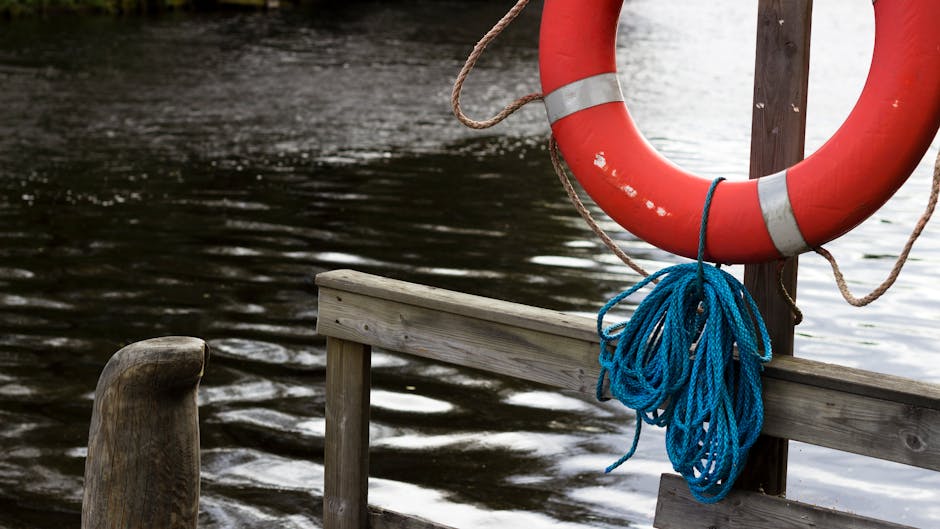
Throw-based rescue works if you have a throwable flotation device. Pool noodles, life rings, and even sealed empty jugs tied to a rope can be thrown to a dog in distress. While a panicking dog may not grab a thrown object deliberately, it may swim toward the splash or use the floating object for partial support while you reel them in.
If you must enter the water, take a flotation device with you. A life jacket, pool noodle, or kickboard provides buoyancy for both you and the dog. Approach the dog from behind to avoid being climbed on. Grab the collar, harness, or scruff from behind and tow the dog to safety while keeping your own head above water. In a pool, swim to the nearest wall and push the dog up and out before climbing out yourself.
For unconscious dogs found floating or submerged, remove them from the water immediately using whatever method is fastest. Every second submerged reduces the chances of survival. Once out of the water, begin emergency first aid immediately.
Emergency First Aid After a Drowning Incident
The first minutes after removing a drowning dog from the water are critical. Brain damage from oxygen deprivation begins within four minutes of submersion, making rapid action essential. Even if the dog appears lifeless, do not give up. Dogs have been successfully resuscitated after several minutes of submersion, particularly in cold water.
Clear the airway first. Hold a small dog upside down by the hind legs for 10 to 15 seconds to allow water to drain from the lungs and airway. For medium to large dogs, lay them on their side with the head lower than the body on a slight decline. Give several sharp compressions to the rib cage to help expel water. Open the mouth and pull the tongue forward to ensure a clear air passage.
Check for breathing and a heartbeat. If the dog is not breathing, begin rescue breathing. Close the mouth, seal your lips around the nostrils, and blow gently until you see the chest rise. Give one breath every three to five seconds. If there is no heartbeat, begin full CPR with chest compressions at 100 to 120 per minute and rescue breaths at a ratio of 30 compressions to 2 breaths.
Continue CPR until the dog starts breathing on their own, you arrive at the veterinary clinic, or 20 minutes have passed without any response. Dogs that were submerged in very cold water may have better outcomes because hypothermia slows metabolic demand and can protect the brain. Do not give up too quickly on a cold-water drowning victim.
Once the dog is breathing, keep them warm. Drowning dogs are almost always hypothermic. Wrap them in dry towels or blankets. If available, use warm (not hot) water bottles against the body. Transport to the emergency veterinarian immediately, even if the dog appears to be recovering. A dangerous condition called secondary drowning or delayed pulmonary edema can occur hours after a near-drowning event, where inflammation in the lungs causes fluid to accumulate and breathing to deteriorate. This is fatal without treatment.
Water Safety Equipment and Training
Investing in proper water safety equipment and training your dog around water can prevent drowning incidents and give you the tools to respond effectively if an emergency occurs.
Dog life vests are the single most important piece of water safety equipment. A properly fitted life vest keeps the dog’s head above water, provides buoyancy even if the dog panics or becomes exhausted, and includes a grab handle on the back for easy rescue. Choose a vest with bright colors for visibility, adjustable straps for a secure fit, and a D-ring for leash attachment. Life vests are essential for boating, open-water swimming, and any water activity involving breeds that are poor swimmers.
Pool alarms detect when something falls into the water and sound an alert. Surface wave sensors, subsurface motion detectors, and wearable collar alarms are all available. While these should not replace physical barriers like fences, they provide an additional layer of protection, particularly for dogs that have unsupervised access to the yard.
Pool ramps and escape devices give dogs a way to exit the pool independently. The most common design is a floating platform with a ramp that hooks over the pool edge. Dogs can swim to the platform and walk up the ramp to safety. These devices must be introduced with training. Repeatedly guide your dog to the ramp and reward them for using it until they can find and use it independently.
Teach your dog to swim if they are physically capable. Introduce water gradually, starting in very shallow water and allowing the dog to gain confidence at their own pace. Never throw a dog into water or force them in. Use a life vest during initial swim training. Stay in the water with them to provide reassurance. Reward calm, confident behavior in the water. For pool dogs, the most critical training is teaching them where the stairs or ramp are located. Practice this from every area of the pool until your dog can reliably find the exit from any position. Keep a well-stocked pet first aid kit near any water area where your dog plays.
Frequently Asked Questions About Dog Drowning
Can all dogs swim naturally?
No, this is a dangerous myth. While most dogs will instinctively paddle when placed in water, many cannot sustain themselves and will sink. Brachycephalic breeds like Bulldogs and Pugs are physically incapable of effective swimming due to their body structure and compromised airways. Short-legged breeds like Dachshunds and Corgis can paddle but tire very quickly. Even breeds considered good swimmers must learn water skills and cannot be assumed to swim safely without experience. Every dog should be individually assessed for swimming ability before being allowed in water, and all dogs benefit from a life vest in open water.
What is secondary drowning and should I be worried?
Secondary drowning, more accurately called delayed pulmonary edema, occurs when inhaled water causes inflammation in the lungs that leads to fluid accumulation hours after the initial incident. A dog that was submerged and then rescued may seem perfectly fine for 2 to 24 hours before developing coughing, labored breathing, lethargy, and respiratory distress. This condition can be fatal without treatment. Any dog that has been submerged, inhaled water, or required rescue from a drowning situation should be examined by a veterinarian and monitored closely for at least 24 hours, even if they appear to have fully recovered.
How long can a dog survive underwater?
Dogs, like humans, can typically survive submersion for three to six minutes before irreversible brain damage occurs. However, many variables affect this timeline. Cold water significantly extends the window by slowing the body’s metabolic rate and oxygen demand, a phenomenon called the mammalian diving reflex. Young dogs and small dogs may have shorter survival windows. The speed and quality of rescue and CPR also dramatically affect outcomes. Even after several minutes of submersion, resuscitation should be attempted, especially in cold-water incidents, because successful recoveries have been documented after prolonged submersion.
Is it safe for my dog to swim in the ocean?
Ocean swimming carries specific risks that freshwater does not. Saltwater ingestion can cause vomiting, diarrhea, and in large quantities, dangerous sodium imbalances. Riptides and strong currents can carry a dog away from shore quickly. Waves can push a dog under and disorient them. Jellyfish, sea urchins, and sharp shells pose additional hazards. If you allow your dog to swim in the ocean, use a life vest, stay close, avoid areas with strong currents, provide fresh water frequently to discourage saltwater drinking, and rinse your dog thoroughly with fresh water after swimming to remove salt and sand.
Should I get my dog swimming lessons?
Swimming lessons or guided water introduction can be very beneficial, especially for dogs that are timid around water or breeds that may struggle to swim. Many dog training facilities and canine hydrotherapy centers offer structured swim programs. A professional can assess your dog’s swimming ability, identify any safety concerns, and teach both you and your dog proper water safety practices. For dogs recovering from injuries, therapeutic swimming under professional supervision provides exercise without joint stress. Even confident swimmers can benefit from training focused on pool exit strategies and recall commands in water environments.


