Last updated: May 4, 2026
In this article
- German Shepherd vs Dutch Shepherd at a Glance
- History and Origin
- Size and Appearance
- Temperament and Personality
- Trainability and Intelligence
- Exercise and Activity Needs
- Grooming and Care
- Health and Lifespan
- Cost and Availability in Rescue
- Living With Each Breed Day to Day
- Which Is Right for You?
- Frequently Asked Questions
German Shepherd vs Dutch Shepherd at a Glance
The German Shepherd vs Dutch Shepherd comparison usually starts when someone has researched into the world of working-line herders and discovered that the German Shepherd they thought they wanted has a leaner, more intense, brindle-coated cousin from the Netherlands. Both breeds were originally created to herd sheep. Both are highly trainable. Both excel in police, military, and protection sport. The Dutch Shepherd, however, is rarer, sportier, and even more intense — and that intensity is the central decision in this comparison.
If you are a first-time owner or want a breed that has settled into family-pet life across decades of selective breeding, the German Shepherd is the more accessible choice. If you are an experienced handler chasing a sport or working partner with extreme drive, the Dutch Shepherd may be exactly what you want — and exactly what most pet homes cannot handle.
History and Origin
The German Shepherd was developed in Germany in the late 1800s by Captain Max von Stephanitz, who aimed to create the ideal all-purpose working dog. The breed was AKC-recognized in 1908 and quickly spread worldwide as a herder, police K9, military dog, service dog, and family companion. Modern GSDs split into working lines, West German show lines, East German (DDR) lines, Czech working lines, and American show lines, each with distinct temperament profiles.
The Dutch Shepherd originated in the rural Netherlands, where farmers used a brindle-coated herding dog to manage sheep and protect farms. The breed was officially recognized in the Netherlands in 1898. Industrialization nearly erased their working role, and the breed remained rare for most of the 20th century. AKC full recognition came in 2017. Today the Dutch Shepherd is most commonly seen in police K9 units, military service (especially special operations), and high-level dog sports — Schutzhund, Mondioring, French Ring, and KNPV. Pet-line Dutch Shepherds exist but are uncommon.
Size and Appearance
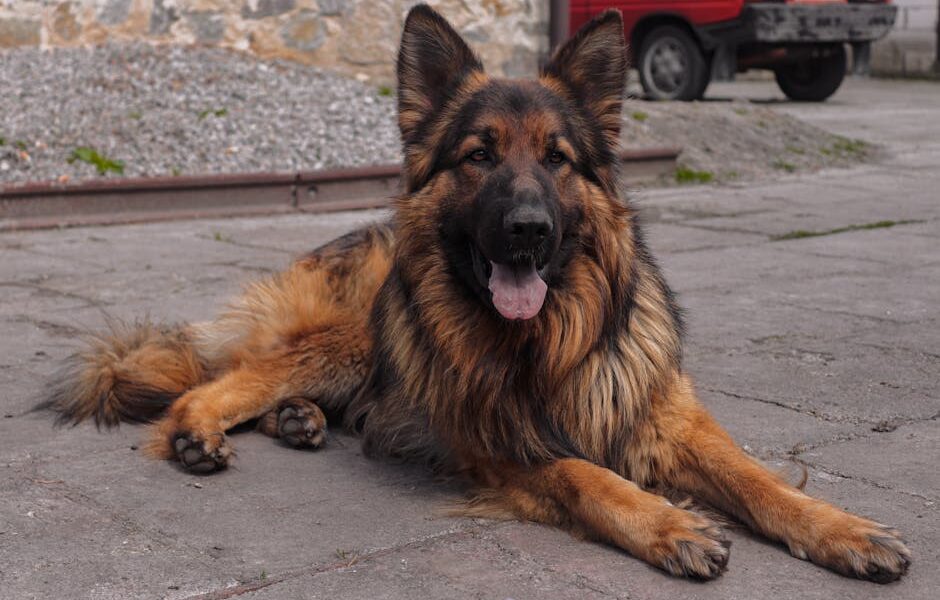
German Shepherds are large dogs, typically 50 to 90 pounds, with a longer body, distinctive ears, and a double coat in black-and-tan, sable, solid black, or other variations. American show lines often have a more sloped topline; working lines have a more level, athletic build.
Dutch Shepherds are slightly smaller and leaner, typically 45 to 75 pounds, with a more square build, a brindle coat (gold or silver brindle is breed-standard), and a more wolf-like, athletic outline. Three coat varieties exist — short, long, and wire — though the short-haired brindle is by far the most common. The Dutch Shepherd’s leaner build reflects their function: a sport and patrol dog who needs agility and explosive power, not the trotting endurance the GSD was bred for.
Temperament and Personality
Both breeds are aloof with strangers, devoted to family, and naturally watchful. Both bond intensely to their handler. Neither is a default-friendly breed in the way a Golden or Lab is.
The German Shepherd has decades of breeding for both pet-home and working-home roles, and the breed’s temperament range is wider as a result. A West German show-line GSD from a stable home can be a calm, biddable family dog. A working-line GSD has higher drive but still falls within “intense pet” territory in capable hands. The Dutch Shepherd, by contrast, has been bred almost exclusively for sport and police work for the last half-century. Drive is higher across the board. Bite-work potential is higher. Energy is higher. The “off switch” — the ability to settle calmly indoors — is harder to find. A Dutch Shepherd in the wrong home is not just bored; they are explosively under-stimulated.
Trainability and Intelligence
Both breeds are at the top tier of working intelligence. Both learn complex sequences fast, read handler body language with precision, and excel in obedience, agility, scent work, herding, and protection sport.
The Dutch Shepherd is often described as more handler-focused, more environmentally bold, and more “operational” — they want to engage, they want to work, and they will offer behaviors all day to figure out what earns them the reward. This makes them a dream for experienced sport handlers and a nightmare for first-time owners who want a polite leash-walker. Both breeds respond best to force-free, reward-based training with clear structure. Compulsion-heavy methods backfire on both — they suppress without resolving the underlying drive, and the dog finds an outlet you do not want.
Exercise and Activity Needs
Both breeds need substantial daily exercise plus mental work — at minimum 90 minutes of physical activity and ideally a structured training or sport hobby.
The Dutch Shepherd’s exercise needs are higher across the board. A GSD might be content with daily long walks, weekly training, and weekend hikes. A Dutch Shepherd typically needs daily training sessions, scent work, agility or bite-sport practice, and structured outlets for drive. Without a job, Dutch Shepherds become destructive, reactive, or self-stimulating — pacing, fence-running, obsessive ball drive that crowds out everything else. Plan to dedicate hours per week to deliberate training and enrichment, not just walks. Both breeds also benefit from puppy socialization and adolescent impulse control work.
Grooming and Care
Both breeds shed heavily despite shorter or medium coat lengths. The Dutch Shepherd’s short coat sheds constantly and weaves into fabric; the long-coat and wire-coat varieties shed less but mat more.
German Shepherds need brushing two to three times a week with daily attention during seasonal coat blows in spring and fall. The undercoat releases in massive quantities. Long-coat GSDs need extra attention behind the ears and on the rear feathering. Dutch Shepherds (short-coat) need weekly brushing and seasonal de-shedding sessions; the wire-coat variety needs occasional hand-stripping or professional grooming. Both breeds need monthly baths, regular nail trims, tooth brushing, and ear care. Neither is low-maintenance.
Health and Lifespan
Both breeds typically live into the early teens, with the Dutch Shepherd often credited with slightly better breed-wide health due to a smaller, more working-focused gene pool that has been less affected by extreme conformation breeding.
Both are predisposed to hip dysplasia and elbow dysplasia. The German Shepherd has notable rates of degenerative myelopathy (a progressive spinal condition), exocrine pancreatic insufficiency, and certain cancers. American-show-line GSDs in particular have been criticized for orthopedic issues tied to extreme rear angulation. The Dutch Shepherd sees fewer breed-specific conditions but is not immune to hip and elbow issues, inflammatory bowel disease, or masticatory muscle myositis. Both breeds can develop bloat (GDV). Reputable breeders screen for hips, elbows, and breed-relevant conditions.
Cost and Availability in Rescue
German Shepherds are widely available in rescue, both in all-breed shelters and through dedicated German Shepherd rescue groups. The breed’s popularity, combined with adopters who underestimated the work, means consistent intake.
Dutch Shepherds are rare in rescue. Most are bred for sport or working homes, and they tend to stay in those homes through the dog’s lifetime. When a Dutch Shepherd does enter rescue, it is usually because the owner could not handle the drive or because a working dog washed out of a program. Specialized rescues exist but have small intake volumes. Adoption fees for both breeds typically run mid-three figures with full vetting. Working-line dogs of either breed often need experienced foster homes during transition. Start with the German Shepherd rescue guide or check the Adopt a Dog hub for current listings.
Living With Each Breed Day to Day
Daily life with a pet-line GSD looks like a serious working dog who has learned a domestic routine. They watch the door, walk the perimeter, settle on a dog bed near you, and ask for engagement throughout the day. With consistent training, they fit into family life and accept houseguests, vet visits, and travel. Daily life with a Dutch Shepherd looks more like daily life with a sport athlete. They want to train. They want to work. They watch every cue you give and offer behaviors constantly. A Dutch Shepherd left without engagement will invent something — usually a destructive something.
Both breeds need crate training from puppyhood and benefit from a designated quiet space. Both shed and need regular grooming. The first week with a rescue dog requires extra patience for both breeds, and especially for working-line dogs of either type. Working-line GSDs and Dutch Shepherds in transition need experienced fosters and structured introductions. The decompression period is essential.
Which Is Right for You?
Pick a German Shepherd if you want a watchful, bonded, trainable family dog, you have some prior dog experience or commit to a class series, you can provide daily exercise and training, and you want a breed with consistent rescue availability. Show-line and pet-line GSDs are appropriate for capable family homes; working-line GSDs need active handlers.
Pick a Dutch Shepherd if you are an experienced sport, working, or service-dog handler, you want extreme drive in a leaner athletic package, you have a structured training and sport program already in place, and you accept that pet-only life will not satisfy this dog. Dutch Shepherds are exceptional in the right hands and miserable in the wrong ones. The breed’s growing popularity has produced a wave of mismatched placements; do not become one.
Frequently Asked Questions
Are Dutch Shepherds rarer than German Shepherds?
Yes, considerably. Dutch Shepherds are rare overall in the United States, and most come from sport or working breeders. German Shepherds are among the most popular breeds in the country.
Which breed has higher drive?
Working-line Dutch Shepherds typically have higher drive than working-line GSDs, with stronger bite work and prey drive on average. Pet-line GSDs have more of an “off switch” than most Dutch Shepherds.
Are these breeds good for first-time dog owners?
The German Shepherd can work for first-time owners who commit to training. The Dutch Shepherd is generally not recommended for first-time owners because of the breed’s drive and exercise demands.
Can either breed live in an apartment?
Possible for adult, well-exercised dogs of either breed, but apartment life requires significantly more deliberate exercise and mental enrichment, plus careful selection of an individual dog with a calmer profile.
Are Dutch Shepherds aggressive?
No more inherently than GSDs. Both breeds are watchful and protective; both can develop fear-based reactivity from poor breeding or under-socialization. The dog body language guide helps adopters read either breed accurately.
Looking to adopt a German Shepherd vs Dutch Shepherd Comparison?
Browse German Shepherd vs Dutch Shepherd Comparison dogs and mixes available for adoption from shelters and rescues near you.
Find German Shepherd vs Dutch Shepherd Comparison Dogs for Adoption