
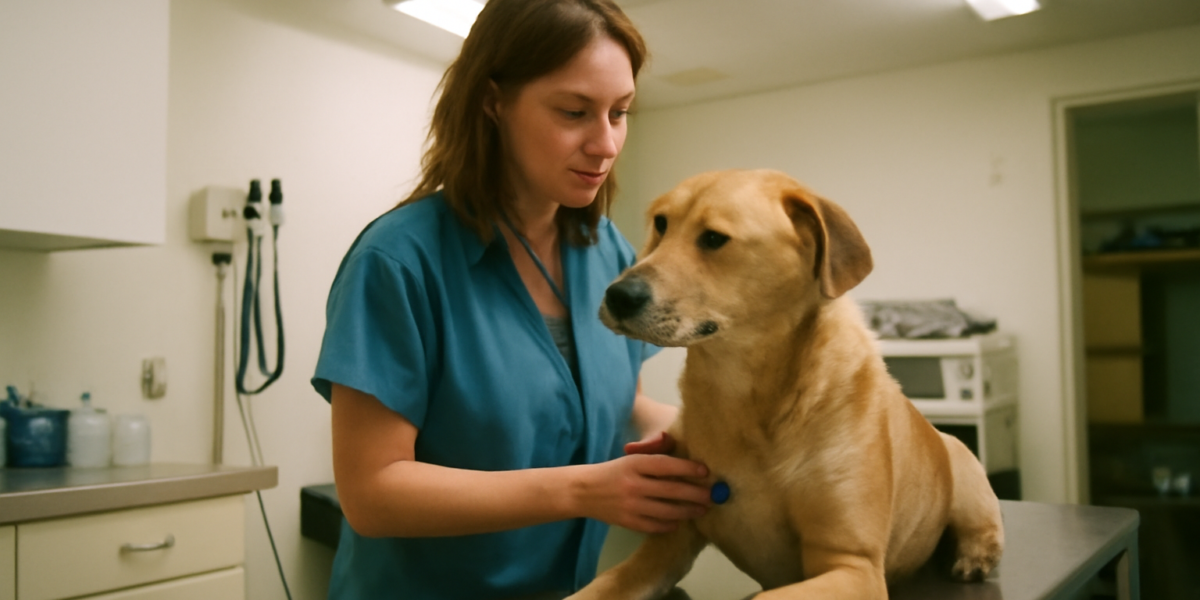
What Is Kennel Stress in Dogs
Kennel stress dogs experience is a specific cluster of behaviors that develop when a dog lives in a high-noise, small-space, low-control environment for days, weeks, or months. It is different from a dog who is simply nervous on intake day. Kennel stress is what happens when the nervous system has been bathed in cortisol for so long that the dog stops being able to regulate, even when nothing acutely threatening is happening.
In this article
- What Is Kennel Stress in Dogs
- Why Kennels Are So Hard on Dogs
- Recognizing the Signs of Kennel Stress
- Health Costs of Chronic Kennel Stress
- How Foster and Adopter Homes Help Recovery
- When to Loop in a Vet or Behavior Professional
- Setting Realistic Expectations
- What Shelter Volunteers and Staff Can Do
- Frequently Asked Questions
Most modern shelter behavior teams treat kennel stress as a welfare emergency, not a personality trait. The dog you meet through the bars may look very different from the dog who unfolds in a quiet foster bedroom three days later. That gap is the kennel speaking, not the dog. Understanding it changes how staff make decisions, how fosters set expectations, and how adopters interpret the first few weeks at home.
This guide is a companion to our pieces on shelter shock in dogs and the decompression period for rescue dogs. Where shelter shock describes the acute, traumatic crash on intake, kennel stress describes the chronic wearing down that follows when housing drags on.
Why Kennels Are So Hard on Dogs
A typical kennel run is a concrete or epoxy box about four to six feet wide and six to ten feet deep, often with a metal-bar front and a neighbor on each side. Sound bounces off every surface. A single barker can push noise levels above 100 decibels — louder than a chainsaw at arm’s length. Dogs cannot escape the sound, and their hearing is far more sensitive than ours.
Beyond noise, the kennel removes nearly every meaningful choice. The dog cannot pick when to eat, where to potty, who to greet, or when to sleep. Lights are often on most of the day. Strangers walk past constantly. Many dogs lose access to soft surfaces, chew outlets, and unstructured time outdoors. Take a confident pet dog and put them in that environment for a month, and you will see kennel stress emerge in them too.
The risk is not equal across dogs. Adolescents, sensitive breeds, dogs with under-socialized backgrounds, and dogs with prior trauma decompensate faster. Senior dogs with arthritis or early dog dementia can spiral very quickly because the noise and hard floors compound their physical discomfort.
Recognizing the Signs of Kennel Stress
Signs of kennel stress dogs commonly display fall into three buckets: active stress, repetitive behaviors, and shutdown. A single dog may cycle through all three over weeks.
Active stress signs include:
- Constant pacing along a fixed track in the run
- Spinning, often in one direction
- Bar-mouthing or chewing the kennel door, sometimes to the point of broken teeth
- Continuous barking, fence-fighting with neighbors
- Hyper-vigilance — startling at every sound, never settling
- Refusing food, or eating only at night when the building is quiet
Repetitive (stereotypic) behaviors are a deeper signal that the dog is no longer coping. Watch for tail-chasing, flank-sucking, light or shadow chasing, and self-licking that creates raw spots. These are functionally similar to compulsive behaviors and need active intervention, not just observation.
Shutdown is the quietest and most dangerous presentation. The dog stops greeting visitors, stays curled in the back of the run, refuses treats, and may eliminate where they sleep. A shutdown dog is often labeled “calm” or “easy” by people walking past — and that is exactly the misread that hurts these dogs the most.
Health Costs of Chronic Kennel Stress
Kennel stress is not just a behavior problem. It changes the body. Chronically elevated cortisol suppresses the immune system, which is why long-stay dogs catch every respiratory bug that moves through a shelter. It alters gut motility, contributing to stress diarrhea and weight loss even when food intake looks adequate on paper.
Sleep architecture breaks down. Dogs in noisy kennels rarely reach the deep, restorative sleep stages they need. Sleep-deprived dogs are reactive, slower to learn, and more prone to digestive upset. This is one of the reasons even a single overnight in a quiet foster home produces such dramatic improvements — the dog finally sleeps.
Repeated bar-mouthing wears down canine teeth and can cause slab fractures that need extraction. Pacing on hard floors aggravates joints, especially in large-breed dogs and seniors. None of these costs show up in a behavior assessment, but every one of them shapes how the dog presents to potential adopters.
How Foster and Adopter Homes Help Recovery
The most reliable treatment for kennel stress is removal from the kennel. Foster placement is often more effective than any single training intervention because it addresses the cause: the environment. Within three to seven days in a calm home, most dogs sleep more deeply, eat more reliably, and stop the most obvious stereotypies. That does not mean they are “fixed” — it means the system has finally been given a chance to reset.
For adopters bringing a kennel-stressed dog home, the playbook is the same as for any rescue: low stimulation, predictable routines, no big outings, and patience. The 3-3-3 rule for rescue dogs is a useful framing, but kennel-stressed dogs may need a longer runway. Plan for weeks, not days.
Practical setup tips:
- One quiet room with a soft bed, water, and minimal foot traffic
- A consistent feeding schedule and a non-cold meal location
- Slow leash walks in low-traffic areas — no dog parks, no daycares
- Sniffing-based enrichment over high-arousal play (see mental enrichment for dogs)
- A predictable sleep area away from doorways
When to Loop in a Vet or Behavior Professional
Some kennel-stressed dogs cannot decompress in a typical foster home without medical support. If your dog is still pacing for hours, refusing food after a week, or showing self-injurious stereotypies, that is the threshold for veterinary involvement. Short-term anxiolytics like trazodone can lower the baseline enough to let the dog rest and learn that the new environment is safe. Longer-term, daily medications like fluoxetine are often appropriate for dogs whose anxiety meets the criteria for generalized anxiety in dogs.
A certified behavior consultant or veterinary behaviorist can build a tailored decompression and counterconditioning plan. Look for credentials such as CDBC, CBCC-KA, or DACVB. Avoid trainers who promise quick fixes through corrections or “balanced” methods — punishing a kennel-stressed dog into compliance worsens the underlying problem and risks bites.
Document everything. Photos of pacing tracks worn into bedding, videos of overnight behavior, and a simple food and stool log will help your vet make decisions and help the next foster, if there is one, hit the ground running.
Setting Realistic Expectations
Recovery from kennel stress is not linear. A dog who slept beautifully on night three may pace on night ten because something shifted in their environment or their internal state. Two steps forward and one step back is normal. So is the “personality reveal” around week three or four, when the real dog finally surfaces and may be quite different from the kennel dog or even the early-foster dog.
Many of these dogs become wonderful pets. The shelter version was an emergency room presentation, not a forecast. With the right home, time, and support, the nervous system reorganizes. The pacing fades. The dog sleeps. The dog plays. And the next time you walk past a kennel run, you will read what you see very differently.
What Shelter Volunteers and Staff Can Do
If you work or volunteer in a shelter, the daily small interventions add up. None of them eliminates kennel stress on their own, but together they meaningfully buffer the impact for the dogs who cannot leave the building yet.
- Cover the front of the kennel run with a sheet or kennel curtain to reduce visual stimulation
- Provide raised cots so dogs can get off the cold concrete
- Add a bed-sized blanket or fleece for soft contact, especially overnight
- Use enrichment feeders for one meal a day — frozen Kongs, snuffle bowls, scatter feeding
- Schedule midday quiet hours where lights dim, music softens, and foot traffic drops
- Train staff and volunteers in low-arousal handling — sideways approach, no looming, no direct eye contact
- Identify long-stay dogs early and prioritize them for foster placement, sleepovers, or day-out programs
- Keep a sensory log — what reduces pacing, what triggers it, what the dog accepts
The single highest-impact intervention is still removing the dog from the kennel, even briefly. Even a four-hour outing in a quiet vehicle and quiet park produces measurable cortisol drops and noticeably better behavior on return. These programs scale; they do not require building anything new.
Frequently Asked Questions
How long does it take a dog to recover from kennel stress?
Most dogs show meaningful improvement within one to two weeks of leaving a stressful kennel environment. Full recovery and “true personality” emergence often takes four to eight weeks. Severe or long-stay cases can take several months and may need vet-prescribed anxiety medication.
Is kennel stress the same as separation anxiety?
No. Kennel stress is caused by the kennel environment itself — noise, lack of choice, hard surfaces, no escape. Separation anxiety is distress triggered by the absence of a specific person. A dog can have both, but they need different treatment plans.
Can puppies get kennel stress?
Yes, and they are especially vulnerable. Puppies in their socialization window who experience prolonged kennel time miss out on critical exposure to people, surfaces, and novelty. They can develop fear and reactivity that lasts well into adulthood. Foster placement for shelter puppies is a public-health-style intervention.
Is bar-biting in a kennel a sign of aggression?
Almost never. Bar-biting is an outlet for frustration and arousal, much like a person clenching their jaw. It is a welfare flag, not a temperament flag. The dog needs decompression and enrichment, not a “bite-risk” label.
Should I medicate a kennel-stressed dog right away when I bring them home?
That depends on severity. Many dogs improve dramatically with environment alone. If you are seeing severe symptoms — refusing food beyond 36 hours, pacing for hours, self-injury — call your vet within the first week. Do not wait it out indefinitely.
How can I tell if a kenneled dog will be different in a home?
You usually cannot, with full confidence, until you try. Sleepovers, day-out programs, and short fosters are the best predictors. Many shelters now offer these specifically because in-kennel behavior is so unreliable as a forecast of in-home behavior.


