Last updated: May 4, 2026
In this article
- Overview of the Minskin Cat
- Origin and History
- Appearance and Distinct Features
- Temperament and Personality
- Living Environment and Daily Care
- Grooming and Skin Care
- Health Considerations and Honest Risks
- Feeding and Nutrition
- Daily Routine and Enrichment
- Multi-Pet Households
- Cost of Ownership Considerations
- Adopting a Minskin
- Is the Minskin Right for You?
- Kitten Care and Early Months
- Frequently Asked Questions
Overview of the Minskin Cat
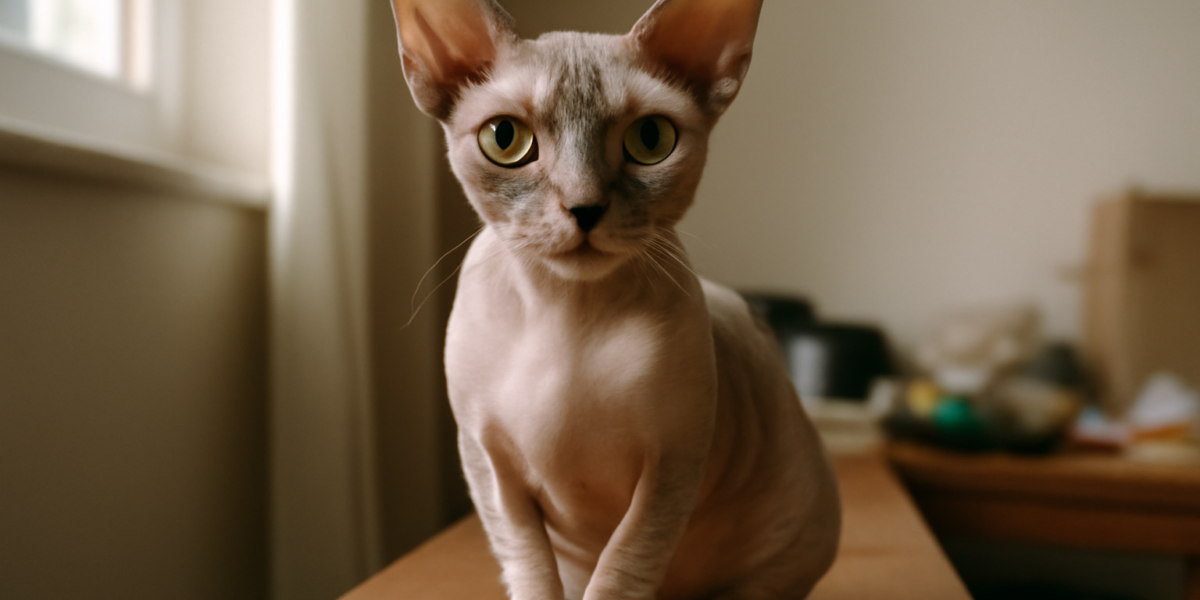
The Minskin cat is a small, mostly hairless dwarf breed developed by Paul McSorley in Boston, Massachusetts in the early 2000s. The goal was a Sphynx-style hairless body on Munchkin-style short legs, with sparse “fur points” of soft hair on the face, ears, legs, and tail — what enthusiasts describe as a cat wearing socks and a hat. The breed remains uncommon, sits in experimental or preliminary status with most major registries, and exists in modest numbers worldwide.
If you are drawn to a Minskin, the honest framing is that you are taking on the care needs of a hairless cat and the structural considerations of a dwarf cat at the same time. That combination is delightful in personality and demanding in practical care. This profile walks through what that actually looks like day to day.
Origin and History
The foundation crosses were Sphynx and Munchkin, with later breeders sometimes incorporating Burmese and Devon Rex to widen the gene pool. The first kitten arrived in 2000, and the breed was named for “miniature” plus “skin.” Development has been deliberate and slow, with most breeders prioritizing structural soundness over rapid expansion.
Major North American registries currently treat the Minskin as a developing or experimental breed. That registry status matters when you are evaluating breeders — a young breed with a small founding population needs careful outcrossing and rigorous health screening, and not all “Minskin breeders” you find online are operating at that standard.
Appearance and Distinct Features
A Minskin is small to medium in size with a substantial, semi-cobby body, short legs, and a relatively long tail. The skin is the defining trait — soft, warm, and chamois-textured with sparse downy fur on the extremities. Coat patterns and colors mirror the Sphynx range, including pointed, solid, tabby, tortie, and bicolor variations. The eyes are large and round, set wide on a broad head with prominent cheekbones.
For comparison with other hairless and near-hairless breeds, the hairless cat breeds comparison walks through the visual differences between Sphynx, Donskoy, Peterbald, Bambino, Minskin, and Levkoy side by side. For the dwarf-leg trait specifically, see the dwarf cat breeds overview.
Temperament and Personality
Minskins are sociable, playful, and people-focused, in line with both their Sphynx and Munchkin parents. They tend to be curious without being neurotic, affectionate without being clingy, and adaptable to multi-pet households. Many enjoy fetch-style play and respond well to clicker training.
The short legs do not slow them down emotionally — they will follow you everywhere — but they do change how the cat navigates the home. Minskins jump, they just choose lower trajectories and more steps. A staircase of perches and ramps is more useful than a single tall cat tree.
Living Environment and Daily Care
Minskins are strict indoor cats. The combination of sparse coat and short legs makes outdoor life unsafe — they cannot regulate temperature efficiently, climb out of trouble well, or run from predators on full-length cat strides. Indoors they thrive in warm, draft-free spaces with multiple bedding nests and access to sunny perches.
Plan a temperature-stable home, soft bedding in several rooms, low-rise climbing furniture, and regular play. The best indoor cats roundup includes other breeds that share this profile if you want to compare options.
Grooming and Skin Care
Hairless and near-hairless skin produces sebum that would normally be wicked away by a coat. On a Minskin, that oil collects in skin folds, ear canals, and along the tail. Plan on weekly to fortnightly gentle baths with a vet-approved cat shampoo, daily eye-corner wipes, and weekly ear cleaning. Skip baths only if your cat’s skin is dry — overbathing causes its own problems.
Sun protection matters too. Indoor sun exposure through a window can sunburn pale Minskin skin in extended sessions. Provide shaded perches and rotate sunbathing spots. Nail caps or trims should be on a tighter schedule than a furred cat because the trim line is more visible and the cat will scratch warm fabric for traction more often.
Health Considerations and Honest Risks
The Minskin combines two parent breeds with specific health considerations, and any honest profile names both:
From the Munchkin parent comes the achondroplastic short-leg trait. Some short-legged cats can develop lordosis (excessive inward spinal curvature) or pectus excavatum (sunken chest wall). These conditions are not universal but they exist in the dwarf-cat lineage, and a reputable breeder will screen kittens for both before placement and disclose any history in their lines.
From the Sphynx parent comes heat sensitivity, the sebum-management workload described above, and a higher-than-average rate of hypertrophic cardiomyopathy in some lines. Annual cardiac screening with a feline cardiologist starting in early adulthood is reasonable for any Sphynx-derived cat. Routine wellness through the adult cat wellness checklist applies as it would for any cat.
Lifespan ranges vary too much between lines for a single number to be useful. Ask the breeder about the longest-lived cats in their pedigree and the most common causes of death they have seen.
Feeding and Nutrition
Minskins burn calories efficiently because hairless skin requires energy to maintain body temperature. They are typically lean and active, but the appetite still needs management. Feed a complete and balanced diet appropriate to life stage, in measured meals rather than free-feeding, with fresh water in multiple locations.
If you are layering a multi-cat household with a Minskin and another breed, the feeding a multi-cat household with different diets guide is worth the read before placement.
Daily Routine and Enrichment
A typical day with a Minskin includes morning play, breakfast, a midday window-warming nap, an afternoon play and snack session, dinner, and evening cuddles. They thrive on routine and read household patterns quickly. Skipping play is more disruptive for a Minskin than for many breeds because their high engagement needs translate to redirected behavior when ignored.
Plan for at least two play sessions per day of ten to fifteen minutes each, rotating between wand toys, fetch toys, puzzle feeders, and quiet enrichment like cardboard boxes and paper bags. The most playful cat breeds roundup covers other engagement-heavy breeds if you want to compare options. A Minskin who gets enough engagement is a calm, contented cat; one who does not is a cat who reorganizes your kitchen.
Multi-Pet Households
Minskins generally do well with other cats and with calm, cat-savvy dogs. Their small size and short legs mean rough play with larger pets carries injury risk, and supervised introductions matter. Many breeders recommend adopting a pair of Minskins together when the household will be empty during work hours, since they are social cats who tolerate solitude poorly.
The introducing a new kitten to a resident cat guide covers the standard protocol. If you have a resident dog, the introducing a new cat to a resident dog guide is the more relevant reference. Multi-cat households tend to suit Minskins well — the warmth of another cat to snuggle against helps with their thermoregulation challenge.
Cost of Ownership Considerations
Pedigree Minskin costs tend to be high — the rarity, careful breeding programs, and small litter sizes contribute. Ongoing care costs run higher than for typical breeds because of the bath supplies, ear and eye cleaning supplies, occasional skin-related vet visits, and the need to keep the home consistently warm in winter (heating bills add up).
The first-year cost of owning a cat guide is a useful baseline; budget toward the higher end for a Minskin. The pet emergency fund savings target page covers building a buffer for unexpected veterinary needs, which is particularly important for a hybrid breed combining two parent lines with their own health considerations.
Adopting a Minskin
You will rarely find a Minskin in a general shelter. Realistic adoption paths are:
- A registered breeder operating with active outcross programs and full health testing
- A breed-specific or hairless-cat-specific rescue contact
- A surrender from a breeder when an adult cat is retired from a breeding program
If a “Minskin” appears at a low price on a classified site, slow down. Verify pedigree paperwork, ask for veterinary records, and consult the reputable rescue red flags guide before committing. The cat-only rescues overview has direction on finding rescues that specialize in pedigree surrenders.
Is the Minskin Right for You?
The Minskin suits adopters who want a small, affectionate, low-shedding companion and who are committed to the practical care of hairless skin and dwarf-legged structural needs. They are excellent for households where someone is home most days and where temperature and surfaces can be controlled.
They are a poor fit for households that want a low-maintenance pet, that travel often without sitters, or that have stairs and cliffs without alternative routes. If you love the look but want a fuller coat or longer legs, compare with the Devon Rex or full-sized Sphynx.
Kitten Care and Early Months
Minskin kittens are small, hairless or near-hairless, and need gentle environmental management from the day they come home. Maintain the kitten’s existing food brand for at least the first two weeks. Plan for four small meals daily until about four months, then taper to three. The kitten feeding schedule by age guide covers the standard transitions, and the kitten vaccination schedule covers the early veterinary visits.
Skin care starts in kittenhood. Gentle weekly baths habituate the kitten to handling, and daily eye and ear checks make the routine feel normal rather than stressful. Keep room temperature stable and provide warm bedding nests in multiple rooms. The kitten parasite prevention guide covers the early-life prophylaxis schedule, and the kitten dental development guide covers tooth eruption and early dental care.
Senior Care for Minskins
Senior Minskins (from about ten years onward) need closer monitoring than younger cats. The combination of hairless skin and dwarf structure means age-related changes show earlier and progress differently than in standard breeds. Twice-yearly veterinary exams, regular bloodwork, and ongoing cardiac monitoring become essential. The senior cat care checklist covers the standard adjustments, and the annual bloodwork for cats guide covers what your vet should screen for.
Watch for skin changes (dryness, lesions, color changes), shifts in litter box habits, water intake patterns, and any reluctance to climb or jump. The breed’s structure makes joint pain potentially more impactful than in long-legged cats, so early intervention with veterinary support keeps quality of life intact.
Frequently Asked Questions
Are Minskins hypoallergenic?
No cat is fully hypoallergenic. Hairless and near-hairless breeds shed less hair, but the allergen Fel d 1 is in saliva and skin oils, not the fur itself. The hypoallergenic cat breeds roundup covers this in more depth.
Do Minskins get cold easily?
Yes. They lose body heat faster than coated cats and seek warm spots constantly. Provide heated beds in winter, draft-free rooms, and avoid exposure to outdoor cold.
Can Minskins jump like regular cats?
They jump, but with shorter trajectories. Most Minskins use furniture as steps rather than launching from the floor to a counter in one movement.
How often do they need baths?
Weekly to every two weeks for most cats, adjusted to skin condition. Overbathing dries the skin; underbathing leads to greasy buildup in folds.
Are short-legged cats in pain?
Most short-legged cats live without obvious discomfort, but the structural risks (lordosis, pectus excavatum) are real and worth screening for. A breeder who refuses to discuss these risks is a breeder you should walk away from.
Looking to adopt a Minskin Cat Breed Profile?
Browse Minskin Cat Breed Profile cats and mixes available for adoption from shelters and rescues near you.
Find Minskin Cat Breed Profile Cats for Adoption