Last updated: May 4, 2026
In this article
Quick Comparison
Nebelung vs Russian Blue is a comparison that some registries refuse to make. TICA recognizes the Nebelung as a separate breed; CFA does not, and several registries treat the Nebelung as a longhair Russian Blue variety rather than a distinct breed. Functionally, the choice between them is almost entirely about coat length and grooming preference.
The Russian Blue is the well-established shorthair blue breed with a plush double coat, vivid green almond eyes, and a quiet, reserved temperament. The Nebelung — German for “creature of the mist” — is the semi-longhair counterpart, developed by Cora Cobb in the United States starting in the early 1980s using Russian Blue lines and selected longhair carriers.
If you want an established, widely available shorthair blue cat with minimal grooming demands, the Russian Blue is your match. If you want the same gentle reserved temperament wrapped in a flowing semi-longhair coat, the Nebelung is the better choice. The rest of this Nebelung vs Russian Blue comparison spells out the practical differences.
Origin and History
The Russian Blue traces to the port city of Arkhangelsk in northern Russia, with sailors reportedly bringing the cats to Britain in the mid-19th century. The breed appeared at the first major British cat shows in the 1870s and was formally distinguished from other “blue” cats by the late 1880s. Twentieth-century breeding programs in Britain and Scandinavia preserved the breed through both World Wars, and today the Russian Blue is widely available worldwide. Our Russian Blue cat breed profile covers the breed’s full background.
The Nebelung’s history begins with Cora Cobb of Denver, Colorado, in the early 1980s. Cobb adopted a longhair black cat that produced a longhair blue male kitten in a litter sired by a shorthair black domestic; the resulting cat, named Siegfried, was followed by a longhair blue female from the same parents named Brunhilde. Cobb worked with TICA to develop a breed standard based on Russian Blue type with a semi-longhair coat. TICA accepted the breed in the late 1980s; CFA has not granted championship recognition.
Both breeds appear in our overview of cat breeds from Russia, recognizing the Nebelung’s clear genetic link to the Russian Blue foundation.
Appearance and Build
Both breeds share the same body type — medium-sized, finely boned, with longer legs and an elegant overall line. The head is angular and wedge-like, eyes are vivid green and almond-shaped, and the body silhouette is balanced rather than cobby.
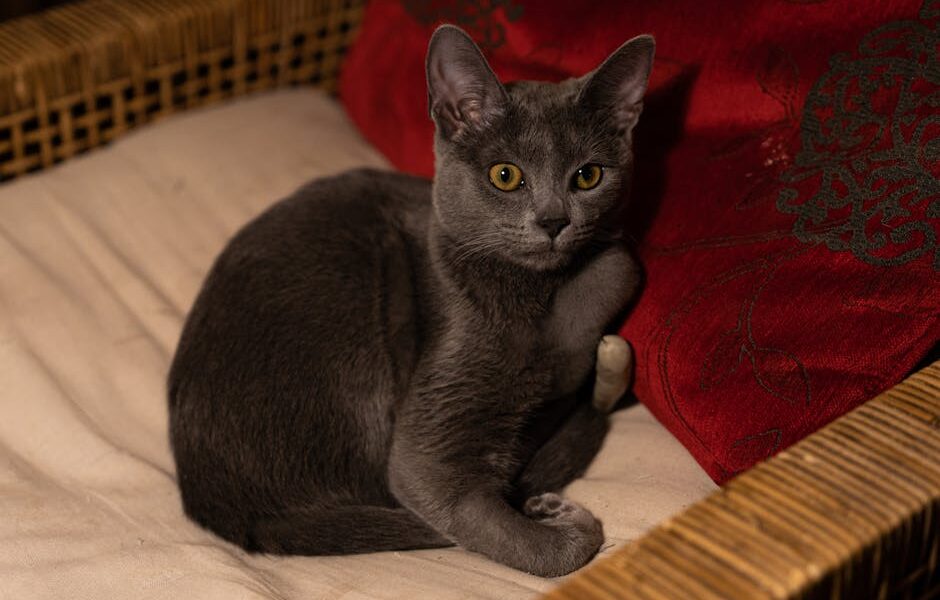
The Russian Blue’s coat is the breed’s signature feature: a double-layered plush short coat with silver-tipped guard hairs that catches the light when the cat moves. The coat stands slightly away from the body, giving the breed its distinctive plush silhouette without being long.
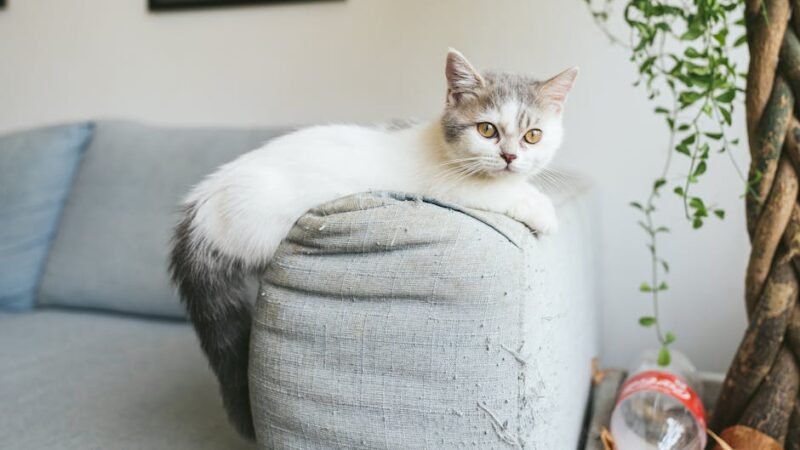
The Nebelung’s coat is semi-long, silky, and likewise double-layered, with feathering on the ears, britches, belly, ruff, and tail. The same silver tipping appears on the longer guard hairs, producing the misty effect that gave the breed its name. The Nebelung’s coat is fine and does not mat as readily as a Persian’s, but it requires more grooming attention than the Russian Blue’s short coat.
Side by side, the Nebelung looks taller and softer-edged because of the longer coat; the Russian Blue looks more compact and plush. Both are genuinely beautiful blue cats with the same vivid green eye color.
Temperament and Personality
Both breeds share an essentially identical temperament, which is one reason some registries treat the Nebelung as a longhair Russian Blue variety. Both are reserved with strangers, deeply bonded to their families, gentle in their demands for attention, and slow to trust new people or environments.
With their bonded humans, both breeds are deeply affectionate without being demanding. They follow their humans from room to room, settle nearby rather than insisting on lap time, and vocalize sparingly with soft chirps. They are not standoffish — they are simply selective and patient about how they engage.
Both breeds rank among the calmest cat breeds and adapt well to quiet households, single-person homes, and routines with predictable patterns. Both are sensitive to chaos and prefer gradual introductions to new people, pets, and environments.
Care, Grooming and Activity Needs
Coat length is the main practical difference between caring for the two.
Daily activity
Both breeds enjoy interactive play but at moderate levels. Plan for one or two structured play sessions per day with a wand toy or fetch toy, plus puzzle feeders for mental work. Both breeds are happy to play alone for short stretches and tolerate predictable alone time better than Burmese-line breeds.
Grooming
The Russian Blue’s plush double coat needs only weekly brushing, with extra attention during seasonal coat change to remove loose undercoat. The Nebelung’s semi-longhair coat needs combing two to three times per week, with particular attention to the ruff, britches, and tail feathering. Neither breed requires professional grooming or regular bathing.
Kittens and seniors
Both breeds tend to be gentle from a young age and slow-maturing — Nebelungs in particular may not reach full coat development until age two. Both breeds benefit from gentle early socialization to children, household sounds, and carrier travel within the first twelve weeks for the calmest adult dispositions. Senior cats of both breeds tend to remain affectionate and benefit from senior cat care attention to weight, dental health, and joint comfort.
Diet for both breeds should emphasize portioned meals and quality protein-forward food. Both breeds are moderate eaters compared with food-driven Burmese-line cats and rarely face the same obesity risk, but free-feeding still encourages drift over years. Track weight at every vet visit.
Health and Lifespan
The Russian Blue is generally regarded as a robust breed with no widely documented breed-specific genetic disorders at the level of breeds like the Korat or Burmese. Routine cardiac screening, dental care, and weight management cover most of the practical health agenda.
The Nebelung shares the Russian Blue’s general robustness, with the same caveat that the breed’s small founding population makes careful pedigree work important. Reputable Nebelung breeders work to maintain genetic diversity through approved Russian Blue outcrosses where allowed by their registry.
Both breeds are typically long-lived with indoor lifestyles, vaccination, weight management, and regular vet care. Use an adult cat wellness checklist to structure annual visits, and watch for any cardiac concerns through middle age.
Living Situation Fit
Both breeds adapt well to apartments and houses, with both being well-suited to quieter households. Solo Russian Blues and solo Nebelungs cope better with predictable alone time than most breeds, making them a reasonable choice for owners who work outside the home (with appropriate enrichment and ideally a second pet companion).
Children: both breeds prefer calmer households; gentle older children are typically fine. Other pets: both breeds do best as only cats or with one calm companion introduced gradually. Sudden chaotic introductions stress both breeds.
Both are firmly indoor cats. Both are reserved enough that outdoor freedom is risky, and both are valuable enough that theft is a documented concern in some regions. Provide indoor enrichment instead — see our indoor cat enrichment guide.
Climate: both breeds tolerate a range of conditions. The Nebelung’s longer coat suits cooler climates particularly well; the Russian Blue’s plush short coat handles a broader range of temperatures with appropriate climate control indoors. Both breeds enjoy quiet warm sleeping nooks and access to sunny windows.
Travel and routine: both breeds prefer stable households and gradual changes. The Russian Blue tolerates a steady absence pattern (a working owner with predictable hours) better than chaotic schedules. Nebelungs are similar. Multi-day boarding stresses both breeds; a quality in-home sitter who respects the cat’s reserved nature works far better.
Cost and Availability
The Russian Blue is widely available from established breeders worldwide. The Nebelung is significantly less common, with smaller breeder networks concentrated in North America, parts of Europe, and Russia itself. Pricing varies by region and lineage, with show-quality kittens commanding the highest prices in both breeds.
Adoption is realistic for the Russian Blue. Surrendered Russian Blues appear in rescues with some regularity, and our guide to adopting a rescue Russian Blue covers what to expect. Nebelungs are rarer in rescue but worth searching for through breed-aware networks and our cat adoption hub.
Whichever breed you pursue, ask reputable breeders for parent cat introductions, written contracts, and any available health-test results. Budget for ongoing care; our first-year cost of owning a cat guide outlines the broader picture.
Decision Framework: When to Choose Each
Choose the Russian Blue if you want an established, widely available, gentle reserved cat with minimal grooming demands. The Russian Blue suits introverts, calm households, owners who travel occasionally, and anyone who wants a beautiful blue cat without committing to two-or-three-times-weekly combing.
Choose the Russian Blue also if breeder availability matters in your region — finding a Russian Blue is significantly easier than finding a Nebelung in most parts of the world. The breed’s plush short coat is also a practical choice for warmer climates.
Choose the Nebelung if you love the same gentle reserved temperament but prefer a flowing semi-longhair coat with feathering and a misty silver-tipped finish. The Nebelung suits owners willing to commit to two-or-three-times-weekly combing and who appreciate a slightly less common breed with the same Russian Blue heart.
Choose the Nebelung also if you live in a cooler climate or simply prefer the visual softness of a longer coat. Both breeds share the same temperament, the same moderate activity level, and the same suitability for quiet households — the deciding factor is almost entirely coat length.
Frequently Asked Questions
Are Nebelungs and Russian Blues the same breed?
It depends on the registry. TICA recognizes the Nebelung as a separate breed; CFA does not, and some registries treat the Nebelung as a longhair Russian Blue variety. Genetically and temperamentally, they share most of their identity.
Do Nebelung coats really need that much grooming?
The Nebelung’s coat is finer and less prone to matting than a Persian’s, but two to three combing sessions per week prevent tangles around the ruff, britches, and tail. The Russian Blue’s short coat needs only weekly brushing.
Are either breed hypoallergenic?
Neither is officially hypoallergenic. Russian Blues are sometimes anecdotally tolerated by mild allergy sufferers, and Nebelungs share the same Fel d 1 production pattern. Test exposure before committing if anyone in your household has reacted to cats.
Are they good with other pets?
Both breeds do best as only cats or with one calm feline companion introduced gradually. They tolerate cat-friendly dogs but prefer steady, predictable household dynamics.
Which breed is better for first-time owners?
Both can work for first-time owners who appreciate a quieter cat. The Russian Blue is significantly easier to find in most regions; the Nebelung is the choice for owners who actively want a longhair variety with the same Russian Blue temperament.
Why is the Nebelung not recognized everywhere?
Some registries view the Nebelung as a longhair variety of Russian Blue rather than a distinct breed and therefore do not grant separate championship status. The breed’s small founding population and the close genetic relationship to the Russian Blue both contribute to this debate.
Will my Nebelung shed a lot?
Nebelungs shed moderately, more during seasonal coat changes. Two to three combing sessions per week minimize loose hair around the home. Russian Blues shed less by volume but more visibly given the silver-tipped coat color.
Looking to adopt a Nebelung vs Russian Blue?
Browse Nebelung vs Russian Blue cats and mixes available for adoption from shelters and rescues near you.
Find Nebelung vs Russian Blue Cats for Adoption