
Last updated: May 17, 2026
In this article
- Pharaoh Hound Quick Facts
- Pharaoh Hound Personality and Temperament
- Pharaoh Hound Appearance
- Exercise Needs
- Grooming Requirements
- Health and Lifespan
- Pharaoh Hound with Children and Other Pets
- Training the Pharaoh Hound
- History of the Pharaoh Hound
- Frequently Asked Questions About the Pharaoh Hound
- Adopt a Pharaoh Hound
Pharaoh Hound Breed Profile
The Pharaoh Hound is one of the oldest and most distinctive dog breeds in the world — a sleek, athletic sighthound that carries the air of an ancient statue brought to life. What sets the Pharaoh Hound apart from nearly every other breed is a trait as endearing as it is unique: when excited or happy, the dog’s nose and ears flush a deep rose-pink, earning it the affectionate nickname “the blushing dog.” Graceful yet goofy, regal yet warm, the Pharaoh Hound forms deep bonds with its family and brings a quiet elegance to every room it enters. Whether you are an experienced sighthound owner or simply captivated by this breed’s otherworldly beauty, this profile covers everything you need to know about the Pharaoh Hound — from temperament and exercise needs to health, history, and adoption.
Pharaoh Hound Quick Facts
| Characteristic | Details |
|---|---|
| Official Name | Pharaoh Hound (Kelb tal-Fenek in Maltese) |
| Origin | Malta |
| Size | Medium — 21 to 25 inches at the shoulder |
| Weight | 45 to 55 pounds |
| Lifespan | 11 to 14 years |
| Coat | Short, smooth, low-maintenance |
| Color | Tan, rich tan, or chestnut with white markings |
| Energy Level | High |
| Shedding | Low to moderate |
| Good with Kids | Yes, with supervision |
| Good with Other Dogs | Generally yes |
| Prey Drive | High |
| AKC Group | Hound Group |
| National Dog of Malta | Yes |
Pharaoh Hound Personality and Temperament
The Pharaoh Hound is a study in charming contradictions. On one hand, this breed carries itself with a noble, composed dignity that commands attention the moment it enters a room. On the other, it is an unapologetic clown in the home — playful, mischievous, and deeply affectionate with the people it trusts.
Pharaoh Hounds are intensely loyal and form strong bonds with their immediate family. They are not aloof or indifferent like some sighthound breeds; most Pharaoh Hounds actively seek out human company and enjoy being close to their owners. Expect a dog that wants to be part of every activity, from morning runs to evening relaxation on the sofa.
Their playful streak runs deep. Pharaoh Hounds retain a puppylike enthusiasm well into adulthood, entertaining themselves and their families with bursts of energy and a talent for making people laugh. At the same time, they are sensitive dogs that pick up on emotional cues and respond poorly to harsh correction or a tense household environment. Positive, reward-based interaction brings out the very best in them.
With strangers, the Pharaoh Hound can be cautious at first but rarely aggressive. Early and consistent socialization helps this breed develop the confidence to greet new people and situations with curiosity rather than anxiety. Once a Pharaoh Hound decides you are a friend, that warmth is genuine and lasting.
Pharaoh Hound Appearance
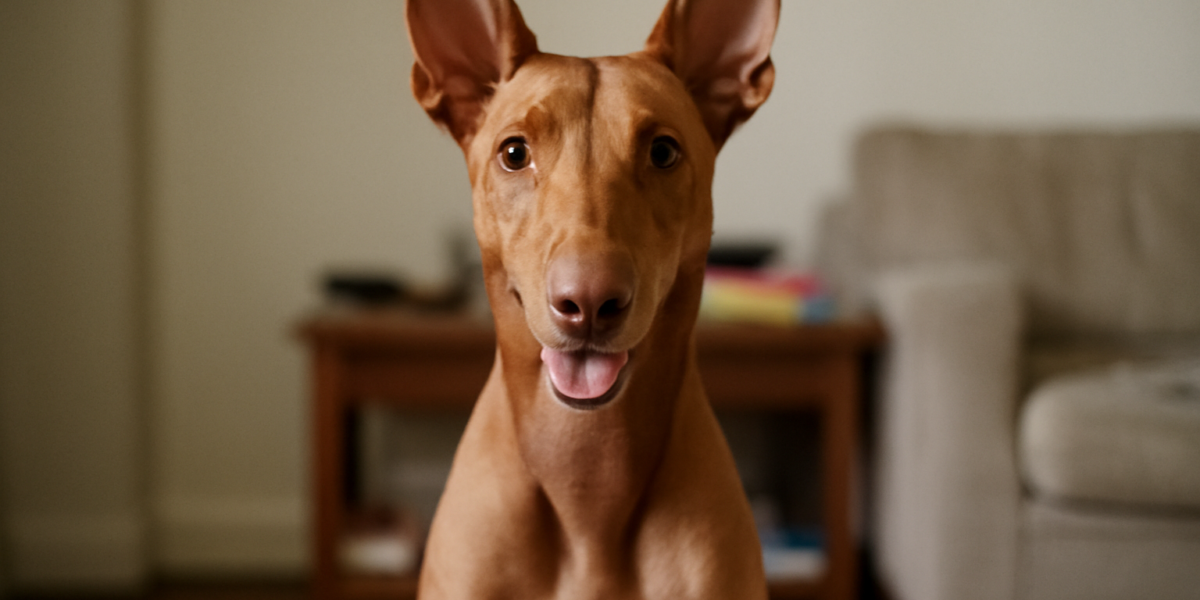
Few breeds command attention quite like the Pharaoh Hound. Its silhouette is unmistakable: a lean, muscular body built for speed, with long legs, a deep chest, a tucked-up abdomen, and a tapering tail that curves slightly when the dog is in motion. The head is long and chiseled, with a slight foreface and a clean stop that gives the breed its aristocratic profile.
Perhaps the most striking features are the large, high-set ears that stand fully erect when the dog is alert, and the amber or golden eyes that glow with intelligence and warmth. The coat is short, smooth, and fine to the touch, appearing in shades of rich tan, chestnut, or golden red, often with white markings on the chest, toes, and tip of the tail.
The famous “blush” of the Pharaoh Hound — a deep rose flush that spreads across the nose leather and inner ear skin when the dog is happy or excited — is a phenomenon unique to this breed and is considered a hallmark of the true Pharaoh Hound. Witnessing it for the first time is a genuinely surprising and delightful experience that owners never tire of.
Exercise Needs
The Pharaoh Hound is a working sighthound built for speed and endurance, and its exercise requirements reflect that heritage. This is not a low-energy breed content with a short daily walk around the block. A Pharaoh Hound that does not receive adequate physical activity will become restless, destructive, and difficult to live with.
At minimum, plan for at least 60 to 90 minutes of vigorous exercise every day. The Pharaoh Hound excels in activities that allow it to run at full speed in a safely enclosed area. Lure coursing — a sport in which dogs chase a mechanically operated lure across an open field — is ideally suited to this breed and provides both physical exertion and mental stimulation that taps into deep instincts.
Fenced yards are essential, as the Pharaoh Hound’s prey drive will send it sprinting after any fast-moving animal with complete disregard for traffic or distance. Underground electric fences are not recommended for this breed; the drive to chase is often stronger than the deterrent. Agility, fast-paced fetch sessions, and off-leash running in secure dog parks are all excellent outlets. Mental stimulation through training and puzzle toys should complement physical exercise to keep this highly alert breed fully satisfied.
Grooming Requirements
One of the practical advantages of owning a Pharaoh Hound is the breed’s minimal grooming needs. The short, smooth coat requires very little maintenance to keep it looking clean and healthy. A weekly once-over with a rubber grooming mitt or a soft-bristle brush is usually sufficient to remove loose hairs and distribute the coat’s natural oils, leaving the coat with its characteristic glossy sheen.
Bathing is only necessary when the dog is visibly dirty or develops an odor, which is infrequent given the breed’s naturally clean habits. Pharaoh Hounds tend to be fastidious about their own cleanliness, much like cats, which makes them pleasant housemates.
Routine care should include regular nail trimming — every three to four weeks — to prevent discomfort and gait problems. Ears should be checked weekly for signs of debris or infection, particularly given the large, open-cup ear structure that can collect dust. Dental hygiene is important for all breeds; brushing teeth several times per week and providing dental chews helps prevent periodontal disease. Overall, the Pharaoh Hound’s grooming routine is straightforward and time-efficient, making it an appealing choice for owners who prefer a low-maintenance coat.
Health and Lifespan
The Pharaoh Hound is considered a generally healthy and robust breed, benefiting from centuries of natural selection in the demanding environment of Malta. Unlike many purebred dogs developed through intensive closed-registry breeding, the Pharaoh Hound has a relatively limited history of breed-specific genetic disorders.
With proper care, a well-bred Pharaoh Hound can be expected to live between 11 and 14 years. The breed is not predisposed to common orthopedic issues such as hip dysplasia at the same rate as heavier breeds, though maintaining a lean body weight throughout life is still important for joint health.
Owners should be aware that sighthound breeds, including the Pharaoh Hound, tend to be sensitive to anesthesia due to their low body fat percentage. Always inform your veterinarian of this sensitivity before any surgical procedure. The breed can also be sensitive to certain medications and chemical compounds. Routine veterinary checkups, up-to-date vaccinations, and consistent parasite prevention are the cornerstones of keeping a Pharaoh Hound healthy. Responsible breeders screen for hereditary eye conditions and other known concerns, so sourcing from health-tested lines remains important.
Pharaoh Hound with Children and Other Pets
The Pharaoh Hound is an affectionate and playful companion that generally gets along well with children, particularly when raised alongside them from a young age. Its gentle temperament and love of play make it a fun household dog for active families. However, due to its size and exuberant energy during play, interactions with very young children should always be supervised to prevent accidental knockdowns.
With other dogs, the Pharaoh Hound tends to be sociable and enjoys the company of canine companions, especially those of similar size and energy level. Introducing a Pharaoh Hound to resident dogs through slow, controlled meet-and-greets in neutral territory generally yields good results.
Cats and small animals are a different consideration. The Pharaoh Hound has a strong, instinctive prey drive inherited from its hunting heritage, and small furry or feathered animals can trigger a chase response regardless of how well-mannered the dog is in other contexts. Some Pharaoh Hounds can learn to coexist peacefully with cats when introduced carefully and at a young age, but this is never guaranteed. Households with rabbits, guinea pigs, birds, or similarly sized small animals should exercise significant caution. The prey drive is not a training failure — it is a deeply ingrained characteristic of the breed that must be managed responsibly.
Training the Pharaoh Hound
Training a Pharaoh Hound rewards patience, consistency, and a sense of humor. This breed is intelligent and curious, which means it learns quickly — but that same intelligence means it will look for shortcuts and may test boundaries if training becomes repetitive or heavy-handed.
Positive reinforcement is the only effective approach with this sensitive breed. High-value food rewards, enthusiastic verbal praise, and play-based rewards all work well. Harsh corrections, raised voices, or punitive training methods will cause the Pharaoh Hound to shut down, become anxious, or simply disengage. Keep training sessions short, upbeat, and varied to hold the dog’s interest.
Basic obedience — sit, stay, recall, leash manners — should begin in puppyhood, and a reliable recall in particular is critical for a breed with a strong prey drive. Socialization should be ongoing throughout the dog’s first two years, exposing it to a wide variety of people, environments, sounds, and other animals. The Pharaoh Hound is not an ideal breed for first-time dog owners unfamiliar with sighthound tendencies, but an experienced owner who understands its nature will find it a willing and responsive training partner.
History of the Pharaoh Hound
The Pharaoh Hound holds the distinction of being the national dog of Malta, where it is known by the Maltese name Kelb tal-Fenek, meaning “rabbit dog” — a reference to its traditional use hunting rabbits across the rocky terrain of Malta and the neighboring island of Gozo.
The breed’s origins are a subject of fascination and some debate. Its striking physical resemblance to the jackal-headed god Anubis and to the slender hunting dogs depicted in ancient Egyptian tomb paintings dating back more than 5,000 years has led many to theorize a direct lineage from those ancient dogs. Phoenician traders are believed to have brought these dogs westward across the Mediterranean, where isolated island populations preserved the type over millennia.
Modern genetic research suggests the Pharaoh Hound’s resemblance to ancient Egyptian dogs may be a case of convergent evolution rather than direct descent — meaning the breed developed similar traits independently due to similar environments and selective pressures. Regardless of the precise genetic history, the Pharaoh Hound remains a living connection to some of humanity’s oldest relationships with domesticated dogs. It was recognized by the American Kennel Club in 1983 and remains a rare and prized breed worldwide.
Frequently Asked Questions About the Pharaoh Hound
Is the Pharaoh Hound a good family dog?
Yes, the Pharaoh Hound can be an excellent family dog for the right household. It is affectionate, playful, and loyal to its family members. Active families who can provide ample daily exercise and mental stimulation will find the Pharaoh Hound a joyful and engaging companion. Families with very small children should be mindful of the dog’s energy during play, and those with small pets should carefully consider the breed’s strong prey drive before adopting.
How much exercise does a Pharaoh Hound need each day?
A Pharaoh Hound needs at least 60 to 90 minutes of vigorous exercise daily. This should include opportunities to run freely in a securely fenced area, as this breed was built for speed and requires outlets that match its athletic ability. Lure coursing, agility, and active play sessions are all excellent options. A Pharaoh Hound that is under-exercised can become destructive and develop anxious behaviors.
Why does the Pharaoh Hound blush?
The blushing behavior unique to the Pharaoh Hound is caused by increased blood flow to the skin when the dog is excited, happy, or stimulated. Because the nose leather and the inner ear skin lack heavy pigmentation, this flush becomes visible as a distinct rose-pink color. It is an entirely natural physiological response and one of the most endearing and distinctive traits of the breed. Not all individuals blush with equal intensity, but the phenomenon is considered a hallmark of authentic Pharaoh Hound type.
Are Pharaoh Hounds rare?
Yes, the Pharaoh Hound is considered a rare breed, particularly outside of Malta where it remains more common as a working dog. In the United States, it consistently ranks among the less commonly registered breeds with the American Kennel Club. Prospective owners should expect wait times when seeking a puppy from a responsible breeder, and adoption through a breed-specific rescue is another avenue worth exploring. The breed’s rarity makes it all the more important to work with knowledgeable, ethical sources.
Adopt a Pharaoh Hound
If the Pharaoh Hound sounds like the right match for your home and lifestyle, consider opening your heart to a dog in need. While Pharaoh Hounds are rare in general rescue populations, sighthound-specific rescues and breed-specific organizations occasionally have Pharaoh Hounds and similar breeds available for adoption. Adopting a rescue dog means giving a second chance to an animal that deserves a loving, permanent home.
Visit our dog adoption page to browse dogs currently available through Walk Me Home Rescue and to learn more about our adoption process. Whether you are searching for a Pharaoh Hound specifically or are open to a sighthound with a similar temperament, our team is here to help you find your perfect match.


