Last updated: May 4, 2026
In this article
Overview: Spitz Cousins With Different Brains
The Pomeranian vs papillon comparison is a fun one because the two breeds look superficially similar — small, fluffy, alert, and full of personality — but they come from very different working backgrounds and have very different brains. The Pomeranian is a Spitz-type companion dog with deep barking instincts. The Papillon is a continental toy spaniel with arguably the highest trainability of any toy breed.
If you are deciding between these two for your next small-dog adoption, the choice usually comes down to whether you want a fluffy lap dog who alerts the entire neighborhood, or a butterfly-eared genius ready to compete in agility. Both make wonderful companions, but they suit different households.
This guide walks through everything an adopter should know to make the right call: history, size, temperament, training, exercise, grooming, health, costs, and where to find these breeds in rescue.
History and Origin
The Pomeranian descends from the Spitz dogs of the Pomerania region of northern Europe. Originally weighing 30 pounds or more and used for sled-pulling and herding, the breed was selectively bred down to lap-size after Queen Victoria popularized smaller specimens in the late 1800s.
The Papillon traces back to dwarf spaniels depicted in Renaissance paintings across France, Italy, and Spain as far back as the 1500s. Marie Antoinette is said to have owned one. The name “Papillon” is French for butterfly — a reference to the breed’s distinctive winged ears. The drop-eared variety is called the Phalène (moth).
The Pom is a working dog in a tiny package; the Papillon is a noble companion bred for centuries to charm royalty and learn quickly.
Size and Appearance
Pomeranians stand 6 to 7 inches at the shoulder and weigh 3 to 7 pounds. They are double-coated with a thick ruff around the neck, fox-like face, and a heavily plumed tail carried over the back. The breed comes in many colors but orange and red are most common.
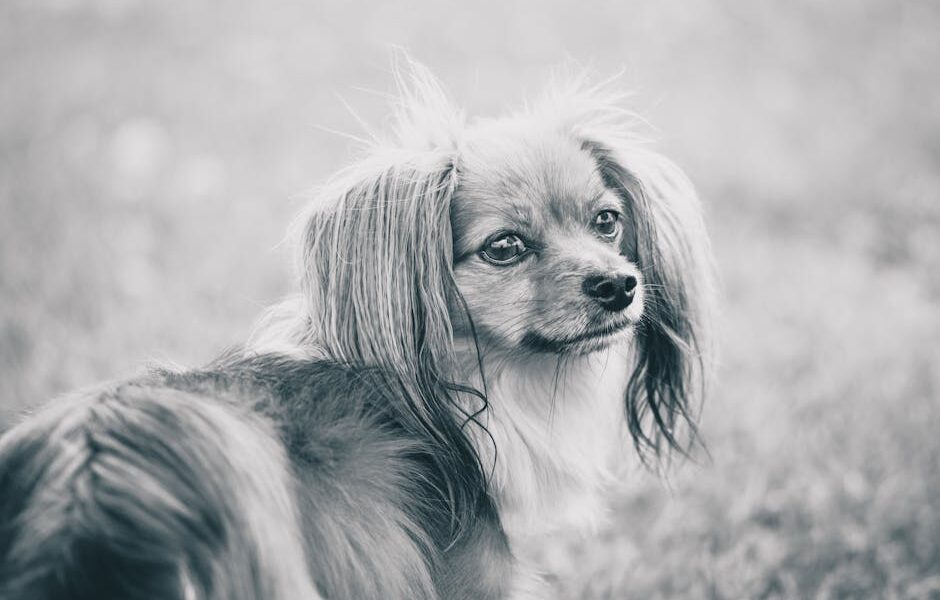
Papillons stand 8 to 11 inches at the shoulder and weigh 5 to 10 pounds. They are taller, leaner, and lighter-boned than Poms. The breed has a single coat (no dense undercoat), a long silky body coat, and the famous fringed butterfly ears. Coat colors are always white with patches of color.
To an experienced eye, the Papillon’s elegant build and longer legs distinguish it instantly from the cobby, fluffy Pomeranian.
Temperament and Personality
Pomeranians are bold, extroverted, and self-assured. They greet strangers with confidence (and barking), bond readily with their families, and tend to think of themselves as much larger than they actually are. They are friendly but vocal — alerting is in their DNA.
Papillons are equally outgoing but channel their energy into engagement and learning rather than alerting. They are happy, busy little dogs who love mental challenges. Most are friendly with strangers, get along well with other dogs, and adapt readily to new situations.
Both breeds do well with respectful children but neither is ideal for households with toddlers due to their fragility. Both can live happily with cats when introductions are managed well.
Pomeranians often pick a favorite person within the household but distribute affection generously. Papillons tend to bond with the whole family equally. Both breeds suffer separation anxiety if left alone for long stretches — these are companion dogs, not pets that thrive while you work a 12-hour shift. Adopters with demanding work schedules should plan for midday dog-walking help or doggy daycare.
One subtle difference: Pomeranians can be more reactive to other small dogs on walks if not socialized early, while Papillons tend to be naturally social and adapt easily to dog parks and group situations. Both benefit from puppy class or adult-dog socialization classes through a force-free trainer.
Trainability
Papillons are widely considered the smartest toy breed and consistently rank in the top 10 of all dog breeds for trainability. They learn new cues in fewer than five repetitions in many cases, and they actively seek out work and games. Papillons routinely place at the highest levels in agility, obedience, rally, and trick-dog competitions, holding their own against breeds many times their size.
Pomeranians are intelligent but more independent. They learn well with positive reinforcement and food motivation, but they are easily distracted by anything bark-worthy. Reliable recall takes longer to install in a Pom than in a Papillon.
For both breeds, force-free positive-reinforcement methods are essential. Both can shut down emotionally with harsh corrections.
Exercise Needs
Papillons are deceptively athletic. They need 30 to 60 minutes of activity per day and thrive with a job to do — agility, treibball, scent work, or even fetch in the backyard. A bored Papillon is a creative Papillon, often in destructive ways.
Pomeranians need 20 to 30 minutes of daily walking plus indoor play. They are happy to nap on a lap between adventures and are slightly less driven than Papillons.
Both breeds are excellent apartment dogs given their size, but the Papillon’s mental energy means small-space adopters need to commit to daily training sessions or interactive games.
Grooming
Pomeranians require significant grooming. Brush every day or every other day to prevent mats, especially around the legs, behind the ears, and on the chest ruff. They blow coat seasonally and shed year-round. Plan on a professional groomer every six to eight weeks for a sanitary trim — and never let anyone shave a Pom down, as the coat may not grow back correctly.
Papillons are surprisingly low-maintenance for a long-coated breed. Their single coat does not mat as readily as a Pom’s double coat. A thorough brushing two to three times a week keeps them tidy. They shed moderately. Bathing every six to eight weeks is plenty for most.
Both breeds need weekly nail trims, regular ear cleaning (especially the Pap with its fringed ears), and consistent dental care.
Health and Lifespan
Both breeds are long-lived. Pomeranians typically reach 12 to 16 years and Papillons reach 13 to 16 years, with many individuals living past 17 in either breed.
Shared health concerns include luxating patella, dental disease (small mouths crowd teeth), and hypoglycemia in very young puppies. Both breeds benefit from a harness rather than a collar to protect the trachea.
Pomeranians are at higher risk for tracheal collapse, alopecia X (black skin disease), and Pomeranian-specific cardiac conditions. Papillons have a higher genetic incidence of progressive retinal atrophy and a few specific neurological conditions. Reputable rescues will share known health history at adoption. Routine vet checks and dental cleanings under anesthesia (typically every 1 to 2 years from middle age) are the biggest investments for either breed.
Dental disease is the single biggest preventable health issue across both breeds. Toy mouths crowd teeth and tartar accumulates faster than in larger breeds. Daily brushing with dog-safe toothpaste is the gold standard; vet-approved dental chews and water additives help as second-tier prevention. Untreated periodontal disease has been linked to heart, kidney, and liver complications in older toy dogs.
Weight management matters disproportionately for tiny breeds. A pound of extra weight on a 5-pound dog is the equivalent of 30 pounds on a human and stresses joints, the heart, and the trachea. Use a measuring cup, limit treats to 10% of daily calories, and weigh monthly.
Cost and Rescue Availability
Adoption fees range from $200 to $500 through most rescues, including spay/neuter, vaccines, microchip, and vet check. Pomeranians are far more common in shelters than Papillons — Poms are popular and often surrendered, while Paps are rarer overall.
Browse dogs available for adoption or read our guide to adopting a rescue Pomeranian. Papillons sometimes appear at toy breed rescues; signing up for breed-specific rescue alerts is the most reliable way to find one. Many Paps end up in rescue when older owners can no longer care for them, so adopting an adult is often a wonderful option.
Buying from a breeder runs $1,500 to $4,000 for either breed.
Beyond adoption, expect $1,500 to $3,000 per year for routine vet care, food, grooming, and pet insurance for either breed. Pomeranians cost more in grooming (professional groomer every 6 to 8 weeks averages $60 to $100 per session) while Papillons cost more in dog-sport gear and class fees if you want to channel that working-dog brain.
Look closely at the rescue adoption application walkthrough guide before applying, especially for Papillons — competition for the few that come into rescue can be intense, and a thorough application puts you ahead.
Which Is Right for You
Choose a Pomeranian if you want a fluffy, vocal extrovert who is content to nap on the couch between short bursts of activity, you enjoy grooming or are willing to pay for it, and you can tolerate alert barking.
Choose a Papillon if you want one of the most trainable and athletic toy breeds in existence, you are excited about clicker training or dog sports, and you want a dog who can hike, travel, and engage with the world without overheating in cold weather.
For shelter dogs, individual personality often beats breed tendency. A foster home assessment is your best information source. The 3-3-3 rule applies to small breeds too — give any new dog at least three weeks before judging their settled personality.
Frequently Asked Questions
Which breed is more trainable, Pomeranian or Papillon?
The Papillon is significantly more trainable. It consistently ranks among the top 10 most trainable breeds of any size and excels in dog sports.
Are Pomeranians or Papillons better with kids?
Both are tolerant of respectful older children but too fragile for toddlers. Papillons tend to be slightly more patient with active children due to their easygoing temperament.
Which breed sheds more?
Pomeranians shed substantially more due to their double coat and seasonal coat blow. Papillons shed moderately year-round but have no undercoat to release in clumps.
Are Papillons rare in rescue?
Yes, Papillons are less commonly surrendered than Pomeranians. Sign up for breed-specific rescue alerts and consider adopting an adult Papillon, which is often available when senior owners can no longer care for them.
Can either breed be left alone all day?
Neither breed thrives with eight or more hours of solitude. Both form strong bonds with their people. A midday dog walker or a doggy daycare arrangement is recommended for working households.
Looking to adopt a Pomeranian vs Papillon?
Browse Pomeranian vs Papillon dogs and mixes available for adoption from shelters and rescues near you.
Find Pomeranian vs Papillon Dogs for Adoption