Last updated: May 4, 2026
In this article
- Overview of the Raas Cat
- Origin and History
- Appearance and Distinct Features
- Temperament and Personality
- Living Environment
- Grooming and Coat Care
- Health Considerations and Honest Risks
- Feeding and Nutrition
- Daily Routine and Enrichment
- Multi-Pet Households
- Cost of Ownership Considerations
- Adopting a Raas Cat
- Is the Raas Right for You?
- Kitten Care and Early Months
- Frequently Asked Questions
Overview of the Raas Cat
The Raas cat — also spelled Ras or Madura — is a heritage cat from Raas Island, part of the Madura archipelago off the eastern coast of Java in Indonesia. It is not a designed pedigree breed in the Western sense; it is a naturally occurring island population that has been geographically isolated long enough to develop a distinctive look and temperament. Local communities have lived alongside these cats for generations, and the breed sits in the early stages of pedigree recognition rather than holding established status with major registries.
If you live in Indonesia or Singapore, the Raas may be an accessible breed to learn about and possibly adopt from a heritage program. Outside Southeast Asia, the breed is essentially absent. This profile gives you the honest picture of what the Raas is, what life with one looks like, and why most people will admire the breed from afar rather than welcome one home.
Origin and History
Raas Island sits in the Madura archipelago, and oral history suggests cats have been part of village life there for centuries. The local population is genetically isolated thanks to the geography, and Indonesian researchers and cat fanciers in the 2000s and 2010s began documenting the breed for possible pedigree status. The Raas remains rare even within Indonesia, with concerns about hybridization with off-island domestic cats threatening the heritage population.
Some Indonesian cat clubs and the World Cat Federation have engaged with Raas documentation, but registry status varies. Treat any “Raas cat” outside Indonesia as either a true imported heritage cat with pedigree paperwork or a Raas-resembling domestic cat — both can be wonderful companions, but the labels matter for honest conversation. The Asian cat breeds overview places the Raas in the broader context of regional heritage cats.
Appearance and Distinct Features
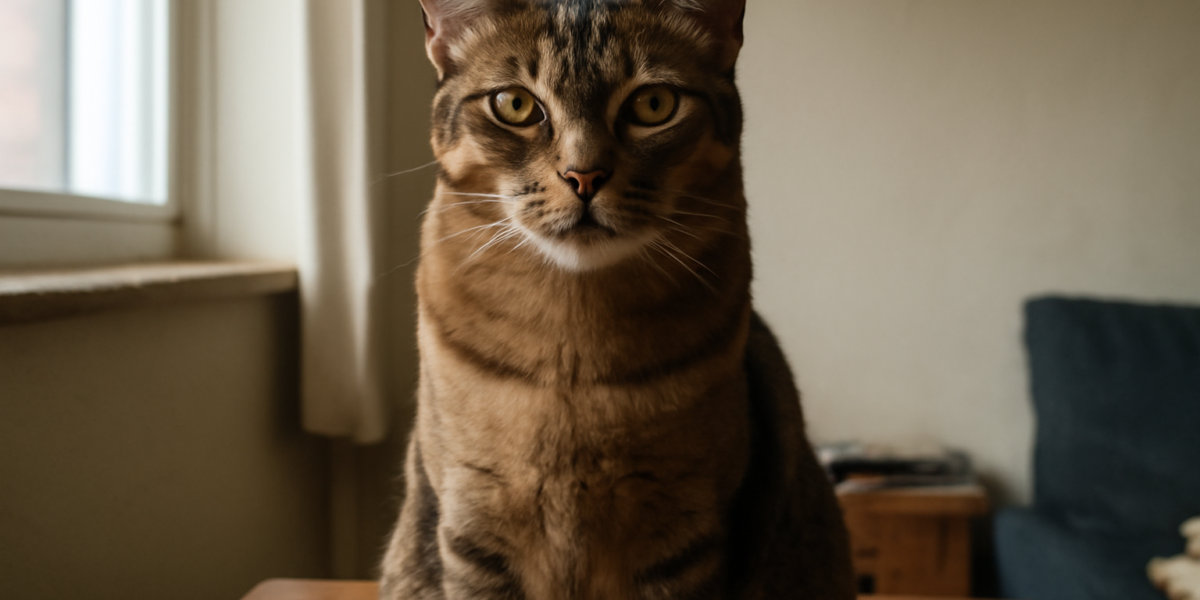
The Raas cat is medium-sized, lean, and athletic, with a slightly elongated body, a long tail (often with a hooked or kinked tip — though not as pronounced as the Mekong Bobtail’s tail), and almond-shaped eyes that are typically green or amber, with rare green-blue variations reported. The coat is short, dense, and close-lying, most often in solid black, brown, or steel-blue tones, sometimes with subtle ghost tabby markings. White markings are uncommon and not part of the heritage type.
The face is more angular than a typical Southeast Asian street cat, with high cheekbones and a slight Roman nose curve. Ears are tall, alert, and set close on the head. The overall silhouette has been described as wild-looking without being a designer “wild type” breed — this is simply how generations of island life shaped the cat.
Temperament and Personality
Raas cats are reported as intelligent, observant, and independent. Unlike many lap-cat pedigree breeds, the Raas tends to choose one or two people, treat the rest of the household with polite distance, and reserve affection for moments of its choosing. Loud, chaotic households make Raas cats nervous; quiet, predictable homes bring them out.
They are excellent hunters by instinct and need both physical exercise and mental enrichment. A Raas in a home without adequate stimulation tends to redirect that energy into household chaos. Puzzle feeders, foraging mats, and rotating toy sets help. They generally do well with respectful older children and tolerate other pets when introduced carefully.
Living Environment
The breed is best suited to indoor or carefully managed catio life. Raas cats have a strong territorial sense and a strong prey drive, and outdoor access raises both risk to local wildlife and risk of fights with neighborhood cats. A vertical environment — tall trees, window perches, sheltered nooks — matches the breed’s natural preference for elevated observation.
If you live in a smaller home, the best indoor cats roundup includes breeds that share the Raas’s adaptability. The breed is reasonably HDB-compatible if enrichment is in place; see the HDB-friendly cat breeds roundup for similar profiles.
Grooming and Coat Care
Coat care is minimal. A weekly comb-through with a fine metal comb removes loose hair, and seasonal sheds are modest. Bathe only if the cat gets into something genuinely dirty — most Raas cats handle their own grooming efficiently. Standard nail trims, weekly ear checks, and a regular dental routine round out the work.
The short, close coat does not mat or tangle, and the dense undercoat in some lines provides natural water resistance, which fits the breed’s island-tropical origins.
Health Considerations and Honest Risks
The Raas is a naturally evolved population without designer-breed structural concerns — no flat faces, no short legs, no extreme conformations. Genetic diversity within the heritage island population is reasonable, though the small founding base for any export program raises long-term diversity questions if outcrossing is not managed carefully.
No breed-specific disease load has been firmly documented. Routine wellness through the adult cat wellness checklist applies as it would for any cat. Annual vaccinations, parasite prevention, and dental care are the standard plan. Cardiac screening for hypertrophic cardiomyopathy is reasonable for any pedigreed cat from middle age, though there is no specific evidence the Raas is at elevated risk.
Lifespan varies too much between lines and environments for a single confident figure. Indoor-kept, well-fed, vet-supported Raas cats appear to live within typical domestic-cat ranges based on owner reports.
Feeding and Nutrition
Feed a complete and balanced diet appropriate to life stage. The Raas is lean and active by nature; obesity is uncommon when meals are portioned. Fresh water in multiple locations and a fountain support kidney health long-term, particularly in warm climates where insensible water loss is higher.
If you adopt a Raas alongside other cats, the feeding a multi-cat household with different diets guide is worth reading because the Raas’s hunting drive can complicate feeding-station logistics.
Daily Routine and Enrichment
Raas cats need substantial mental engagement to be content. A typical day with a satisfied Raas includes a morning hunt-style play session, breakfast, a long observation nap on a high perch, an afternoon training or puzzle-feeder session, dinner, and quiet evening time. The breed responds well to clicker training, target work, and food puzzles that simulate the hunting sequence (search, stalk, capture, eat).
Skipping enrichment for a Raas is more disruptive than for many breeds. They redirect frustration into territorial behavior, vocal complaint, or escape attempts. The puzzle feeder guide covers options that engage hunting instincts; rotating between two or three puzzle types prevents boredom. The most playful cat breeds roundup includes other engagement-heavy breeds if temperament fit matters.
Multi-Pet Households
Raas cats can integrate with other pets but typically prefer fewer companions over many. Their territorial nature means a small, stable multi-pet household works better than a busy one. Introductions should follow the standard slow-burn protocol — separate rooms, scent swapping, supervised brief meetings, gradual extension. Some Raas cats prefer to be the only cat in the home; others enjoy a single feline companion.
The introducing a new kitten to a resident cat guide covers the basic protocol; the multi-species household guide covers cross-species integration. Avoid adding a Raas to a household with very young children or small prey animals — the strong hunting drive does not always discriminate between toy and target.
Cost of Ownership Considerations
If you can find one, Raas cats from heritage breed programs in Indonesia tend to be moderately priced; international import adds substantial cost in transport, quarantine, and paperwork. Ongoing costs follow standard cat budgets, with relatively low veterinary expenses thanks to the breed’s natural hardiness.
The first-year cost of owning a cat guide is a useful baseline. The pet emergency fund savings target page covers building a buffer, and the CareCredit and vet financing options guide covers payment routes if a larger bill arrives before the emergency fund is fully built.
Adopting a Raas Cat
Within Indonesia, the realistic paths are heritage breed registration programs, regional cat clubs, and sometimes village-level adoptions on Raas Island itself. Outside Indonesia, the Raas is essentially unavailable. Any North American or European source claiming to have Raas cats for sale should be approached with significant skepticism, and the reputable rescue red flags guide is especially relevant.
If you live in Singapore, the local cat welfare community sometimes encounters Indonesian heritage cats in surrender or rehome situations — the Cat Welfare Society breeds and adoption page is a starting point. The finding a reputable rescue in your state guide covers the broader principles.
If you are drawn to the lean, sleek, naturally-evolved look but cannot find a Raas, similar profiles include the Sokoke from Kenya and the Dragon Li from China. Both are heritage breeds with similar themes of geographic isolation and natural type.
Is the Raas Right for You?
The Raas suits adopters who appreciate independent, observant, hunter-type cats and who can provide a quiet, structured home with rich enrichment. They suit experienced cat owners more than first-timers, and they tend to do better in single-cat or small-household setups than in busy multi-pet homes.
They are a poor fit for adopters who want a cuddly lap cat, a tolerant kid-magnet, or a low-engagement pet. They are also a poor fit for anyone outside Indonesia who is not willing to wait years and verify pedigree paperwork rigorously. The romance of a rare island heritage cat should not override the realism of “this is not an easily available breed.”
Kitten Care and Early Months
Raas kittens may come from heritage island sources, registered breeders, or rescue intermediaries — the path affects the early routine. Whatever the source, maintain the existing food for at least the first two weeks before transitioning. Plan for four small meals daily until about four months, then taper to three. The kitten feeding schedule by age guide covers the standard transitions, and the kitten vaccination schedule covers early veterinary visits.
Early socialization is especially important for this breed. Heritage-origin kittens may have had less exposure to typical household environments, and the breed’s naturally cautious temperament means early positive experiences shape adult confidence significantly. Expose the kitten gradually to handling, sounds, carriers, and visitors. The kitten parasite prevention guide covers the prophylaxis schedule.
Senior Care for Raas Cats
Senior Raas cats (from about ten years onward) follow standard senior cat wellness routines. Twice-yearly veterinary exams, regular bloodwork, dental care, and weight monitoring become important. The senior cat care checklist covers the standard adjustments, and the annual bloodwork for cats guide covers screening priorities for kidney function, thyroid, and other age-related changes.
Watch for changes in territorial behavior, vocalization patterns, and willingness to engage in play. The breed’s independent baseline means subtle senior changes may be easy to miss — establishing a clear sense of what is normal for your individual cat helps you spot deviations early. The breed’s natural hardiness often means senior years are relatively quiet from a veterinary standpoint, but routine screening remains the right plan.
Frequently Asked Questions
Is the Raas the same as the Madura cat?
The terms overlap but are not identical. The Raas refers specifically to the cat population on Raas Island; “Madura cat” is sometimes used more loosely for cats across the broader Madura archipelago. Local fanciers use the names with subtle distinctions.
Are Raas cats recognized by major registries?
Recognition is partial and evolving. Some Indonesian and international clubs document the breed, but it does not hold full championship status with the largest Western registries.
Why do some Raas cats have kinked tails?
A naturally occurring tail-kink trait runs through several Southeast Asian heritage cat populations. It is cosmetic in most cases and does not affect quality of life.
Can I import a Raas to the United States?
Theoretically yes, but the import process is complex, the origin paperwork is hard to verify, and the breed has no established North American breeder network to support placement. Most prospective adopters will be better served by similar heritage breeds with clearer import pipelines.
Are they good apartment cats?
Yes, with adequate vertical space, mental enrichment, and a calm household. They thrive in quiet apartments and struggle in chaotic ones.
Looking to adopt a Raas Cat Breed Profile?
Browse Raas Cat Breed Profile cats and mixes available for adoption from shelters and rescues near you.
Find Raas Cat Breed Profile Cats for Adoption