
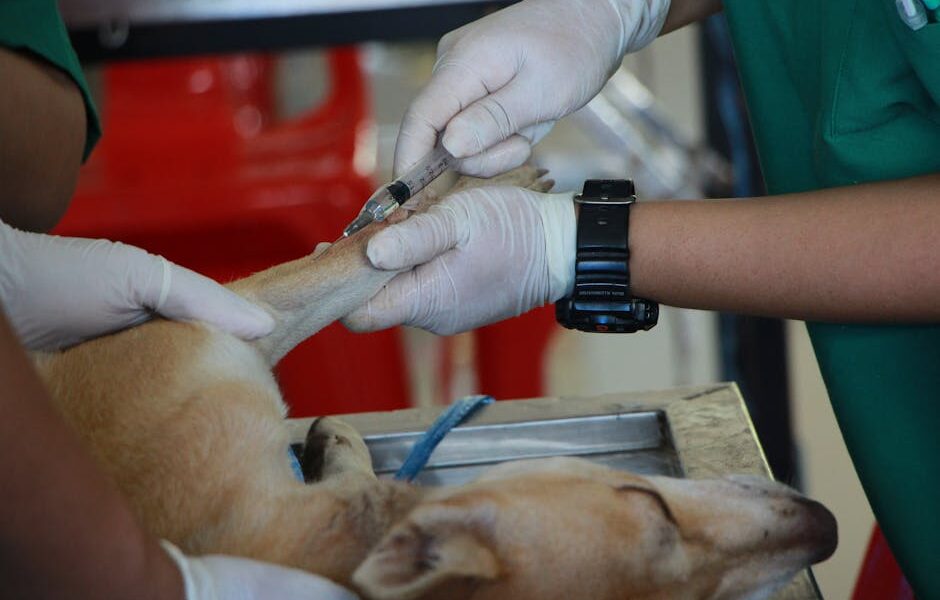
Why Intake Vaccination Is Non-Negotiable
The single intervention that prevents the most shelter disease is vaccination at intake, before the animal is housed in general population. The Association of Shelter Veterinarians (ASV) Vaccination Guidelines for Animal Shelters (2nd edition, 2022) is unambiguous on this point: every dog and cat entering a shelter receives core vaccines at the time of the intake medical exam, ideally before being moved past the intake room.
In this article
- Why Intake Vaccination Is Non-Negotiable
- The Core Vaccines: Dogs
- The Core Vaccines: Cats
- Modified-Live vs Killed: The Shelter-Specific Argument
- Puppies and Kittens: The Multi-Dose Series
- Adult Animals of Unknown Vaccine History
- Bordetella, Canine Influenza, and Region-Dependent Add-Ons
- The Adult Vaccination Maintenance Layer
- Vaccine Reactions and Site Selection
- Documentation, Lot Numbers, and the Adopter Packet
- Outbreak Context: When Vaccination Becomes Reactive
- Frequently Asked Questions
The reason is biological. Modified-live vaccines (MLV) begin to confer protection within hours of administration and reach functional immunity within roughly five to seven days. A puppy or kitten that walks into a building harboring parvovirus, panleukopenia, or distemper has no time to wait for a “settle in and vaccinate next week” plan. The shelter vaccination on intake protocol exists because every day of delay is measured in mortality.
The Core Vaccines: Dogs
For dogs, the core protocol on intake is DA2PP (distemper, adenovirus type 2, parvovirus, parainfluenza), often written as DHPP. The ASV recommends MLV product where available because of faster onset in an exposure context; AAHA (American Animal Hospital Association) canine vaccination guidelines align with the same MLV preference for shelter use. Bordetella (intranasal or oral preferred over injectable in shelter context for faster mucosal immunity) is given at the same visit. Canine influenza vaccine (H3N2 and H3N8 bivalent) is added where the region has documented circulation; see the canine influenza vaccine framing for indication logic.
Rabies is given per state law, typically at twelve weeks of age and older. Where the dog arrives as an adult of unknown rabies status, the shelter-medicine veterinarian documents the vaccine and the next due date per local statute. Leptospirosis vaccine is region- and lifestyle-dependent; the leptospirosis vaccine debate in dogs covers the operational considerations.
The Core Vaccines: Cats
For cats, the core protocol on intake is FVRCP (feline viral rhinotracheitis, calicivirus, panleukopenia). The AAFP (American Association of Feline Practitioners) and ASV both recommend MLV FVRCP for shelter use where ophthalmic and respiratory MLV concerns can be managed. Killed-virus FVRCP is used in pregnant or immunocompromised cats where MLV is contraindicated.
FeLV vaccine is recommended on intake for kittens and for adult cats whose housing or lifestyle could expose them; the feline leukemia vaccine decision covers the modern AAFP guidance. The vaccine-associated sarcoma awareness pillar (vaccine-associated sarcoma prevention in cats) drives modern site selection (distal limb rather than interscapular). Rabies is given per state law and age. Chlamydia felis vaccine is added in cattery and shelter contexts where chlamydial conjunctivitis is documented; see the chlamydia vaccine cats framing.
Modified-Live vs Killed: The Shelter-Specific Argument
The shelter context changes the vaccine-product calculus. In a private practice, the killed-vs-MLV decision is largely driven by lifestyle and individual risk. In a shelter, the operative consideration is onset of immunity in an exposure environment. MLV vaccines begin to stimulate active immunity within hours and confer measurable protection within days; killed vaccines require a longer prime-and-boost interval to reach the same titer.
Because a shelter animal may be exposed to parvovirus or panleukopenia from the moment it enters the building (the environment retains both viruses for months on porous surfaces), MLV is the operational default. The exceptions are pregnant queens and cats with documented immunosuppression, where killed FVRCP is preferred to avoid MLV-related concerns.
Puppies and Kittens: The Multi-Dose Series
Puppies and kittens require a multi-dose vaccine series because maternal antibody interferes with vaccine response in the first weeks of life. Maternal antibody declines on an unpredictable timeline; the only way to ensure protection is to vaccinate repeatedly through the window where maternal antibody could interfere. The ASV shelter protocol vaccinates every two to three weeks from intake until at least sixteen weeks of age, and many shelter protocols extend the final dose to eighteen or twenty weeks.
The puppy vaccination schedule, puppy vaccination week by week, kitten vaccination schedule, and the Singapore-context puppy vaccination schedule Singapore all describe the species-specific cadence. The intake protocol layers on top: dose one is given at intake regardless of how old the puppy or kitten appears, because age at intake is rarely verifiable.
Adult Animals of Unknown Vaccine History
The dominant intake scenario is an adult dog or cat of unknown vaccine history. The ASV position: re-vaccinate. The cost of a duplicate vaccine is trivial compared to the cost of an outbreak. Where the owner produces a verifiable vaccination certificate from a licensed veterinarian within the validity window for each product, the certificate is documented and only the missing or expired vaccines are given. Where documentation is absent, vaccinated as if naive.
Vaccine titer testing is largely impractical in shelter operational context (turnaround time, cost, individual-animal logistics). See the vaccine titer testing for dogs and vaccine titer testing for cats for the technical considerations that limit shelter use. Most shelters vaccinate and document.
Bordetella, Canine Influenza, and Region-Dependent Add-Ons
Bordetella is universal in dog shelter protocols. The intranasal product is preferred over injectable in shelter contexts because mucosal immunity at the upper respiratory tract is the operational goal and intranasal onset is fastest. See bordetella vaccine decision for the product-selection logic.
Canine influenza (H3N2 and H3N8) vaccine is added in shelters located in or transporting from regions of documented circulation. Lyme vaccine (lyme vaccine decision in dogs) is region-dependent. Leptospirosis is region-dependent and increasingly recommended in the urban environments where the disease is documented; the shelter-medicine veterinarian sets the regional protocol based on documented Leptospira serovar circulation.
The Adult Vaccination Maintenance Layer
The intake vaccination is dose one of a series that continues into the animal’s adopted life. The adult dog vaccination schedule and adult cat vaccination schedule describe the maintenance cadence (three-year core protocols for non-rabies in adults; annual for non-core where indicated). The dog vaccination schedule and cat vaccination schedule summarize the full lifecycle. The adoption discharge packet documents what was given at intake, when boosters are due, and which non-core vaccines the adopter’s primary-care veterinarian should evaluate.
The shelter is not the lifetime medical home. The intake vaccination protocol gets the animal protected, documented, and ready for general population; the adopter and primary-care veterinarian carry forward.
Vaccine Reactions and Site Selection
Vaccine reactions are uncommon but real. Acute hypersensitivity reactions (facial swelling, hives, vomiting within thirty minutes) are managed with antihistamines and steroids per shelter-medicine veterinarian protocol; persistent reactions are escalated to emergency care. The puppy vaccine reactions framing covers the routine post-vaccination monitoring expected of fosters and shelter staff.
In cats, the AAFP vaccine site recommendation is distal limb (rather than interscapular) for the species’ documented vaccine-associated sarcoma risk; specific site protocols vary by product. The shelter-medicine veterinarian sets standing-orders for which vaccine goes where, and trained staff follow the protocol uniformly so that any future mass is anatomically traceable to product.
Documentation, Lot Numbers, and the Adopter Packet
Vaccine lot numbers, product names, sites, dates, and the responsible staff member are documented in the medical record at the time of administration. The information transfers to the adopter packet at discharge. Lot tracking matters: if a product recall or reaction cluster occurs, the shelter needs to identify which animals received which lot. Software (PetPoint, ShelterLuv, Chameleon, RescueGroups, and similar tools) makes this routine; paper records work too where the workflow is disciplined.
The intake exam medical record (see shelter intake medical exam protocol) and the vaccine record are linked. They form the foundation of the adoption disclosure and the lifetime vaccination history that travels with the animal.
Outbreak Context: When Vaccination Becomes Reactive
The intake protocol is preventive. When an outbreak is detected (panleukopenia in the cat ward, parvovirus in the puppy ward), the protocol shifts to reactive: vaccinate the entire exposed cohort immediately with MLV product, regardless of recent vaccine history, and isolate clinical cases. The shelter panleukopenia outbreak protocol and shelter parvo outbreak protocol describe the full reactive workflow.
Singapore and tropical-context shelters also layer in the heartworm prevention Singapore framework on intake, because heartworm is endemic and the dog leaving the intake room without preventive coverage is exposed from day one.
Frequently Asked Questions
Should we vaccinate a visibly sick animal at intake?
The ASV position: vaccinate even mildly ill animals because the benefit (protection against parvo, panleuk, distemper) outweighs the theoretical risk. Severely ill animals (high fever, severe dehydration, suspected immunosuppression) are stabilized first; the shelter-medicine veterinarian makes the call.
What about pregnant animals?
Killed-virus core vaccines are preferred for pregnant queens and bitches. MLV FVRCP and MLV DA2PP carry theoretical risk to the fetuses; the AAFP and AAHA guidelines describe the product-selection logic. Where killed product is unavailable, the shelter-medicine veterinarian weighs the case-by-case risk.
Can adopters skip future boosters if intake vaccines were given?
No. The intake vaccine starts the series; boosters at the species- and product-appropriate interval are required to reach durable immunity. The adoption discharge packet states the next-due date for each vaccine in plain language.
What if a puppy has only one dose at intake and gets adopted at fourteen weeks?
The adopter’s primary-care veterinarian completes the puppy series through at least sixteen weeks of age. The adoption packet specifies the booster schedule and the rationale (maternal antibody window). Skipping subsequent doses leaves a puppy with incomplete protection.
Do we vaccinate cats against FeLV at intake?
Kittens routinely; adult cats based on housing and adoption-context risk. The AAFP 2020 guidance is risk-stratified rather than universal; the shelter-medicine veterinarian sets the operational policy that matches your housing model and adopter community.


