
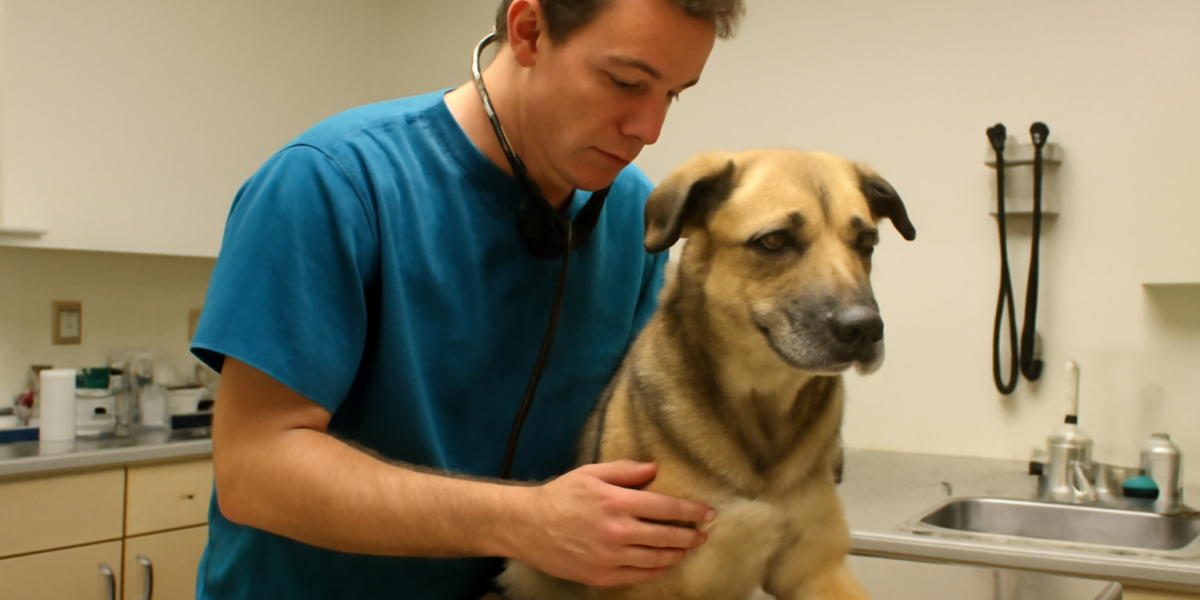
A successful weight loss plan for dogs is not a diet — it is a structured 6 to 12 month program with measurable milestones, regular check-ins, and a clear exit into long-term maintenance. The plan you build today determines whether your dog reaches a healthy weight and stays there, or whether you join the majority of well-meaning owners whose dogs lose a few pounds, plateau, regain, and end up worse than where they started. The framework below is the same one veterinary weight management programs use.
In this article
- Before You Start: The Vet Visit
- Step 1: Set the Target Weight
- Step 2: Calculate the Calorie Target
- Step 3: Allocate Treat Calories
- Step 4: Build the Exercise Plan
- Step 5: Track Progress
- Household Strategy: The People Problem
- Step 6: Maintenance — The Real Test
- When to Call the Vet During the Plan
- Common Mistakes That Sabotage Weight Loss Plans
- Frequently Asked Questions
This guide walks through the four building blocks of any sound weight loss plan for dogs: setting the right target, calculating accurate calories, structuring exercise progression, and tracking weight with the right cadence to catch problems early. It also covers the maintenance transition that keeps weight off — the part most plans skip and most regains begin.
Before You Start: The Vet Visit
Do not start a weight loss plan without veterinary input. Your vet rules out endocrine disease (hypothyroidism and Cushing’s both cause weight gain — see our obesity in dogs treatment guide for the full workup), screens for arthritis or other orthopedic issues that change exercise prescriptions, sets the right target weight for your dog’s frame, and calculates the calorie target based on individual factors that an internet calculator cannot capture.
Bring an honest food log to the visit. Write down everything your dog eats for three days — meals, treats, table scraps, dental chews, training rewards, the spoonful of peanut butter in the Kong, the leftover crust from the kid’s sandwich. The food log usually reveals the source of the weight gain in plain numbers.
Step 1: Set the Target Weight
Your vet uses body condition score (BCS), frame size, and sometimes a measurement-based ideal weight calculation to set the target. For most overweight dogs, the target is the weight that brings them from current BCS down to BCS 5 on the 9-point scale.
For severely obese dogs, set staged targets. A Labrador needing to drop from 95 pounds to 70 pounds (a 26% loss) faces a 25-50 week journey. Setting the first milestone at 85 pounds (10% loss) makes the goal achievable, builds momentum, and reduces owner discouragement. Achieve milestone one, stabilize for 2-4 weeks, then reset for milestone two.
Step 2: Calculate the Calorie Target
Weight loss in dogs requires roughly 80% of the resting energy requirement (RER) calculated from target weight, not current weight. The formula structure is RER = 70 × (body weight in kg)^0.75. The actual numbers should come from your vet — too low and you risk muscle wasting and gallbladder issues; too high and weight loss stalls.
Once you have the daily calorie target, divide it by the calorie density of the chosen food to get the daily food amount. Almost every prescription weight loss food lists kcal per cup or per gram on the bag. Use grams, not cups — measuring cup variance can run 30% in either direction. See our measuring dog food portions guide for the kitchen-scale method.
Therapeutic Weight Loss Diets vs. Portion Control
For dogs at BCS 6 (mildly overweight), portion control of a high-quality regular food often works. For dogs at BCS 7+, therapeutic weight loss diets from brands like Hill’s, Purina ProPlan, Royal Canin, or Iams Healthy Naturals are usually more successful. These diets pack complete nutrition into lower calorie density, use higher protein and fiber to keep dogs full, and include nutrients (L-carnitine, omega-3s) that support fat metabolism and joint health during weight loss. Cutting regular food too far creates nutrient gaps and leaves dogs miserable with hunger.
Step 3: Allocate Treat Calories
Treats should make up no more than 10% of daily calories — the 10% rule. For a dog on a 700 kcal/day weight loss plan, that is 70 kcal of treats. Subtract the treat allocation from the meal allocation, not on top of it.
Use small, low-calorie training treats (1-3 kcal each is ideal). Break larger treats into pieces — dogs respond to the act of receiving a treat, not the size. Substitute green beans, frozen plain pumpkin, or carrot sticks for high-calorie biscuits when you want volume. Our dog treat calorie calculator guide walks through reading treat labels and budgeting treats into the daily plan.
Step 4: Build the Exercise Plan
Exercise alone won’t drive significant weight loss in dogs (diet does the heavy lifting), but movement is essential for muscle preservation, joint health, behavioral wellness, and the metabolic adaptation that prevents plateaus. The exercise plan must match your dog’s current capacity, not the goal.
Mildly Overweight, No Joint Issues
Increase walking gradually. Add 5 minutes per outing weekly until you reach 30-60 minutes daily. Vary terrain — hills increase intensity. Add 1-2 days per week of higher-intensity activity (fetch, structured play, hiking) once base fitness is established.
Obese or Arthritic Dogs
Start with multiple short outings (3-5 minutes) on flat, soft ground several times daily. Build duration before intensity. Swimming and hydrotherapy are gold-standard low-impact exercise for arthritic obese dogs — many veterinary physical therapy clinics offer underwater treadmill sessions specifically for weight management. See our guide on osteoarthritis in dogs for joint-friendly exercise principles.
Mental Enrichment
Puzzle feeders, snuffle mats, and training drills add cognitive activity that satisfies dogs without adding calories. Use the daily kibble allotment in puzzle feeders rather than as bowl meals — your dog works for the food, eats slower, and stays mentally engaged.
Step 5: Track Progress
Weigh every two weeks during active weight loss. Use the same scale, same time of day, ideally before the morning meal. Many vet clinics offer free weight checks for weight management patients — take them up on it for accuracy.
Healthy weight loss in dogs runs 1-2% of body weight per week. For a 60-pound dog, that is 0.6 to 1.2 pounds weekly. Track on paper or in an app — a visible trend line catches problems faster than memory does. Plot the data point even when it disappoints; flat or upward weeks contain information.
Plateau Protocol
If two consecutive weigh-ins show no progress, the plan needs adjustment. Possibilities to investigate: uncounted calories from a household member or environmental source; metabolic adaptation requiring a 10% calorie reduction; reduced activity due to weather, schedule change, or injury; weighing inconsistency (different scale, different time of day, full vs. empty bladder). Consult your vet before making a calorie change — going too low risks muscle loss and creates an unsustainable hunger spiral.
Household Strategy: The People Problem
The dog is not the variable that breaks weight loss plans — the people are. Convene a family meeting. Decide who feeds, who treats, what counts as a treat, and what is off-limits. Use a shared note or whiteboard so everyone knows whether the dog has had treats today.
Key household rules: no table feeding (or only specific approved foods at specific times); kids do not feed unsupervised; visiting grandparents are briefed on the plan; the dog is not in the kitchen during cooking; trash and counter food are securely managed. The plan that works on weekdays must also work on weekends, holidays, and when guests visit.
Step 6: Maintenance — The Real Test
Reaching target weight is the midpoint, not the finish. Maintenance calories are typically the full RER calculated for the now-ideal weight, often 20-30% higher than the weight loss prescription. Add calories back gradually over 4-6 weeks while monitoring weight weekly.
Continue weighing monthly for the first six months, then quarterly. A two-pound regain on a 60-pound dog is the time to act, not when the regain has reached eight pounds. The eating and exercise routines that drove the loss must become permanent — most successful long-term cases never return to free-feeding or pre-diet treat habits.
When to Call the Vet During the Plan
Contact your vet if your dog refuses food for more than 24 hours, vomits or has diarrhea more than a single episode, becomes lethargic or weak, gains weight unexpectedly despite plan adherence, loses weight much faster than 2% per week (risk of muscle wasting), or develops new symptoms like increased thirst, panting, or coat changes (possible underlying disease emerging).
Common Mistakes That Sabotage Weight Loss Plans
Measuring with a cup instead of a scale (30%+ variance). Forgetting to subtract treat calories from the meal calorie target. Free-feeding alongside the new diet. One household member feeding “extras” off-plan. Changing the plan based on the dog’s begging rather than the data. Quitting at the plateau (week 6-8 plateaus are normal). Setting the target weight from breed standards instead of from your dog’s frame. Returning to the old feeding habits the moment target weight is reached.
Frequently Asked Questions
How long does a dog weight loss plan take?
Plan on 6-12 months for most cases. A dog needing to lose 10% of body weight is looking at 5-10 weeks at the safe rate of 1-2% per week. A dog needing 25% loss may need 12-18 months including stabilization periods between staged targets.
Should I exercise my obese dog more before changing food?
Diet and exercise should start together but with exercise carefully scaled to current capacity. Pushing an obese dog into long, intense walks risks injury and joint damage. Build duration first (short, frequent walks), then intensity, while the diet does most of the actual weight loss work.
What if my dog won’t eat the prescription weight loss food?
Transition gradually over 7-10 days, mixing increasing proportions. Try the wet version of the same prescription line, or a different brand’s weight loss formula. Some dogs do better on canned than dry. Avoid the temptation to top with high-calorie additions — that defeats the purpose. If multiple options fail, talk to your vet about portion-controlled high-quality regular food as an alternative.
Can I use puzzle feeders for the whole daily ration?
Yes — many dogs do better with the entire daily kibble allotment delivered through puzzle feeders, snuffle mats, or food-dispensing toys. The slower eating, mental engagement, and decoupling of food from a fixed mealtime tend to reduce begging and improve satiety.
My dog has lost the weight. Now what?
Transition to maintenance over 4-6 weeks: add roughly 10% more calories per week while weighing weekly. Settle at the calorie level that holds target weight stable. Continue measured meals, the 10% treat rule, and regular exercise. Weigh monthly for six months, then quarterly. Plan for periodic vet check-ins to catch any drift early.
Are there safe weight loss supplements for dogs?
Most marketed “fat burner” or appetite suppressant supplements for dogs lack strong evidence and some carry safety concerns. Omega-3 fatty acids (fish oil) and L-carnitine are commonly added to therapeutic weight loss diets and are reasonable to discuss with your vet. The proven tools remain calorie restriction, therapeutic diets, and exercise.


