Last updated: May 4, 2026
In this article
Overview: Athletic Farm Dog vs Stocky Companion
The American Bulldog vs american bully comparison surprises many adopters because the names sound nearly identical, but the breeds are dramatically different. The American Bulldog is a tall, athletic working farm dog descended from English working bulldogs preserved in the rural American South. The American Bully is a relatively young companion breed developed in the 1990s from American Pit Bull Terrier and AmStaff stock with the explicit goal of producing a stockier, blockier, more compact show dog.
One was bred to catch hogs on a farm; the other was bred for the show ring and family companionship. They look different, behave differently, and need very different homes.
This guide walks through history, build, temperament, training, exercise, grooming, health, and rescue availability so you can clearly distinguish these often-confused breeds.
History and Origin
The American Bulldog descends from the English working bulldogs that came to North America with colonists in the 1600s and 1700s. They remained farm dogs throughout the centuries — catching feral hogs, guarding livestock, and herding cattle — without ever being refined into a show breed. The breed nearly went extinct after WWII before John D. Johnson and Alan Scott revived it in the rural South. Today there are two main lines: the Johnson type (heavier, more bull-headed) and the Scott type (leaner, more athletic).
The American Bully is a much younger breed. It was developed in the United States in the 1980s and 1990s from American Pit Bull Terrier and AmStaff stock crossed with English Bulldogs and Staffordshire Bull Terriers. Breeders specifically selected for a stockier, more compact, blockier-headed companion dog. The United Kennel Club recognized the American Bully as a distinct breed in 2013.
There are four recognized American Bully sizes: Pocket, Standard, Classic, and XL. The XL Bully became the subject of a UK ban in 2024 amid public concern over a small number of high-profile incidents — a topic adopters in the UK should research carefully before pursuing this breed.
Size and Appearance
American Bulldogs stand 20 to 28 inches at the shoulder and weigh 60 to 120 pounds. They are tall, square-built, and muscular with relatively long legs and a long natural tail. Coats are short, predominantly white with patches of brindle, fawn, or black.
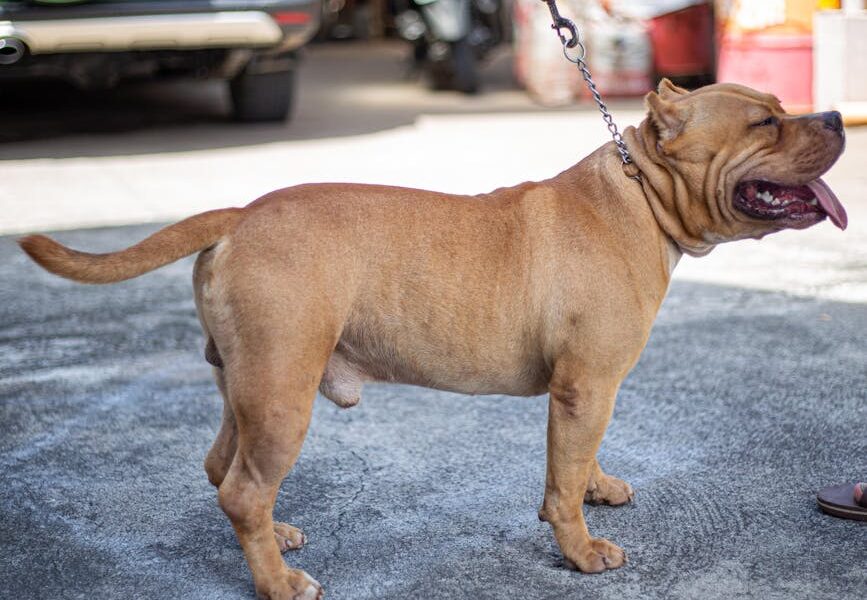
American Bullies are shorter and stockier. Heights range from 13 to 23 inches across the four size classes. Pocket Bullies stand 13 to 17 inches; Standard Bullies stand 17 to 20; Classic Bullies look like an elongated AmStaff; XL Bullies stand 20 to 23 inches and weigh 80 to 150 pounds. All Bully sizes share the breed’s distinctive blocky head, broad chest, and short muscular legs. Coats are short in many colors.
The most reliable distinguishing feature is height-to-weight ratio. An American Bulldog is tall and athletic-looking. An American Bully is short and densely muscled with a much wider chest relative to its height. Read the American Bully breed page for full breed information. There is no dedicated American Bulldog profile yet on the site, but the Pit Bull breed profile covers many relevant comparisons.
Temperament and Personality
American Bulldogs are confident, loyal, and protective. They bond fiercely with their families and are naturally suspicious of strangers, which makes them effective property guardians. With proper socialization they are trustworthy with kids. They are working dogs at heart and need both physical and mental engagement.
American Bullies were bred specifically for companion temperament. They are typically less protective and more universally friendly than American Bulldogs. Many American Bullies are described as “nanny dogs” by their families — affectionate, patient with kids, and eager to please. They retain some of the dog-selectivity of their APBT ancestors and benefit from careful socialization with other dogs.
Both breeds respond beautifully to positive, force-free training. Both can be wonderful family companions in the right homes.
One important behavioral difference: the American Bulldog needs a job. Without structured work — protection sport, weight pull, hunting, or consistent training — they can become destructive, hyper-vigilant, or fence-running. American Bullies are far more content with daily walks and family time and do not require a structured working outlet to stay balanced.
Both breeds tend to integrate well with children when raised together. Both are powerful enough that adult supervision is essential around toddlers regardless of temperament. Use force-free training and respect-based handling from day one.
Trainability
American Bulldogs are intelligent and trainable but independent. They excel at protection sports, weight pull, and tracking. They need a confident, consistent handler who can guide their working drive without harsh corrections.
American Bullies are typically more food-motivated and eager to please than American Bulldogs. Many do well in basic obedience, conformation showing, and trick work. They are not typically used for protection sports because the breed standard prioritizes companion temperament.
Force-free positive reinforcement is essential for both. Both are sensitive despite their muscular appearance. The dog body language guide is helpful for any bully-breed adopter learning to read subtle communication.
Exercise Needs
American Bulldogs need 1 to 2 hours of vigorous activity per day. They love running, hiking, swimming, and structured work. They are not suited to apartment living without significant outdoor outlet.
American Bullies need 45 to 60 minutes of moderate activity per day. Their compact build and shorter legs mean they are not endurance athletes — XL Bullies in particular can have brachycephalic-leaning faces that make hard exercise risky. Walking and play sessions are ideal; long runs and hot-weather hikes are not.
The American Bulldog is a true working dog. The American Bully is a companion who enjoys exercise but does not require working-dog volumes of it.
Grooming
Both breeds are short-coated and shed moderately year-round. Weekly brushing handles either breed. Neither has significant wrinkles to manage daily, although some American Bullies (particularly those with more English Bulldog influence) may have a nose rope that needs occasional cleaning.
Both need monthly nail trims, regular ear cleaning, and consistent dental care. The AVMA opposes ear cropping in both breeds — natural ears are healthier. Many adopters of either breed deliberately seek out natural-ear individuals.
Health and Lifespan
American Bulldogs typically live 10 to 14 years. Major concerns include hip and elbow dysplasia, bone cancer (osteosarcoma), and neuronal ceroid lipofuscinosis (NCL) — a breed-specific neurological condition that responsible breeders screen for. They are also at risk of bloat (GDV) due to their deep chest.
American Bullies typically live 10 to 13 years. Common concerns include hip dysplasia, skin allergies, and (especially in heavily-built or “exotic” Bullies) brachycephalic-leaning airway issues, cherry eye, and joint problems from extreme conformation. The “exotic” or “extreme” Bully look (very short legs, ultra-wide chest, very heavy build) carries health risks that adopters should understand. More moderate Bully types are healthier.
Both breeds benefit from screening, weight management, and a vet experienced with bully-type dogs.
Cost and Rescue Availability
Both breeds appear in shelters and rescues — sometimes labeled as “American Bulldog,” “American Bully,” “Pit Bull mix,” or “Bully mix” depending on the shelter’s identification practices. Adoption fees range from $150 to $400 at most rescues.
Read our guides to bully breed rescues, adopting a rescue pit bull, and pittie mix breed profile. There are no dedicated American Bulldog or American Bully adoption guides yet — the Pit Bull and bully-breed resources cover most relevant considerations. Browse current listings at adopt a dog.
Be aware of breed-specific legislation. The XL Bully is banned in the UK as of 2024. American Bulldogs are sometimes included in US Pit Bull restrictions due to physical similarity. Verify your local laws and homeowners insurance before adopting either breed.
Lifetime cost varies by breed and conformation. American Bulldogs accumulate $8,000 to $15,000 in lifetime vet bills due primarily to orthopedic and cancer care. Moderate-built American Bullies accumulate similar amounts; extreme/exotic Bullies can accumulate $15,000 to $30,000 due to ongoing surgical and conformational health issues. Pet insurance, taken out before pre-existing diagnoses, is strongly recommended.
One important point for adopters: do not buy from “exotic” or “XL micro” breeders advertising extreme features. The dogs produced often suffer significant lifetime health issues. Adoption from rescue gets you healthier, moderately-built dogs at a fraction of the cost.
Which Is Right for You
Choose an American Bulldog if you want a tall, athletic working farm dog; you have land or a large yard; you have experience with large protective breeds; and you can commit to 1 to 2 hours of vigorous daily exercise.
Choose an American Bully if you want a stockier companion-focused bully breed; you have a more moderate exercise lifestyle; you appreciate the breed’s reputation as a “nanny dog” with kids; and you choose a moderate (not extreme/exotic) example of the breed for better long-term health.
Despite the similar names, these breeds suit different homes. American Bulldog adopters are often experienced working-dog handlers. American Bully adopters often want a family-focused companion with a striking appearance. Both deserve responsible owners willing to socialize, train, and represent these often-misunderstood breeds well.
Frequently Asked Questions
Are American Bulldogs and American Bullies the same breed?
No. They are entirely separate breeds with different histories, builds, temperaments, and purposes. American Bulldogs are athletic working farm dogs. American Bullies are companion show breeds developed from APBT/AmStaff stock since the 1990s.
Which breed is bigger?
American Bulldogs are typically taller (20 to 28 inches) and similar in weight to large American Bullies. XL American Bullies can outweigh some American Bulldogs but are shorter and stockier. American Bullies range from 13 to 23 inches across four size classes.
Are American Bullies banned anywhere?
The XL Bully is banned in the UK as of 2024. Some US jurisdictions and many homeowners insurance policies restrict American Bullies under broader Pit Bull-type legislation. Check your local laws.
Which is healthier?
It depends on the individual. Moderately-built American Bulldogs and moderately-built American Bullies have similar health risks. Extreme/exotic American Bullies (very short legs, ultra-wide chest) face significant conformational health problems. Adopt moderate examples of either breed for better long-term outcomes.
Where can I adopt these breeds?
Both breeds appear in shelters and bully-specific rescues nationwide. Browse listings on Walk Me Home Rescue and check breed-specific bully rescues in your region. Application processes typically take 2 to 6 weeks.
Looking to adopt a American Bulldog vs American Bully Comparison?
Browse American Bulldog vs American Bully Comparison dogs and mixes available for adoption from shelters and rescues near you.
Find American Bulldog vs American Bully Comparison Dogs for Adoption