
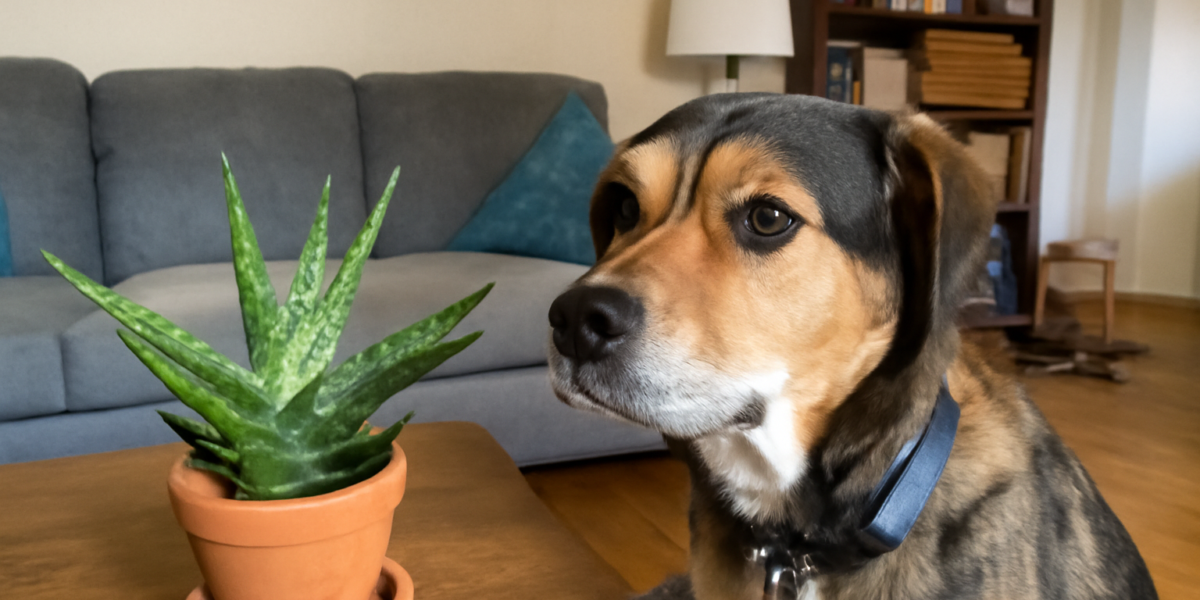
Aloe Vera Is Toxic to Dogs
Yes, aloe vera plants are toxic to dogs. While aloe gel is widely used in human skincare and health products, the plant itself contains compounds that are harmful to canines. The toxic substances are concentrated in the latex layer, the yellowish sap found just beneath the outer rind of the leaves, rather than in the clear inner gel. The primary culprits are saponins and anthraquinones, which cause gastrointestinal distress and, in significant amounts, more serious systemic effects. Toxicity is classified as mild to moderate.
In this article
Aloe vera (Aloe barbadensis miller) is one of the most common houseplants in the world, and many dog owners keep one on a windowsill or patio without realizing the risk. Understanding exactly which parts of the plant are dangerous and how to respond to ingestion helps you protect your dog while making informed decisions about keeping the plant in your home.
The Toxic Compounds: Saponins and Anthraquinones
Saponins are naturally occurring glycosides that act as a detergent-like substance in the digestive tract. When a dog chews and swallows aloe plant material, saponins irritate the stomach and intestinal lining, causing nausea, vomiting, and diarrhea. In larger doses, saponins can also cause hemolysis, the destruction of red blood cells, though this is uncommon from typical houseplant ingestion.
Anthraquinones, particularly aloin and barbaloin, are potent laxative compounds found in the latex layer. These are the same compounds that make aloe latex a powerful purgative in traditional medicine. In dogs, they cause profuse watery diarrhea, abdominal cramping, and dehydration. The laxative effect can be severe enough to require veterinary intervention for fluid replacement.
The clear inner gel contains far lower concentrations of these compounds and is generally considered much less toxic. However, a dog chewing on an aloe leaf will inevitably consume the latex layer along with the gel, making it impossible to separate the “safe” part during natural ingestion.
Symptoms of Aloe Vera Poisoning in Dogs
Symptoms typically appear within 6 to 12 hours of ingestion, though some dogs may show signs sooner. The most common symptoms include:
- Vomiting, sometimes with blood
- Watery diarrhea, potentially severe
- Loss of appetite
- Lethargy and depression
- Abdominal pain (hunching, reluctance to be touched on the belly)
- Tremors (in larger ingestions)
- Changes in urine color (reddish-brown, indicating possible hemolysis)
The severity depends on how much plant material was consumed relative to your dog’s body weight. A large dog who chews on a single leaf tip may experience only mild stomach upset, while a small dog who eats an entire leaf could develop significant dehydration from vomiting and diarrhea.
The most concerning sign is dark or reddish urine, which may indicate hemolysis from saponin exposure. This symptom warrants immediate veterinary attention regardless of how much plant was consumed.
First Aid After Aloe Ingestion
If you catch your dog eating aloe or find chewed aloe leaves, take the following steps:
- Remove the plant: Move all aloe plants out of reach and clean up any leaf fragments from the floor
- Assess the damage: Look at the plant to estimate how much was consumed. A few tooth marks versus a missing leaf section tells different stories
- Check the mouth: Wipe away any visible plant material from your dog’s mouth with a damp cloth
- Offer water: Encourage your dog to drink to help dilute stomach contents and prepare for potential fluid loss
- Call your veterinarian: Describe the amount eaten, your dog’s size, and any symptoms you are observing
Do not induce vomiting at home unless specifically directed by a veterinarian. The anthraquinones are already irritating to the digestive tract, and vomiting may cause additional irritation or, worse, aspiration if your dog vomits forcefully.
Monitor your dog closely for the next 24 hours, keeping track of the frequency of vomiting and diarrhea, water intake, appetite, energy level, and urine color. This information is extremely valuable for your veterinarian.
When to Call the Veterinarian
Contact your vet or the ASPCA Animal Poison Control Center (888-426-4435) immediately if:
- Your dog ate more than a small nibble of aloe leaf
- Vomiting or diarrhea is persistent (more than three episodes)
- You notice bloody vomit or stool
- Your dog’s urine appears dark or reddish
- Lethargy worsens or your dog becomes unresponsive
- Your dog is a puppy, senior, or has pre-existing health conditions
- Signs of dehydration appear (dry gums, skin tenting, sunken eyes)
Veterinary treatment typically involves anti-nausea medication, IV fluids to correct dehydration, and monitoring of blood values if significant ingestion is suspected. Activated charcoal may be given if the ingestion was recent. In rare cases involving hemolysis, blood transfusion may be necessary, though this is extremely uncommon with household aloe ingestion.
Most dogs recover fully within 24 to 48 hours with appropriate supportive care. The prognosis is excellent for mild to moderate ingestions when treatment is timely.
Aloe Products and Dog Safety
Many commercial aloe vera products are marketed for use on dogs, including topical gels for hot spots and minor wounds. These products typically use processed aloe gel from which the latex layer and its anthraquinones have been removed. When applied topically as directed, these products are generally safe.
However, dogs frequently lick anything applied to their skin. If your dog licks a significant amount of even a processed aloe gel product, mild stomach upset may occur. Use an Elizabethan collar or bitter-tasting bandage wrap to prevent licking after applying any topical treatment.
Never give your dog aloe juice, aloe supplements, or raw aloe from a plant as a health remedy without explicit veterinary approval. The laxative effects of anthraquinones can cause dangerous dehydration, and the purported health benefits for dogs are not supported by veterinary evidence.
Preventing Aloe Exposure in Your Home
If you want to keep aloe vera plants, place them in locations your dog absolutely cannot reach. Keep in mind that dogs can knock over pots from tables and counters, making floor-level plants and even tabletop plants potentially accessible.
Safer succulent alternatives with a similar look include haworthia (particularly Haworthia cooperi and Haworthia fasciata), which are non-toxic to dogs and share aloe’s rosette growth pattern. Echeveria and sempervivum also offer attractive, pet-safe options for succulent lovers.
If you garden with aloe outdoors, fence off the planting area or supervise your dog closely. Broken or pruning aloe leaves left on the ground are especially tempting for dogs who are attracted to the moisture inside. For more on protecting your dog from common houseplants, read our guides on jade plant toxicity and euphorbia sap dangers. You can also check our dog care resources for a broader overview of household hazards.
Frequently Asked Questions
Can aloe vera kill a dog?
Death from aloe ingestion is extremely rare and would require consumption of a very large amount relative to the dog’s body size, combined with a lack of veterinary treatment. The primary danger is severe dehydration from profuse diarrhea and vomiting. Prompt veterinary care effectively manages this risk.
Is the clear aloe gel safe for dogs to eat?
Pure, processed aloe gel with the latex removed is much less toxic than the whole leaf. However, when a dog chews on an aloe plant, it consumes the entire cross-section of the leaf including the toxic latex layer. There is no way to separate the gel from the latex during natural consumption, so treat any plant ingestion as a potential toxicity event.
Can I put aloe vera gel on my dog’s skin?
Commercial aloe vera products designed for topical use on pets have had the toxic latex removed and are generally safe when used as directed. The concern is licking. Use an Elizabethan collar to prevent your dog from ingesting the product, and consult your vet before applying any topical treatment to open wounds.
Is aloe vera also toxic to cats?
Yes, aloe vera is toxic to cats as well, and cats may be even more sensitive to the saponins and anthraquinones than dogs. The symptoms and treatment are similar. If you have both cats and dogs, removing aloe plants from your home entirely is the safest approach. Check out our guide on aloe toxicity in cats for more details.


