
Last updated: May 16, 2026
In this article
- Is Cherry Laurel Toxic to Dogs? The Direct Answer
- Why Cherry Laurel Releases Cyanide
- Cherry Laurel vs. Bay Laurel vs. Mountain Laurel vs. Cherry Tree — A Critical Look-Alike Map
- Symptoms of Cherry Laurel Poisoning in Dogs
- What Parts of the Plant Are Most Dangerous?
- What to Do if Your Dog Eats Cherry Laurel
- Why Dose Matters Even More Than Usual
- Cherry Laurel in the Garden — Practical Risk Reduction
- Other Cyanogenic Plants to Know About
- When to Call the Vet — Threshold Lower Than You Might Think
- Frequently Asked Questions
Is Cherry Laurel Toxic to Dogs? The Direct Answer
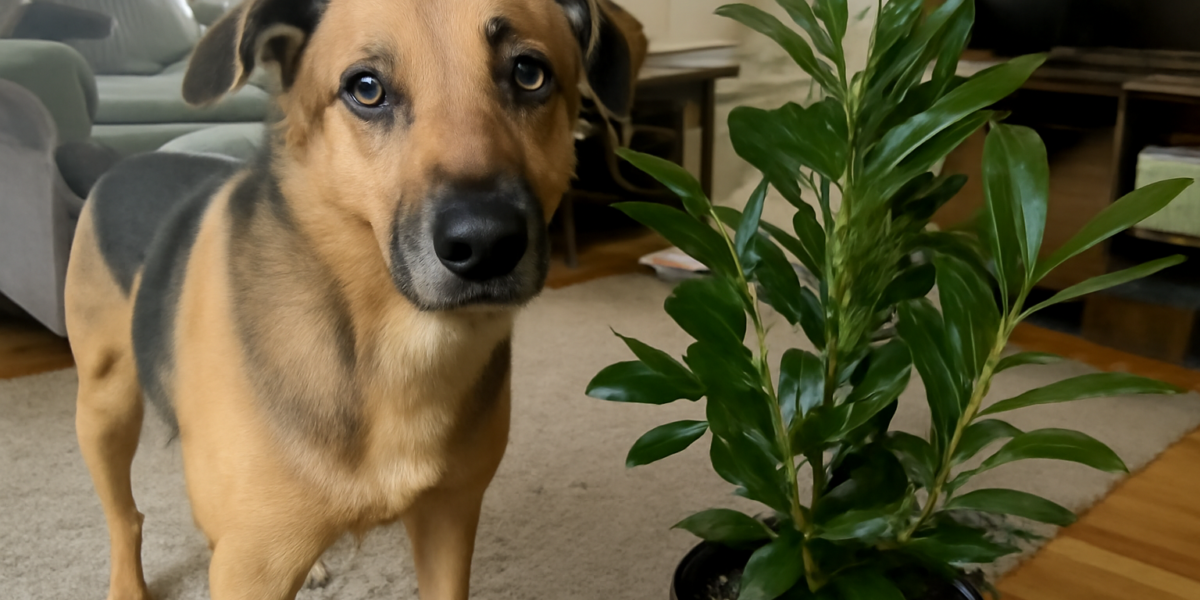
Yes, cherry laurel is toxic to dogs. The plant in question is Prunus laurocerasus, the dense glossy-leaved evergreen hedge planted across the UK, the Mediterranean, parts of the US Pacific Northwest and East Coast, and milder pockets of central Europe. Its leaves, stems, and seeds inside the small black drupes contain cyanogenic glycosides (mainly prunasin and amygdalin), which release hydrogen cyanide when chewed, crushed, or wilting. Severity is moderate to severe depending on the amount eaten and the dog’s size.
The cherry laurel toxic dogs warning matters because the plant’s name is misleading. Cherry laurel is not the bay laurel you cook with. It is not the mountain laurel of North American forests. It is not the cultivated cherry tree at the orchard. Chemically, it sits in the same cyanogenic family as cherry pits, peach pits, apricot kernels, almond shells, chokecherry, and blackthorn. If your dog has chewed cherry laurel leaves, eaten one of the small black fruits, or crunched through a seed, treat it as a potential cyanide exposure and call your veterinarian or one of the helplines we list further down — even before symptoms develop.
Why Cherry Laurel Releases Cyanide
The toxic principle in Prunus laurocerasus is a class of compounds called cyanogenic glycosides — molecules that bind a sugar to a cyanide-bearing group. As long as the leaf or seed sits intact, those compounds are stable. The instant the tissue is bruised, chewed, or starts to wilt, plant enzymes (beta-glucosidases) split the sugar away and release hydrogen cyanide gas. That is why crushed cherry laurel leaves smell faintly of bitter almond — the smell is HCN.
Cyanide is a metabolic poison. It binds to the iron in cytochrome c oxidase deep in the cell’s mitochondria and blocks the cell’s ability to use oxygen, even when oxygen is plentiful in the bloodstream. Affected dogs can have bright red gums (because the blood is fully oxygenated and not unloading at the tissues) and yet appear severely oxygen-starved at the same time — distressed breathing, weakness, collapse. The clinical picture develops fast, often within 15 to 60 minutes of meaningful ingestion.
The reason cherry laurel is more concerning than, for example, a single cherry pit kicked across the floor is concentration combined with quantity. A single cherry laurel leaf has a real toxin load. A dog that has chewed several leaves while playing in a hedge, or one that has crunched through one of the seeds inside the small black drupes, can ingest a clinically meaningful dose without it taking any apparent effort.
Cherry Laurel vs. Bay Laurel vs. Mountain Laurel vs. Cherry Tree — A Critical Look-Alike Map
Owners frequently search the wrong plant in a panic and get the wrong information. Here is the four-way distinction every cherry laurel article needs to spell out:
Cherry laurel (Prunus laurocerasus) — the famous Mediterranean and UK evergreen hedge. Glossy dark-green elongated leaves, racemes of small white flowers in spring, small black drupes in late summer/autumn. Cyanogenic, toxic, the plant this article is about. Sometimes also sold as English laurel or common laurel.
Bay laurel (Laurus nobilis) — the culinary plant whose leaves go in stew. Different family (Lauraceae). Generally non-toxic to dogs in small amounts, though large ingestion can cause GI upset. Different aroma, more pointed leaves, lighter green.
Mountain laurel (Kalmia latifolia) — a North American flowering shrub, completely unrelated to Prunus. Contains grayanotoxins (same family of toxins as rhododendron and azalea). Severely toxic to dogs. We cover it in mountain laurel toxicity in dogs.
Cherry tree (Prunus avium, sour cherry P. cerasus) — the cultivated fruit tree. Also Prunus, also cyanogenic. Pits and wilted leaves carry the main hazard; the fruit pulp is much less concerning. See cherry pits toxicity in dogs and cherry leaves toxicity in dogs.
Four different plants. Three of the four are toxic in different ways. If you are not sure which laurel is in your garden, photograph the leaves, flowers, and fruits and ask a knowledgeable nursery, an extension service, or your vet — the treatment story changes depending on which plant your dog actually encountered.
Symptoms of Cherry Laurel Poisoning in Dogs
Onset is fast. Mild to moderate cyanide exposures often produce signs within 15 to 60 minutes; severe exposures can begin even sooner.
Early signs include sudden anxiety or restlessness, dilated pupils, drooling, vomiting, panting or rapid breathing, and bright cherry-red gums (a paradoxical sign — oxygen is in the blood but the tissues cannot use it). The dog may pace, breathe heavily despite no obvious airway obstruction, and look generally distressed.
Worsening signs include weakness, ataxia (stumbling, drunk-walking), tremors, depression, collapse, seizures, and respiratory failure. Severe poisoning can be fatal within an hour without aggressive veterinary treatment that may include cyanide antidotes (sodium thiosulfate is the workhorse; hydroxocobalamin is a newer option), oxygen support, and IV fluids.
You may also see GI signs from the leaf bulk itself — drooling, retching, foamy vomit. Those are common with any plant ingestion and are not specific to cyanide. The combination of GI signs plus altered breathing or altered consciousness is what raises the cyanide-specific concern and should send you straight to the clinic.
What Parts of the Plant Are Most Dangerous?
All green parts of cherry laurel — leaves, stems, and unripe fruit — contain cyanogenic glycosides. Concentrations vary by tissue and state: actively wilting leaves (a branch knocked down by wind, a clipping pile from hedge maintenance, or a leaf left in a glass of water) tend to release more cyanide than fresh, undamaged leaves on the plant. Wilting partially predigests the glycoside-enzyme barrier, which means a chewing animal gets a bigger toxic hit per gram.
The seeds inside the small black drupes are the most concentrated source. The fruit pulp around the seed has a much lower toxin load. Dogs are more inclined than cats to mouth or eat fallen drupes, and a determined chewer can crunch through the seed coat — exactly the worst-case scenario.
Hedge clippings are a particular hazard for dogs. After a hedge trim, cuttings often pile on the lawn or in a green-waste heap, wilting and releasing more cyanide as they dry. Dogs investigating the new pile can chew on wilted leaves out of curiosity. If you trim cherry laurel, dispose of the cuttings the same day, ideally in a covered green bin, and do not leave them where the dog has access. Burning is not recommended either — the smoke contains cyanide.
What to Do if Your Dog Eats Cherry Laurel
Treat any meaningful cherry laurel ingestion as a possible emergency. Do not wait to see if symptoms appear. Steps:
1. Remove your dog from the plant. Take any visible plant material out of their mouth if you can do so safely, and make a quick estimate of how much was eaten — a chewed leaf, several leaves, a fallen drupe, a whole branch tip from a clipping pile.
2. Call your veterinarian, the nearest 24-hour emergency vet, the ASPCA Animal Poison Control Center at 888-426-4435 (consultation fee applies), or the Pet Poison Helpline at 855-764-7661 (fee applies). Ideally call before the drive so the clinic is ready when you arrive. Outside the US, call your country’s veterinary emergency line.
3. Do not induce vomiting at home. Hydrogen peroxide can cause severe esophagitis, salt water can produce sodium toxicity, and finger-down-the-throat can cause aspiration pneumonia. Decontamination decisions belong to the veterinary team — they can dose appropriate emetics safely, and they may need to skip emetics entirely if cyanide signs are already developing.
4. If you can, photograph the plant and bring a leaf and a piece of stem to the clinic. Identification matters because the treatment for cyanogenic plants differs from grayanotoxin plants like mountain laurel.
Treatment in clinic typically includes IV fluids, oxygen, monitoring, and in cyanide cases, specific antidotes. Activated charcoal may be given to reduce further absorption — it does not bind cyanide ion itself, but it binds the parent glycoside, which slows the rate at which cyanide is generated. Supportive care for several hours is usually needed.
Why Dose Matters Even More Than Usual
Cyanogenic toxicity is dose-dependent in a way that is hard to predict from the outside. A 30 kg Labrador that ingests one chewed leaf is likely fine. The same dog eating a pile of wilted clippings is in real trouble. A 4 kg Yorkie eating that same single leaf is at proportionally higher risk than the Lab.
That dose-dependence is why we don’t publish “X grams equals toxic” numbers — they would not be reliable across dogs of different sizes, ages, and metabolic states, and they create false reassurance for owners whose situation falls outside the average. The safer approach is: any meaningful ingestion, any symptoms, any uncertainty — call. Smaller dogs, puppies, senior dogs, and dogs with kidney or liver disease should trigger a faster call.
Wilted plant matter is more dangerous than fresh, all else equal. A clipping pile after hedge trimming is the worst scenario. Fresh leaves on a healthy plant, chewed briefly and spat out, are typically less of a hit than a determined chew of a wilting bunch.
Cherry Laurel in the Garden — Practical Risk Reduction
If Prunus laurocerasus is already established as a hedge — as it is in many UK and Mediterranean households — full replacement is a major undertaking. You can manage the risk without ripping out:
Trim regularly and dispose of clippings the same day. Wilted clippings are the highest-risk form; do not leave them on a lawn, compost pile, or in a place the dog can investigate. Bag and bin them in a closed container. Plant a barrier on the dog-side if practical, or fence off the corners of the garden where dogs run.
Watch for fruit-fall season (typically late summer through autumn). Pick up fallen drupes regularly. Dogs are happy to mouth fallen fruit, and a single seed crunch is enough to deliver a real dose. Pet-safe garden plants covers reliable alternatives if you are designing a dog-active garden.
If you are planting fresh and dogs use the garden, choose pet-safer hedging instead. Beech, hornbeam, Japanese holly (Ilex crenata), and various non-cyanogenic evergreens are options worth discussing with a knowledgeable nursery. Avoid yew (toxic), oleander (severely toxic), mountain laurel, and rhododendrons as substitutes — they trade one toxicity for another.
Other Cyanogenic Plants to Know About
Cherry laurel is one of a family of Prunus and Rosaceae plants with similar chemistry. If you are setting up a dog-safe outdoor space, it is worth knowing the neighbours so you can spot them all. Cyanogenic relatives include cultivated cherry trees (see cherry pits toxicity in dogs and cherry leaves toxicity in dogs), peach and apricot trees (peach pits toxicity and apricot pits toxicity), almond trees (almond trees toxicity), and the sibling cherry-laurel chemistry plants in this batch: chokecherry (Prunus virginiana), blackthorn (Prunus spinosa), and the milder Rosaceae relative flowering quince.
For a fuller pet-safe outdoor planting list, our pet-safe garden plants guide covers reliable non-toxic options that fill the same garden roles as cherry laurel without the chemistry.
When to Call the Vet — Threshold Lower Than You Might Think
For cherry laurel, the safer rule is: any chewed leaf, any seed contact, any fruit ingestion, any unexplained drooling or breathing change after garden access — call. The treatment for cyanogenic toxicity works best when started early, and the early signs (drooling, anxiety, cherry-red gums, fast breathing) can be subtle in a dog that is otherwise active.
Bring identifying material — a leaf, a piece of stem, a fruit if you can — to the clinic. If the plant is wilted (a clipping pile), take a wilted sample. The vet team will weigh dose estimates, time elapsed, and current symptoms to decide on decontamination, antidote, and supportive care. Don’t try to triage cyanide exposure at home with internet checklists; the time saved by a phone call to ASPCA APCC or Pet Poison Helpline can be the difference between a routine visit and a critical one.
If you are considering bringing a new dog home, ask us about plant-safety considerations during the adoption process — we are happy to flag the plants in your environment and discuss placement and management. Browse adoptable dogs through our network if you are starting that journey.
Frequently Asked Questions
How quickly does cherry laurel poisoning appear in dogs?
Onset is typically within 15 to 60 minutes of ingestion, with severe exposures developing even sooner. That is why “wait and see” is the wrong response — call your vet or ASPCA APCC (888-426-4435) as soon as ingestion is suspected.
Is cherry laurel really the same chemistry as cherry pits?
Yes. Both contain cyanogenic glycosides (prunasin and amygdalin) that release hydrogen cyanide when plant tissue is damaged. Cherry laurel leaves contain meaningful amounts; cultivated cherry pits contain even more, gram-for-gram, but the seed coat reduces release until the kernel is crushed.
How much cherry laurel is dangerous for a dog?
There is no safe published dose. It depends on the dog’s body weight, the part of the plant ingested, whether the leaves were fresh or wilted, and the dog’s metabolic state. Treat any meaningful ingestion as a reason to call your vet or poison control immediately.
My dog walked through a cherry laurel hedge — is that dangerous?
External contact alone is not toxic. The risk comes from chewing or eating leaves, stems, or seeds. If you see no chewing and no symptoms, monitoring is reasonable, but call your vet if anything unusual develops in the next several hours.
Can I burn cherry laurel clippings safely?
No. Burning cherry laurel clippings releases cyanide-containing smoke that is hazardous to humans and animals nearby. Bag and bin clippings in a closed container instead, and dispose of them through municipal green-waste channels rather than open burning.


