
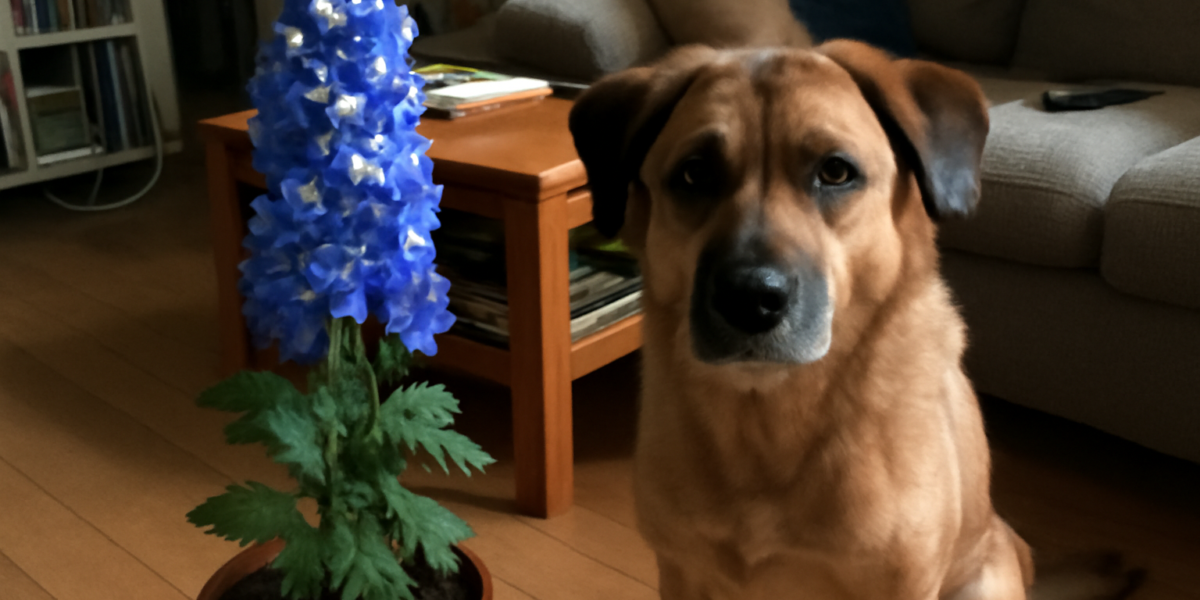
Delphinium Is Toxic to Dogs: Larkspur Family Risks
Delphinium, along with its close relative larkspur (Consolida), is toxic to dogs. These popular garden perennials contain diterpenoid alkaloids, primarily delphinine and methyllycaconitine (MLA), that can cause neuromuscular paralysis, cardiac arrhythmias, and respiratory failure. If your dog has eaten any part of a delphinium plant, contact your veterinarian or the ASPCA Animal Poison Control Center immediately.
In this article
Delphiniums are prized for their towering spikes of blue, purple, pink, and white flowers that add dramatic vertical interest to garden borders. Unfortunately, their widespread popularity means dogs encounter them frequently in yards, parks, and along walking trails. All parts of the plant are toxic, with the seeds and young shoots containing the highest alkaloid concentrations. The risk of delphinium toxic to dogs exposure is highest in spring when new growth emerges and in late summer when seeds mature.
Toxicity severity: Moderate to High. Delphinium poisoning can range from mild GI upset to life-threatening neuromuscular and cardiac complications depending on the amount ingested and the plant’s growth stage. Young plants and seeds pose the greatest danger.
Toxic Compounds in Delphinium
Delphiniums belong to the Ranunculaceae (buttercup) family and contain a complex mixture of diterpenoid alkaloids. The two most significant toxic compounds are delphinine and methyllycaconitine (MLA), both of which act as nicotinic acetylcholine receptor antagonists. In practical terms, these alkaloids block nerve signals to muscles, leading to progressive paralysis.
Methyllycaconitine is particularly dangerous because it has a high affinity for the receptors that control skeletal muscle contraction. When these receptors are blocked, the affected animal loses the ability to control voluntary muscles, including those used for breathing. This is the primary mechanism by which delphinium poisoning can become fatal.
Delphinine affects both the heart and the nervous system. It disrupts the electrical conduction system of the heart, potentially causing dangerous arrhythmias. Combined with the muscle-paralyzing effects of MLA, this creates a dual threat to the cardiovascular and respiratory systems that can overwhelm the body’s compensatory mechanisms.
The alkaloid concentration in delphinium plants varies significantly with growth stage. Young, actively growing plants in spring contain the highest levels. As the plant matures and flowers, the alkaloid concentration in the leaves and stems decreases somewhat, but the seeds accumulate high levels of toxin. This seasonal variation is important for dog owners to understand: the most dangerous periods are early spring (new growth) and late summer to fall (seed production).
Symptoms of Delphinium Poisoning in Dogs
Symptoms of delphinium poisoning typically appear within one to six hours of ingestion. The presentation depends on the quantity consumed, which part of the plant was eaten, and the growth stage of the plant.
Early Gastrointestinal Symptoms
- Drooling and nausea
- Vomiting
- Abdominal pain and bloating
- Diarrhea
- Loss of appetite
Neuromuscular Symptoms
- Muscle stiffness progressing to weakness
- Tremors and muscle twitching
- Staggering, unsteady gait, or inability to walk
- Progressive paralysis starting in the hind legs
- Inability to stand or support weight
Cardiovascular and Respiratory Symptoms
- Irregular heart rhythm
- Rapid or abnormally slow heartbeat
- Labored breathing
- Respiratory distress or failure
- Collapse
The neuromuscular symptoms are the hallmark of delphinium poisoning and what distinguish it from many other plant toxicities. The progressive muscle weakness, starting with subtle stiffness and potentially advancing to full paralysis, is caused by the alkaloids blocking nerve-to-muscle communication. If the muscles that control breathing are affected, the situation becomes immediately life-threatening.
Dogs that have eaten only small amounts may experience just the gastrointestinal symptoms and mild stiffness. Those that have consumed larger quantities, especially of young growth or seeds, may progress rapidly through the neuromuscular and cardiac stages. Size matters significantly: a toy breed eating the same amount as a large breed will be affected much more severely.
What to Do If Your Dog Eats Delphinium
Step 1: Remove your dog from the area immediately. Prevent any further ingestion. Check the mouth for remaining plant material and gently remove what is visible.
Step 2: Call your veterinarian or an emergency helpline. Contact your vet, the nearest emergency animal hospital, or the ASPCA Animal Poison Control Center at (888) 426-4435. Describe your dog’s size, the estimated amount of plant eaten, and how long ago the ingestion occurred. If your dog is already showing muscle stiffness or weakness, emphasize this to the veterinary team so they can prepare for a neuromuscular emergency.
Step 3: Do not induce vomiting unless specifically directed. Because delphinium’s neuromuscular effects can compromise your dog’s ability to swallow and protect their airway, inducing vomiting at home carries a significant aspiration risk. Let the veterinary professional decide whether emesis is safe.
Step 4: Transport to the vet promptly. Bring a sample of the plant or a photograph. Keep your dog calm and limit physical activity during transport, as exertion can accelerate the absorption of toxins and worsen muscle weakness.
Step 5: Veterinary treatment. There is no specific antidote for delphinium poisoning. Treatment is supportive and may include activated charcoal if administered within the first hour or two, IV fluid therapy to support blood pressure and kidney function, medications to manage cardiac arrhythmias, anti-seizure medication if needed, respiratory support including supplemental oxygen or mechanical ventilation, and continuous cardiac monitoring.
In cases involving livestock (delphinium is the leading cause of cattle poisoning on western rangelands), the drug physostigmine has been used experimentally to reverse the neuromuscular blockade. Some veterinarians may consider this option for dogs with severe paralysis, though its use in companion animals is not standard. Discuss all treatment options with your veterinary team.
With prompt treatment, many dogs recover from delphinium poisoning within 24 to 72 hours as the alkaloids are metabolized and cleared from the body. The prognosis worsens significantly if respiratory failure or severe cardiac arrhythmia develops before treatment begins.
Identifying Delphinium and Related Larkspur Species
Recognizing delphinium and larkspur in your environment is an important step in protecting your dog. These plants share similar characteristics but have some differences worth noting.
Garden Delphinium (Delphinium species)
- Tall, stately plants reaching three to six feet in height
- Dense spikes of large, spurred flowers in shades of blue, purple, pink, white, and occasionally red
- Deeply lobed, palmate leaves
- Commonly planted in perennial borders and cottage gardens
- Perennial, returning year after year
Larkspur (Consolida species)
- Generally shorter and more branching than delphinium
- Similar spurred flowers but often more loosely arranged on the stem
- Finely divided, feathery foliage (more delicate than delphinium leaves)
- Annual species commonly self-seed in gardens and meadows
- Wild larkspur grows across western North America
Both genera are equally toxic to dogs. If you are unsure whether a plant in your garden is delphinium or larkspur, treat it as dangerous and prevent your dog from accessing it. The alkaloid profile is similar in both genera, and the treatment approach is the same.
Preventing Delphinium Poisoning and Safe Alternatives
The most effective prevention is removing delphinium and larkspur from areas where your dog can reach them. If you grow delphiniums and have dogs, consider these strategies:
- Complete removal: The safest option. Remove all delphinium plants, including roots, and dispose of them in sealed bags.
- Barrier separation: If you want to keep your delphiniums, install sturdy fencing that physically prevents your dog from reaching the plants. Standard low garden edging is not sufficient for determined dogs.
- Dedicated garden zones: Create separate dog-friendly and ornamental garden areas, with the ornamental section fully enclosed.
- Vigilant supervision: Never leave your dog unsupervised in an area where delphiniums grow, especially during spring growth and seed production.
Dog-safe plants that provide similar tall, spike-like flower forms include:
- Hollyhocks (Alcea rosea): Tall, showy flower stalks in many colors. Non-toxic to dogs.
- Snapdragons (Antirrhinum majus): Vertical flower spikes, safe for dogs, available in dwarf to tall varieties.
- Salvia (Salvia species): Many species produce tall blue or purple flower spikes similar to delphinium. Non-toxic to dogs.
- Penstemon: Native to North America, produces attractive tubular flowers on spikes. Safe for dogs.
Our dog care section offers additional guidance on creating a safe environment for your pet. If you are planning to adopt a dog, reviewing your yard for toxic plants should be part of your preparation checklist. For information about related garden dangers, check out our guides on monkshood toxicity in dogs and periwinkle risks for dogs.
Frequently Asked Questions
Are delphinium and larkspur the same thing?
They are closely related but not identical. Delphinium (Delphinium) and larkspur (Consolida) are separate genera within the Ranunculaceae family. They share similar toxic alkaloids and both are dangerous to dogs. The common name “larkspur” is sometimes used for both genera, which adds to the confusion. For safety purposes, treat them as equally toxic.
Which part of the delphinium plant is most toxic?
The seeds contain the highest concentration of alkaloids, followed by young spring growth (shoots and leaves). Mature leaves and stems have lower but still dangerous levels. The flowers contain moderate alkaloid levels. No part of the plant is safe for dogs to eat.
Can delphinium kill a dog?
Yes, severe delphinium poisoning can be fatal, particularly if it causes respiratory paralysis or cardiac arrest before treatment is administered. The risk is highest for small dogs that eat seeds or young plant material. Prompt veterinary treatment dramatically improves survival rates, which is why immediate action is so important.
Are dried delphinium flowers in arrangements toxic to dogs?
Yes. The diterpenoid alkaloids in delphinium are chemically stable and persist in dried plant material. Dried flower arrangements containing delphinium should be kept where your dog cannot access them. If your dog chews on dried delphinium, treat it with the same urgency as fresh plant ingestion.
Is delphinium toxic to cats?
Yes, delphinium is toxic to cats as well as dogs. Cats that ingest delphinium can experience the same gastrointestinal, neuromuscular, and cardiac symptoms. However, cats are less likely to eat large quantities of garden plants compared to some dogs. Regardless, keep delphiniums away from all household pets.


