
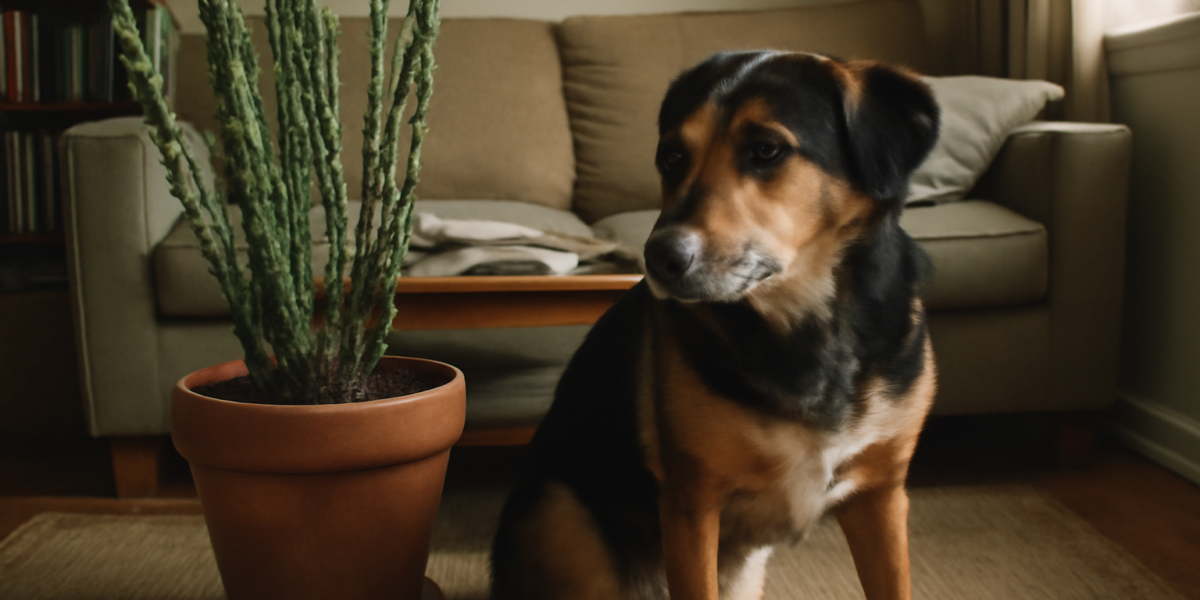
The Direct Answer About Ocotillo and Pets
Good news on the chemistry side: ocotillo (Fouquieria splendens) is not listed by the ASPCA as toxic to dogs or cats. The phrase ocotillo toxic pets is largely a search-engine misnomer — the practical risk from this iconic southwestern desert plant is mechanical, not chemical. Long, hard thorns line every stem, the wood is fibrous and capable of inflicting deep punctures, and a curious pet investigating an ocotillo can come away with paw, muzzle, or eye injuries that need veterinary care.
In this article
- The Direct Answer About Ocotillo and Pets
- What Ocotillo Looks Like and Where It Grows
- Why the Thorns Are the Whole Story
- What About the Sap?
- Symptoms and Injury Patterns
- What to Do in the First Hour
- Veterinary Treatment
- Where Pets Encounter Ocotillo
- Sibling Desert Plants
- Pet-Friendlier Desert Garden Alternatives
- What Ocotillo Is Not
- Long-Term Considerations
- The Bottom Line on Ocotillo
- Frequently Asked Questions
The sap of ocotillo can be mildly irritating on prolonged skin contact, but ingestion of small amounts of plant material is not associated with serious systemic toxicity in pets. The realistic hazard is the architecture of the plant: a mature ocotillo can stand fifteen to twenty feet tall with whip-like thorny stems radiating from a central crown, and the thorns are sturdy enough to drive into a dog’s chest, paw, or eye on hard contact. This guide treats ocotillo as the mechanical hazard it is and walks through what to expect when a pet meets one.
What Ocotillo Looks Like and Where It Grows
Ocotillo is one of the most recognizable plants of the Sonoran and Chihuahuan Deserts. Its distinctive features:
- A central woody crown with multiple long, slender, whip-like stems radiating outward
- Stems can reach fifteen to twenty feet on mature plants
- Hard, sharp thorns spaced along the entire length of each stem
- Small green leaves that emerge after rain and drop off in dry periods
- Bright red-orange tubular flower clusters at the stem tips during spring bloom
Native range covers southern California, Arizona, southwestern New Mexico, west Texas, and northern Mexico. It also shows up as an ornamental in xeriscaped yards across the desert southwest, in some California native-plant gardens, and occasionally in container plantings further north as a novelty.
The plant is sometimes called coachwhip, candlewood, or vine cactus despite not being a true cactus. Its closest relatives are in the Fouquieriaceae family — a small group of southwestern North American plants that includes boojum tree (Fouquieria columnaris) and related Fouquieria species, all of which share similar thorny architecture and similar low-toxicity profiles.
Why the Thorns Are the Whole Story
Ocotillo thorns are not the soft glochid bristles of prickly pear or the segmented spine clumps of cholla. They are individual, hard, sharply-tipped projections that come straight out of the woody stem. Each thorn:
- Is typically one to two centimeters long
- Is rigid enough to puncture leather, denim, and skin
- Stays attached to the stem (unlike cholla, which detaches in chunks)
- Spaced closely along the stem so contact almost always means multiple punctures
- Located at heights that line up with a typical dog’s face, chest, and shoulders on a tall mature plant
The realistic injury pattern for a pet that encountered ocotillo:
- A dog running past brushed a stem and now has a row of small punctures along the chest or flank
- A dog jumped at a low stem (or a flower) and got punctures across the muzzle
- A dog or cat got a paw injury from stepping on a fallen branch or thorny debris
- An eye injury from a swing of the head or a curious paw at a bobbing flower-laden stem
The eye is the same priority concern as with agave and other thorny desert plants. Any thorn contact with the eye is an emergency.
What About the Sap?
Ocotillo sap is low on the irritant spectrum compared to plants like fig, agave, or oleander. Reports describe it as mildly resinous and slightly sticky, with occasional skin irritation in humans on prolonged contact. Pet exposure is mostly limited to chewing or biting the stem, which would deliver a small amount of sap to the mouth.
Realistic chemical signs after ocotillo sap exposure:
- Drooling, lip-smacking
- Possible single-episode vomiting
- Mild oral irritation
None of these is severe in typical exposures. The bigger concern from any chewing is mechanical — the dog who tries to chew an ocotillo stem will end up with thorn fragments in the gums, tongue, or roof of the mouth long before the sap chemistry becomes an issue.
Ocotillo flowers are sometimes asked about because they are a known food source for hummingbirds and have been used in traditional medicine. The flowers are not associated with significant pet toxicity, but they sit at the tip of a thorny stem, so reaching one is the hazard.
Symptoms and Injury Patterns
What to watch for after a known or suspected ocotillo encounter:
- Visible puncture wounds on the muzzle, chest, flanks, or paws
- Bleeding from individual puncture points
- Limping if a paw is involved
- Eye squinting, tearing, or pawing at the eye
- Refusal to eat if mouth or throat punctures are present
- Swelling around a puncture site days later (possible embedded fragment or developing abscess)
- A dog who pulls a thorn out themselves and then licks the wound repeatedly
The injuries that look minor at the time are sometimes the ones that cause trouble later. A small puncture that closed over an embedded thorn fragment can develop into an abscess in the following days. If you see a wound that gets warmer, more swollen, or starts draining, that is a vet visit even if the original injury seemed harmless.
What to Do in the First Hour
If your pet just had an ocotillo encounter:
- Get the pet away from the plant.
- Visually inspect the entire body — chest, muzzle, paws, flanks, eyes — under good light.
- For surface punctures with no thorn fragment visible, gently clean with saline and apply light pressure if bleeding.
- If a thorn is embedded and you can see most of it, you can attempt removal with tweezers, gripping firmly and pulling straight out. Do not rock or twist. Do not pull thorns embedded in the eye, mouth, or near vital structures — that is a vet job.
- Place an Elizabethan collar to stop self-licking and rubbing.
- Call your veterinarian or ASPCA Animal Poison Control (888-426-4435, fee applies) or Pet Poison Helpline (855-764-7661, fee applies). Even non-toxic plant injuries benefit from triage.
If your pet has eye involvement, multiple deep punctures, refuses to eat, or shows signs of significant blood loss, head directly to a clinic. Eye injuries in particular are time-critical.
Veterinary Treatment
What a typical vet visit might involve for an ocotillo injury:
- Sedation if multiple puncture points need exploration or if the pet is too stressed for examination
- Magnified inspection for embedded thorn fragments
- Mechanical removal of fragments with fine forceps
- Wound cleaning and flushing to reduce infection risk
- Antibiotic coverage if multiple punctures introduced bacteria
- Pain management
- Eye examination with fluorescein staining if any ocular involvement is suspected — this may be referred to a veterinary ophthalmologist
- Imaging if a deeply embedded fragment is suspected and not externally visible
- Follow-up in five to seven days to check for delayed abscesses
Cost varies widely. A few cleaned punctures and an antibiotic course is at the lower end. A sedated multi-fragment extraction with eye evaluation climbs higher. Pet poison helplines can also relay treatment plans directly to your vet.
Where Pets Encounter Ocotillo
The most realistic exposures happen in:
- Off-leash hikes in southwestern US desert preserves and trails
- Xeriscaped front and back yards in Arizona, California, New Mexico, and west Texas
- Public landscaping along sidewalks and parking lots in desert cities
- Container ocotillos used as architectural focal points
- Fallen stems and thorny debris from mature plants in the yard
For dog owners hiking in desert regions, the practical takeaway is to keep your dog leashed, stay on cleared trails, and know what ocotillo looks like (especially when it is leafless and looks like a cluster of dead sticks — the thorns are still active). After any off-trail excursion, do a quick inspection of the muzzle, chest, paws, and any obviously sniffed-at areas.
For homeowners with ocotillo in the yard, the practical strategies include physical barriers (a low decorative fence or rock border at thorn-tip height) and routine clean-up of fallen stems after windstorms.
Sibling Desert Plants
Ocotillo is part of a family of southwestern desert plants that share thorn-and-mechanical-hazard themes more than chemical-hazard themes. Pet owners in desert regions usually need to know about all of them. Our coverage includes:
- Prickly pear and pets — non-toxic but the glochids are a major mechanical hazard
- Cholla cactus and pets — the most severe spine hazard in the desert plant family
- Agave and dogs — chemical sap plus mechanical leaf-tip spines
- Yucca and dogs — saponins plus sword-shaped leaves
The treatment pattern across this group is similar: identify and remove embedded fragments, manage wound contamination, evaluate the eyes if any ocular contact is suspected, and watch for delayed abscess. The injuries are different in detail but related in approach.
Pet-Friendlier Desert Garden Alternatives
If you wanted a southwestern aesthetic without the spine hazard, options include:
- Native ornamental grasses (deer grass, blue grama, side-oats grama)
- Sedum and Echeveria succulents for the structural element
- Penstemon and salvia species for color (with caveats — see sage and dogs)
- Lantana (consult before planting — it has its own toxicity considerations)
- Desert marigold and other native wildflowers
The pet-safe garden plants roundup walks through pet-safe outdoor swaps. For homeowners committed to keeping ocotillo, design strategies like rock-bordered planting beds, raised gravel zones, and low fences create a buffer between pets and thorns.
If you are still building a pet household and choosing landscaping for a desert-region yard, the dog adoption hub and cat adoption hub connect you with rescues. Doing the plant audit before adoption makes life easier.
What Ocotillo Is Not
A few clarifications because misinformation gets shared:
- Ocotillo is not a cactus, despite often being called one. It is in its own family.
- Ocotillo is not closely related to oleander, despite both being long, vertical desert-region plants. Oleander is severely toxic; ocotillo is not.
- The flowers are not poisonous and are a known nectar source for hummingbirds.
- Ocotillo bark and stems have been used in traditional medicine, which sometimes prompts pet owners to wonder if they are dangerous. Casual pet exposure to the plant material is not associated with significant systemic toxicity.
The takeaway is that ocotillo is a thorn problem, not a poison problem. Treat it accordingly.
Long-Term Considerations
For pets who live in ocotillo country, the long-term picture is about preventing repeat injuries. Dogs who get a face-full of thorns once will sometimes learn to avoid the plant; others will not. Owners who have been through one extraction visit usually develop habits that make the second visit unnecessary: leashed walks in known stands, fenced-off plants in the yard, post-walk inspections.
Eye injuries are the long-term concern most worth respecting. Untreated, they can cause chronic corneal ulceration. Treated promptly, the prognosis is usually good. Speed of veterinary intervention is the difference.
For homeowners, the maintenance habit that prevents most yard-related injuries is post-storm cleanup. Wind storms in the southwest blow ocotillo stems and thorny debris around, and a yard that looked safe yesterday can have a pile of thorny sticks across the dog’s favorite path today.
The Bottom Line on Ocotillo
Ocotillo is non-toxic in the chemical sense — there is no poison story here, no compound that requires decontamination, no organ-system risk to manage. The entire hazard profile is mechanical: long, hard thorns that can puncture skin, paws, mouth, and eyes on hard contact. The injury can range from a few cleaned punctures to a sedated multi-fragment extraction with eye evaluation.
The right response to a suspected ocotillo encounter is calm, prompt routing to your vet for any non-trivial injuries, especially eye involvement. Surface punctures with no embedded fragments may resolve at home; multiple punctures, embedded thorns, or eye contact need a clinic. Most cases resolve well with proper care.
Prevention is the bigger win. Leashed dogs, cleared trails, post-walk inspections, fenced-off yard plants, and post-storm debris cleanup handle most cases before they become injuries. Ocotillo is a beautiful plant; it just demands a little respect from anyone with a curious pet in the household.
Frequently Asked Questions
Is ocotillo poisonous to dogs and cats?
No, ocotillo (Fouquieria splendens) is not on the ASPCA toxic-plant list. The sap is mildly resinous but not associated with serious systemic toxicity in pets. The hazard is mechanical: long hard thorns that can cause puncture wounds, paw injuries, and eye injuries.
What if my dog ran into an ocotillo?
Inspect the muzzle, chest, paws, flanks, and eyes under good light. For surface punctures, clean gently with saline. For embedded thorns you can see clearly, attempt removal with tweezers (straight pull, no twisting). For thorns near eyes, mouth, or vital areas, leave for the vet. Eye involvement is an emergency.
Can I remove an ocotillo thorn from my dog at home?
Yes for surface fragments where the thorn is fully visible and not near sensitive structures. Grip firmly with tweezers and pull straight out. Clean the puncture afterward. For thorns embedded near the eye, in the mouth, or that are deeper than they look, the vet has better tools and can sedate if needed.
Is ocotillo sap dangerous if my pet chewed a stem?
The sap is mildly irritating but not associated with serious toxicity. Drooling and possibly a single round of vomiting are the realistic chemical signs. The bigger concern from chewing is mechanical — thorn fragments in the gums, tongue, or palate. Watch for refusal to eat or visible mouth injuries.
What should I do if my pet got an ocotillo thorn in the eye?
This is an emergency. Do not flush, do not touch the eye, do not let the pet rub it. Place an Elizabethan collar if available and drive to the clinic. Untreated penetrating eye injuries can cause permanent vision loss. Same-day veterinary ophthalmology evaluation is essential.


