
Last updated: May 16, 2026
In this article
- Spruce Trees and Pets at a Glance
- What Is a Spruce Tree?
- Toxicity Status and ASPCA Listing
- The Needle-Puncture Risk
- Christmas Tree Water and the Stand Reservoir
- Possible Symptoms After Spruce Ingestion
- What to Do If Your Pet Eats Spruce
- Cats and the Christmas Tree
- Dogs and the Holiday Yard
- Spruce in the Mixed Conifer Landscape
- Adoption and a Pet-Friendly Holiday Plan
- Frequently Asked Questions
Spruce Trees and Pets at a Glance
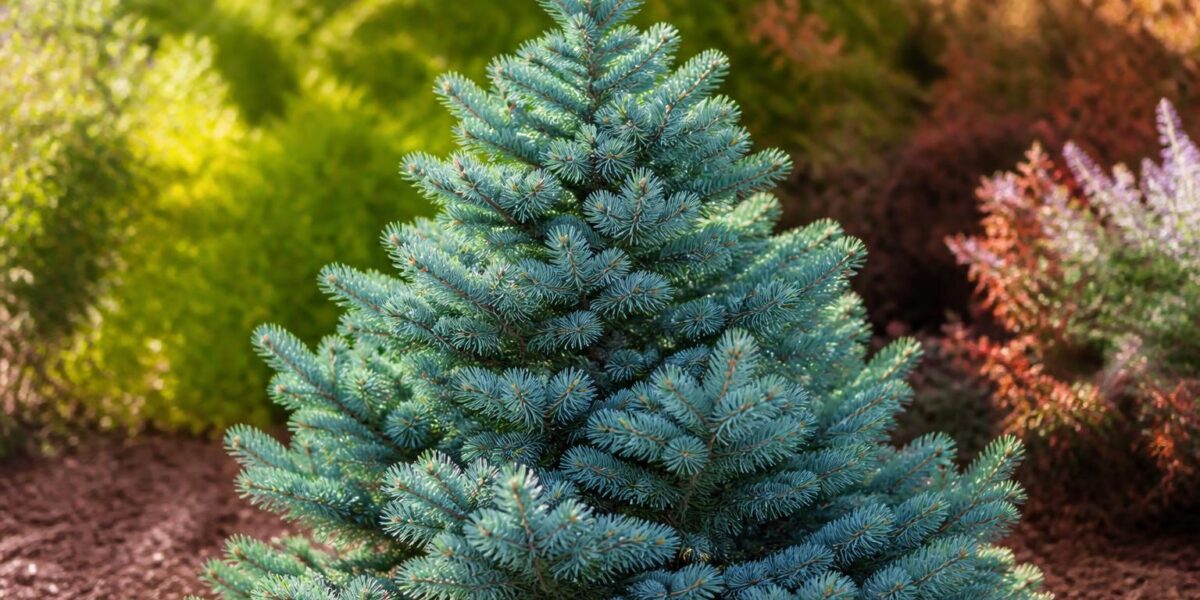
Are spruce trees safe for pets? For dogs and cats, the working answer is yes from a chemical standpoint, but spruces deserve special attention because of their seasonal role as Christmas trees. The genus Picea includes Norway spruce (Picea abies), white spruce (Picea glauca), blue spruce (Picea pungens), and several other species commonly planted as landscape trees and harvested for the holiday cut-tree market. None of these species is on the ASPCA toxic-plant list, and available poison-control literature does not link spruce to severe canine or feline poisonings at typical exposure levels.
The pet safety conversation around spruce is therefore mostly about mechanical hazards rather than chemistry. Spruce needles are short, stiff, and sharp-tipped, and they can puncture gums, paw pads, or the GI tract if a dog or cat chews on a branch or steps on dropped needles. Christmas tree water in a stand can grow bacteria over time and may contain preservatives that cause GI upset if a thirsty pet drinks from the reservoir. With reasonable supervision and a few targeted precautions during the holiday season, a spruce tree in the yard or living room is a safe backdrop for pet life.
What Is a Spruce Tree?
Spruces are evergreen conifers native to cold and temperate regions across the Northern Hemisphere. Mature trees range from 60 to 200 feet tall depending on species, with a tall pyramidal form, short stiff needles attached to small woody pegs along the twigs, and pendulous cones that dangle downward from the upper branches. The bark is typically gray-brown and scaly. Needles range from blue-green in blue spruce to deep dark green in Norway spruce.
Spruce wood is light, soft, and resonant, which is why it has been the traditional wood for the soundboards of pianos, violins, and acoustic guitars. The species is also widely planted for shelterbelts and reforestation. In North America, white spruce and blue spruce are popular Christmas tree species along with various firs and pines. Norway spruce is more common in Europe both as a landscape tree and a holiday cut tree.
Toxicity Status and ASPCA Listing
The ASPCA Animal Poison Control Center does not list any Picea species on its toxic-plant rosters for dogs, cats, or horses. Veterinary case reports do not link spruce foliage, bark, or cones to severe poisoning in companion animals at typical exposure levels. Livestock-management literature places spruce in the low-risk category for cattle and sheep grazing.
The chemistry of spruce includes various essential oils and resins that produce the characteristic “Christmas tree smell.” These compounds are not associated with documented systemic toxicity in dogs or cats from casual exposure, but they can cause mild GI upset if a pet ingests a large quantity of needle or bark material. Concentrated essential oils derived from spruce are a different and more concerning issue; we cover that risk in the essential oils toxic to cats guide.
The Needle-Puncture Risk
Spruce needles are short, stiff, and sharp-tipped, and they are firmer than the soft flexible needles of larch or fir. A dog that chews a spruce branch can experience minor gum or tongue punctures. A pet that walks barefoot through a heavy needle drop can pick up needles in paw pads, where they may be grooming-licked into the mouth or, more rarely, embedded enough to cause local irritation. Indoor cats jumping onto a Christmas tree can press needles between toes.
The mechanical needle risk is one reason cut Christmas trees are typically positioned in busy households with the lower bare-trunk section behind a barrier or skirt that limits paw access. Dropped needles in homes with allergic owners are vacuumed daily during the holiday season, and that habit benefits pets at the same time. Outdoor needle litter under a mature landscape spruce is generally less of a concern because pets do not linger directly under the canopy.
Christmas Tree Water and the Stand Reservoir
Cut Christmas trees sit in a water reservoir to extend freshness through the holiday season. That reservoir is the most overlooked pet hazard around spruce trees. Stagnant water can grow bacteria and mold over weeks, and many tree-stand water additives marketed as “preservatives” or “fresh-cut tree feed” contain compounds that are mildly toxic if a pet drinks the water.
The simplest fix is a tree skirt that fully covers the stand and a closed reservoir model where pets cannot lap from the basin. Alternatively, place the tree on a tall sturdy base where the stand is out of paw or muzzle reach. Use plain water without commercial additives if you choose to keep the reservoir simple and accessible. Aspirin or sugar in tree water are old wives’ tale additives that do not preserve the tree meaningfully and can cause GI upset for pets.
Possible Symptoms After Spruce Ingestion
For oral ingestion of spruce needles, bark, or cone fragments, possible symptoms in dogs include drool, lip licking, single-episode vomiting, soft stool, oral irritation from needle pricks, and brief reluctance to eat. Cats are less likely to engage with spruce material directly, but a curious cat that chews a holiday tree branch may drool or vomit a fiber wad.
For Christmas tree water ingestion, possible symptoms include vomiting, diarrhea, and drooling within hours, depending on what was in the water. Severe toxicity is rare, but pets that drink from a reservoir with commercial preservatives and existing bacterial overgrowth are more likely to develop signs. Severe systemic symptoms such as tremors, seizures, or organ failure are not characteristic of spruce ingestion at normal household exposure levels.
What to Do If Your Pet Eats Spruce
If you witness or suspect ingestion, remove any plant fragments from your pet’s mouth and offer a small drink of water. Photograph the tree and any chewed material. Most pets that swallow a small amount of spruce needle, bark, or cone material will be fine after a quiet evening of observation.
Phone your own veterinarian first if your pet shows persistent vomiting, refusal to eat, lethargy, oral injury from a needle puncture, or evidence of having drunk from a tree-stand reservoir with additives. The ASPCA Animal Poison Control Center at 888-426-4435 and the Pet Poison Helpline at 855-764-7661 are available around the clock for second opinions. Do not induce vomiting at home without veterinary instruction; sharp needles can damage the esophagus in either direction.
Cats and the Christmas Tree
Cats are notorious for treating Christmas trees as climbing toys. The seasonal post about a cat balanced atop a holiday tree is a meme, but the underlying risks are real: the tree can topple, ornaments can fall and break, lights can be chewed, and water can be lapped. The spruce itself is the smallest part of the safety equation.
For cat households at the holidays, anchor the tree to the wall or ceiling with a small hook and fishing line, decorate with shatter-resistant ornaments at lower levels, route lights along sturdy branches and inside the tree where chewing is less likely, and seal the reservoir. Skip tinsel entirely; ingested tinsel can cause linear foreign body obstruction in cats, which is a surgical emergency. Our cat-safe houseplants guide covers complementary indoor strategies.
Dogs and the Holiday Yard
Dogs interact with spruce mostly outdoors and during yard play. A dog that fetches a stick that turns out to be a spruce twig may experience needle pricks. A puppy chewing on a fallen branch is a more sustained exposure that warrants supervision. Most adult dogs ignore intact spruce trees once the novelty wears off.
For training around the Christmas tree, work on a firm “leave it” cue at the edge of the tree skirt and reward attention back to you. Crate or gate access to the room when the dog cannot be supervised, especially in the first few days when the tree is new and interesting. Our pet-safe garden plants roundup covers yard-companion species for non-holiday seasons.
Spruce in the Mixed Conifer Landscape
Spruce often shares yard space with other conifers. Larch, fir species, and certain pines are common neighbors. Some look-alike species deserve more caution: juniper berries are a separate concern, and cedar species have a confusing common-name landscape that includes both safer (Cedrus, our row 30) and mildly concerning (Western red cedar / Thuja) options.
Norfolk pine is a houseplant conifer with mild toxicity in cats and warrants its own attention if you grow indoor “tabletop” trees. Pine needles covers the broader pine-needle question for dogs that browse outdoors. Mixed-yard owners benefit from learning which conifer they actually have, because casual species names overlap quite a lot.
Adoption and a Pet-Friendly Holiday Plan
If you are bringing home a new pet around the holiday season, plan ahead for the tree. New animals are unfamiliar with the household routine, and a Christmas spruce in the corner is the most novel thing in their new world. Set up the tree before the pet arrives if possible, supervise interactions on the first day, and use the first few weeks to teach calm behavior around the tree.
The adopt dogs and adopt cats hubs collect adoptable animals along with practical first-week guidance. For most pets, a spruce in the corner is a backdrop they ignore once the routine settles. With reasonable mechanical precautions and a sealed water reservoir, the holiday tree is a low-stress part of family life.
Frequently Asked Questions
Are spruce trees toxic to dogs?
Spruce trees (Picea species) are not listed as toxic by the ASPCA. The bigger spruce-related risks for dogs are needle-puncture injury, GI irritation from heavy ingestion, and Christmas tree water that contains preservatives or bacteria.
Are spruce trees toxic to cats?
Spruces are not on the ASPCA toxic-to-cats list. Cats may experience needle injury from chewing branches and can develop GI symptoms after drinking from a Christmas tree water reservoir. Tree-skirts that block access reduce both risks.
Can pets drink Christmas tree water?
It is best if they do not. Stagnant water grows bacteria, and tree-stand preservatives can cause GI upset if ingested. Use a sealed reservoir or a tree skirt that fully covers the stand, and skip preservative additives if pets share the room.
What should I do if my dog ate spruce needles or bark?
Watch for vomiting, soft stool, or oral injury for 24 hours. If symptoms persist or worsen, or if you suspect needle puncture, contact your veterinarian, ASPCA Animal Poison Control at 888-426-4435, or the Pet Poison Helpline at 855-764-7661.
Are spruce essential oils safe to diffuse around pets?
Concentrated essential oils, including spruce, can be irritating to pets and especially to cats, who metabolize many essential oil compounds poorly. Avoid direct application to pets and limit diffuser use in rooms where pets cannot escape the airspace.


