
Last updated: May 4, 2026
In this article
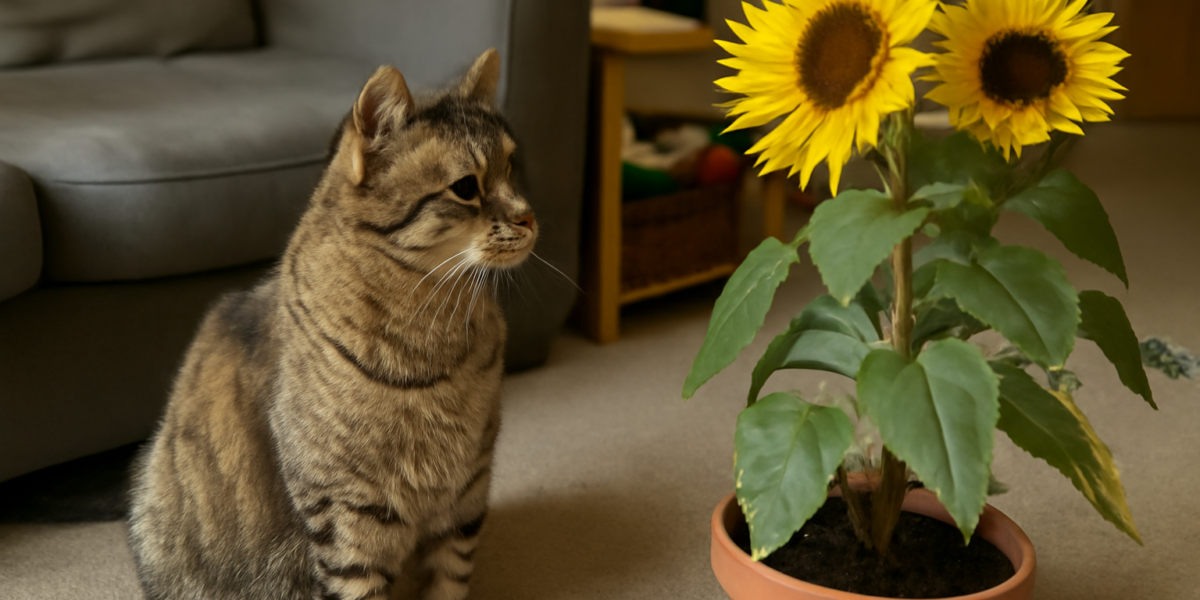
Quick Answer: No — sunflowers are not toxic to cats. The ASPCA confirms that sunflowers (Helianthus annuus) are non-toxic to cats, dogs, and horses. They are one of the safest popular flowers you can keep in a home with cats. That said, pesticide residue on commercially grown stems and large quantities of seeds deserve a second look.
If your cat has taken an interest in the sunflowers on your kitchen table or snuck a bite of a petal, you have likely found yourself asking: are sunflowers toxic to cats? The reassuring answer is no. Unlike many common flowers that can cause serious harm to felines, sunflowers are firmly in the safe column. The American Society for the Prevention of Cruelty to Animals (ASPCA) lists sunflowers as non-toxic to cats, and that classification covers the whole plant — petals, leaves, stems, and flowers. Still, non-toxic does not mean there is nothing to think about. This guide walks through what the research says, the practical caveats worth knowing, and how to keep your cat comfortable around these cheerful yellow blooms.
Are Sunflowers Safe for Cats?
Yes — sunflowers are safe for cats. The ASPCA Animal Poison Control Center lists Helianthus annuus, the common sunflower, as non-toxic to cats, dogs, and horses. This applies to the flower head, petals, leaves, and stems. There are no known compounds in the sunflower plant that damage a cat’s kidneys, liver, nervous system, or red blood cells. This puts sunflowers in a very different category from genuinely dangerous plants like true lilies, which can cause fatal kidney failure in cats from even minimal exposure.
If you are asking are sunflowers toxic to cats because your cat just chewed on a petal or two, you can take a breath. The plant itself poses no poisoning risk. A cat that samples a sunflower and then walks away is not facing a medical emergency. As always, any unusual behavior or persistent symptoms after a cat eats plant material is worth a call to your vet, but sunflower ingestion alone is not cause for alarm. For more guidance on plants and cat safety, browse our cat care blog.
Can Sunflowers Cause Any Problems?
While the sunflower plant is non-toxic, two practical concerns are worth understanding for any cat owner who brings these flowers into the home.
Pesticide residue. Commercially grown cut sunflowers — those sold in grocery stores, florists, and flower markets — are frequently treated with pesticide and fungicide sprays during cultivation and after harvest to maintain their appearance during transport and sale. These chemical residues remain on petals, leaves, and stems. A cat that chews on a treated stem or grooms itself after rubbing against the flower can ingest a meaningful quantity of those chemicals. This is the more significant real-world concern with store-bought sunflowers, not the plant itself. Symptoms of pesticide ingestion in cats can include drooling, vomiting, diarrhea, lethargy, and in serious cases, tremors. If you suspect your cat ingested chemicals from a treated plant, contact your veterinarian or the ASPCA Animal Poison Control Center at (888) 426-4435.
Gastrointestinal upset from large amounts. Even non-toxic plants can cause mild digestive trouble if a cat eats a large quantity of unfamiliar plant material. The fibrous texture of sunflower leaves and stems may lead to vomiting or loose stools in cats with sensitive stomachs. This is generally self-limiting and resolves on its own, but it is worth discouraging your cat from treating your flower arrangement as a salad. To reduce pesticide exposure, rinse store-bought sunflowers with clean water before placing them in a vase and keep the arrangement out of easy reach.
Sunflower Seeds and Cats
Sunflower seeds are also non-toxic to cats, but they come with their own considerations. Plain, raw, or roasted sunflower seeds without added salt, flavoring, or seasoning are not poisonous. However, sunflower seeds are high in fat, and cats that eat more than a small amount may experience digestive upset, including vomiting or diarrhea. Cats are obligate carnivores, and seeds are not a natural part of their diet.
Salted or flavored sunflower seeds sold for human snacking should be kept away from cats entirely. Excess sodium can be harmful to cats and cause symptoms including increased thirst, lethargy, and in severe cases, sodium ion poisoning. Shells can also present a choking hazard or cause irritation in the digestive tract. An occasional plain seed is unlikely to cause harm, but sunflower seeds should not become a regular part of your cat’s diet. When in doubt, stick to food formulated for feline nutritional needs.
Other Cat-Safe Flowers
Sunflowers belong to a small but useful list of popular flowers confirmed as non-toxic to cats by the ASPCA. If you want to build a cat-friendly arrangement or simply know which flowers you can keep in your home without worry, the following options are all considered safe for felines.
Roses are non-toxic to cats, though thorns and pesticide residue on commercial roses deserve the same caution noted above for sunflowers. Snapdragons are a safe, colorful option that works well in mixed bouquets and carries no toxicity concern for cats. Gerbera daisies are bright and long-lasting and have a clean safety record with felines. Orchids — especially the common phalaenopsis variety — are non-toxic and among the most elegant choices for indoor display. Lisianthus, often used as a rose substitute in arrangements, is safe for cats and available in a wide range of colors. Freesias are fragrant, cat-safe, and available in many shades. Statice and wax flowers, frequently used as filler in bouquets, also pose no toxicity risk to cats.
Flowers to avoid entirely in a home with cats include all true lilies in the Lilium and Hemerocallis genera, tulips, daffodils, hyacinths, and chrysanthemums. Many mixed bouquets from florists include lilies — always inspect an arrangement carefully before bringing it inside. If you are unsure whether a specific plant is safe, the ASPCA toxic plant database is a free and reliable resource. For more on cat-safe plants and pet-friendly home decisions, visit our cat care blog.
Frequently Asked Questions
Are sunflowers toxic to cats if swallowed whole?
No. The sunflower plant does not contain compounds that are poisonous to cats, so swallowing a petal or a piece of leaf is not a toxicity emergency. The main risks from eating plant material in quantity are mild gastrointestinal symptoms — vomiting or loose stools — from the unfamiliar fibrous content. If your cat swallowed a large amount of sunflower material or is showing signs of distress, contact your veterinarian for guidance. The concern with store-bought sunflowers is not the plant itself but potential pesticide residue on commercially treated stems.
Are sunflowers toxic to cats in the same way lilies are?
No — sunflowers and lilies are completely different in terms of feline safety. True lilies (genus Lilium and day lilies in Hemerocallis) are among the most dangerous plants a cat can encounter, capable of causing fatal kidney failure from even a very small exposure including pollen or vase water. Sunflowers carry no such risk. The ASPCA classifies sunflowers as non-toxic to cats, which means the plant does not contain organ-damaging compounds. If you are ever unsure whether a plant is safe, the ASPCA toxic plant database is the most reliable free reference available.
Can cats eat sunflower petals without getting sick?
In most cases, yes — cats can eat a small amount of sunflower petal without becoming ill. The petals of Helianthus annuus are non-toxic, and a nibble or two is very unlikely to cause any symptoms. The main exception applies to petals from commercially grown sunflowers that may carry pesticide residue. If the sunflowers came from a store or florist, rinse them well before displaying them and discourage your cat from chewing on them. Cats that eat large amounts of any plant material may experience mild vomiting simply due to the unusual fiber content, regardless of whether the plant is toxic.
What should I do if my cat ate part of a sunflower?
If your cat ate a petal, leaf, or small amount of stem from a garden-grown sunflower with no pesticide treatment, monitor for mild digestive symptoms and contact your vet if anything persists or seems severe. If the sunflowers came from a commercial source, call your veterinarian or the ASPCA Animal Poison Control Center at (888) 426-4435 and describe what your cat consumed. Have the flower packaging on hand if possible, as it may include grower information that helps assess any chemical risk. In general, are sunflowers toxic to cats is a question with a reassuring answer — but when in doubt, professional guidance is always the right call.


