
Last updated: May 16, 2026
In this article
- Are White Pine Trees Safe for Pets? The Short Answer
- What Is Pinus Strobus?
- Why White Pine Is Considered Non-Toxic
- The Real Risks: Needles, Sap, and Mechanical Hazards
- Christmas Tree Water and Decoration Risks
- Don’t Confuse White Pine With Yew
- Symptoms to Watch For After Ingestion
- What to Do If Your Pet Eats White Pine
- Long-Term Coexistence With White Pine
- Frequently Asked Questions
Are White Pine Trees Safe for Pets? The Short Answer
Yes, white pine trees (Pinus strobus) are generally considered safe for pets. The Eastern white pine is not listed by the ASPCA as toxic to dogs or cats, and most veterinary toxicology references treat the species as non-toxic in the chemical sense. If your retriever brushes through your neighbor’s white pine hedge or your kitten bats at a fallen branch, you are not facing a poisoning emergency.
That said, “non-toxic” is not the same thing as “no risk at all.” White pine needles are long, soft-looking, but still mechanically pointed. The aromatic sap can mildly irritate skin and stomachs. And when a white pine becomes a Christmas tree, it brings a whole secondary set of household risks (water, decorations, electrical cords) that have nothing to do with the tree’s chemistry. The goal of this guide is to give you a calm, accurate picture of what white pine trees actually do (and don’t do) to dogs and cats so you can keep your home pet-safe without panicking every time a needle drops.
What Is Pinus Strobus?
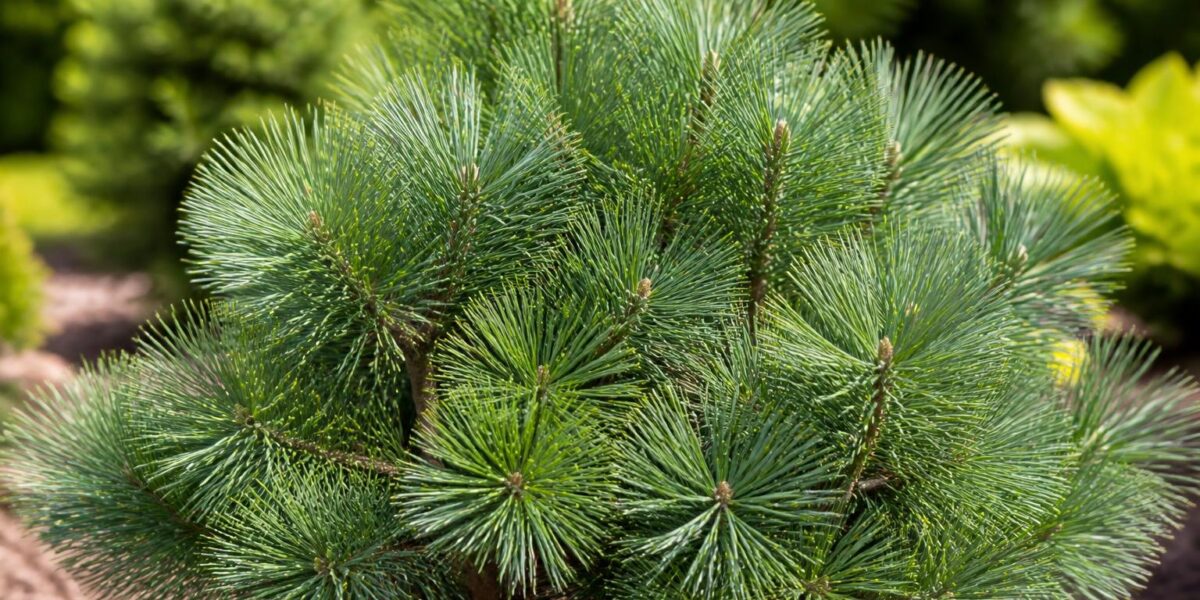
Pinus strobus, commonly called Eastern white pine, white pine, or northern white pine, is a tall evergreen conifer native to eastern North America. It is one of the dominant timber and landscape trees of the northeastern United States and southeastern Canada and is recognized by its soft, slender, blue-green needles bundled in groups of five (a useful identifier — most other common pines bundle their needles in twos or threes). The cones are long, slightly curved, and often dripping with resin.
You will encounter white pine in three main household contexts: as a mature landscape tree in yards and parks, as a privacy hedge or windbreak (often pruned back as a younger tree), and as a popular Christmas tree variety sold whole or as cut boughs. White pine is sometimes confused at a glance with other five-needle pines (such as limber pine or sugar pine), but for pet-safety purposes the toxicology profile across these species is broadly similar: low chemical risk, modest mechanical and resin risks.
Why White Pine Is Considered Non-Toxic
White pine wood, bark, and needles do not contain the cardiac glycosides, taxine alkaloids, cyanogenic glycosides, or saponins that drive most plant-poisoning emergencies in pets. The aromatic compounds in pine sap are largely terpenes (alpha-pinene, beta-pinene, limonene), which are mildly irritant to the gut and skin in concentrated form but are not systemically toxic at the doses a curious pet would actually ingest from chewing a branch.
For comparison, the ASPCA flags trees like yew (Taxus species), sago palm (Cycas revoluta), and oleander as severely toxic — those species can kill a small dog from a few leaves. White pine is in a completely different risk class. The veterinary literature documents pine ingestion as a common but generally mild GI upset case, not an ER-level emergency. If you are reading this because your dog ate a few needles off the floor, the realistic outcome is “watch for vomiting or loose stool over the next 12 to 24 hours,” not “rush to the emergency room.”
The Real Risks: Needles, Sap, and Mechanical Hazards
The genuine concerns with white pine are mechanical rather than chemical. Pine needles, even the relatively soft ones on Pinus strobus, can cause:
- Mouth and throat irritation if a dog or cat chews a mouthful of fresh needles. The pointed tips can scratch oral tissue.
- GI upset — vomiting, loose stool, decreased appetite — when a pet swallows a wad of needles. Most cases self-resolve, but persistent symptoms warrant a vet call.
- Intestinal obstruction or perforation in rare cases when a large quantity of needles is swallowed by a small dog or cat. This is the worst-case mechanical outcome and is uncommon.
- Skin and eye irritation from sticky resin. The sap is hard to remove from fur (warm soapy water and patience; never use solvents like acetone or paint thinner on a pet’s coat).
For a fuller breakdown of pine-needle ingestion specifically, see our species-specific guides on whether pine needles are toxic to cats and whether pine needles are toxic to dogs. Both reinforce the same picture: chemical risk is low, mechanical risk is real but usually mild.
Christmas Tree Water and Decoration Risks
If your white pine is serving as the family Christmas tree, the tree itself is rarely the dangerous part. The Christmas-tree-water reservoir at the base of a stand is a well-known pet hazard for two reasons: water sitting around bark and sap can grow bacteria and mold quickly, and many homeowners add commercial tree-preservative additives that are not pet-safe. A dog or cat lapping at the basin can pick up GI upset, and in worst cases ingest mold or chemical preservatives.
Cover the reservoir with a tree skirt the pet cannot push aside, or use a stand with a closed top. Other classic Christmas-tree pet risks include:
- Glass ornaments at tail-height — shattered glass cuts paws and mouths.
- Tinsel — a notorious linear foreign body in cats; it can saw through intestinal tissue if swallowed.
- Electrical cords from light strings — chewed cords can cause oral burns or electric shock.
- Chocolate ornaments and candy canes within reach — chocolate is toxic to dogs.
- Toxic plant decorations — holly, mistletoe, and amaryllis are commonly displayed alongside the tree and are all problematic. Pet-safe alternatives include the Christmas cactus for cats (note Schlumbergera species are generally safe).
Don’t Confuse White Pine With Yew
If you are unsure whether a needled evergreen in your yard is a true pine, a fir, or a yew, treat it as toxic until you can identify it. Yew (Taxus species) is a SEVERE-tier toxic plant — taxine alkaloids in the needles, bark, and seeds can cause sudden cardiac collapse in dogs and cats, sometimes with no warning vomiting first. Yews are commonly planted as foundation shrubs and hedges, and a young yew can be mistaken at a glance for a pine seedling or a small fir.
Quick visual differences: white pine has long (3 to 5 inch) flexible needles bundled in groups of five, with large pendant cones. Yew has short (less than 1 inch) flat dark green needles attached singly along the stem, with a distinctive red berry-like aril containing a single seed. If you have any uncertainty, our pillar guides on yew toxicity in cats and yew toxicity in dogs walk through ID and emergency steps.
Symptoms to Watch For After Ingestion
After a known or suspected white pine ingestion, monitor your pet for the next 24 to 48 hours for:
- Vomiting (especially repeated vomiting more than once or twice)
- Diarrhea or loose stool
- Drooling or pawing at the mouth (suggesting oral irritation or a stuck needle)
- Decreased appetite or lethargy
- Straining to defecate, abdominal tenderness, or signs of obstruction
- Coughing or gagging that doesn’t resolve within an hour
Most cases resolve with a small amount of vomiting or one episode of loose stool. If symptoms last more than 24 hours, get worse rather than better, or include any blood, take your pet to the vet.
What to Do If Your Pet Eats White Pine
If you catch your dog or cat eating white pine needles, branch tips, or sap:
- Don’t panic. White pine is non-toxic in the chemical sense. The realistic outcome is mild GI upset.
- Remove access to the tree or branch. Sweep up loose needles. If it’s a Christmas tree, gate off the area or move the tree.
- Estimate how much was eaten. A few needles is different from a fistful. Take a photo of the plant if you are unsure of the species.
- Check the mouth gently for any visible needles stuck in the gums, palate, or between teeth.
- Offer fresh water and a small bland meal (boiled chicken and rice for dogs, plain canned food for cats) once any vomiting has stopped.
- Call your veterinarian if your pet ate a large quantity, is a small breed or kitten, or shows any symptoms beyond a single episode of vomiting.
For 24/7 toxicology guidance, contact the ASPCA Animal Poison Control Center at (888) 426-4435 (a per-call consultation fee applies) or the Pet Poison Helpline at (855) 764-7661. Your own veterinarian’s office or the nearest emergency animal hospital should be your first call for any pet showing active symptoms.
Long-Term Coexistence With White Pine
If you have a mature Pinus strobus on your property, you do not need to remove it for pet safety. Sensible long-term management:
- Rake or blow fallen needles regularly so dogs and cats are not eating them off the ground.
- Clean up sap-coated branches and cones promptly — these are the chewiest temptations.
- Keep puppies and kittens supervised around any new Christmas tree until they lose interest.
- For chronic chewers, consider a pet-safe deterrent spray on lower branches.
- Pair the white pine with genuinely cat-safe houseplants indoors so curious cats have approved chewing options.
If you are choosing a new landscape conifer and want one with a similar low-toxicity profile, our guides on Norway spruce and balsam fir cover popular alternatives.
Frequently Asked Questions
Is white pine toxic to dogs?
No, white pine (Pinus strobus) is not listed by the ASPCA as toxic to dogs. Ingestion may cause mild GI upset (vomiting, loose stool) from the mechanical needles and aromatic sap, but it is not a systemic poisoning. Monitor at home for 24 hours and call your vet if symptoms persist.
Is white pine toxic to cats?
No, white pine is not chemically toxic to cats either. The bigger feline-specific concern is needle ingestion (cats often chew at fallen needles or branch tips), which can cause vomiting, and mechanical injury to the small feline mouth and esophagus. Tinsel and ornament hardware on a Christmas-tree white pine are far more dangerous to cats than the tree itself.
Can dogs drink Christmas tree water from a white pine?
They shouldn’t. The water reservoir grows bacteria and mold quickly, and any commercial preservative added to the water is rarely pet-safe. Cover or block access to the tree stand. If your dog drinks a sip of plain (no-additive) reservoir water, mild GI upset is the most likely outcome, not poisoning.
What if my pet has pine sap stuck in their fur?
Use warm soapy water and a fine comb. For stubborn sap, work a small amount of vegetable oil or smooth peanut butter into the area, let it sit a few minutes to soften the resin, then wash out with pet-safe shampoo. Never use acetone, mineral spirits, or other solvents on a pet — those products are themselves toxic.
How is white pine different from poison hemlock or yew?
Completely different. Yew (Taxus) is a SEVERE-tier conifer with cardiotoxic taxine alkaloids — a few mouthfuls can kill a dog. Poison hemlock (Conium maculatum) is not a tree at all but an herbaceous flowering weed in the carrot family, and it is also severely toxic. White pine has neither chemical class. If you cannot positively ID a needled evergreen as a pine, fir, spruce, or cedar, treat it as potentially toxic until confirmed.


