Last updated: April 10, 2026
In this article
Two Spotted Beauties, Two Very Different Cats
If you have ever fallen for a wildcat look wrapped in a domestic package, the bengal vs ocicat debate is one you need to settle before bringing a spotted feline home. Both breeds turn heads with their dramatic rosettes and spots, but the similarities are mostly coat-deep. Underneath that show-stopping fur lie distinct personalities, care needs, and energy levels that can make or break the match with your household.
Bengals descend from crosses between domestic cats and the Asian leopard cat, giving them a genuinely wild ancestry. Ocicats, on the other hand, have zero wildcat DNA — their spotted pattern emerged from accidental crosses of Abyssinian, Siamese, and American Shorthair lines. That difference in heritage shapes everything from activity demands to the way each breed bonds with people.
Whether you are a first-time cat owner or an experienced multi-cat household, understanding these two breeds side by side will help you choose the companion that truly fits. Let’s break down temperament, grooming, health, and more so you can decide which spotted cat deserves a forever home with you.
Bengal vs Ocicat: Quick Comparison Table
| Trait | Bengal | Ocicat |
|---|---|---|
| Origin | USA (domestic × Asian leopard cat) | USA (Abyssinian × Siamese cross) |
| Weight | 8–15 lbs | 6–15 lbs |
| Lifespan | 12–16 years | 12–18 years |
| Coat | Short, dense, glittered | Short, smooth, satiny |
| Energy Level | Very high | High |
| Grooming Needs | Low | Low |
| Vocalization | Moderate–high | Moderate |
| Good With Kids | Yes, if socialized | Yes |
| Good With Dogs | Often yes | Often yes |
| Lap Cat? | Rarely sits still | More willing to cuddle |
Temperament and Personality
Bengals are the athletes of the cat world. They want to climb, leap, and explore every vertical surface in your home. Many Bengal owners describe living with one as having a small, opinionated roommate who insists on supervising every activity you do — from cooking dinner to folding laundry. They are clever problem-solvers known for opening cabinets, turning on faucets, and figuring out puzzle feeders faster than you expected.
Bengals can be affectionate, but their love language usually involves being near you rather than draped across your lap. They are vocal cats that chirp, trill, and sometimes yowl when they want attention. If left alone for long stretches without enrichment, Bengals can develop destructive habits out of sheer boredom.
Ocicats share the Bengal’s intelligence but channel it with a bit more social grace. They are often called “dog-like” because they follow their humans from room to room, greet visitors at the door, and can even learn to walk on a leash or play fetch. Ocicats tend to be more adaptable to changes in routine and new environments, making them a solid choice for families that travel or move occasionally.
Where Bengals can sometimes be independent and headstrong, Ocicats lean toward being people-pleasers. They crave companionship and do not do well as the only pet in a home where everyone is away all day. If you want a spotted cat that is more likely to curl up next to you during a movie, the Ocicat often wins that round.
Size, Appearance, and Coat
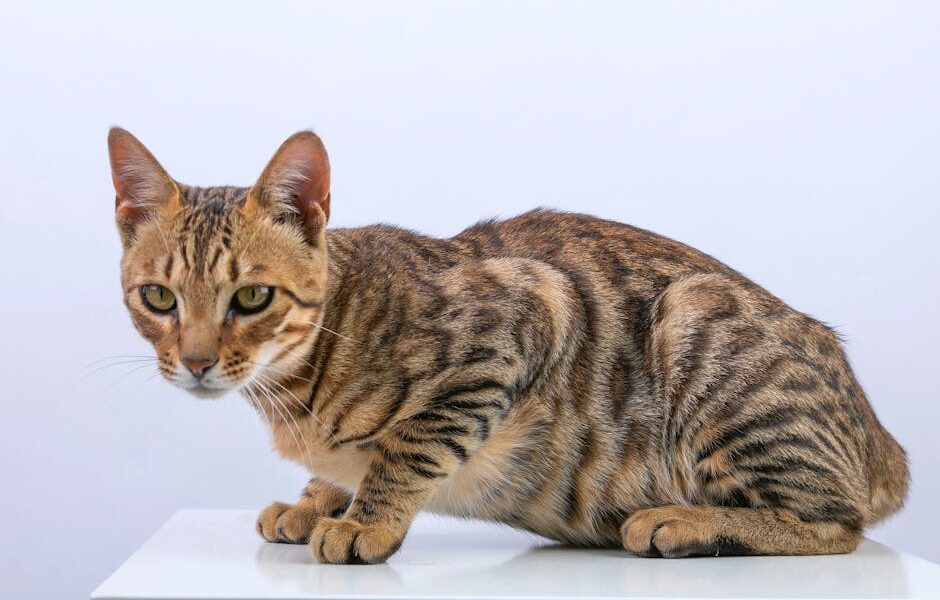
Bengals are muscular and athletic, with a sleek, low-slung body that hints at their wild ancestry. Males typically weigh 10 to 15 pounds, while females range from 8 to 12 pounds. Their coat is short but remarkably dense, and many Bengals carry a “glitter gene” that gives individual hairs a shimmering, almost metallic finish in sunlight. Coat patterns include rosettes (two-toned spots), single spots, and marbled swirls.
Ocicats are slightly more moderate in build — athletic but not as heavily muscled as Bengals. They range from 6 to 15 pounds, with males on the larger end. Their coat is short, smooth, and lies close to the body, showcasing large thumbprint-shaped spots arranged in a classic bullseye pattern along the sides. Ocicats come in 12 recognized colors, from tawny and chocolate to silver and lavender.
Grooming for both breeds is refreshingly simple. A weekly brushing removes loose hair and distributes skin oils. Neither breed has an undercoat heavy enough to cause serious matting. Bengals may need slightly more frequent brushing during seasonal shedding, but overall, both are low-maintenance on the grooming front.
If the “wow factor” of a wild-looking coat matters to you, Bengals generally edge out Ocicats with their rosettes and glitter. If you prefer a wider palette of color options and a slightly softer look, the Ocicat delivers.
Health and Common Medical Concerns
Both breeds are generally healthy, but each carries predispositions worth knowing about before you adopt. Responsible breeders screen for these conditions, and you should ask for health clearances when evaluating a kitten or adult cat.
Bengal health concerns:
- Hypertrophic cardiomyopathy (HCM) — a thickening of the heart muscle that is the most common heart disease in cats. Annual echocardiograms are recommended for breeding cats and any Bengal showing symptoms like lethargy or rapid breathing.
- Progressive retinal atrophy (PRA) — a genetic eye condition that can lead to blindness. A DNA test exists, so reputable breeders screen for it.
- Patellar luxation — occasional reports of kneecap issues, especially in very active Bengals.
- Sensitive stomach — some Bengals do better on a high-protein, grain-free diet. Your vet can help you find the right food.
Ocicat health concerns:
- Hypertrophic cardiomyopathy (HCM) — also seen in Ocicats, though at lower reported rates than in Bengals.
- Renal amyloidosis — a kidney condition inherited from the Abyssinian side of their pedigree. It is uncommon but serious.
- Periodontal disease — Ocicats can be prone to dental issues, so regular dental checkups and at-home tooth care are a good idea.
- Liver or kidney issues in older cats — standard senior bloodwork every six to twelve months helps catch problems early.
Regardless of which breed you choose, keep up with annual veterinary exams, vaccinations, and parasite prevention. Both Bengals and Ocicats thrive on high-quality, protein-rich diets that support their active lifestyles.
Exercise, Enrichment, and Living Space
If you are comparing bengal vs ocicat in terms of energy, think of the Bengal as a marathon runner and the Ocicat as a recreational jogger. Both need daily play sessions, but Bengals demand more intensity and variety to stay mentally satisfied.
For Bengals, invest in:
- Tall cat trees with multiple levels
- Puzzle feeders and food-dispensing toys
- Interactive wand toys for at least 20–30 minutes per day
- A cat wheel (many Bengals take to these enthusiastically)
- Secure outdoor access such as a catio or leash walks
Ocicats appreciate similar enrichment but are generally satisfied with slightly less extreme setups. They love interactive play, enjoy learning tricks, and do well with another social cat as a companion. A couple of 15-minute play sessions daily, combined with a good cat tree and rotating toys, usually keeps an Ocicat content.
Both breeds can adapt to apartment living as long as they get enough vertical space and enrichment. Bengals in small spaces without stimulation are a recipe for shredded furniture and 3 a.m. zoomies. If your living space is on the smaller side, the Ocicat may be the safer pick.
Best-Fit Owner for Each Breed
The Bengal is ideal for you if:
- You are home often or have another active pet for companionship
- You enjoy interactive play and do not mind a vocal, demanding cat
- You have space for climbing structures and enrichment setups
- You want a cat that feels almost like a small exotic animal
- You are experienced with cats or high-energy pets
The Ocicat is ideal for you if:
- You want a spotted cat with a friendlier, more easygoing personality
- You have children or other pets and need a breed that adapts well
- You like the idea of a “dog-like” cat that learns tricks and follows you around
- You want low-maintenance grooming without sacrificing a stunning look
- You are a first-time cat owner looking for a social, forgiving breed
Both breeds reward engaged, attentive owners. If you are ready to provide daily play, mental stimulation, and genuine companionship, either cat will thrive. The main difference comes down to intensity: Bengals dial everything up to eleven, while Ocicats strike a happy balance between playful and calm.
Thinking about welcoming a spotted feline into your family? Browse cats waiting for homes on our cat adoption page — you might find a Bengal, Ocicat, or spotted mix looking for exactly the kind of home you can offer.
Frequently Asked Questions
Are Bengals or Ocicats better for apartment living?
Ocicats generally adapt to apartments more easily because their energy level, while high, is a step below a Bengal’s. However, a Bengal can thrive in an apartment if you provide tall cat trees, a cat wheel, and plenty of interactive play every day. The key for either breed is vertical space and mental stimulation.
Do Bengals and Ocicats get along with dogs?
Yes, both breeds often get along well with cat-friendly dogs. Ocicats, with their dog-like sociability, tend to warm up to canine housemates quickly. Bengals can also bond with dogs, especially if introductions are done gradually. Always supervise early interactions and provide your cat with escape routes and high perches.
Which breed sheds less — Bengal or Ocicat?
Both are low-shedding compared to long-haired breeds. Bengals have a slightly denser coat that may release a bit more hair during seasonal changes, but the difference is minimal. Weekly brushing keeps shedding manageable for both.
Can I walk a Bengal or Ocicat on a leash?
Many Bengals and Ocicats take well to harness training, especially if you start when they are young. Bengals tend to be bolder outdoors, while Ocicats may be more cautious at first but usually gain confidence with practice. Use a snug, escape-proof harness and start with short sessions in a quiet area.
How much do Bengal and Ocicat kittens cost?
Purebred Bengal kittens from reputable breeders typically cost $1,500 to $3,000 or more, depending on coat quality and lineage. Ocicats are somewhat less expensive, usually ranging from $800 to $1,500. Adoption is always an option — breed-specific rescues and shelters occasionally have Bengals, Ocicats, or mixes available at a fraction of breeder prices. Check our adopt a cat page to see cats looking for homes right now.
Looking to adopt a Bengal vs Ocicat?
Browse Bengal vs Ocicat cats and mixes available for adoption from shelters and rescues near you.
Find Bengal vs Ocicat Cats for Adoption