Last updated: May 6, 2026
In this article
Ocicat Cat Breed Profile: The Wild-Looking Domestic Cat
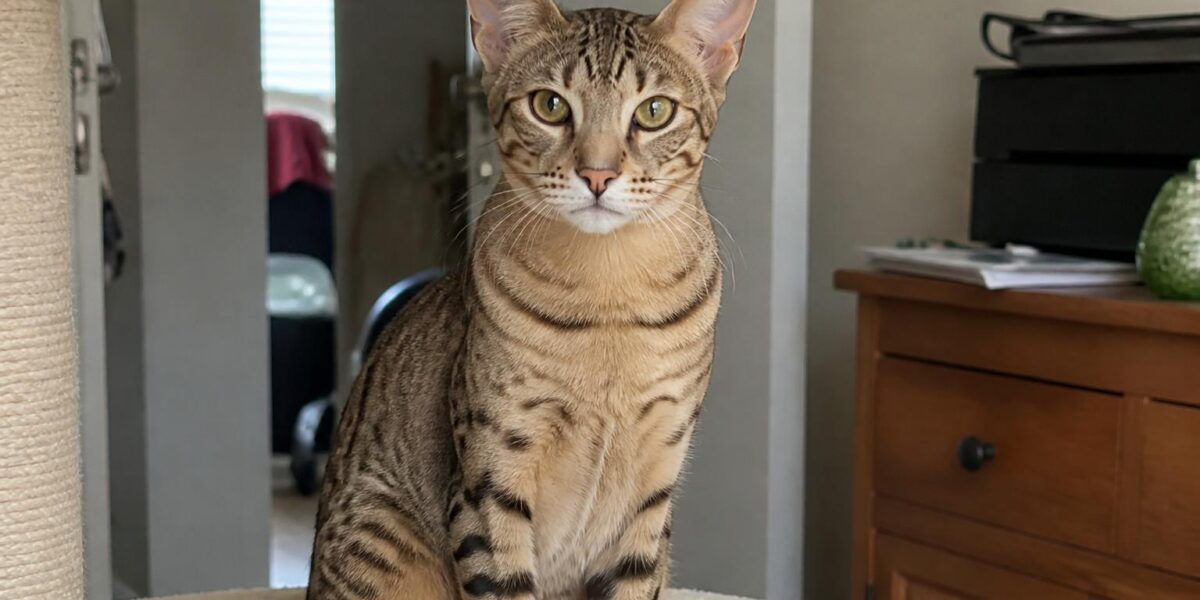
At first glance, the Ocicat cat breed looks like it just stepped out of the jungle. With its muscular body covered in rows of distinctive spots, large expressive eyes, and powerful legs, this cat has all the visual drama of a wild ocelot. But here is the wonderful surprise: the Ocicat has absolutely no wild blood in its lineage. This is a fully domestic cat created entirely from crosses between Siamese, Abyssinian, and American Shorthair cats, resulting in a breed that looks untamed but acts like a devoted and sociable family companion.
The Ocicat is the ideal breed for someone who dreams of living with a wild cat but wants the temperament, predictability, and health of a domestic breed. These cats are confident, outgoing, and remarkably adaptable, thriving in active households where they receive plenty of attention and engagement. In this complete breed profile, we will explore the Ocicat’s origin story, physical characteristics, personality, health considerations, and everything else you need to know to determine whether this spotted beauty is the right cat for your home.
The Accidental Origins of the Ocicat
The Ocicat’s creation was entirely unplanned, which makes its story one of the most charming in the cat breeding world. In 1964, breeder Virginia Daly of Berkley, Michigan, was attempting to create a Siamese cat with Abyssinian-ticked points. She crossed a Siamese with an Abyssinian, and the resulting kittens were exactly what she expected: ticked tabbies that looked Abyssinian. However, when she bred one of these hybrid females back to a Siamese, something unexpected happened. Among the pointed kittens in the litter was one ivory-coated male covered in golden spots.
Daly’s daughter remarked that the kitten looked like an ocelot, and the name “Ocicat” was born. That first spotted kitten, named Tonga, was neutered and placed as a pet. But Daly recognized the potential for a new breed and repeated the cross, producing more spotted kittens. Other breeders soon joined the effort, and American Shorthair was introduced to the breeding program to add substance, bone density, and the silver color series.
The Cat Fanciers’ Association granted the Ocicat provisional status in 1986 and full championship status in 1987. The International Cat Association also recognizes the breed. Today, the Ocicat is bred around the world and has a dedicated following among people who appreciate a cat that combines exotic looks with an easy-going domestic temperament.
What makes the Ocicat’s genetic story particularly interesting is that despite looking like a wild hybrid, every single Ocicat is the result of domestic cat crosses. Unlike breeds such as the Bengal, which was created using Asian Leopard Cat genetics, the Ocicat achieves its wild appearance entirely through the combination of the Abyssinian’s ticking gene, the Siamese’s pointing gene, and selective breeding for the spotted tabby pattern. For a comparison with a breed that does carry wild ancestry, check out our Bengal cat breed profile.
Physical Characteristics and Coat Patterns
The Ocicat is a large, well-muscled cat with a surprisingly solid and heavy feel when picked up. Males typically weigh between nine and fifteen pounds, while females range from six to twelve pounds. The body is long and semi-foreign in type, meaning it falls between the slender Siamese build and the stocky cobby build. The chest is deep, the legs are medium-long and well-muscled, and the paws are oval and compact.
The head is a modified wedge shape with broad muzzle, strong chin, and large, almond-shaped eyes that can be any color except blue. The ears are moderately large, set at a forty-five-degree angle, and sometimes feature ear tufts that add to the wild appearance. The tail is fairly long with a slight taper and a dark tip.
The coat is the Ocicat’s defining feature. It is short, smooth, satiny, and lies close to the body with a lustrous sheen. The spotted tabby pattern creates rows of thumbprint-shaped spots along the sides and belly, with a classic “M” marking on the forehead and broken necklace lines across the throat. The spots should be well-defined, large, and evenly distributed rather than forming stripes or blotches.
The Ocicat comes in twelve recognized color variations: tawny, chocolate, cinnamon, blue, lavender, fawn, and the silver versions of each. Tawny is the most common and perhaps the most striking, with dark spots against a warm, golden background. The silver varieties are particularly dramatic, with dark spots against a pale, icy background that enhances the wild cat illusion.
Another breed that shares the Ocicat’s spotted Egyptian mystique is the Egyptian Mau. If you are drawn to spotted cats, you may also want to read our Egyptian Mau breed profile to compare the two breeds.
Temperament: A Dog in Cat’s Clothing
If there is one phrase that Ocicat owners use more than any other, it is “dog-like.” These cats are extraordinarily social, loyal, and eager to be involved in everything their humans do. They greet visitors at the door, follow their owners from room to room, come when called by name, and many can be trained to walk on a leash, play fetch, and perform tricks.
The Ocicat’s confidence is one of its most notable traits. These are not timid cats that hide under the bed when company arrives. Instead, they march right up to greet new people, investigate new objects, and insert themselves into the center of any activity. This boldness makes them excellent candidates for therapy cat work and wonderful companions for families with children or other pets.
Their intelligence is impressive and demands engagement. Ocicats thrive on puzzle feeders, interactive toys, and training sessions. They can learn to open doors, cabinets, and even some types of latches, so childproofing your home may be necessary. Without adequate mental stimulation, an Ocicat will create its own entertainment, and you may not appreciate the results.
Despite their active nature, Ocicats are also deeply affectionate. They love to cuddle on laps, sleep under the covers, and drape themselves across their owner’s shoulders. They tend to bond strongly with their entire family rather than selecting just one person, making them wonderfully democratic in their affections.
Their social nature does come with a caveat: Ocicats do not handle isolation well. A lonely Ocicat can develop behavioral issues such as excessive vocalization, destructive behavior, or depression. If you work long hours, having a second pet is strongly recommended. Ocicats generally get along well with other cats and cat-friendly dogs. Providing your Ocicat with plenty of enrichment activities is essential for keeping this intelligent breed happy and well-adjusted.
Health and Lifespan of the Ocicat
The Ocicat is generally a robust and healthy breed with an average lifespan of twelve to eighteen years. The genetic diversity contributed by three distinct foundation breeds (Siamese, Abyssinian, and American Shorthair) has given the Ocicat a broad gene pool that helps protect against some of the health issues seen in more narrowly bred cats. However, there are still some conditions to be aware of.
Hypertrophic cardiomyopathy (HCM) is the most common heart disease in cats and can affect Ocicats. This condition causes the walls of the heart to thicken, eventually impeding the heart’s ability to pump blood efficiently. Regular veterinary checkups that include cardiac auscultation can help detect early signs, and echocardiograms may be recommended for breeding cats or those with a family history of HCM.
Periodontal disease is relatively common in Ocicats, as it is in many breeds. Establishing a dental hygiene routine early in your cat’s life, including regular professional cleanings and at-home tooth brushing, can significantly reduce the risk of dental problems. Dental treats and water additives designed for cats can supplement but should not replace brushing.
Liver or renal amyloidosis can occasionally occur in breeds with Siamese heritage. This condition involves the accumulation of abnormal proteins in organs and can affect liver or kidney function. While it is not extremely common in Ocicats, awareness and regular blood work during veterinary visits can help with early detection.
Patellar luxation is a condition where the kneecap slips out of its normal position. While more common in dogs, it can occur in cats, particularly in larger, athletic breeds like the Ocicat. Signs include intermittent limping or an unusual gait. If you notice your cat skipping or holding a hind leg up occasionally, have your veterinarian evaluate the knees.
Keeping your Ocicat at a healthy weight through proper nutrition and regular exercise is one of the most impactful things you can do for its long-term health. Obesity increases the risk of diabetes, joint problems, and heart disease, so monitor portion sizes and ensure your cat gets plenty of active play time every day.
Grooming and Daily Care
The Ocicat’s short, close-lying coat is one of the easiest to maintain in the cat world. A weekly rubdown with a grooming glove or chamois cloth is usually all that is needed to remove loose hair and distribute natural oils for a healthy shine. During seasonal shedding periods in spring and fall, you may want to increase this to twice per week, but even then the Ocicat sheds minimally compared to many other breeds.
Bathing is rarely necessary unless your cat gets into something messy or you are preparing for a cat show. When you do bathe an Ocicat, the short coat dries quickly and returns to its sleek, satiny appearance with minimal effort. Many Ocicat owners find that a simple wipe-down with a damp cloth between baths keeps the coat looking its best.
Nail trimming should happen every two to three weeks. Because Ocicats are active cats that love to climb and scratch, providing multiple scratching posts and surfaces throughout your home will help keep nails in check naturally while also protecting your furniture. Sisal rope posts, cardboard scratchers, and carpeted cat trees are all good options.
Ear cleaning should be part of your routine care, particularly since the Ocicat’s large ears can collect debris. Check the ears weekly and clean them gently with a veterinarian-approved ear cleanser if needed. Healthy ears should be pink and clean with minimal wax and no foul odor.
Nutrition is particularly important for this athletic breed. Ocicats benefit from a high-protein diet that supports their muscular physique and active lifestyle. Look for cat foods where a named animal protein is the first ingredient, and avoid foods that rely heavily on fillers like corn, wheat, or soy. Both wet and dry food can be part of a balanced diet, though wet food has the added benefit of contributing to hydration.
Is the Ocicat Right for You?
The Ocicat is a fantastic breed for the right household, but it is important to honestly assess whether your lifestyle matches this cat’s needs before bringing one home. Ocicats are best suited for families or individuals who spend a significant amount of time at home, enjoy interacting with their pets, and are prepared for a cat that demands attention and engagement.
Active families with children tend to be an excellent match, as Ocicats are sturdy enough to handle the energy of kids and social enough to enjoy the extra playmates. Multi-pet households also work well, as the Ocicat’s confidence and friendliness mean it usually adapts easily to living with other cats or dogs.
The Ocicat may not be the best choice for someone who works extremely long hours, travels frequently, or prefers a cat that is content to spend most of the day sleeping independently. These cats need interaction, stimulation, and companionship to be truly happy.
If you are attracted to the Ocicat’s spotted appearance, consider that the breed’s beauty goes far deeper than its coat. When you bring an Ocicat into your home, you are gaining a devoted, intelligent, and endlessly entertaining companion that will enrich your life in ways you may not have imagined. Whether you find your Ocicat through a reputable breeder or discover one at a rescue organization, you are in for a wonderful journey with one of the most personable cats in the feline world.
Frequently Asked Questions About the Ocicat
Does the Ocicat have any wild cat DNA?
No, the Ocicat is entirely domestic. Despite its wild, ocelot-like appearance, the breed was created solely from crosses between Siamese, Abyssinian, and American Shorthair cats. There is no wild cat blood in the Ocicat’s lineage at all, which is one of the reasons the breed has such a friendly, approachable temperament.
Are Ocicats good with children and other pets?
Ocicats are excellent with children and typically get along very well with other cats and cat-friendly dogs. Their confident, social nature makes them adaptable to busy, multi-member households. They are sturdy enough to handle gentle play with kids and bold enough to hold their own with other animals. Proper introductions and supervision during initial meetings are always recommended.
How much exercise does an Ocicat need?
Ocicats are active, athletic cats that need daily interactive play sessions to stay physically and mentally healthy. Plan for at least two fifteen-to-twenty-minute play sessions per day using wand toys, fetch games, or laser pointers. Puzzle feeders, cat wheels, and climbing structures also help burn energy. An under-stimulated Ocicat may become destructive or develop behavioral issues, so consistent engagement is important.
Can you train an Ocicat to walk on a leash?
Yes, many Ocicats take to leash training quite readily. Their dog-like temperament and natural curiosity make them good candidates for harness and leash walks. Start indoors with a well-fitted harness, let your cat get comfortable wearing it, and gradually introduce the leash before venturing outside. Always supervise outdoor time and be prepared for your Ocicat to attract attention from curious passersby.
Looking to adopt a Ocicat Cat Breed Profile?
Browse Ocicat Cat Breed Profile cats and mixes available for adoption from shelters and rescues near you.
Find Ocicat Cat Breed Profile Cats for Adoption