Last updated: May 4, 2026
In this article
- Border Collie vs Cattle Dog at a Glance
- History and Origin
- Size and Appearance
- Working Style and Temperament
- Trainability and Mental Stimulation
- Exercise Needs
- Grooming and Coat Care
- Health and Lifespan
- Rescue Availability and Cost
- Living Day-to-Day with a Border Collie or Cattle Dog
- Compared with Other Herders and Working Shepherds
- Which Is Right for You
- Adoption Process and Preparation
- Frequently Asked Questions
Border Collie vs Cattle Dog at a Glance
The Border Collie vs cattle dog comparison is the classic “sport vs ranch” question among working-breed adopters. Both are intensely intelligent, both are over-represented in rescue from pet homes that under-estimated the work requirement, and both will happily fail in a casual family setting. The right choice depends almost entirely on what kind of work you can offer the dog daily, not on which photo you find more appealing.
In short: the Border Collie is a silent, eye-stalking herder bred for sheep on rugged hill country; the Australian Cattle Dog is a heeling, nipping driver bred for half-wild cattle across vast Australian distances. The Border Collie is the better pick for sport, agility, and obedience work; the Cattle Dog is the better pick for ranch reality and a tough, weather-hardy working partner.
Below we compare them across origin, build, temperament, training style, exercise, health, and rescue realities so you can match the dog to the work you can actually provide.
History and Origin
The Border Collie was developed along the Anglo-Scottish border in the 1800s, prized for the silent, low-posture “eye” technique used to gather and move sheep across rough hill country. The breed’s foundation dog, Old Hemp (born 1893), is the ancestor of nearly every modern working Border Collie. Working ability registration predated conformation registration by decades.
The Australian Cattle Dog (also called Blue Heeler or Queensland Heeler) was developed in nineteenth-century Australia to move cattle across enormous distances in heat and rough country. Crosses between British herding stock, dingoes, Dalmatians, Collies, and Hall’s Heeler produced the modern Cattle Dog by the 1890s. The blue or red speckled coat reflects that mixed heritage and provides camouflage in dust and brush.
Size and Appearance
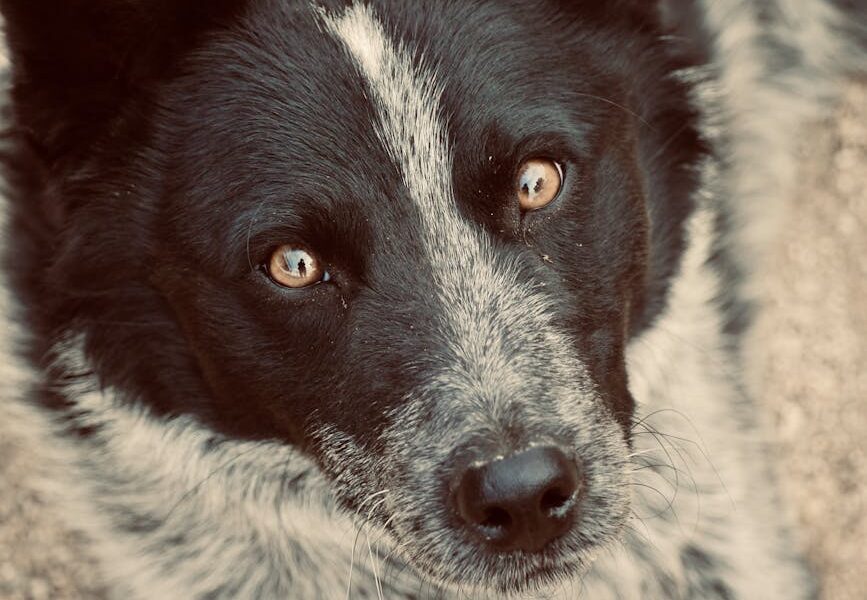
Border Collies stand 18 to 22 inches and weigh 30 to 55 pounds. The medium-length double coat (smooth or rough varieties) comes in black-and-white, red, merle, sable, and tricolor. Eyes are expressive — brown, blue, or one of each. The build is slightly longer than tall, agile and lean.
Cattle Dogs are smaller and more compact — 17 to 20 inches at the shoulder, 35 to 50 pounds. The short, weather-resistant double coat is blue or red speckle, often with darker patches or a face mask. Pups are born white and develop their adult coat color over the first weeks. The build is muscular, slightly longer than tall, with pricked ears.
Read the border collie breed profile and Blue Heeler breed profile for full standards.
Working Style and Temperament
Border Collies are silent gatherers. They use posture, eye contact, and movement rather than barking or biting to control stock. They are extraordinarily focused, sensitive to handler cues, and famous for the obsessive “eye” — a fixed predatory gaze that locks onto sheep or, in pet homes, onto frisbees, lights, or shadows. They are also among the most neurotic breeds when under-stimulated.
Cattle Dogs are heelers — they move stock by nipping at the heels of cows and ducking the kick. That instinct does not stay on the ranch; in pet homes, an ACD will heel kids, joggers, and bicycles without serious management. ACDs are notably one-person dogs, suspicious of strangers, and tougher in temperament than Border Collies.
Both breeds will fail in low-stimulation homes. Mismatch with pet-home life is the top surrender reason for both.
Trainability and Mental Stimulation
Border Collies are at the very top of trainability rankings. They are extraordinarily sensitive — harsh corrections shut them down or create avoidance. They learn complex sequences fast and excel at agility, disc, herding trials, obedience, and trick titles. Force-free training with short, varied, reward-rich sessions is the only humane approach.
Cattle Dogs are equally smart but more independent and harder-edged. They learn fast but will challenge weak handling. They thrive in scent work, agility, herding trials, and farm-dog roles, and they recover from training mistakes faster than the more sensitive Border Collie. Force-free methods still produce the most stable adult dogs.
Both breeds need 30 to 60 minutes of daily mental work on top of physical exercise. Without it, you will see destructive chewing, fence-climbing, herding household members, and stereotypies.
Exercise Needs
Border Collies need 90 to 120 minutes of vigorous structured daily activity. A long off-leash run plus 30 minutes of agility, herding, or trick training is the closer-to-realistic baseline than a leash walk. Border Collies are best served by access to a dog sport or stock work.
Cattle Dogs need at least as much, often more. Many ACDs work a full ranch day and still bring the ball over at dusk. They are not apartment-friendly without significant compensatory routine.
Both breeds excel at hiking, biking, and swimming. Read our adopting a rescue border collie guide for adult-rescue placement tips.
Grooming and Coat Care
Border Collies need brushing two to three times weekly, more during the spring and fall coat blow. The rough coat picks up burrs and mud; the smooth coat is slightly easier. Bathe every two to three months.
Cattle Dogs are far easier — a weekly brush keeps the short double coat tidy, with heavier shedding twice a year. They do not require professional grooming and bathe infrequently. Both breeds need standard nail, dental, and ear care.
Health and Lifespan
Both breeds typically live 12 to 16 years. Common health concerns include:
- Hip and elbow dysplasia in both breeds — see elbow dysplasia in dogs.
- Progressive retinal atrophy and Collie eye anomaly (Border Collies particularly).
- MDR1 drug sensitivity in Border Collies.
- Deafness in Cattle Dogs (linked to merle/speckle coat genetics).
- Epilepsy in both breeds.
Cattle Dogs are notably long-lived for medium working dogs. A baseline vet exam and breed-specific genetic testing are smart first steps for any adopted dog.
Rescue Availability and Cost
Both breeds turn up in rescue regularly. Border Collies are over-represented in suburban surrenders from sport-aspiring families who under-estimated the daily work; Cattle Dogs are over-represented in rural and Western US shelters from ranch turnover and pet-home placement failures. Adoption fees run $250 to $600 through breed-specific or all-breed rescues.
Read the all-breed vs breed-specific rescue comparison and the rescue adoption application walkthrough for what to expect.
Foster-based rescues are common for both breeds and produce the most reliable placement information. A foster home that has lived with the dog for weeks knows whether the dog tolerates cats, kids, alone time, vet visits, and grooming. Read our foster-based rescue explained guide and the adopting from a foster walkthrough.
Living Day-to-Day with a Border Collie or Cattle Dog
The honest reality is that the herding brain never turns off. A Border Collie that has not had a real job by mid-morning will spend the day fixating on light reflections, herding shadows, dismantling furniture, or stalking the family cat. A Cattle Dog under-met will heel-nip running children, escalate guarding behavior toward strangers at the door, or escape secure-fenced yards by climbing.
Successful homes for both breeds typically involve some combination of: structured dog sport (agility, herding, disc, scent work), real working duty (stock work, ranch life, service or therapy roles), or an active outdoor lifestyle that brings the dog into long daily activity. A fenced backyard alone does not produce a settled herder of either type.
Both breeds thrive on predictable routine. Once daily exercise and mental work are consistently met, both can settle indoors and bond deeply with family. The settling-in period for adult rescues runs weeks to months — read our first week with a rescue dog guide for setting that routine from day one.
Compared with Other Herders and Working Shepherds
Both breeds get cross-shopped against other intense working dogs. Compare the Border Collie and ACD to the Belgian Malinois in our Border Collie vs Belgian Malinois guide. Compare the ACD to its continental cousin in our Australian Shepherd vs Australian Cattle Dog comparison.
The reality across all herding-breed comparisons: these are working dogs first and pets second. The pet-line variants exist but are rare in rescue, and the average rescue Border Collie or Cattle Dog you meet was bred for a job. Match the dog to the work you can provide consistently for the next decade-plus, or rule both out and look at lower-drive working-mix candidates.
Which Is Right for You
Choose a Border Collie if you want a sport, agility, or obedience partner; if you have flock or sheep work; or if you can offer hours of daily structured engagement and patient, force-free training. The Border Collie’s sensitivity rewards a calm, structured handler.
Choose an Australian Cattle Dog if you want a tough, weather-hardy working partner — ideally with cattle work, ranch life, or a serious sport schedule. The Cattle Dog’s harder edge handles rougher work but is harder to place in pet-only homes.
If neither dog will get a real job, neither is the right pick. Browse the adopt a dog hub for lower-drive working-mix candidates first.
Adoption Process and Preparation
Adopting either breed is a multi-step process that takes weeks. Reputable working-breed rescues require an application, references (including a vet reference for any other animals), a phone screening, and often a home check. Many rescues include behavior questions specifically designed to surface unrealistic expectations — answer honestly, and a rescue that turns you down is doing both you and the dog a favor.
Preparation before bringing the dog home includes: securing the yard (six-foot fencing minimum, dig-proof bottom edge for Cattle Dogs), scheduling the first week or two off work for decompression and routine-building, lining up training resources (force-free trainer, herding club, or sport venue), and stocking puzzle toys, slow-feed bowls, and chew options. The first month sets patterns that last years. Read our rescue adoption application walkthrough for the application side of the process.
Frequently Asked Questions
Which is smarter, the Border Collie or the Cattle Dog?
Both rank in the top tier of canine intelligence. Border Collies edge out on standardized obedience-trainability rankings; Cattle Dogs match them on problem-solving and independent decision-making. Practically, both will outsmart an under-engaged owner.
Which is better with kids?
Border Collies typically tolerate kids better; Cattle Dogs may heel-nip running children. Both need supervised handling and proper socialization. Older, calm households suit both better than chaotic young-kid homes.
Can they live with cats?
Border Collies often can with proper introduction. Cattle Dogs are more variable — many have higher prey drive toward cats. Rescue-side honesty about the individual dog matters more than the breed line.
Do they need a yard?
Helpful but not sufficient. Both need handler-led structured exercise; a fenced yard alone produces an under-stimulated, destructive dog.
Are they good first dogs?
Generally no. Both are advanced-handler breeds. Use the 3-3-3 rule framework for any rescue settling in, and be honest about your daily-life capacity before committing.
Looking to adopt a Border Collie vs Australian Cattle Dog Comparison?
Browse Border Collie vs Australian Cattle Dog Comparison dogs and mixes available for adoption from shelters and rescues near you.
Find Border Collie vs Australian Cattle Dog Comparison Dogs for Adoption