Last updated: May 4, 2026
In this article
- Border Collie vs Belgian Malinois at a Glance
- History and Origin
- Size and Appearance
- Temperament and Drive
- Trainability and Mental Stimulation
- Exercise Needs
- Grooming and Coat Care
- Health and Lifespan
- Rescue Availability and Cost
- Living Day-to-Day with a Border Collie or Malinois
- Comparison with Related Working Breeds
- Which Is Right for You
- Frequently Asked Questions
Border Collie vs Belgian Malinois at a Glance
The Border Collie vs malinois debate rarely gets discussed honestly enough at the adoption stage. Both breeds are at the very top of the canine intelligence and drive spectrum, both will fail miserably in the average pet home, and both are over-represented in rescue specifically because well-meaning families adopted them without understanding what “needs a job” actually means in daily practice. If you finish this article and decide neither dog is right for you, that itself is a successful outcome.
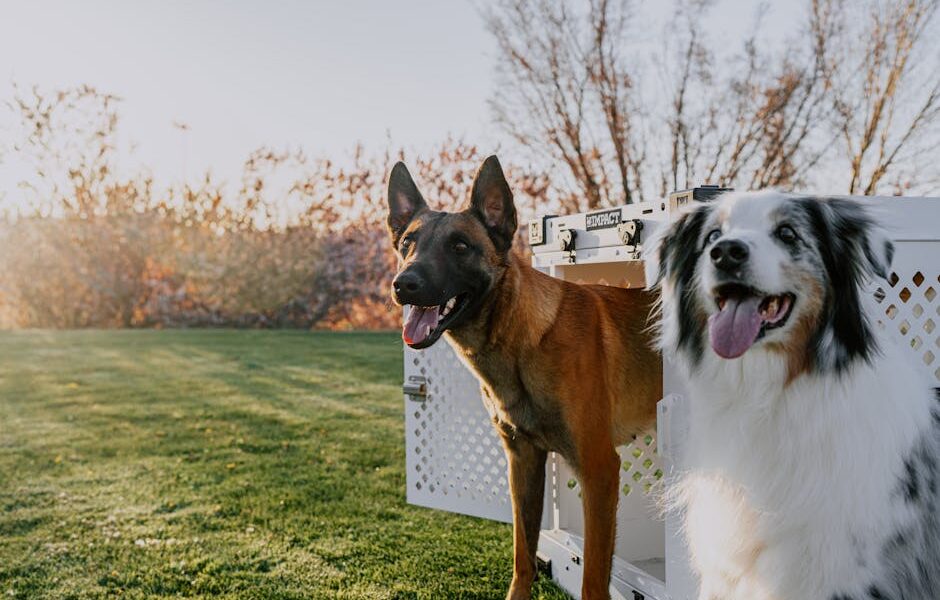
In short: the Border Collie is a herding specialist, bred for centuries to silently gather sheep on the rugged Anglo-Scottish border using a hypnotic stalking gaze called “the eye.” The Belgian Malinois is a versatile working breed bred in Belgium for shepherding, then refined over the last fifty years for police, military, and protection-sport work. Both are athletic, biddable, and intense, but they channel that intensity in very different directions.
Below we compare them across origin, build, temperament, training, exercise, health, and rescue realities so you can decide if either belongs in your home, and if so, which.
History and Origin
The Border Collie was developed along the border between Scotland and England, where shepherds prized a quiet, agile dog that could move large flocks across rough terrain by anticipating sheep movement and using subtle posture rather than barking or biting. The foundation dog of the modern breed, Old Hemp, was born in 1893 and is the ancestor of nearly every working Border Collie alive today. The breed was registered for working ability long before it was registered for conformation.
The Belgian Malinois is one of four Belgian shepherd varieties (along with the Tervuren, Groenendael, and Laekenois), all sharing a working farm-dog ancestry from the late 1800s. The Malinois — the short-coated fawn-and-black variety — became the preferred line for police and military programs from the mid-twentieth century onward because of its drive, biddability, and physical durability. Today most Malinois rescues come from working-line breedings, not show lines.
Size and Appearance
Border Collies stand 18 to 22 inches at the shoulder and weigh 30 to 55 pounds. They have a medium-length double coat (smooth or rough varieties), a moderately long muzzle, and famously expressive eyes that come in brown, blue, or one of each. Black-and-white is iconic, but red, merle, sable, and tricolor are all standard. The body is slightly longer than tall with an athletic, agile frame.
Belgian Malinois are larger and heavier-built. Males stand 24 to 26 inches and weigh 60 to 80 pounds; females run 22 to 24 inches and 40 to 60 pounds. The coat is short, dense, and weather-resistant, fawn to mahogany with a black mask and black-tipped guard hairs. The frame is square and notably more “shepherd-like” than the Border Collie’s lower-slung herding build.
Both breeds are working athletes — wiry, lean, and built for endurance over hours of work. Read the border collie breed profile and Belgian Malinois breed profile for full standards.
Temperament and Drive
Border Collies are intensely focused, sensitive, and obsessive about movement. A Border Collie that does not have an outlet will create one — herding cars, kids, the family cat, light reflections on the wall, or the vacuum. They form strong bonds with their people, are wary of strangers, and tend to be neurotic if under-stimulated.
Belgian Malinois have similar drive but channel it more toward the handler than toward objects in the environment. The Mali wants a job to do for you. They have higher prey drive than most Border Collies, are more naturally protective (a guarding instinct the Border Collie largely lacks), and are physically much more intense — Malinois bites can do serious damage even in play.
Both breeds are mismatched-with-pet-home as the top surrender reason. Families adopt the dog from a sport video and discover that an hour of fetch and a backyard does not begin to meet the dog’s mental and physical requirements.
Trainability and Mental Stimulation
Both breeds are at the very top of trainability rankings, but they need different handling. Border Collies are extraordinarily soft — harsh corrections shut them down or create avoidance. They learn complex sequences fast and excel at agility, disc, herding trials, obedience, and trick titles. Force-free training is the only humane and effective approach.
Malinois are physically tougher than Border Collies but emotionally more sensitive than their reputation suggests. They thrive on clear, consistent handling and short, high-energy reward-based sessions. The “ecollar and prong” reputation comes from working-dog circles; for pet-home Malinois, force-free methods produce the most stable, biddable adults. Bite-sport, scent work, French Ring, IPO, and protection-sport are all common Malinois outlets in capable homes.
Both breeds need 30 to 60 minutes of mental work daily on top of physical exercise. Without it, you will see destructive chewing, wall-bouncing, fence-climbing, and stereotypies like spinning or shadow-chasing.
Exercise Needs
Border Collies need 90 to 120 minutes of vigorous daily activity — and “activity” means problem-solving, not just running. A long off-leash run plus 30 minutes of agility, herding, or trick training is closer to the daily baseline than a leash walk.
Malinois need at least as much, often more — 2 hours of structured work most days. Many Malinois rescues fail because owners under-estimate how relentless that requirement is across a 12-to-14-year lifespan.
Both dogs are inappropriate for sedentary or low-activity households. If your fitness level changes, the dog still needs the work — that is the math owners must accept before adopting. Read our adopting a rescue border collie and adopting a rescue Belgian Malinois guides.
Grooming and Coat Care
Border Collies need brushing two to three times weekly, more during the spring and fall coat blow. The rough coat picks up burrs and mud; the smooth coat is slightly easier. Bathe every two to three months. Nails, teeth, and ear cleaning on the standard schedule.
Malinois are dramatically lower-maintenance coat-wise — a weekly brush is plenty most of the year, with heavier shedding twice a year during seasonal blow. The short coat is functionally weather-resistant and self-cleaning to a surprising degree.
Health and Lifespan
Both breeds typically live 12 to 14 years. Common health concerns include:
- Hip and elbow dysplasia — see our elbow dysplasia in dogs guide.
- Progressive retinal atrophy and Collie eye anomaly (Border Collies particularly).
- Epilepsy in both breeds.
- MDR1 drug sensitivity in Border Collies — affects ivermectin and several common medications.
Malinois face additional risk of progressive retinal atrophy, hemangiosarcoma, and — in working lines — repetitive-strain injuries from sport work. Reputable rescues will share known medical history; an early vet baseline is essential for any adopted dog.
Rescue Availability and Cost
Both breeds turn up in rescue regularly, but rarely as puppies. Most are 1-to-4-year-old surrenders from owners who could not meet the exercise and training demands. Adoption fees run $250 to $600 through breed-specific or all-breed rescues. Border Collie rescue is well-organized in nearly every US region; Malinois rescue is somewhat more concentrated near working-dog hubs and military communities.
Expect a serious application process — references, a home check, and often a working-dog experience requirement for Malinois. Read the all breed vs breed specific rescue comparison and the rescue adoption application walkthrough.
Foster-based rescues are common for both breeds and produce excellent placement information. A foster home that has lived with the dog for weeks can tell you exactly how the dog handles cats, kids, alone time, leash work, and resource guarding — which a shelter intake form cannot. Read our foster-based rescue explained walkthrough for what to expect from foster-network adoption.
Living Day-to-Day with a Border Collie or Malinois
The honest reality of living with either breed is that the dog dictates much of your daily schedule. A Border Collie that has not been exercised and mentally engaged by 10 a.m. will spend the day inventing problems — herding shadows, dismantling furniture, redirecting onto the family cat. A Malinois under-met by mid-morning will be physically destructive and increasingly aroused as the day progresses.
Successful homes for both breeds typically involve at least one of: a structured dog-sport schedule (agility, herding, scent work, IPO, French Ring), a working role (farm work, service-dog training, search-and-rescue), or an outdoor lifestyle that incorporates the dog into long daily activity (trail running, hiking, ski-touring). The dog cannot be a side character.
Both breeds thrive on predictable routine. Once exercise and mental work are met consistently, both can settle calmly indoors and bond deeply with family. Read our first week with a rescue dog guide for setting up that routine from day one.
Comparison with Related Working Breeds
Both breeds frequently get cross-shopped against other intense working herders and shepherds. Compare the Belgian Malinois to other working shepherds in our German Shepherd vs Doberman and German Shepherd vs Dutch Shepherd comparisons. Compare the Border Collie to its herding cousins in our Border Collie vs Australian Cattle Dog guide.
The honest takeaway across all these comparisons: working-line dogs are working dogs. Pet-line variants exist but are rare in rescue, and the average rescue Border Collie or Malinois you meet was bred for a job. Match the dog to the job, or match the household to the dog’s needs — there is no shortcut.
Which Is Right for You
Choose a Border Collie if you want a sport, agility, or trick-training partner; if you have flock or stock work; or if you have hours per day and a deeply patient training mindset. The Border Collie’s sensitivity rewards a calm, structured handler.
Choose a Belgian Malinois only if you have prior working-breed experience, a real outlet (sport, scent work, protection sport, or active service), and a household ready for a physically formidable dog. The Mali is not a starter dog and is unsafe for households that cannot manage drive and arousal.
For most active families, neither breed is the right answer. Browse current listings at adopt a dog and consider lower-drive working-mix candidates first.
Frequently Asked Questions
Which breed is more intense to live with?
The Belgian Malinois, by most experienced trainers’ accounts. Border Collies are intense in focus and obsession; Malinois are intense in physical drive, prey drive, and arousal. Mistakes with a Mali have higher real-world consequences than mistakes with a Border Collie.
Are either of them good first dogs?
No. Both are advanced-handler breeds. A Border Collie in a low-stimulation pet home becomes neurotic; a Malinois in the same home becomes dangerous to itself or others.
Can they live with cats and small pets?
Border Collies often can with proper introduction; the herding instinct may surface as chasing but rarely as predation. Malinois have higher prey drive and many are unsafe with cats — case-by-case, with rescue input.
Do they need a yard?
A yard helps, but neither breed is a “backyard dog.” Both need handler-led structured exercise and mental work; a fenced acre without engagement still produces an under-stimulated, destructive dog.
What about Border Collie-Malinois mixes?
Common in working-dog circles. Mixes inherit drive from both sides — assume the higher-drive parent’s needs apply. Use the 3-3-3 rule framework for any rescue settling into your home.
Looking to adopt a Border Collie vs Belgian Malinois Comparison?
Browse Border Collie vs Belgian Malinois Comparison dogs and mixes available for adoption from shelters and rescues near you.
Find Border Collie vs Belgian Malinois Comparison Dogs for Adoption