Last updated: May 4, 2026
In this article
- German Shepherd vs Doberman at a Glance
- History and Origin
- Size and Appearance
- Temperament and Personality
- Trainability and Intelligence
- Exercise and Activity Needs
- Grooming and Care
- Health and Lifespan
- Cost and Availability in Rescue
- Living With Each Breed Day to Day
- Which Is Right for You?
- Cost of Ownership Beyond Adoption
- Frequently Asked Questions
German Shepherd vs Doberman at a Glance
The German Shepherd vs doberman comparison is the protection-breed question most family adopters wrestle with. Both breeds were developed for security and personal protection. Both are highly trainable, intensely loyal, and capable of being either outstanding family companions or dangerous liabilities depending on breeding, socialization, and handler skill. They are not interchangeable, though, and the differences shape daily life with each breed.
In short: the GSD is double-coated, slightly heavier-bodied, and bred to herd as well as protect. The Doberman is short-coated, leaner, and bred specifically for personal protection. Both deserve capable handlers who understand what guarding-bred dogs need to be stable family pets.
History and Origin
The German Shepherd was developed in Germany in the late 1800s by Captain Max von Stephanitz to be the ideal working dog — herder, military partner, police K9, and family companion. The breed was AKC-recognized in 1908. Modern GSDs split into working lines, West German show lines, and American show lines, each with distinct temperament and structure profiles.
The Doberman Pinscher was developed in Germany in the late 1800s by Karl Friedrich Louis Dobermann, a tax collector who wanted a personal-protection dog to accompany him on rounds. He blended several breeds — likely including the Rottweiler, German Pinscher, Beauceron, Greyhound, and Weimaraner — to produce a sleek, athletic, intensely loyal protector. The breed was AKC-recognized in 1908. Dobermans served as military and police dogs through the World Wars, and they remain one of the most recognizable protection breeds today, though selective breeding has softened the breed considerably from its earliest, more aggressive type.
Size and Appearance
German Shepherds are large dogs, typically 50 to 90 pounds, with a medium-length double coat in black-and-tan, sable, solid black, or other variations. American show lines have a more sloped topline; working lines are more athletic and level-backed.
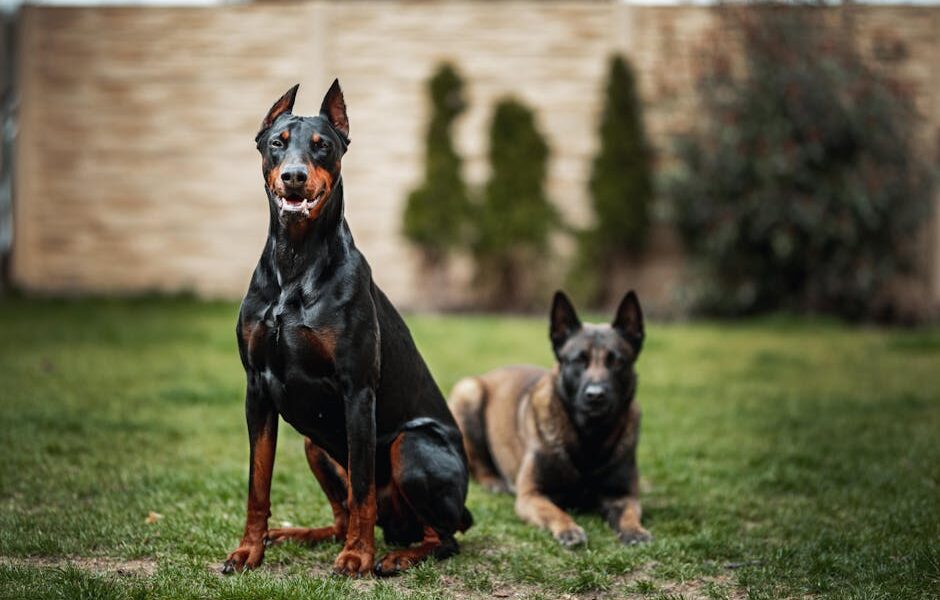
Dobermans are large, typically 60 to 100 pounds, with a sleek, short single coat in black, red (rust), blue, or fawn — all with rust markings. The Doberman has a leaner, more elegant outline than the GSD, with a deep chest, long legs, and an unmistakable wedge-shaped head. Cropped ears and docked tails were historically common, but many modern Dobermans are kept natural. The Doberman’s short coat means less shedding visible on furniture and a much higher cold-weather sensitivity — they need a coat in winter and cannot live outdoors in cold climates.
Temperament and Personality
Both breeds are aloof with strangers, deeply bonded to family, and naturally watchful. Both will alert to perceived threats. Neither is a default-friendly breed.
The Doberman is often described as a “velcro” dog — they want to be physically near their primary person at all times, lean into laps, and follow you room to room. Many Doberman owners describe the breed as more sensitive and emotionally needy than the GSD. German Shepherds are also bonded to family but generally more independent and watchful from a slight distance. Both breeds can be excellent with children in their family when properly raised, and both are typically more reserved with visiting children. Both can develop same-sex aggression in adulthood, particularly if not neutered or if socialization was incomplete. Stable temperament starts with reputable breeding and continues with thoughtful socialization throughout the first two years.
Trainability and Intelligence
Both breeds are at the top tier of working intelligence. Both learn complex sequences quickly, read handler emotion accurately, and excel in obedience, protection sport, and scent work.
The German Shepherd is arguably the more versatile working breed, dominating police K9 work, search and rescue, and service-dog programs. The Doberman is a sharper, more reactive learner — they pick up commands fast but can also pick up unwanted behaviors fast if you are not consistent. Both breeds respond best to force-free, reward-based training; harsh handling backfires on both, but it backfires harder on the Doberman, who tends to be more sensitive to handler tension. Both breeds need daily training as part of their lifestyle, not just a six-week puppy class.
Exercise and Activity Needs
Both breeds need substantial daily exercise plus mental work — at least 60 to 90 minutes of physical activity and structured training daily.
The Doberman is an athletic breed bred for endurance and agility. They love running, hiking, tug, and bite work in sport. The GSD has similar exercise needs with a slight emphasis on trotting endurance — the breed was bred to trot tirelessly behind a flock for hours. Both breeds thrive on having a job. Without one, both develop destructive behaviors and reactivity. Plan on a structured training or sport hobby — obedience, scent work, agility, dock diving, or protection sport — for either breed to be content as a pet.
Grooming and Care
The grooming gap between these breeds is one of the bigger practical differences.
German Shepherds shed heavily year-round and blow coat seasonally — expect tumbleweeds of undercoat in spring and fall. Brushing two to three times a week is standard, with daily brushing during heavy shedding periods. Long-coat GSDs need extra attention. Dobermans have a short, single coat that sheds modestly and is easy to brush — a weekly rubdown with a Hound glove or rubber curry is usually enough. The Doberman is the lower-effort grooming choice. Both breeds need regular nail trims, tooth brushing, ear cleaning, and monthly baths. Dobermans need a winter coat in cold climates and benefit from a thin layer in any weather under 40°F.
Health and Lifespan
Both breeds typically live into the late preteens or low teens, but the Doberman has a notably difficult breed-wide health profile and adopters should research carefully before committing.
The Doberman is significantly affected by dilated cardiomyopathy (DCM), an inherited heart condition that can be sudden and fatal. Reputable breeders test extensively, but the breed-wide rate is high. Dobermans are also predisposed to von Willebrand disease (a clotting disorder), Wobbler syndrome, and certain cancers. The German Shepherd is predisposed to hip dysplasia, elbow dysplasia, degenerative myelopathy, exocrine pancreatic insufficiency, and certain cancers. Both breeds can develop bloat (GDV). Plan on annual veterinary screenings, especially cardiac monitoring for Dobermans starting in early adulthood.
Cost and Availability in Rescue
Both breeds appear in rescue, though German Shepherds are far more common in shelters than Dobermans. German Shepherd rescues exist in nearly every US region. Doberman rescue is more concentrated through breed-specific groups, though Dobermans appear in all-breed shelters too, often surrendered when adopters discovered they were not the “low-maintenance short-haired guard dog” they expected.
Adoption fees for both breeds typically run mid-three figures with full vetting. Both breeds may have BSL (breed-specific legislation) issues in certain cities or rental markets — verify your local laws and your landlord’s policies before adopting. Start with the GSD rescue guide or Doberman rescue guide, and check the Adopt a Dog hub for current listings.
Living With Each Breed Day to Day
Daily life with a Doberman is famously close-quarters. They follow you to the bathroom. They wait by the bed in the morning. They place a paw on your leg during dinner. The breed wants to be physically near their primary person at all times, and households with multiple family members usually find the Dobie picking a favorite within the first few weeks. Daily life with a GSD is similarly bonded but less velcro — Shepherds tend to settle on a nearby dog bed rather than directly on the human, and they are slightly more independent in their patrols of the house.
Both breeds need crate training from puppyhood, daily mental work, and consistent socialization throughout the first two years. The Doberman’s short coat means winter sweaters are a real necessity, not a fashion choice. The GSD handles cold easily but heats up faster in summer than the Doberman due to the heavier coat. The first week with a rescue dog requires patience for both breeds; the decompression period is essential.
Which Is Right for You?
Pick a German Shepherd if you want a versatile, bonded, trainable working partner, you live in a varied climate, you can commit to consistent grooming, and you want a breed with extensive rescue availability. The GSD’s working heritage gives you flexibility — herding, sport, service, or just a stable family dog.
Pick a Doberman if you want a velcro-style protection breed, you live in a moderate-to-warm climate or accept dog-sweater life, you want lower grooming time, and you accept the cardiac health considerations. Dobermans are extraordinary one-person and one-family dogs in capable hands. Neither breed is suitable for a household that wants a casual, low-effort pet — both demand training, exercise, and emotional engagement at a level most pet breeds do not.
Cost of Ownership Beyond Adoption
Both breeds have similar adult food needs — four to six cups daily depending on size and activity. Doberman pet insurance typically runs higher than GSD insurance due to breed-wide cardiac concerns; reputable insurers often factor cardiomyopathy risk into premiums. Plan on annual cardiac screening for Dobermans starting in early adulthood and continuing through senior years.
Training costs differ slightly. Both breeds benefit from continued classes through the first two years, but GSDs often need the longer training horizon to channel their working drive. Climate-related costs also matter: Doberman owners in cold regions need quality dog coats and possibly boots for winter walks, while GSDs handle most climates without extra gear. Both breeds benefit from puzzle toys, training tools, and structured enrichment, all of which add modestly to annual budgets but pay back in better behavior and a happier dog.
Frequently Asked Questions
Are Dobermans more aggressive than German Shepherds?
Modern, well-bred Dobermans have been selectively softened over decades and are not more inherently aggressive than GSDs. Both breeds can develop fear-based reactivity from poor breeding or under-socialization.
Which breed is better for protection?
Both are top-tier protection breeds. The GSD is more dominant in police K9 work; the Doberman is the historical specialist in personal protection. For pet families, both are alert without being attack-trained.
Which breed sheds less?
The Doberman, by a significant margin. The short single coat sheds modestly. The GSD’s double coat sheds heavily year-round.
Are these breeds good with children?
Both can be excellent with children in their family when properly raised and supervised. Both are typically more reserved with visiting children. The dog body language guide helps families read either breed accurately.
Which has the longer lifespan?
The German Shepherd typically lives slightly longer on average than the Doberman, largely because of the Doberman’s breed-wide cardiac issues. Individual care, breeding quality, and proactive monitoring matter more than breed averages.
Looking to adopt a German Shepherd vs Doberman Pinscher Comparison?
Browse German Shepherd vs Doberman Pinscher Comparison dogs and mixes available for adoption from shelters and rescues near you.
Find German Shepherd vs Doberman Pinscher Comparison Dogs for Adoption