
Last updated: March 31, 2026
In this article
Can Cats Eat Edamame? Understanding Soy Safety for Your Cat
Is Edamame Safe for Cats?
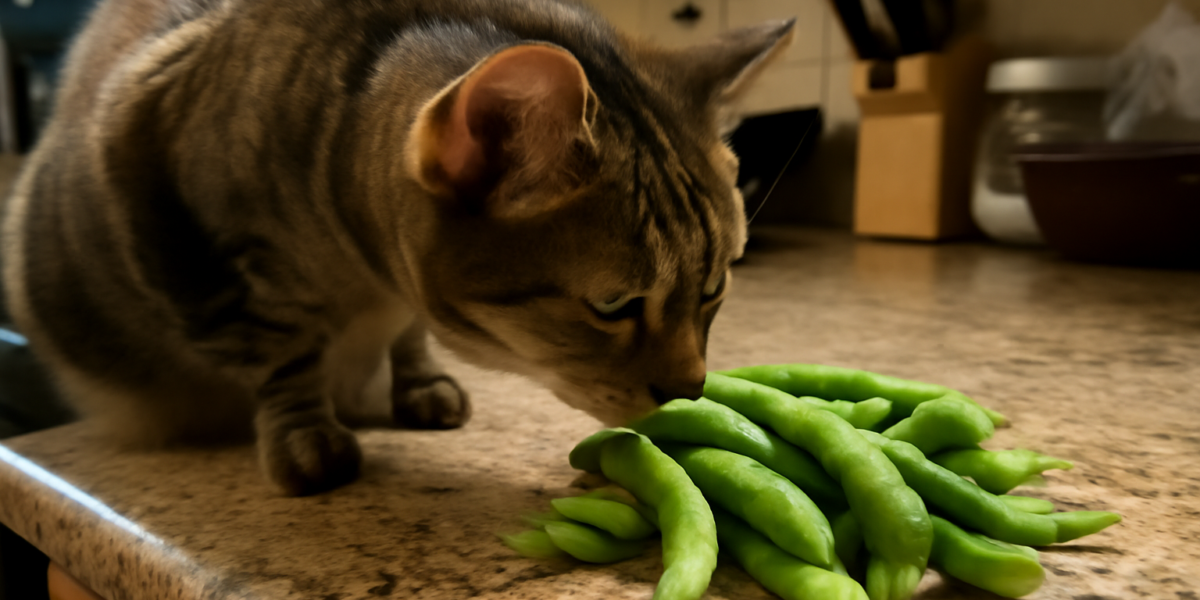
Edamame, which consists of immature soybeans typically served in their pods, is not toxic to cats. The soybeans themselves do not contain compounds that are poisonous to felines, and a cat who eats a few plain cooked edamame beans is not in danger of a toxic reaction. Soy is, in fact, used as a protein source in some commercial cat foods, though its inclusion is a topic of ongoing debate among pet nutritionists.
The safety of edamame for cats comes with several important qualifications. First, only the beans inside the pod should be offered to cats, never the pods themselves. Edamame pods are fibrous, tough, and difficult for cats to chew and digest. They can present a choking hazard and may cause gastrointestinal obstruction, particularly in smaller cats. Second, the edamame must be plain, with no salt, soy sauce, garlic, chili flakes, or any other seasoning. The way edamame is typically served to humans — salted in the pod — is not appropriate for cats.
Soy is recognized as one of the more common food allergens in cats. While not all cats are allergic to soy, a meaningful percentage of cats with food allergies react to soy products. If your cat has never eaten soy before, introduce edamame very cautiously and watch for allergic responses. If your cat is already known to have food allergies or sensitivities, it is best to avoid soy entirely unless your veterinarian has specifically cleared it.
Nutritional Profile of Edamame and Feline Needs
Edamame is nutritionally impressive by human dietary standards. A half cup of shelled edamame contains approximately 9 grams of protein, 4 grams of fiber, 4 grams of fat, and significant amounts of folate, vitamin K, manganese, and iron. It is considered a complete protein for humans, meaning it contains all essential amino acids.
For cats, this nutritional profile is far less relevant. The protein in edamame is plant-based, and while soy protein is more complete than many other plant proteins, it still does not provide the amino acid ratios that cats require. Cats need high levels of taurine, an amino acid found primarily in animal tissue, which soy does not provide. Cats also need arachidonic acid, a fatty acid found only in animal fats. No amount of edamame can substitute for these critical animal-derived nutrients.
The fiber content in edamame, while beneficial for humans, is more than feline digestive systems are designed to handle efficiently. Cats thrive on low-fiber, high-protein diets, and the fiber in edamame can cause gas, bloating, and altered stool consistency when consumed in more than trace amounts.
Isoflavones present in soy products, including edamame, are phytoestrogens that mimic estrogen in the body. The effects of isoflavones on cats are not well studied, but some veterinary nutritionists express concern about long-term phytoestrogen exposure in cats, particularly regarding thyroid function. Cats are known to be susceptible to hyperthyroidism, and while a direct causal link between soy consumption and feline hyperthyroidism has not been definitively established, some research suggests a possible association. This is another reason to keep edamame consumption occasional and minimal.
Risks and Side Effects
Several risks accompany edamame consumption in cats, ranging from mild digestive upset to more serious allergic reactions.
Digestive upset is the most common issue. Edamame contains oligosaccharides and fiber that can cause gas, bloating, abdominal discomfort, and changes in stool consistency. Cats who eat more than a few beans may experience flatulence, loose stools, or diarrhea. These symptoms are usually mild and self-resolving but can be uncomfortable for the cat and unpleasant for the household.
Soy allergy is a legitimate concern. Soy is among the top food allergens for cats, alongside beef, dairy, and fish. Symptoms of soy allergy in cats include itchy skin, excessive scratching, hair loss, ear infections, vomiting, diarrhea, and facial swelling. Allergic reactions can range from mild to severe. If your cat has never consumed soy products before, offer a single edamame bean and observe for 24 to 48 hours before offering more. If any allergic symptoms develop, discontinue soy immediately and consult your veterinarian.
Edamame pods are a physical hazard. The tough, fibrous outer shell is very difficult for cats to chew and digest. Swallowed pod pieces can cause choking, and larger pieces can potentially cause intestinal obstruction, a serious condition requiring emergency veterinary intervention. Always shell edamame completely before offering beans to a cat.
Seasoned edamame is dangerous. The most common preparation of edamame involves salt, which is the minimum concern, as excess sodium can cause dehydration and electrolyte imbalances in cats. Many edamame preparations include soy sauce (extremely high in sodium), garlic (toxic to cats), chili (causes gastrointestinal irritation), sesame oil, or other seasonings that are not safe for cats. Only plain, unseasoned edamame beans should ever be offered.
Frozen edamame straight from the package may be too hard for cats to chew safely. Always thaw and cook edamame before offering it to a cat. The cooking process softens the beans and makes them safer and easier to digest.
How to Prepare Edamame for Cats
If you choose to offer your cat edamame, proper preparation is essential for safety.
Start with plain frozen edamame, either in the shell or pre-shelled. Avoid flavored or seasoned varieties. If using edamame in the shell, you will need to remove the beans from the pods before serving.
Boil or steam the edamame in plain water without adding any salt, oil, or seasonings. Boiling for three to five minutes is typically sufficient to soften the beans adequately. Steaming for four to six minutes achieves the same result while preserving slightly more nutrients.
Drain the edamame and allow it to cool completely to room temperature. If the beans were cooked in their pods, shell them by gently squeezing the beans out of each pod. Discard all pods.
For smaller cats, cut each bean in half to reduce choking risk and make them easier to eat. For average-sized cats, whole shelled beans are generally manageable, but halving them is always a safer option.
You can offer the prepared beans on their own as a small treat, or mix one or two beans into your cat’s regular wet food for added texture. Do not use edamame as a meal replacement or a significant dietary supplement.
How Much Edamame Can Cats Eat?
Edamame portions for cats should be very small, reflecting the food’s limited value and potential for digestive upset in feline systems.
Two to four individual shelled edamame beans is an appropriate serving for an average adult cat weighing eight to twelve pounds. This amount provides a small treat experience without delivering a problematic amount of fiber, soy protein, or isoflavones. Edamame should be offered no more than once per week.
For cats under eight pounds, one to two beans is the maximum. For larger cats over twelve pounds, four to five beans remain a reasonable limit. Increasing the portion beyond these amounts increases the likelihood of digestive upset without providing any additional benefit.
When offering edamame for the first time, give a single bean and wait 24 to 48 hours to observe for any adverse reactions, including both digestive symptoms and allergic responses. If your cat tolerates it well and seems to enjoy it, you can offer the full recommended portion on subsequent occasions.
Kittens should not be given edamame. Their developing digestive and immune systems are more vulnerable to the digestive challenges and potential allergenic properties of soy. Wait until a cat is fully grown before introducing edamame as an occasional treat.
Edamame vs Other Legumes for Cats
Cat owners who are curious about feeding legumes to their cats should understand how different options compare.
Edamame and other soy products carry the additional concern of isoflavones and soy allergenicity that other legumes do not. However, edamame is generally softer and easier to prepare safely than many other legumes.
Lentils are another legume that cats can technically eat in tiny amounts, but they tend to cause more gas and digestive upset than edamame due to their higher oligosaccharide content. Green peas are among the most well-tolerated legumes for cats and appear in many commercial cat foods.
Overall, none of these legumes are necessary or particularly beneficial for cats. If you want to offer your cat a non-meat treat, vegetables like zucchini are typically better tolerated and more appropriate for feline digestion than any legume.
Frequently Asked Questions
Can cats eat edamame pods?
No, cats should not eat edamame pods. The outer shell of edamame is tough, fibrous, and very difficult for cats to chew and digest. Swallowed pod pieces can cause choking and potentially lead to gastrointestinal obstruction, which is a veterinary emergency. Always remove the beans from the pods completely and discard the shells before offering edamame to a cat. Only the soft inner beans should be given, and even those should be in very small quantities.
Can cats eat soy sauce with edamame?
Absolutely not. Soy sauce is extremely high in sodium, with a single tablespoon containing over 900 milligrams. Cats have a low sodium tolerance, and even small amounts of soy sauce can cause excessive thirst, urination, and in larger quantities, sodium ion poisoning with symptoms including vomiting, diarrhea, tremors, and seizures. No soy sauce, tamari, or any other high-sodium condiment should ever be given to cats. Edamame for cats must always be completely plain.
Is soy bad for cats long term?
The long-term effects of regular soy consumption in cats are not fully understood, but there are reasons for caution. Soy contains isoflavones, which are phytoestrogens that can potentially affect hormonal balance. Some research has suggested a possible association between soy consumption and thyroid issues in cats, though a definitive causal link has not been established. Soy is also a common allergen that can cause chronic skin and digestive problems in sensitive cats. For these reasons, most veterinary nutritionists recommend that soy remain a minor component of a cat’s diet at most, not a regular treat.
My cat ate salted edamame, should I be worried?
If your cat ate a few pieces of lightly salted edamame, they will likely be fine. Ensure fresh water is available, as the sodium may cause increased thirst. Monitor for signs of excessive drinking, lethargy, vomiting, or diarrhea over the next several hours. If your cat consumed a large amount of heavily salted edamame or edamame seasoned with garlic, soy sauce, or other concerning ingredients, contact your veterinarian for guidance. Garlic is toxic to cats even in small amounts and warrants prompt veterinary consultation.
Can cats eat tofu instead of edamame?
Tofu, which is processed from soybeans, follows similar safety guidelines as edamame for cats. Small amounts of plain, unseasoned tofu are not toxic. However, tofu shares the same concerns as edamame regarding soy allergenicity, isoflavone content, and limited nutritional value for obligate carnivores. Silken tofu is softer and potentially easier for cats to eat, while firm tofu can be cut into small cubes. The same strict portion limits apply: a small piece once a week at most. Neither tofu nor edamame should be a regular part of a cat’s diet.


