
Last updated: March 31, 2026
In this article
Can Cats Eat Soy Sauce? Safety Guide for Cat Owners
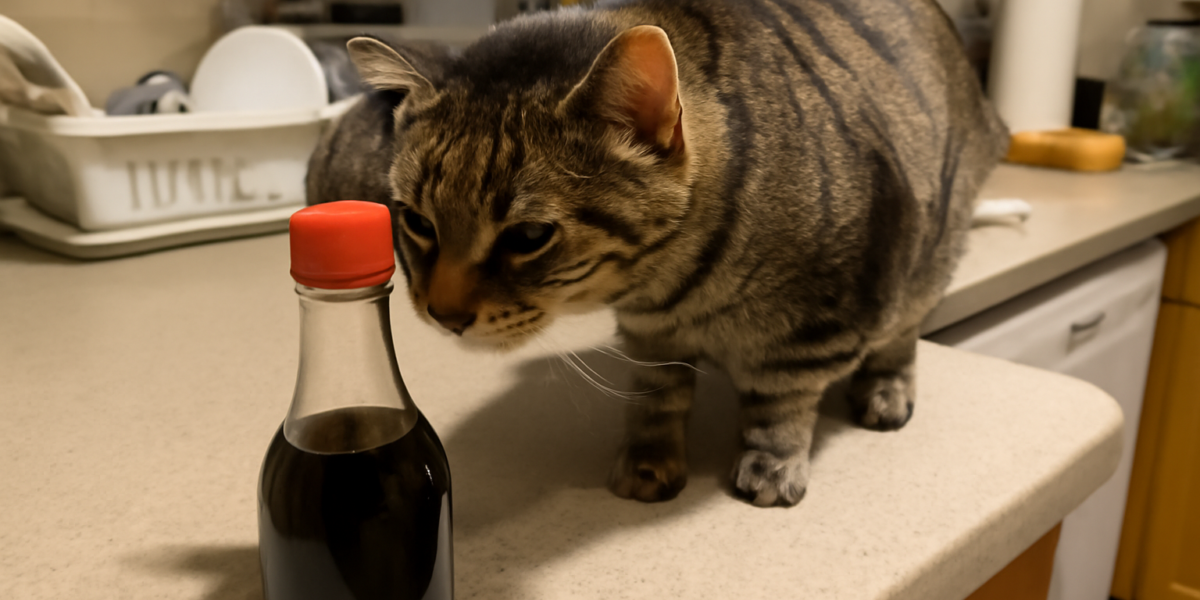
Soy sauce is a staple condiment in many kitchens around the world, and it is not uncommon for cats to show curiosity toward foods on your plate that have been seasoned with it. Whether your cat licked a small puddle of soy sauce off the counter or you are wondering if a tiny dip is harmless, it is important to understand the risks involved.
The straightforward answer is no. Cats should not eat soy sauce under any circumstances. This popular condiment poses a genuine health risk to cats, primarily because of its extraordinarily high sodium content. What seems like a trivial amount to a human can be a dangerous dose for a small animal like a cat.
Quick Answer
No, cats should never be given soy sauce. A single tablespoon of soy sauce contains roughly 900 to 1,000 milligrams of sodium, while an average adult cat only needs about 21 milligrams of sodium per day. Even a small lick of soy sauce delivers a disproportionately large amount of salt relative to a cat’s body weight, creating a significant risk of sodium ion poisoning.
If your cat has accidentally consumed a small lick of soy sauce, they will likely be fine, but you should monitor them closely and provide plenty of fresh water. If your cat has consumed more than a small taste, or if you notice any unusual symptoms, contact your veterinarian immediately.
Nutritional Considerations for Cats
To understand why soy sauce is so dangerous for cats, it helps to look at what it actually contains. Soy sauce is made from fermented soybeans, wheat, water, and salt. The fermentation process concentrates the flavors but also results in an extremely salty product.
From a nutritional standpoint, soy sauce offers virtually nothing beneficial for cats. It contains minimal protein, negligible fat, and a small amount of carbohydrates from the wheat and soybeans. What it does contain in abundance is sodium, and this is where the danger lies.
Cats are obligate carnivores, meaning their bodies are designed to derive nutrition from animal-based proteins and fats. Their kidneys and cardiovascular systems are calibrated for a low-sodium diet. The average house cat weighs between 3.5 and 5 kilograms, and their bodies simply cannot process the concentrated salt found in soy sauce the way a human body can.
Some soy sauce varieties also contain additives such as monosodium glutamate, preservatives, or caramel coloring. While these additives are generally recognized as safe for human consumption, they have not been tested for safety in cats and could potentially cause additional digestive irritation.
Additionally, traditional soy sauce contains wheat, which is a source of gluten. While true gluten intolerance is rare in cats, some cats with sensitive stomachs may experience digestive discomfort from wheat-based products.
Benefits and Risks of Soy Sauce for Cats
There are no benefits to feeding soy sauce to cats. Unlike some human foods that may offer occasional nutritional value as treats, soy sauce provides nothing that a cat needs and carries substantial risks.
The primary danger is sodium toxicity, also known as sodium ion poisoning or hypernatremia. When a cat ingests too much sodium, the excess salt draws water out of cells throughout the body, including brain cells. This can lead to neurological symptoms and, in severe cases, can be fatal.
Symptoms of mild sodium overload include increased thirst and urination as the body attempts to flush out the excess salt. More moderate exposure can cause vomiting, diarrhea, decreased appetite, and lethargy. Severe sodium toxicity can result in tremors, seizures, loss of coordination, coma, and death.
The threshold for sodium toxicity in cats is relatively low. Veterinary literature suggests that sodium intake of approximately 40 to 80 milligrams per kilogram of body weight can be dangerous. For a 4-kilogram cat, that means roughly 160 to 320 milligrams of sodium could trigger toxic effects. Given that a single tablespoon of soy sauce contains around 900 milligrams of sodium, even a fraction of a tablespoon could push a cat into dangerous territory.
Beyond sodium toxicity, regular exposure to high-salt foods can contribute to chronic health problems in cats, including kidney disease and high blood pressure. Cats are already prone to kidney issues as they age, and excessive sodium intake places additional strain on these vital organs.
Soy sauce also contains soy protein, which is a known allergen in some cats. Allergic reactions can manifest as skin irritation, gastrointestinal upset, or respiratory symptoms.
How to Handle Accidental Ingestion
If your cat has licked a small amount of soy sauce, do not panic. A tiny lick is unlikely to cause serious harm in most healthy adult cats. However, you should take the following steps to ensure your cat’s safety.
First, remove the source of soy sauce immediately and clean up any spills. Make sure your cat has access to plenty of fresh, clean water, as increased water intake will help the kidneys flush out the excess sodium. Monitor your cat closely for the next 12 to 24 hours.
If your cat consumed a larger quantity of soy sauce, such as lapping up a pool of it from a plate or spill, contact your veterinarian or an emergency animal poison control hotline right away. Do not attempt to induce vomiting unless specifically instructed by a veterinary professional.
Watch for symptoms including excessive thirst, frequent urination, vomiting, diarrhea, lethargy, wobbling or unsteady gait, tremors, or seizures. Any of these signs following soy sauce ingestion should be treated as a veterinary emergency.
To prevent accidental ingestion in the future, store soy sauce and similar high-sodium condiments in closed cabinets. Be mindful when eating foods seasoned with soy sauce around your cat, and promptly clean plates and surfaces after meals.
Signs of Sodium Toxicity in Cats
Recognizing the signs of sodium toxicity is essential for any cat owner, as prompt treatment can be lifesaving. The symptoms typically progress in stages depending on the amount of sodium consumed and the size of the cat.
Early signs usually appear within a few hours of ingestion and include excessive thirst, increased urination, and mild gastrointestinal upset such as vomiting or diarrhea. The cat may appear restless or uncomfortable.
As sodium levels rise further, more concerning symptoms develop. These include pronounced lethargy, loss of appetite, swelling or edema, and decreased responsiveness. The cat may appear confused or disoriented.
Severe sodium toxicity affects the central nervous system. Symptoms at this stage include muscle tremors, incoordination, stiffness, seizures, and in the worst cases, coma. Without veterinary intervention, severe hypernatremia can be fatal.
If you observe any of these symptoms after your cat has had access to soy sauce or any other high-sodium food, seek emergency veterinary care immediately. Treatment typically involves careful intravenous fluid administration to gradually correct sodium levels, along with supportive care. It is critical that sodium levels are brought down slowly, as rapid correction can cause dangerous brain swelling.
Healthy Alternatives to Soy Sauce for Cats
If you want to add variety or flavor to your cat’s diet, there are much safer options than soy sauce or any other human condiment. Cats do not need added flavoring in their food, but if you want to offer a special treat, focus on plain, unseasoned animal proteins.
Small pieces of plain cooked chicken, turkey, or fish make excellent treats for cats. These provide the animal protein that cats need as obligate carnivores without the dangerous sodium levels found in soy sauce. You might also consider whether your cat would enjoy plain cooked prawns as a protein-rich seafood treat.
If your cat seems to enjoy umami-rich flavors, a small amount of unsalted bone broth can be a safe way to add flavor to their meals. Make sure the broth contains no onion, garlic, or added salt, as all of these are harmful to cats.
Commercial cat treats designed to be nutritionally appropriate offer another safe alternative. Many brands produce treats that are formulated specifically for feline dietary needs, with appropriate sodium levels and balanced nutrition.
For cats that enjoy the texture of wet food, high-quality wet cat food with real meat as the primary ingredient can satisfy their cravings without any of the risks associated with human condiments. If you are adopting a new cat and planning their diet, visit our adoption page to learn about finding a rescue cat that is right for your family.
Frequently Asked Questions
What should I do if my cat licked soy sauce?
If your cat licked a tiny amount of soy sauce, provide fresh water and monitor them for 12 to 24 hours. A small lick is unlikely to cause serious harm in a healthy adult cat. However, if your cat consumed more than a small taste, or if you notice symptoms like vomiting, excessive thirst, lethargy, or tremors, contact your veterinarian immediately.
Is low-sodium soy sauce safe for cats?
No. While low-sodium soy sauce contains less salt than regular varieties, it still has a very high sodium concentration relative to what a cat can safely consume. A tablespoon of low-sodium soy sauce still contains approximately 500 to 600 milligrams of sodium, which far exceeds a cat’s daily needs. It should be avoided entirely.
Can soy sauce kill a cat?
In sufficient quantities, yes, soy sauce can be fatal to cats. Severe sodium ion poisoning can cause seizures, coma, and death. The amount required to cause fatal toxicity depends on the cat’s size, overall health, and how quickly treatment is administered. Any significant ingestion should be treated as a veterinary emergency.
Why are cats attracted to soy sauce?
Cats may be attracted to soy sauce because of its strong aroma and its association with meat-based dishes. The umami flavor profile, which comes from glutamate produced during fermentation, can appeal to cats. However, attraction does not indicate safety. Many substances that are dangerous to cats may still smell or taste appealing to them.
Can cats eat foods cooked with soy sauce?
It is best to avoid giving cats any food that has been cooked with or marinated in soy sauce. Even if the soy sauce flavor seems mild, the sodium has been absorbed into the food during cooking. If you want to share a protein like chicken or other meats with your cat, always set aside a plain, unseasoned portion before adding any sauces or condiments.
How much sodium is too much for a cat?
An adult cat’s daily sodium requirement is approximately 21 milligrams. Veterinary guidelines suggest that sodium intake exceeding 40 to 80 milligrams per kilogram of body weight can begin to cause toxic effects. For a typical 4-kilogram cat, that means as little as 160 milligrams of excess sodium could potentially be dangerous. Commercial cat foods are formulated to contain appropriate sodium levels for feline health.


