
Last updated: April 9, 2026
In this article
Can Cats Eat Matcha? Safety Guide and Tips
Matcha has become a staple in cafes and kitchens around the world, celebrated for its vibrant green color and purported health benefits. From lattes to desserts, this finely ground green tea powder seems to appear everywhere. If you are a matcha enthusiast and your cat has shown interest in your morning matcha latte or a matcha-flavored snack, you might be curious whether this trendy superfood is safe for felines.
The short answer is that matcha is not safe for cats, and understanding why requires knowing what makes matcha unique. Unlike regular green tea where the leaves are steeped and discarded, matcha involves consuming the entire tea leaf in powdered form. This means you get a much more concentrated dose of everything in the leaf — including caffeine, which is toxic to cats.
Quick Answer: Can Cats Eat Matcha?
No, cats must not consume matcha. Matcha contains approximately 70 milligrams of caffeine per gram of powder, making it one of the most caffeine-dense common beverages. Cats are highly sensitive to caffeine, and even small amounts can trigger serious symptoms including rapid heart rate, tremors, and seizures.
Beyond caffeine, matcha also contains theobromine — the same compound that makes chocolate dangerous for pets. While matcha has less theobromine than chocolate, it adds to the overall toxicity profile. The combination of caffeine and theobromine creates a dual threat that makes matcha particularly risky for cats.
If your cat has consumed matcha powder, a matcha latte, or any matcha-flavored food, contact your veterinarian immediately. The caffeine in matcha is absorbed quickly, and early intervention can make a significant difference in outcomes. Note the approximate amount consumed and the time of ingestion to relay to your vet.
Nutritional Profile of Matcha
One gram of matcha powder (approximately half a teaspoon, enough for a standard serving of matcha tea) contains:
- Calories: 3 kcal
- Caffeine: 60 to 70 milligrams — this is the primary danger for cats
- Theobromine: Approximately 2 milligrams
- L-theanine: 14 to 20 milligrams, an amino acid that modulates caffeine effects in humans but has unknown effects in cats at these doses
- Catechins (EGCG): 30 to 60 milligrams of these antioxidant polyphenols
- Vitamin C: Small amounts
- Vitamin A: Small amounts in the form of beta-carotene (cats cannot convert this to retinol)
- Potassium: Small amounts
To put the caffeine content in perspective, a typical matcha latte made with 2 grams of powder contains roughly 140 milligrams of caffeine. For a 4-kilogram cat, caffeine toxicity symptoms can begin at doses as low as 80 milligrams. This means that even a few tablespoons of matcha latte could potentially deliver a toxic caffeine dose to your cat.
While matcha is celebrated for its antioxidant content in human nutrition, cats cannot benefit from these compounds in the same way. Cats produce their own vitamin C and cannot convert beta-carotene to usable vitamin A. The catechins in matcha, while powerful antioxidants for humans, have not been established as safe or beneficial for cats, and their effects are overshadowed by the caffeine danger.
Benefits and Risks of Matcha for Cats
Benefits
- Antioxidant compounds: Matcha is rich in catechins, particularly EGCG, which are potent antioxidants — however, the risks of caffeine exposure far outweigh any theoretical antioxidant benefit for cats
- L-theanine: This amino acid promotes calm focus in humans and has been studied for anxiolytic properties, but safe feline dosing has not been established
- Trace minerals: Matcha contains small amounts of potassium, iron, and calcium, though these are negligible and easily obtained from proper cat food
- Chlorophyll: The high chlorophyll content gives matcha its green color and has mild detoxifying properties, though this is not a meaningful benefit for cats
Risks
- Caffeine toxicity: The high caffeine concentration in matcha can cause hyperexcitability, tachycardia, tremors, seizures, and potentially death in cats
- Theobromine content: While lower than chocolate, the theobromine in matcha adds to the overall methylxanthine toxicity burden
- Rapid absorption: Because matcha is consumed as a fine powder rather than steeped leaves, the caffeine is absorbed more quickly and completely
- Gastrointestinal irritation: The concentrated tannins and catechins in matcha can irritate a cat’s stomach lining, causing vomiting and nausea
- Cardiac effects: Caffeine stimulates the cardiovascular system and can cause dangerous arrhythmias in cats
- Central nervous system overstimulation: Cats’ smaller body mass means they are disproportionately affected by stimulants, leading to anxiety, restlessness, and muscle tremors
How to Serve Matcha Safely to Your Cat
Matcha should never be served to cats. There is no safe dose, dilution, or preparation method that eliminates the caffeine risk. Even a small taste of matcha powder or matcha-flavored food could deliver a concerning amount of caffeine to your cat’s small body.
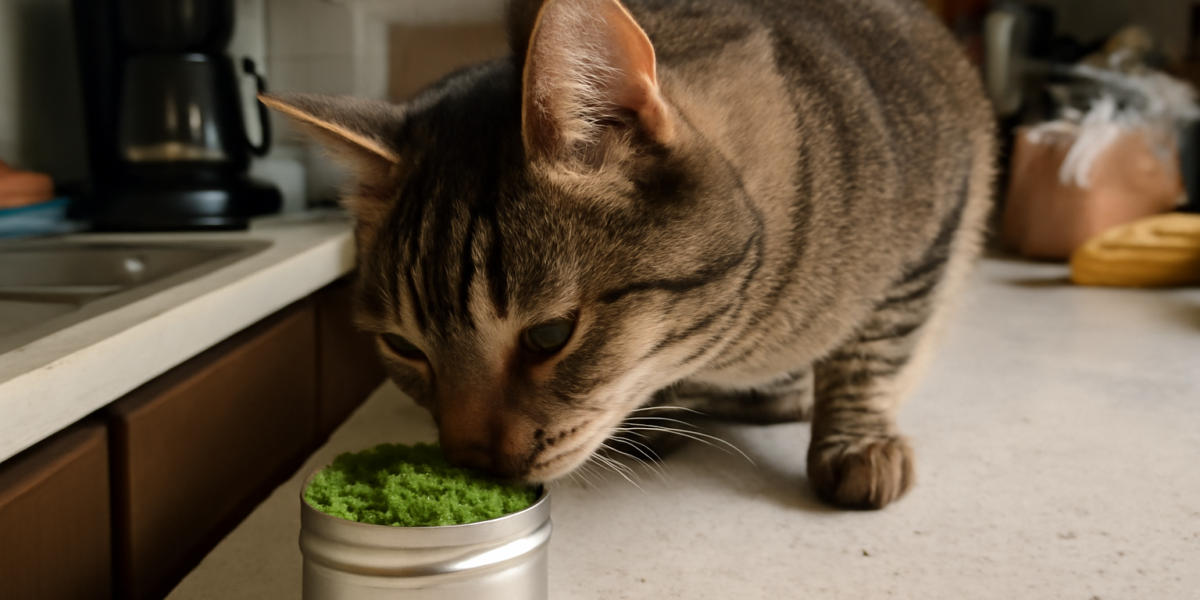
Be particularly careful with matcha in your kitchen. The fine, lightweight powder can easily be scattered or spilled, and a curious cat might lick it off a counter, floor, or your hand. Store matcha in tightly sealed containers in closed cabinets. If you spill matcha powder, clean it up thoroughly before your cat can investigate.
Matcha lattes and matcha-flavored desserts (cakes, cookies, ice cream) also contain concerning amounts of caffeine and should be kept out of your cat’s reach. The dairy in a matcha latte adds the additional concern of lactose intolerance, and the sugar in matcha desserts compounds the health risks.
If you enjoy matcha daily and your cat frequently tries to sample your beverages, consider covering your cup and drinking in a location your cat cannot access. Prevention is far easier and safer than dealing with caffeine toxicity after the fact.
Signs of Problems After Consuming Matcha
Caffeine is absorbed rapidly, and symptoms of matcha ingestion can appear within 30 minutes to 2 hours. The severity depends on the amount consumed relative to your cat’s body weight.
Mild exposure (small lick or taste): Restlessness, increased alertness, mild panting, and increased heart rate. Your cat may seem agitated or unable to settle. These symptoms may resolve within a few hours as the caffeine is metabolized, but you should still contact your vet.
Moderate exposure: Hyperactivity, tremors, rapid breathing, vomiting, diarrhea, excessive thirst, and elevated body temperature. Your cat may vocalize more than usual and appear distressed. These symptoms require veterinary attention to prevent escalation.
Severe exposure (significant amount consumed): Seizures, cardiac arrhythmias, collapse, difficulty breathing, and loss of consciousness. This is a life-threatening emergency. Rush your cat to the nearest emergency veterinary clinic immediately. Treatment may include induced vomiting (if ingestion was recent), activated charcoal, intravenous fluids, anti-seizure medication, and cardiac monitoring.
Do not attempt to treat caffeine toxicity at home. Even if symptoms seem mild, caffeine effects can intensify as absorption continues. Your veterinarian can provide supportive care to help your cat’s body process and eliminate the caffeine safely.
Healthy Alternatives to Matcha
If you want to share a health-boosting moment with your cat, consider these feline-friendly options:
- Cat grass: Wheat grass, oat grass, or barley grass grown specifically for cats provides greenery your cat can safely nibble on and may help with digestion
- Plain cooked chicken: High-quality animal protein is the ultimate superfood for an obligate carnivore
- Fish oil supplement: A veterinary-approved fish oil supplement provides omega-3 fatty acids that support skin, coat, and joint health
- Commercial cat treats with added vitamins: Many premium cat treats are fortified with vitamins and antioxidants appropriate for feline physiology
- Fresh water: Adequate hydration supports every system in your cat’s body — a cat water fountain can encourage more drinking
- Cooked salmon: Small portions provide protein and omega-3s that genuinely benefit your cat’s health
Ready to find a health-conscious cat companion? Visit our adoption page to meet rescue cats looking for their forever homes.
Frequently Asked Questions
How much caffeine is dangerous for cats?
Caffeine toxicity symptoms in cats can begin at doses as low as 20 milligrams per kilogram of body weight. For a typical 4-kilogram cat, that means approximately 80 milligrams — roughly the amount in one gram of matcha powder. The lethal dose is estimated at approximately 150 milligrams per kilogram, but individual sensitivity varies. Any caffeine exposure in cats should be taken seriously.
Is decaffeinated matcha safe for cats?
Decaffeinated matcha has significantly reduced caffeine content but is not entirely caffeine-free. It also retains theobromine, tannins, and other compounds that can irritate a cat’s digestive system. While the risk of severe caffeine toxicity is much lower with decaf, there is still no nutritional reason to give matcha to a cat. It is best to simply avoid it.
My cat licked matcha powder off the counter — what do I do?
If your cat licked a small amount of dry matcha powder (less than a quarter teaspoon), monitor them closely for signs of caffeine stimulation over the next 2 to 4 hours. Provide fresh water and a calm environment. If they consumed more than a quarter teaspoon, or if you notice any symptoms such as restlessness, trembling, or rapid breathing, contact your veterinarian immediately.
Are matcha-flavored treats or ice cream dangerous for cats?
Yes, matcha-flavored foods still contain caffeine from the matcha powder. While the concentration may be lower than in pure matcha tea, the caffeine is still present and potentially harmful. Matcha ice cream also contains dairy (which most cats cannot digest) and sugar. Keep all matcha-flavored foods away from your cat.
Can cats drink green tea?
No, cats should not drink green tea either. While brewed green tea contains less caffeine per serving than matcha (approximately 25 to 50 milligrams per cup compared to 70 milligrams per gram of matcha), it still delivers a dose of caffeine that is disproportionately large for a cat’s small body. All tea products, including green, black, white, and oolong, contain caffeine and should be kept away from cats.
What if my cat seems fine after eating matcha?
Even if your cat appears fine immediately after consuming matcha, it is still worth contacting your veterinarian. Caffeine absorption continues for some time after ingestion, and symptoms may develop or worsen over the next few hours. Your vet can advise you on what to watch for and whether a veterinary visit is warranted based on the estimated amount consumed. It is always better to be cautious with caffeine exposure in cats.
Every cat deserves a safe, loving environment where toxic substances are kept well out of reach. If you are ready to provide that kind of home, visit our adoption page to find your ideal feline companion among our wonderful rescue cats.


