
Last updated: April 1, 2026
In this article
Can Cats Eat Plums? Risks & Safety
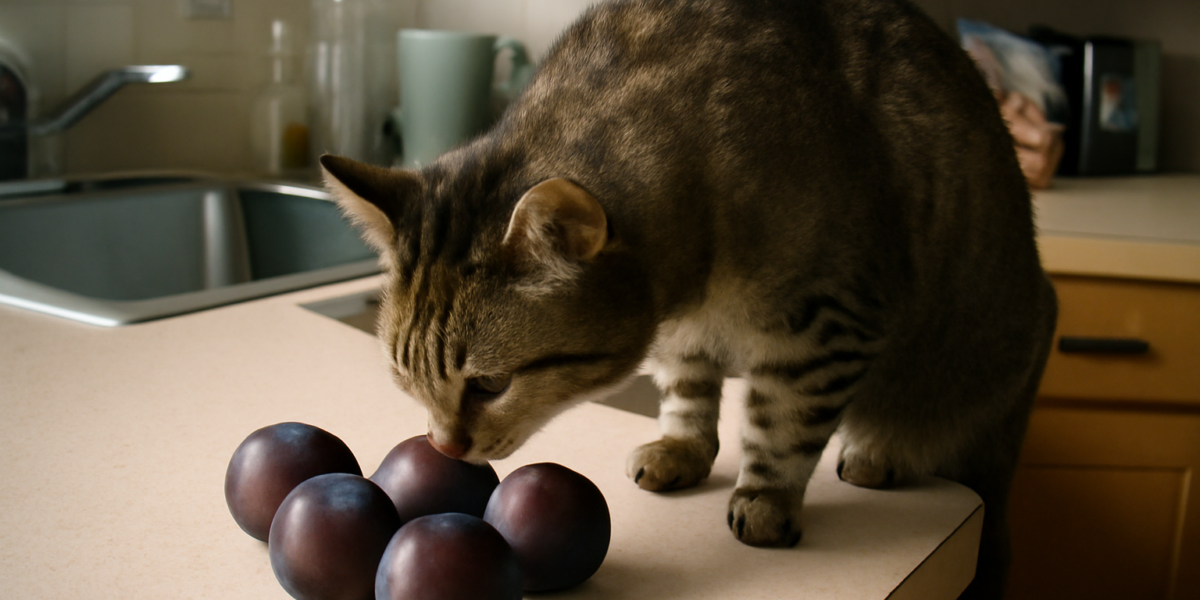
When it comes to feeding plums to your feline friend, the answer is mostly no. While a small amount of plum flesh may not be harmful, the risks associated with other parts of the fruit make it generally unsafe for cats. Understanding these risks and knowing how to safely offer plums, if at all, can help protect your pet’s health.
Is Plums Safe for Cats?
Plums are not typically safe for cats due to the presence of certain harmful substances. The most dangerous parts of the plum are the pit, stems, and leaves, all of which contain cyanide compounds. These compounds can be toxic to cats and other pets. While the flesh itself is less toxic, it’s still not recommended as a regular treat for your cat.
Nutritional Benefits of Plums for Cats
Plums are rich in vitamins and nutrients that are beneficial to humans, such as vitamin C, vitamin K, and potassium. However, cats are obligate carnivores, meaning their nutritional needs are best met with a diet primarily composed of animal-derived proteins and fats. The small nutritional benefit that plums could offer a cat does not outweigh the potential risks.
Risks and Side Effects
The primary risk associated with plums is cyanide poisoning. The pit, leaves, and stems of plums contain cyanogenic glycosides, which can release cyanide when metabolized. Symptoms of cyanide poisoning include difficulty breathing, dilated pupils, and bright red gums. Even the flesh, while less dangerous, can cause gastrointestinal upset in some cats.
For more information on similar risks, you can explore our article on can cats eat peaches and understand the danger of cyanide in different fruits.
How to Serve Plums to Your Cat
If you decide to offer your cat a taste of plum, it is crucial to do so safely. Ensure that all pits, stems, and leaves are completely removed to eliminate the risk of cyanide exposure. Only offer a small amount of plum flesh, and do so infrequently. Monitor your cat closely for any adverse reactions.
For safer alternatives, consider reading about can cats eat apples to find low-risk fruit options for your pet.
How Much Plums Can Cats Eat?
If you choose to give your cat plum, it should only be an occasional treat. A small piece of flesh, no larger than a pea, is more than enough. The key is moderation and vigilance in monitoring your pet’s reaction to the fruit. Given the potential risks, it might be better to avoid plums altogether and stick to fruits that are known to be safer for cats.
Signs of an Adverse Reaction
Watch for signs of distress or illness if your cat has consumed plum. Symptoms of an adverse reaction may include vomiting, diarrhea, lethargy, or loss of appetite. More severe symptoms, such as difficulty breathing or seizures, require immediate veterinary attention. If you suspect cyanide poisoning, contact your vet as soon as possible.
To learn more about symptoms of food poisoning in cats, visit our cat food poisoning symptoms guide for detailed information.
Frequently Asked Questions
Can cats eat plum jelly or jam?
No, it is not recommended for cats to eat plum jelly or jam. These products often contain added sugars and preservatives that are not suitable for cats and can contribute to obesity and other health issues.
What should I do if my cat eats a plum pit?
If your cat ingests a plum pit, contact your veterinarian immediately. The pit can cause intestinal blockage or cyanide poisoning, both of which require prompt medical intervention.
Are there any fruits that are safe for cats?
Yes, some fruits are safe for cats in moderation. These include peeled apples, blueberries, and watermelon. Always remove seeds and offer only in small amounts.
What are the symptoms of cyanide poisoning in cats?
Symptoms of cyanide poisoning in cats include difficulty breathing, bright red gums, dilated pupils, and, in severe cases, seizures or collapse. Immediate veterinary care is crucial if you suspect cyanide poisoning.


