
Last updated: May 4, 2026
In this article
Quick Answer: Yes, cats can eat peaches — but only the ripe flesh, in very small amounts. The pit, stem, and leaves of a peach contain amygdalin, a compound that releases cyanide when digested. Canned peaches are also off-limits because of their high sugar content and preservatives. If your cat has swallowed a peach pit or is showing signs of distress after eating any part of a peach, contact your veterinarian immediately.
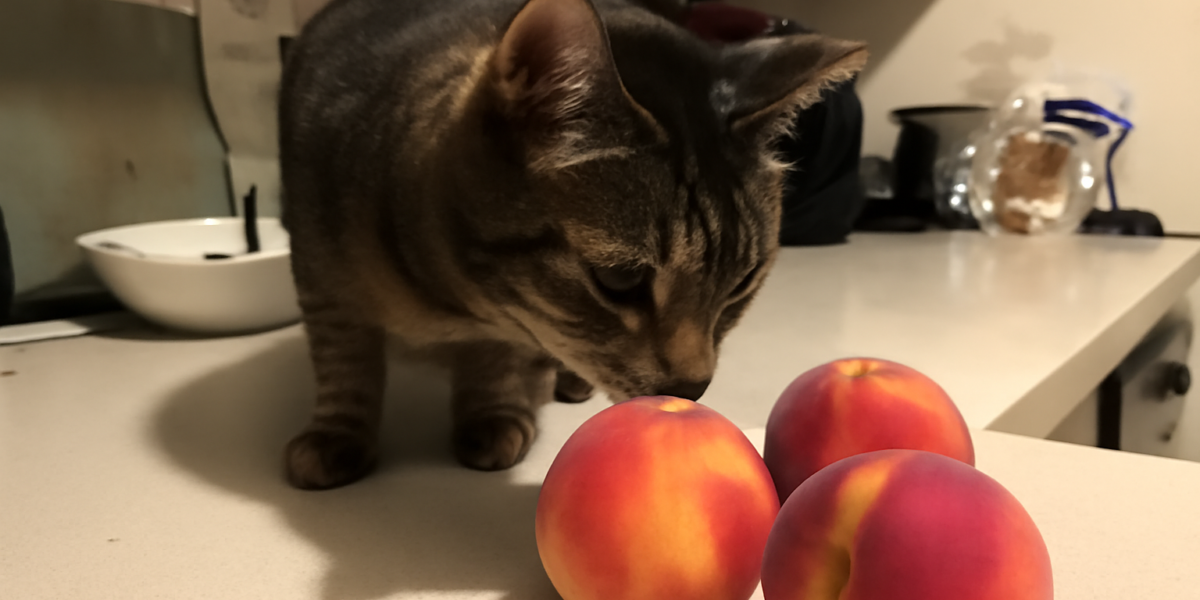
Summer brings an abundance of stone fruits, and peaches are among the most popular. If you have ever been slicing a peach at the kitchen counter only to find your cat staring up at you with intense curiosity, you have probably wondered: can cats eat peaches? The short answer is that the flesh itself is not toxic to cats, but several parts of the peach — and several forms in which peaches are sold — pose real dangers. Understanding the difference between a safe nibble and a veterinary emergency is essential for every cat owner.
Cats are obligate carnivores, which means their digestive systems are designed to process animal protein, not fruit. They lack the taste receptors for sweetness and gain very little nutritional benefit from plant-based foods. That said, a tiny piece of fresh peach flesh will not harm most healthy cats. The problems arise when cats eat too much, consume the wrong parts of the fruit, or are given processed peach products intended for humans.
Are Peaches Safe for Cats?
The flesh of a ripe, fresh peach is not toxic to cats. It contains no compounds that are known to be directly harmful to felines when consumed in small quantities. Veterinary toxicology databases, including those maintained by the ASPCA, list peach flesh as non-toxic to cats. So if your cat has licked or eaten a small piece of peach, there is generally no reason to panic.
However, “non-toxic” does not mean “recommended.” Cats derive almost no meaningful nutrition from fruit. Their bodies are built to extract nutrients from meat, and their short digestive tracts are not optimised for breaking down plant fibre or processing fructose. Feeding peaches to your cat regularly or in large amounts can lead to digestive upset, including diarrhea, vomiting, and abdominal discomfort. It is best to think of peach flesh as an occasional, tiny treat — not a dietary addition.
Some cats also have sensitive stomachs or underlying health conditions such as diabetes or inflammatory bowel disease that make any fruit a poor choice. If your cat has a known health issue, consult your veterinarian before offering any human food, including peaches. For cats with no underlying conditions, a small cube of fresh peach once in a while is unlikely to cause problems — but it is never a necessity.
Fresh Peaches vs Canned Peaches
When people ask “can cats eat peaches,” they often do not distinguish between fresh fruit and the canned version found on supermarket shelves. This distinction matters enormously. Fresh, ripe peach flesh — washed, peeled, and cut into tiny pieces with the pit removed — is the only form that is even marginally acceptable for cats.
Canned peaches are not safe for cats. Nearly all commercially canned peaches are packed in heavy syrup or light syrup, both of which contain large amounts of added sugar. Cats cannot taste sweetness, so the sugar adds no enjoyment for them, but it does add calories, spikes blood glucose, and over time can contribute to obesity and feline diabetes. Even canned peaches labelled “in juice” or “no sugar added” still contain concentrated natural sugars that are far higher than what a cat’s metabolism is designed to handle.
Beyond sugar, canned peaches often contain preservatives such as citric acid and ascorbic acid in concentrations that can irritate a cat’s gastrointestinal tract. Some brands also include artificial sweeteners — and while xylitol is primarily a concern for dogs, any artificial additive is best avoided for cats as well. The texture of canned peaches is also softer and more slippery than fresh fruit, increasing the risk that a cat might swallow a large piece without chewing, which can lead to choking.
The rule is simple: if you are going to let your cat try peach, it must be fresh, ripe, thoroughly washed, and completely free of the pit, stem, and any leaves. Canned, jarred, dried, and frozen peach products made for human consumption should never be given to a cat.
Pit, Stem, and Leaf Dangers
The most serious risk associated with peaches and cats is not the fruit itself — it is the pit, also called the stone. Peach pits contain amygdalin, a cyanogenic glycoside. When a peach pit is cracked, chewed, or partially broken down during digestion, amygdalin converts into hydrogen cyanide, a potent toxin that interferes with cellular oxygen transport. In a small animal like a cat, even a relatively small amount of cyanide can be dangerous.
The leaves and stems of the peach tree also contain amygdalin, particularly when they are wilting. A wilting peach leaf releases more cyanide precursors than a fresh one, making fallen leaves in a garden especially hazardous for outdoor cats. If you have a peach tree in your yard and your cat has outdoor access, keeping fallen leaves and dropped fruit cleaned up is important.
Physical dangers of the pit: Beyond the chemical toxicity, a peach pit is large enough to cause a gastrointestinal obstruction in a cat. If swallowed whole or in large fragments, a pit can become lodged in the oesophagus, stomach, or intestines. A bowel obstruction is a life-threatening emergency that typically requires surgical intervention. The rough, textured surface of a peach pit can also abrade and damage the lining of the digestive tract as it passes through.
Signs of cyanide exposure in cats include: rapid or laboured breathing, dilated pupils, bright red gums (due to the blood’s inability to release oxygen), drooling, weakness, tremors, and in severe cases, collapse and seizures. If you suspect your cat has chewed or swallowed any part of a peach pit, stem, or leaf, do not wait for symptoms to develop — contact your veterinarian or an emergency animal clinic immediately.
Nutritional Value of Peaches for Cats
Peaches offer a reasonable nutritional profile for humans — they are a good source of vitamins A and C, potassium, and dietary fibre. But when considering whether cats benefit from these same nutrients, the picture changes considerably.
Vitamin A: Cats do need vitamin A, but they obtain it most efficiently from animal sources such as liver. Unlike humans, cats cannot effectively convert beta-carotene (the plant form of vitamin A found in peaches) into retinol, which is the biologically active form. The vitamin A in a peach is essentially useless to a cat.
Vitamin C: Cats synthesise their own vitamin C internally. They do not require any dietary supplementation, and the vitamin C in a peach slice offers them no benefit.
Fibre: While a small amount of fibre can support digestive regularity, cats need far less fibre than humans. Too much plant fibre can actually cause diarrhea and gas in cats, whose digestive systems are short and optimised for animal protein.
Sugar: A medium peach contains roughly 13 grams of natural sugar. While this is fine for a human, a cat weighing 4 to 5 kilograms has a very different metabolic capacity. Even a small slice of peach delivers a proportionally large sugar load relative to a cat’s body weight. Cats that eat sugary foods regularly are at increased risk of weight gain and diabetes.
In practical terms, peaches add nothing to a cat’s diet that a high-quality, complete cat food does not already provide in a form their body can actually use. If you want to give your cat a treat, a small piece of cooked chicken or a commercial cat treat formulated for feline nutrition is a far better choice. If you are looking for a new feline companion to spoil with appropriate treats, check the cats available through our adoption page.
How to Serve Peaches to Your Cat Safely
If you have decided to let your cat try a small taste of peach, preparation matters. Cutting corners here is how accidents happen. Follow these steps every time.
Step 1 — Choose a ripe, fresh peach. Avoid unripe peaches, which are harder and more acidic. Never use canned, dried, or frozen peaches. Organic is preferable to reduce pesticide residue, but regardless of whether the peach is organic, it must be washed thoroughly under running water.
Step 2 — Remove the skin. Peach skin is not toxic, but it is difficult for cats to digest and may contain pesticide residue even after washing. Peeling the peach removes this risk entirely.
Step 3 — Remove the pit, stem, and any leaf fragments completely. This is the most critical step. Do not leave the pit sitting on the counter or in a bowl where your cat could reach it. Dispose of the pit in a sealed bin.
Step 4 — Cut the flesh into very small pieces. A piece no larger than a fingernail — roughly half a centimetre — is appropriate. This reduces the choking risk and makes it easier for your cat’s digestive system to process.
Step 5 — Offer one or two small pieces only. Watch your cat while they eat. If they show any signs of gagging, coughing, or discomfort, stop immediately and remove the remaining fruit.
Step 6 — Watch for reactions over the next 12 to 24 hours. If your cat has never eaten peach before, treat this as a trial. Monitor for vomiting, diarrhea, lethargy, or loss of appetite. If any of these occur, do not offer peach again and consult your veterinarian if symptoms persist.
How Much Peach Can a Cat Eat?
The answer is: very little. Most veterinary nutritionists recommend that treats and non-essential foods should make up no more than 10 percent of a cat’s daily caloric intake. For an average indoor cat consuming around 200 to 250 calories per day, that means treats of all kinds — including any peach — should total no more than 20 to 25 calories.
A single small slice of peach (about 15 grams) contains roughly 6 calories and 1.3 grams of sugar. One or two small pieces at that size, offered no more than once or twice a week, stays well within safe limits for a healthy adult cat. Kittens, senior cats, and cats with any health conditions should not be given peach at all unless your veterinarian specifically says it is acceptable.
It is also important to remember that peach should never replace any portion of your cat’s regular meals. A balanced, complete commercial cat food is formulated to meet all of a cat’s nutritional needs. Peach is a novelty at best, and many cats will show no interest in it whatsoever — which is perfectly fine and arguably preferable. Cats that seem unusually drawn to fruit may simply be attracted to the texture or the moisture content rather than the flavour itself.
Signs of Trouble After Eating Peach
Even when peach flesh is prepared correctly, some cats may react poorly. Their digestive systems are not designed for fruit, and individual sensitivities vary. Here is what to watch for and when to act.
Mild reactions (monitor at home): A single episode of soft stool or mild diarrhea within 12 hours of eating peach is common and usually resolves on its own. A brief episode of vomiting shortly after eating is also not unusual. If the cat is otherwise alert, eating normally, and drinking water, these mild symptoms typically pass within a day. Do not offer peach again if this happens.
Moderate reactions (call your vet): Repeated vomiting, diarrhea lasting more than 24 hours, noticeable decrease in appetite, or visible abdominal discomfort such as a hunched posture or reluctance to be touched around the belly are all reasons to call your veterinarian for guidance. These signs may indicate a more significant digestive upset or an underlying sensitivity.
Severe reactions (emergency — go to the vet now): Difficulty breathing, excessive drooling, bright red gums, dilated pupils, tremors, weakness, collapse, seizures, or complete refusal to eat or drink for more than 12 hours are all signs of a potentially life-threatening situation. These symptoms may indicate cyanide exposure from a pit, stem, or leaf — or a bowel obstruction from a swallowed pit fragment. Do not wait. Get your cat to a veterinarian or emergency clinic immediately.
If you are uncertain whether a reaction is mild or serious, always err on the side of caution and call your vet. A brief phone consultation is far better than waiting too long and allowing a treatable problem to become an emergency. To learn more about the dietary needs and characteristics of different feline breeds, visit our cat breeds directory.
Frequently Asked Questions
Can kittens eat peaches?
No. Kittens have developing digestive systems that are far more sensitive than those of adult cats. Their nutritional needs are also much more specific — kittens require a carefully balanced diet of kitten-formulated food to support proper growth. The sugar and fibre in peach flesh can easily cause digestive upset in a kitten, and even a small piece poses a proportionally greater choking risk given their smaller size. Wait until a cat is fully grown and healthy before considering any human food treat, and even then, peach should be an occasional rarity rather than a regular offering.
Can cats eat peach yogurt or peach-flavoured foods?
No. Peach yogurt, peach ice cream, peach jam, and other peach-flavoured processed foods are not suitable for cats. These products contain high amounts of sugar, artificial flavourings, preservatives, and in many cases dairy — which most adult cats are lactose intolerant to. Even “natural” peach-flavoured products are formulated for human digestion and human caloric needs, not feline ones. The only form of peach a cat should ever be offered is fresh, ripe, peeled peach flesh in very small quantities.
What should I do if my cat ate a peach pit?
Contact your veterinarian or an emergency animal clinic immediately. A peach pit poses two simultaneous risks: cyanide toxicity from the amygdalin inside the pit and physical obstruction of the gastrointestinal tract. Do not attempt to induce vomiting at home unless a veterinary professional explicitly instructs you to do so. Bring your cat to the clinic as quickly as possible and, if you can, let the vet know approximately when the pit was swallowed and whether it was whole or broken. Time is a critical factor in both preventing cyanide absorption and addressing a potential obstruction before it becomes surgical.
Are peach trees dangerous to cats?
Yes. The leaves, stems, bark, and pits of peach trees all contain amygdalin, which releases cyanide when broken down. Wilting leaves are particularly dangerous because the wilting process increases the concentration of cyanide precursors. If you have a peach tree and an outdoor cat, keep the area around the tree clear of fallen fruit and leaves. Consider fencing the base of the tree or providing your cat with a secure outdoor enclosure that keeps them away from the tree entirely. Indoor cats are not at risk from peach trees, but be cautious about bringing cut branches or decorative peach blossoms into the house.
My cat licked peach juice — should I be worried?
A small lick of juice from the flesh of a ripe, fresh peach is extremely unlikely to cause any harm. The flesh and its juice do not contain amygdalin or any other compound that is toxic to cats. Your cat may experience very mild digestive upset from the acidity or sugar, but most cats that lick a small amount of peach juice show no symptoms at all. If the juice came from a canned peach product containing syrup, preservatives, or artificial sweeteners, monitor your cat for vomiting or diarrhea over the next 12 hours and call your vet if symptoms appear.
Do cats even like peaches?
Most cats show little to no interest in peaches. Cats cannot taste sweetness — they lack the taste receptor gene for it — so the primary appeal of a peach to a human is completely lost on a cat. Some cats may be curious about the texture, the moisture, or the novelty of a new food being offered, but genuine enjoyment of peach flavour is not something cats experience. If your cat turns away from a piece of peach, that is a perfectly normal and healthy response. There is no reason to encourage a cat to eat fruit.


