
Last updated: April 9, 2026
In this article
Can Cats Eat Raspberries? What Cat Owners Need to Know
Raspberries are a beloved summer berry known for their delicate sweetness, vibrant color, and impressive nutritional profile. Whether you enjoy them fresh, frozen, or blended into a smoothie, raspberries are a staple in many health-conscious households. If you have a curious cat who has shown interest in these tiny red gems, you are probably wondering whether they are safe to share.
The short answer is yes, cats can eat raspberries in very small amounts. Raspberries are not toxic to cats, and an occasional berry or two will not harm a healthy adult feline. However, there are some important considerations that make raspberries a treat requiring moderation and thoughtfulness. Cats are obligate carnivores, meaning their bodies are designed to thrive on animal protein, and their digestive systems are not optimized for processing plant-based foods, including fruit. In this guide, we will cover everything you need to know about cats and raspberries, from safety and nutrition to proper serving guidelines and potential concerns.
Are Raspberries Safe for Cats?
Raspberries are considered safe for cats in small quantities. They are not listed among toxic plants or foods for felines by the ASPCA or other veterinary toxicology resources. This means that if your cat sneaks a raspberry from your bowl, there is no need for alarm.
That said, “safe” for cats means something different than it does for humans or even dogs. Cats are obligate carnivores with a digestive system specifically adapted for processing meat. They have a shorter digestive tract than omnivores, produce fewer of the enzymes needed to break down plant matter, and have limited ability to taste sweetness. This means that while raspberries will not poison your cat, their body is not well equipped to derive significant nutritional benefit from them either.
There is one compound in raspberries that warrants attention: xylitol. Raspberries naturally contain small amounts of xylitol, a sugar alcohol that is famously toxic to dogs. In cats, xylitol toxicity is less well-documented, but there is reason for caution. The amount of naturally occurring xylitol in a few raspberries is extremely small and unlikely to cause problems, but it is another reason to keep portions minimal.
Cats also lack the taste receptors for sweetness that humans and dogs possess, so many cats are simply uninterested in fruit. If your cat does not seem drawn to raspberries, there is absolutely no nutritional reason to encourage them to eat berries. However, for the cats that are curious about these little fruits, offering one or two on occasion is perfectly fine.
Nutritional Considerations for Cats
While cats cannot utilize the nutrients in raspberries as efficiently as humans can, the berries do contain some compounds that may offer minor benefits:
Antioxidants: Raspberries are rich in antioxidants including ellagic acid, quercetin, and vitamin C. These compounds help combat oxidative stress and may support cellular health. While cats produce their own vitamin C and do not require dietary supplementation, small amounts of additional antioxidants from whole food sources are generally considered harmless and potentially supportive.
Fiber: Raspberries contain dietary fiber, which can support digestive health in very small amounts. For cats that occasionally struggle with hairballs or minor constipation, a tiny amount of fiber from natural sources can sometimes help. However, excessive fiber can cause diarrhea in cats.
Water content: Raspberries are approximately 85 percent water, which can contribute to hydration. Many cats do not drink enough water, so water-rich treats can be a small bonus. That said, raspberries are far from the most effective hydration strategy for cats.
Low in calories: With only about one calorie per raspberry, these berries are one of the lower-calorie treat options available. For cats watching their weight, a raspberry is a better occasional indulgence than many commercial treats.
Manganese: Raspberries are a good source of manganese, which supports bone health and metabolic function. While cats get manganese from their regular diet, trace amounts from whole foods are not harmful.
It is important to emphasize that no fruit or vegetable can replace the essential nutrients that cats need from animal-based proteins and fats. Raspberries should never be viewed as a nutritional supplement for cats. They are, at best, a harmless occasional novelty that some cats happen to enjoy. If you are looking for other safe berry options for your feline, you might explore whether cats can eat blueberries or strawberries.
How to Serve Raspberries to Your Cat
If you decide to offer raspberries to your cat, following proper serving guidelines will ensure the experience is safe and enjoyable:
Choose fresh, ripe berries: Select raspberries that are plump, deeply colored, and free from mold or mushiness. Avoid berries that are underripe, as they tend to be more tart and may be less palatable and harder on the stomach.
Wash thoroughly: Rinse raspberries under cool running water to remove any pesticide residues, dirt, or potential contaminants. Even organic berries should be washed before serving.
Serve whole or halved: For most cats, a whole raspberry is small enough to eat safely. However, if your cat tends to gulp food without chewing, you can cut the raspberry in half to reduce any choking risk. For kittens, always cut berries into smaller pieces.
Serve plain: Never add sugar, cream, chocolate, or any other topping to raspberries intended for your cat. Chocolate is toxic to cats, and dairy can cause digestive upset in many felines since most adult cats are lactose intolerant.
Room temperature is best: While cold raspberries from the refrigerator are safe, room-temperature berries tend to have more aroma, which may make them more interesting to your cat. If offering frozen raspberries, let them thaw first to avoid any issues with very cold food on sensitive teeth or gums.
Offer as a standalone treat: Rather than mixing raspberries into your cat’s regular food, offer them separately as an occasional treat. This makes it easier to monitor how much your cat eats and to observe any reactions.
For a broader look at other safe human foods for your feline friend, visit our guide on human foods cats can eat.
Portion Sizes and Frequency
Portion control is critical when offering any non-meat food to cats. Their small body size and carnivorous metabolism mean that even small amounts of plant-based foods can have an outsized impact on their digestion.
Recommended portion: One to two raspberries at a time is the maximum recommended serving for an adult cat. This should be offered no more than once or twice per week. For smaller cats or kittens, half a raspberry is a more appropriate portion.
The ten percent rule: All treats, including fruits, should make up no more than ten percent of your cat’s daily caloric intake. For an average indoor cat consuming about 200 to 250 calories per day, that means no more than 20 to 25 calories from treats. Since each raspberry is about one calorie, this puts them well within the safe range, but it is important to consider the cumulative treat total from all sources throughout the day.
First-time introduction: When offering a raspberry for the first time, give your cat just a small piece, about a quarter of a berry, and observe for 24 hours. Look for any signs of digestive upset, including vomiting, diarrhea, or loss of appetite. If your cat tolerates the small piece well, you can offer a full berry next time.
Cats with health conditions: Cats with diabetes, inflammatory bowel disease, food allergies, or other health conditions should not be given raspberries without veterinary approval. The sugars in raspberries, while minimal, could affect blood sugar management in diabetic cats. Cats with sensitive digestive systems may not tolerate even small amounts of fruit.
Potential Risks and Side Effects
While raspberries are generally safe in small amounts, there are several potential risks to consider:
Digestive upset: The most common side effect of feeding raspberries to cats is mild digestive disturbance. The fiber and natural sugars in raspberries can cause loose stools, gas, or diarrhea, particularly if a cat eats more than the recommended amount. Cats that are not accustomed to any plant-based foods may be more susceptible to digestive upset.
Natural xylitol content: As mentioned, raspberries contain trace amounts of naturally occurring xylitol. While the amount in a few berries is extremely small and unlikely to cause problems for cats, it is worth knowing about. This is one of the reasons why portions should be kept very small.
Sugar content: Although raspberries are lower in sugar than many fruits, they still contain natural sugars that cats do not need in their diet. Frequent consumption of sugary foods can contribute to weight gain and potentially increase the risk of dental issues over time.
Choking hazard: While raspberries are soft, their small size and round shape could potentially pose a choking risk for cats that tend to swallow food without chewing. This is more of a concern for kittens or very small cats.
Allergic reactions: Food allergies in cats, while usually associated with proteins, can theoretically develop to any food. Watch for signs of an allergic reaction after feeding raspberries, including itching, skin irritation, vomiting, diarrhea, or swelling.
Raspberry leaves and plants: While raspberry fruit is safe, be cautious if you grow raspberry bushes. The thorny canes can injure curious cats, and while raspberry leaves are not considered toxic, they are not intended for feline consumption and could cause digestive upset if eaten in large amounts.
Raspberry-flavored products: Never give your cat raspberry-flavored human products such as jams, jellies, yogurts, or candy. These contain added sugars, artificial sweeteners (potentially including concentrated xylitol), preservatives, and other ingredients that can be harmful to cats.
When to Contact Your Veterinarian
In most cases, a cat that has eaten a few raspberries will be perfectly fine. However, there are situations that warrant veterinary attention:
Mild symptoms that usually resolve: A single episode of soft stool or a brief loss of appetite after eating raspberries for the first time is typically not concerning. These symptoms usually resolve within a day without intervention.
Symptoms warranting a call to your vet: Vomiting more than once, diarrhea lasting more than 24 hours, refusal to eat for more than one day, signs of abdominal pain or discomfort, or any symptoms that seem out of proportion to the amount of raspberries consumed.
Emergency symptoms: Difficulty breathing, facial swelling, collapse, prolonged vomiting or diarrhea leading to dehydration, or any sudden change in behavior after consuming raspberries. While these reactions to a few raspberries would be extremely unusual, they warrant immediate veterinary attention.
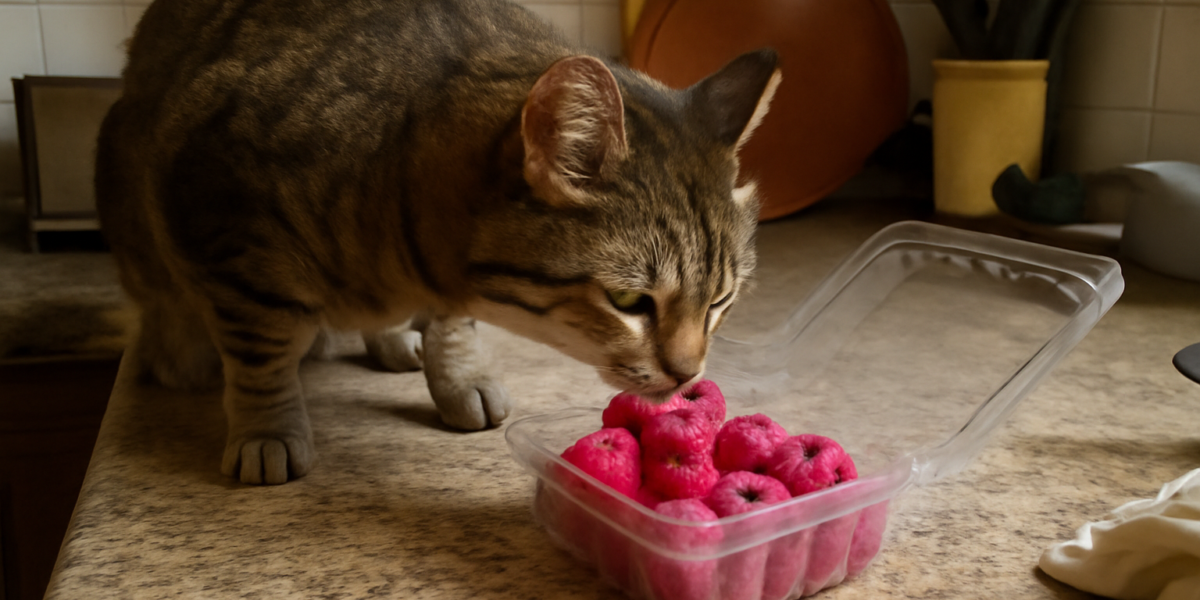
If your cat has consumed a large quantity of raspberries, such as getting into a full container left on the counter, contact your veterinarian. While toxicity is not the concern, the volume of fruit could cause significant digestive distress, particularly from the fiber and natural sugars.
Frequently Asked Questions
Do cats even like raspberries?
Most cats show little to no interest in raspberries or other fruits. Cats lack the taste receptors for sweetness, which means they cannot appreciate the sweet flavor that makes raspberries appealing to humans. Some cats may be attracted to the texture, the scent, or simply the novelty of the berry, but it is completely normal for a cat to sniff a raspberry and walk away disinterested. Never force your cat to eat any food they are not naturally drawn to.
Can kittens eat raspberries?
Kittens should not be given raspberries until they are fully weaned and well established on a solid kitten diet, typically around four to five months of age. Even then, portions should be extremely small, no more than a quarter of a raspberry, and only offered very occasionally. Kittens have sensitive, developing digestive systems that are best supported by a complete kitten food formulated for their specific nutritional needs. The priority for kittens should always be high-quality kitten food, not experimental treats.
Are frozen raspberries safe for cats?
Frozen raspberries are safe for cats as long as they are plain, with no added sugars or syrups. However, it is best to thaw frozen raspberries before offering them to your cat. Very cold food can be uncomfortable on a cat’s teeth and gums, and frozen berries are harder and more likely to pose a choking risk. Let the berries thaw to room temperature, then offer one as you would a fresh raspberry. Some cats enjoy the slightly mushier texture of a thawed berry, while others prefer the firmness of fresh ones.
My cat ate several raspberries. Should I be worried?
If your cat ate a handful of raspberries, there is usually no cause for serious concern, but monitor them closely over the next 24 hours. The most likely outcome is some digestive upset, which could include soft stools, gas, or possibly a bout of vomiting as the cat’s system processes the unusual food. Ensure your cat has access to fresh water and their regular food. If vomiting or diarrhea becomes persistent or your cat shows signs of lethargy or distress, contact your veterinarian for guidance.
Raspberries are one of many fruits that fall into the “safe in tiny amounts” category for cats. While they will not harm your feline friend when offered sparingly, they also do not provide essential nutritional value for an obligate carnivore. If your cat enjoys a raspberry here and there, you can feel comfortable sharing the occasional one. But the foundation of your cat’s diet should always remain a high-quality, protein-rich cat food formulated to meet their specific biological needs.


