
Last updated: April 9, 2026
In this article
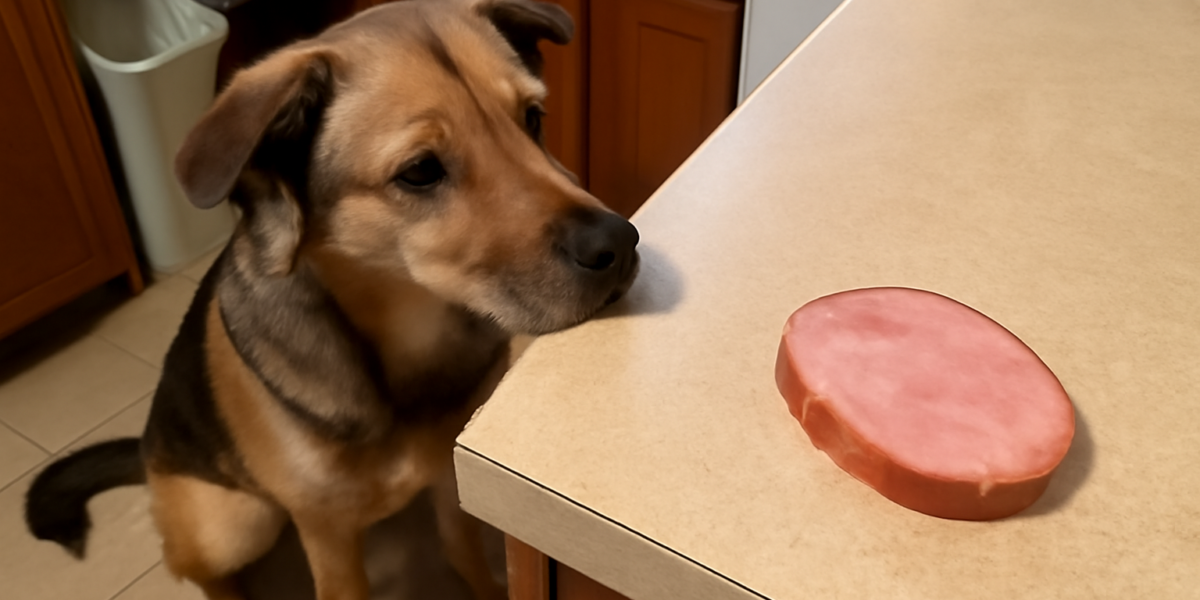
Can Dogs Eat Ham?
Is Ham Safe for Dogs?
Can dogs eat ham without getting sick? Technically, ham is not toxic to dogs in the way that grapes or xylitol are. However, “not immediately toxic” is a very low bar, and ham clears it only barely. The real problems with ham are its nutritional profile and the way it is almost always processed before it reaches the table.
Ham comes from the hind leg of a pig and is one of the most heavily processed pork products in a typical grocery store. Most hams are cured with salt, injected with brine, smoked, and treated with preservatives such as sodium nitrite. The finished product can contain sodium levels many times higher than what is appropriate for a dog’s daily diet. Add to that a fat content that far exceeds what veterinarians recommend for dogs, and the answer to whether ham is safe becomes clear: it is not a food worth offering your dog. If your dog has sneaked a small piece off the floor, that is unlikely to cause lasting harm, but deliberately feeding ham is a different matter entirely.
Why Ham Is Bad for Dogs
There are several distinct reasons why most veterinarians answer this question with a firm “not recommended.”
Sodium. Ham is one of the highest-sodium foods a dog could encounter. A single slice of deli ham can contain several hundred milligrams of sodium. Dogs require only a small amount of sodium per day, and excess intake stresses the kidneys, raises blood pressure, and in serious cases leads to sodium ion poisoning. Dogs with heart disease or kidney conditions are at particular risk from even modest exposures.
Fat content. Ham is a fatty cut of meat, and many preparations add further fat through cooking with butter, glaze, or drippings. High-fat foods are a leading trigger of pancreatitis in dogs — an inflammation of the pancreas that ranges from uncomfortable to life-threatening. Dogs that are small, older, overweight, or already prone to digestive issues face the highest risk.
Preservatives and curing agents. Nitrates and nitrites used in the curing process, along with other additives found in packaged ham products, are not appropriate for regular canine consumption. These compounds place additional strain on the liver and kidneys over time. Honey-glazed, brown-sugar, or pre-seasoned hams may also contain garlic or onion powder, both of which are toxic to dogs.
Symptoms If Your Dog Ate Too Much Ham
If your dog got into a significant quantity of ham, watch closely for the following signs in the hours that follow. Mild gastrointestinal upset — loose stools or a brief episode of vomiting — may resolve on its own with rest and access to water. More concerning symptoms warrant a call to your veterinarian.
- Excessive thirst and urination (a sign of sodium overload)
- Vomiting or diarrhea that persists beyond a few hours
- Bloating or visible abdominal discomfort
- Lethargy or reluctance to move
- Loss of appetite
- Tremors or seizures in severe sodium poisoning cases
- Hunched posture, which can indicate abdominal pain consistent with pancreatitis
If you suspect your dog has consumed ham containing garlic or onion in any form, contact your veterinarian immediately regardless of the amount. For emergencies, the ASPCA Animal Poison Control Center can be reached at 888-426-4435.
What About Ham Bones?
Ham bones deserve their own warning, because the instinct to give a dog a leftover bone feels natural — and the risk is very real. Can dogs eat ham bones? No, and this applies with particular urgency to cooked ham bones.
When pork bones are cooked, they become brittle. A dog that chews on a cooked ham bone — whether a large shank bone or a smaller piece — can cause it to splinter into sharp fragments. Those fragments can lacerate the gums, get lodged in the throat, puncture the esophagus, perforate the stomach lining, or cause an intestinal obstruction. Any of these outcomes can require emergency surgery and may be fatal if not treated quickly.
Even raw pork bones carry a risk of bacterial contamination, including Salmonella and Trichinella, and should only be considered under specific guidance from a veterinarian familiar with raw feeding. The general guidance for the average dog owner is straightforward: no ham bones, cooked or raw, full stop. Discard ham bones promptly and ensure your trash is secured so your dog cannot access them later. Purpose-made chews and veterinarian-approved dental bones are far safer options for dogs that love to chew.
Safer Protein Alternatives
If you want to give your dog a high-protein treat or supplement their diet with a whole-food protein source, there are far better options than ham. These alternatives offer genuine nutritional value without the excessive sodium, fat, or preservatives.
- Plain cooked chicken — boneless, skinless, and unseasoned; one of the most widely recommended proteins for dogs
- Plain cooked turkey — lean and digestible; a good choice for dogs with chicken sensitivities
- Cooked salmon — rich in omega-3 fatty acids that support coat health and inflammation; always cook thoroughly and remove all bones
- Hard-boiled eggs — a complete protein source that most dogs tolerate well
- Plain cooked shrimp — low in calories and fat; remove the shell and tail before serving
Each of these options delivers real protein without the risks associated with ham. When introducing any new food, do so gradually and in small amounts, and check with your veterinarian if your dog has existing health conditions.
Frequently Asked Questions
Can dogs eat a small piece of ham as a one-time treat?
A single small bite of plain cooked ham is unlikely to cause serious harm to a healthy adult dog. However, even occasional feeding sets a pattern, and ham offers no nutritional benefit that cannot be found in a safer food. Given the high sodium and fat content, it is best to skip it entirely and reach for a safer treat instead.
Can dogs eat canned ham or deli ham?
Canned ham and deli-sliced ham are among the worst forms to offer a dog. These products are extremely high in sodium, packed with preservatives including sodium nitrite, and often contain added sugars or flavorings. The answer is an unambiguous no. The sodium content alone in a few slices of deli ham can exceed a small dog’s safe daily limit many times over.
My dog ate leftover glazed ham at the holidays. What should I do?
Monitor your dog closely for the next 12 to 24 hours. Look for vomiting, diarrhea, excessive thirst, lethargy, or abdominal bloating. Glazed hams often contain brown sugar and may include garlic or onion in the glaze, which raises the stakes further. If your dog ate a significant amount, or if you notice any concerning symptoms, call your veterinarian promptly rather than waiting to see how things develop.
Is pork in general bad for dogs?
Not all pork is equally problematic. Plain, fully cooked, unseasoned pork with the fat trimmed is not toxic to dogs and can be given occasionally in small amounts. The issue with ham specifically is the curing process and the massive sodium load that results. If you want to share pork with your dog, a small piece of plain roasted pork tenderloin is a far more appropriate choice than any form of cured ham.
For more dog nutrition guides, care tips, and adoption resources, visit our dog care blog at Walk Me Home Rescue.


