
Last updated: April 1, 2026
In this article
Quick Answer: No — ice cream is not recommended for dogs. Standard ice cream is made from dairy, loaded with sugar, and often flavored with ingredients that range from unhealthy to outright toxic for dogs. Lactose intolerance, excess sugar, chocolate flavoring, and the artificial sweetener xylitol are the four main reasons veterinarians advise against sharing ice cream with your dog. If your dog has already eaten a small amount of plain vanilla ice cream, a one-time exposure is unlikely to cause serious harm — but it should not become a habit, and certain flavors demand an immediate call to your vet.
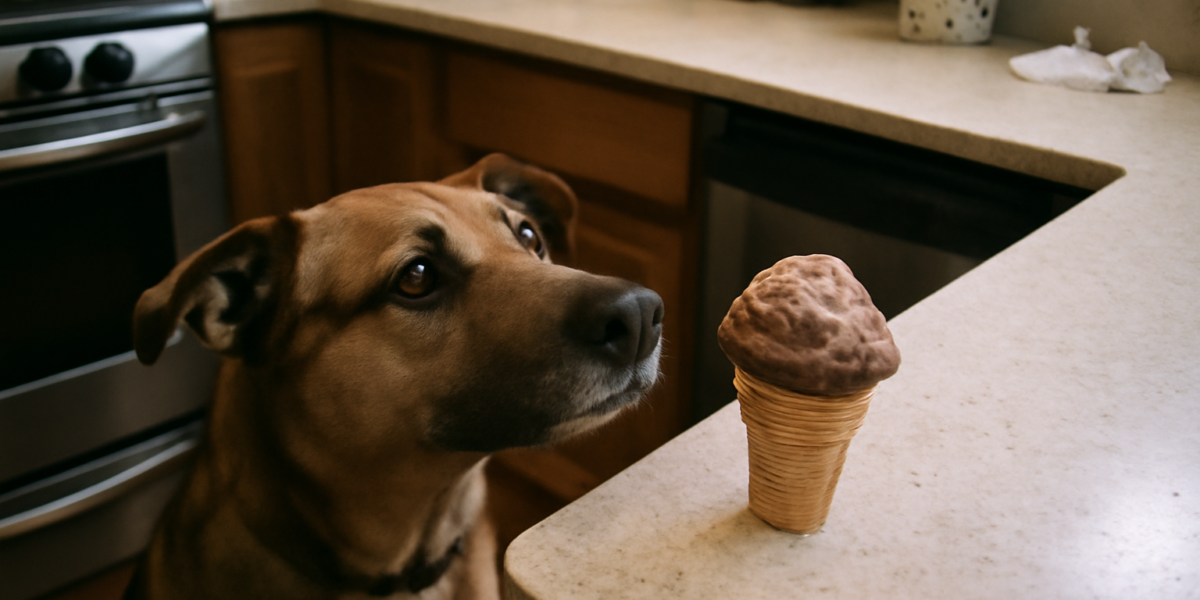
On a hot day it is tempting to let your dog share a scoop. They are watching, they are eager, and a little ice cream seems harmless enough. But can dogs eat ice cream safely, or does that moment of generosity come with real risks? The honest answer is that ice cream is one of the worst frozen treats you can give a dog. It is not about being overprotective — it is about understanding what is actually in the product and how a dog’s digestive system responds to it. This guide covers every risk in plain terms and offers genuinely good alternatives that dogs can enjoy without the downsides.
Is Ice Cream Safe for Dogs?
Can dogs eat ice cream without harm? In most cases, a very small amount of plain vanilla ice cream will not send a dog to the emergency vet. But that does not make it safe, and it certainly does not make it a good treat. Ice cream is formulated for human consumption and contains a combination of dairy fat, sugar, and flavorings that dogs are not designed to process well.
The core issue is that dogs are not biologically suited to handle the lactose in dairy products past puppyhood. Their production of lactase — the enzyme that breaks down lactose — drops significantly as they mature. Layer sugar on top of that, and you have a treat that can cause digestive upset in even healthy dogs. Now consider that many popular ice cream flavors contain chocolate, coffee, macadamia nuts, grapes, or xylitol — each of which is toxic to dogs to varying degrees — and the risk profile climbs sharply. Even when a flavor seems benign, the base formula of most commercial ice cream is simply not a good match for the canine digestive system. For more guidance on what dogs can safely eat, visit our dog care blog.
Why Ice Cream Is Bad for Dogs
There are four specific reasons why ice cream is a poor choice for dogs, and understanding each one makes the case clearly.
Lactose intolerance is the most universal concern. Adult dogs produce far less lactase than they did as puppies, making dairy hard to digest. Ice cream is made primarily from cream and milk — both high in lactose. After eating ice cream, a lactose-intolerant dog may develop gas, bloating, loose stools, diarrhea, or vomiting within a few hours. Many dogs will show these symptoms even if they have never been formally identified as lactose intolerant, because some degree of reduced lactase production is normal in adult dogs.
Sugar content is the second major problem. A standard serving of ice cream contains a significant amount of added sugar, which dogs do not need and cannot metabolize efficiently. Regular sugar consumption contributes to weight gain, dental decay, and elevated blood sugar levels. For dogs that are already overweight, diabetic, or prone to pancreatitis, even a small serving of ice cream is a meaningful health risk.
Chocolate and other toxic flavors represent the most urgent danger. Chocolate ice cream contains theobromine and caffeine, both of which are toxic to dogs. The darker the chocolate, the higher the concentration. Other common ice cream flavors — coffee, macadamia nut, and anything containing raisins or grape — are also toxic. Never assume a flavor is safe without checking every ingredient.
Xylitol is found in some low-sugar and diet ice cream products as a sugar substitute. Xylitol is highly toxic to dogs, capable of causing a sudden and dangerous drop in blood sugar, liver failure, and in severe cases, death. Always read the full ingredient list on any frozen dessert before allowing your dog near it. If xylitol appears anywhere on the label, keep the product away from your dog entirely and treat any accidental exposure as a medical emergency.
What About Dog-Safe Ice Cream?
Can dogs eat ice cream that is specifically made for them? Yes — there are dog-safe versions of frozen treats that deliver the cold, creamy experience without the harmful ingredients, and they are genuinely worth trying on a warm day.
Frozen yogurt made for dogs is one option. Plain, unsweetened yogurt has lower lactose levels than regular ice cream because the fermentation process breaks down much of the lactose. Freezing it into small portions gives dogs a cold treat they can enjoy. Make sure the yogurt contains no added sugar, no artificial flavors, and absolutely no xylitol. Check the label every time, as formulations can change.
Banana nice cream is perhaps the easiest and most dog-friendly frozen treat to make at home. Blend one or two frozen ripe bananas until smooth — the texture becomes surprisingly creamy without any dairy or sugar added. You can mix in a spoonful of dog-safe peanut butter (xylitol-free), a few blueberries, or plain pumpkin puree. Freeze in silicone molds for individual servings your dog can enjoy with zero health concerns.
Commercial dog ice cream products — sold under names like Frosty Paws and various pet store brands — are formulated specifically for dogs. They are typically made without dairy or with minimal lactose, sweetened only with dog-safe ingredients, and free from chocolate and xylitol. These are the closest thing to a genuinely safe frozen treat you can buy off the shelf. Check the ingredients to confirm, as product formulations vary by brand.
What If My Dog Ate Ice Cream?
If your dog got into a small amount of plain vanilla or strawberry ice cream, the most likely outcome is temporary digestive upset — gas, loose stools, or mild vomiting — that should pass within 24 to 48 hours. Keep fresh water available and monitor their condition. No immediate action is required for a one-time small exposure to a non-toxic flavor.
If the ice cream contained chocolate, coffee, macadamia nuts, raisins, or xylitol, treat it as an emergency. Contact your veterinarian or the ASPCA Animal Poison Control Center at 888-426-4435 immediately. Do not wait for symptoms to appear — early intervention dramatically improves outcomes, particularly in cases of xylitol or chocolate toxicity. Be prepared to describe the flavor, the approximate amount consumed, and your dog’s weight.
Frozen Treat Alternatives
There is no shortage of frozen treats that dogs can enjoy safely. These options skip the dairy, sugar, and toxic risk while still giving your dog something cold and satisfying on a hot day.
- Frozen banana slices: Peel, slice, and freeze ripe bananas. Simple and naturally sweet.
- Frozen blueberries: Low in calories and high in antioxidants. Most dogs enjoy them straight from the freezer.
- Frozen watermelon chunks: Remove the seeds and rind, cut into pieces, and freeze. Hydrating and refreshing.
- Pumpkin puree popsicles: Mix plain canned pumpkin with a small amount of xylitol-free peanut butter and freeze in silicone molds.
- Frozen chicken broth cubes: Use low-sodium, onion-free broth. Freeze in an ice cube tray for a savory cold treat.
These alternatives are easy to prepare, contain no harmful ingredients, and are far better nutritional choices than any ice cream product. Visit our dog care blog for more ideas on healthy, dog-safe food and treats.
Frequently Asked Questions
Can dogs eat ice cream in small amounts?
A very small lick of plain vanilla or fruit-flavored ice cream is unlikely to cause a medical emergency in a healthy adult dog, but that does not mean it is safe or appropriate. Even small amounts of ice cream introduce lactose, sugar, and fat that many dogs struggle to process. Repeated exposure — even in small quantities — contributes to weight gain, digestive issues, and poor dietary habits over time. If you want to give your dog a cold treat, choose a dog-specific frozen product or make a banana nice cream at home. Can dogs eat ice cream regularly? No — even if a single small serving seems harmless, it is not a treat worth making routine.
What flavors of ice cream are most dangerous for dogs?
Chocolate ice cream is the most commonly dangerous flavor because it contains theobromine and caffeine, both toxic to dogs. Dark chocolate and chocolate fudge varieties carry the highest concentrations. Coffee-flavored ice cream poses a similar risk due to caffeine. Macadamia nut ice cream is also dangerous, as macadamia nuts cause neurological symptoms in dogs. Anything containing raisins or grape flavoring is toxic. Sugar-free ice cream products that use xylitol as a sweetener are among the most acutely dangerous of all. When asking can dogs eat ice cream, the answer depends heavily on the flavor — but no flavor is genuinely recommended.
Can dogs eat vanilla ice cream?
Vanilla is the least dangerous ice cream flavor for dogs because it typically contains no acutely toxic ingredients. However, vanilla ice cream is still made from cream and milk (high in lactose), loaded with sugar, and offers no nutritional benefit to your dog whatsoever. A small amount is unlikely to require emergency treatment in a healthy adult dog, but it can still cause digestive upset, and the sugar and fat content make it a poor choice. Dogs with lactose intolerance, diabetes, obesity, or pancreatitis should not have any vanilla ice cream. The bottom line: can dogs eat ice cream, even the vanilla kind? Not in any meaningful sense of “safe.”
Is there a dog-safe ice cream I can buy?
Yes. Several commercial products are formulated specifically as frozen treats for dogs. Frosty Paws is one of the most widely available and uses a base designed to be easier on the canine digestive system, without chocolate or xylitol. Many pet stores and online retailers stock similar products made with dog-safe ingredients. You can also make your own at home using frozen bananas, plain pumpkin puree, or xylitol-free peanut butter blended and frozen in molds. These homemade options give you full control over the ingredients and are often better nutritionally than any store-bought treat, for dogs or humans.
Can dogs eat ice cream? The clear answer is no — not safely, and not as a regular treat. The combination of lactose, sugar, and the ever-present risk of toxic flavoring agents or sweeteners makes standard ice cream one of the worst choices you can make when looking to cool your dog down on a warm day. The good news is that genuinely dog-safe frozen alternatives are easy to find or make, and your dog will be just as delighted with a frozen banana or a Frosty Paws as they would be with a scoop from your cone. Choose treats that are made with them in mind, and everyone enjoys the summer a little more.


