Last updated: May 4, 2026
In this article
- Quick Facts About the Elf Cat
- Origin and Breed History
- Appearance and Distinguishing Features
- Temperament and Personality
- Skin and Coat Care
- Ear Care for the Curled Cartilage
- Diet and Nutrition
- Life Stages: Kitten Through Senior
- Health Considerations Specific to the Breed
- Comparing the Elf with Related Breeds
- Is an Elf Cat Right for You?
- Frequently Asked Questions
Quick Facts About the Elf Cat
The Elf cat is a rare hybrid breed combining the Sphynx and American Curl. The result is a hairless or near-hairless cat with the Sphynx’s bare skin and the American Curl’s distinctively backward-curled ear tips. The breed name evokes the pointed-eared mythical figures, and individual cats often carry an unmistakable, faintly mischievous expression.
Karen Nelson and Kristen Leedom are generally credited with founding the breed in the United States around 2006. The Elf cat is registered in TICA’s experimental class. The breed has not been recognized by CFA, and the worldwide population remains very small, with most active breeders concentrated in North America.
Adult Elf cats typically weigh 6 to 12 pounds. They share most physical and behavioral traits with the standard Sphynx, with the addition of curled ear cartilage that requires gentle handling. Owners drawn to the look should understand that the breed is a serious commitment in time, attention, and grooming.
Origin and Breed History
The Elf cat emerged from a deliberate program to combine Sphynx hairlessness with the American Curl’s ear-curl mutation. The American Curl mutation is autosomal dominant, meaning that one copy is sufficient to produce the curled-ear phenotype. The Sphynx hairlessness is recessive, meaning that two copies are needed.
Breeders working with the foundation lines crossed Sphynx with American Curl cats, then selectively bred subsequent generations to produce kittens that inherited both traits. The breeding program is technically more demanding than standard Sphynx breeding because each pairing has to balance both gene systems.
Importantly, the American Curl’s ear-curl mutation does NOT cause the cartilage disease associated with the unrelated Scottish Fold mutation. American Curls inherit a different gene, and the curled ear tips of an Elf cat reflect normal cartilage shaped into a curl rather than the diseased cartilage that produces folded ears in Scottish Folds.
Appearance and Distinguishing Features
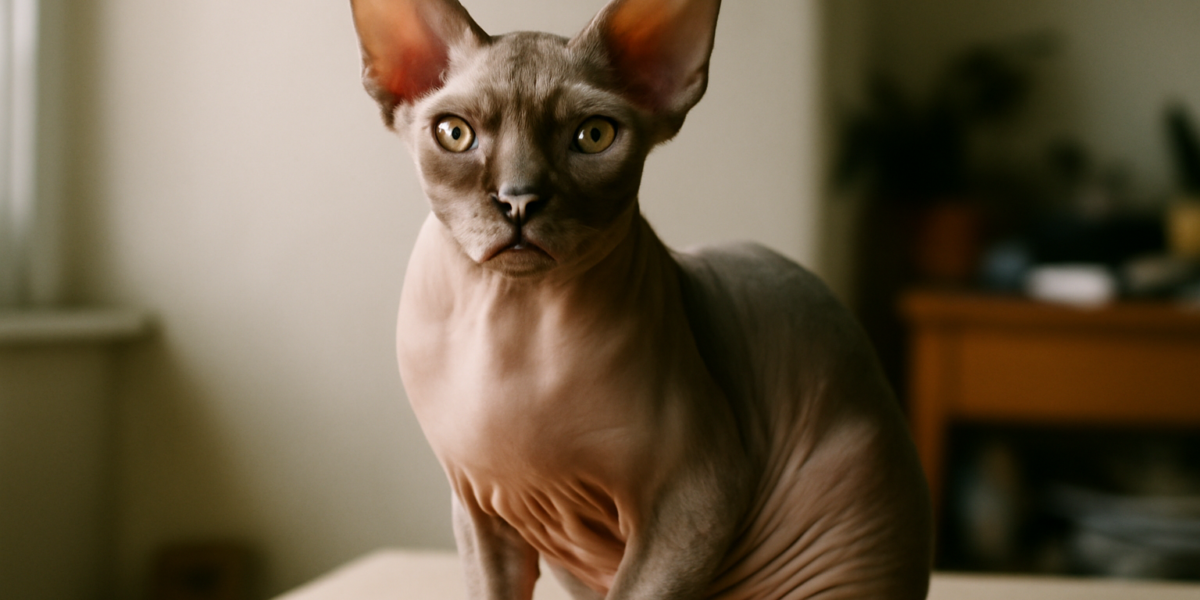
The most striking feature of an Elf cat is the combination of bare skin and curled ear tips. The ears curl backward in a graceful arc, with the tips rotating between roughly 90 and 180 degrees from straight. Kittens are born with straight ears that begin curling within a few days and reach final shape over the first few months of life.
The coat is hairless or covered in fine downy fuzz, like a standard Sphynx. Skin color and pattern reflect the underlying genetics and may include solid colors, points, tabby markings, or bicolor patches. Most adult Elves have noticeable wrinkles around the head, neck, and shoulders.
Body type is typically lean and athletic, similar to the Sphynx, though the structural inheritance from American Curl can produce slightly more compact builds in some lines. Eye color varies. Tails are normal length, often with a fine fuzz of fur at the tip.
Temperament and Personality
Elf cats inherit the famously extroverted personality of the Sphynx parent. Most are highly affectionate, social, and people-oriented. They follow owners between rooms, seek lap time at every opportunity, and often vocalize for attention. Many Elves enjoy riding on shoulders and greeting visitors at the door.
The American Curl parent contributes a curious, playful temperament that complements the Sphynx side without diluting it. American Curls are sometimes described as kitten-like into old age, and Elves tend to share that trait. Play sessions remain enjoyable to most cats well past 10 years of age.
Like Sphynx cats more broadly, Elves are not well suited to households where they spend long workdays alone. They thrive with another cat companion or in households with consistent human company. Stress and loneliness can produce destructive behaviors, overgrooming, or skin issues. Useful routines are covered in our indoor cat enrichment ideas guide.
Skin and Coat Care
The Sphynx-derived hairlessness means Elf cats need regular bathing to manage sebum buildup. Most owners bathe their cats weekly with a gentle, cat-safe shampoo. Skipping baths leads to greasy skin, blocked pores, and unpleasant odor. The Sphynx cat care guide covers underlying skin-care fundamentals that apply equally to the Elf.
Hairless breeds also produce more ear wax than coated cats. Combined with the curled ear cartilage of the American Curl side, this means Elf ear care requires extra attention. Use a vet-approved feline ear cleaner and a soft cotton pad once or twice weekly. Be especially gentle when cleaning the curled tips, where the cartilage shape can hide debris.
Sun protection is essential. Hairless cats sunburn quickly and face elevated skin-cancer risk with chronic UV exposure. Keep your Elf indoors during peak sun hours and limit window-side basking. Skin lotion designed for sensitive skin (vet-approved) can help during dry-season months, but daily moisturizing is rarely necessary if bathing routines are consistent.
Ear Care for the Curled Cartilage
The American Curl’s curled ear cartilage is a normal, healthy structure. It does not cause arthritis, dwarfism, or any of the cascading skeletal effects associated with the Scottish Fold’s diseased cartilage gene. American Curls and Elf cats are bred from straight-eared and curled-eared parents to maintain genetic diversity, and TICA recognizes both ear types in the American Curl breed standard.
That said, the curl creates a slightly more enclosed ear canal that can trap wax and debris. Routine cleaning is essential. Watch for signs of ear infection: head shaking, scratching at the ear, dark or foul-smelling discharge, or redness. Prompt veterinary attention prevents minor wax accumulation from becoming chronic infection.
Handle Elf ears gently. The cartilage is curled into shape, and rough handling, especially in young kittens, can damage the ear during development. Show breeders observe ear development carefully through the first three to four months of life and use the final ear shape to evaluate breed standard conformity.
Diet and Nutrition
Like other hairless breeds, Elf cats run a slightly higher metabolic rate than coated cats of equivalent size, because they burn more energy maintaining body temperature. Most Elves benefit from a calorie-dense, high-protein diet split across multiple meals per day. Feeding two to four small meals supports steady energy and prevents overeating.
Hydration is also important. Elf cats lose moisture through bare skin slightly faster than coated cats, so a clean, accessible water source matters. Many owners use cat fountains to encourage drinking. Wet food alongside dry kibble adds dietary moisture and is generally well-received.
Avoid free-feeding for cats that overeat, and watch body condition score at every wellness visit. Excess weight stresses joints and accelerates dental and metabolic issues. The best cat food for sensitive stomach guide can help if your Elf shows digestive sensitivity.
Life Stages: Kitten Through Senior
Kitten Stage
Elf kittens are born with straight ears that begin curling within the first few days. The curl progresses over the first three to four months of life. Kittens thermoregulate poorly and need warm sleeping environments. Early socialization to handling, bathing, and routine veterinary care builds a confident adult. Kittens should stay with their mother and littermates for at least 12 to 14 weeks.
Adult Stage
Adult Elves reach full size by 12 to 18 months. Maintain weekly bathing, regular nail trims, twice-weekly ear cleaning, and twice-yearly veterinary wellness visits. Watch for skin issues, ear infections, and any cardiac symptoms. The adult cat wellness checklist covers the routine.
Senior Stage
Senior Elves benefit from more frequent veterinary monitoring, attention to weight maintenance, and assessment for early heart-disease changes (Sphynx lineages have an elevated rate of hypertrophic cardiomyopathy). Provide accessible litter boxes and gentle handling. The senior cat care checklist covers monitoring routines.
Health Considerations Specific to the Breed
Elf cats inherit potential health issues primarily from the Sphynx side. The most significant is hypertrophic cardiomyopathy, a heart condition documented at elevated rates in Sphynx populations. Annual cardiac screening for breeding cats and adult Elves, including echocardiograms, is recommended. Our hypertrophic cardiomyopathy in cats guide covers what to watch for.
Skin issues, ear infections, and dental disease are also more common in hairless cats than in coated breeds. Dental care matters from kittenhood: gingivitis develops earlier in many hairless lines, and prevention through brushing and routine cleanings extends a cat’s healthy lifespan. Our gingivitis in cats guide covers home care.
From the American Curl side, the breed is generally healthy. The ear cartilage gene is dominant but does not cause cartilage disease. Routine domestic-cat health monitoring covers the rest, including vaccination protocols and parasite prevention. The cat vaccination schedule outlines core protocols.
Comparing the Elf with Related Breeds
The Elf shares most of its body and skin characteristics with the standard Sphynx. The defining difference is the curled ears, inherited from the American Curl. If you love the curled-ear look but want a coated cat, consider a standard American Curl; if you love the hairless aesthetic without the ear curl, a standard Sphynx is the obvious match.
Within the broader hairless-and-folded-ear category, the Ukrainian Levkoy combines Sphynx hairlessness with Scottish Fold ear inheritance and carries the welfare concerns associated with that ear gene. The Elf, by contrast, uses the safer American Curl gene. This is a meaningful distinction for ethical breeders and prospective owners.
Other hairless variants include the Peterbald, Donskoy, and other hairless breeds, each with distinct origins and care notes.
Is an Elf Cat Right for You?
An Elf can be a wonderful companion if you are committed to the high-touch care hairless breeds require, comfortable with weekly bathing and twice-weekly ear cleaning, and willing to source from a breeder who screens for cardiac and other health issues. They are affectionate, social, and visually unmistakable.
An Elf is not a good fit for households that want a low-maintenance pet, that travel frequently and leave cats home alone, or that cannot accommodate the elevated grooming and veterinary cost. The breed is also rare, so finding a kitten may take patience and travel.
If you encounter an Elf in rescue, adopt mindfully and connect with a feline veterinarian familiar with hairless breeds. The breed is too uncommon to have established surrender networks, but Sphynx-focused rescues sometimes coordinate placements for Elf and other hairless variants.
Frequently Asked Questions
Is the Elf cat recognized by major cat registries?
The Elf is registered in TICA’s experimental class. CFA does not recognize the breed, and the worldwide population remains small. The breed continues to develop within TICA toward potential championship recognition.
Do Elf cats have the same ear cartilage problems as Scottish Folds?
No. The American Curl ear-curl gene is genetically distinct from the Scottish Fold gene and does not cause cartilage disease. Elf cats inherit a healthy curled ear shape rather than the diseased cartilage seen in Scottish Folds.
Are Elf cats hypoallergenic?
No cat is truly hypoallergenic. Hairless breeds shed less hair, but they still produce the Fel d 1 protein that triggers most cat allergies. Spend time with an Elf before committing if you have allergies.
Why are Elf cats so rare?
The breed is recent, the breeding program requires balancing two gene systems (recessive hairlessness and dominant ear curl), and few breeders work with the lineage. Demand exists but production is limited, leading to long wait lists.
How is the Elf different from the Bambino?
Both combine the Sphynx with another distinctive mutation. The Bambino adds Munchkin dwarfism (short legs); the Elf adds American Curl ear-curl. The Elf has standard leg length; the Bambino has short legs. The two breeds share Sphynx-derived skin care needs.
Looking to adopt a Elf Cat Breed Profile?
Browse Elf Cat Breed Profile cats and mixes available for adoption from shelters and rescues near you.
Find Elf Cat Breed Profile Cats for Adoption