
Last updated: May 16, 2026
In this article
- What Grape and Raisin Toxicity in Dogs Actually Is
- Call APCC and Pet Poison Helpline Right Away
- Why the Mechanism Matters
- Clinical Signs to Watch For
- How Veterinarians Diagnose and Stage the Case
- Decontamination — The Time-Critical Step
- The Aggressive IV Fluid Protocol
- Prognosis and Recovery
- Are Cats Affected?
- Prevention — The Easiest Part of the Plan
- The Newly Adopted Dog
- Frequently Asked Questions
What Grape and Raisin Toxicity in Dogs Actually Is
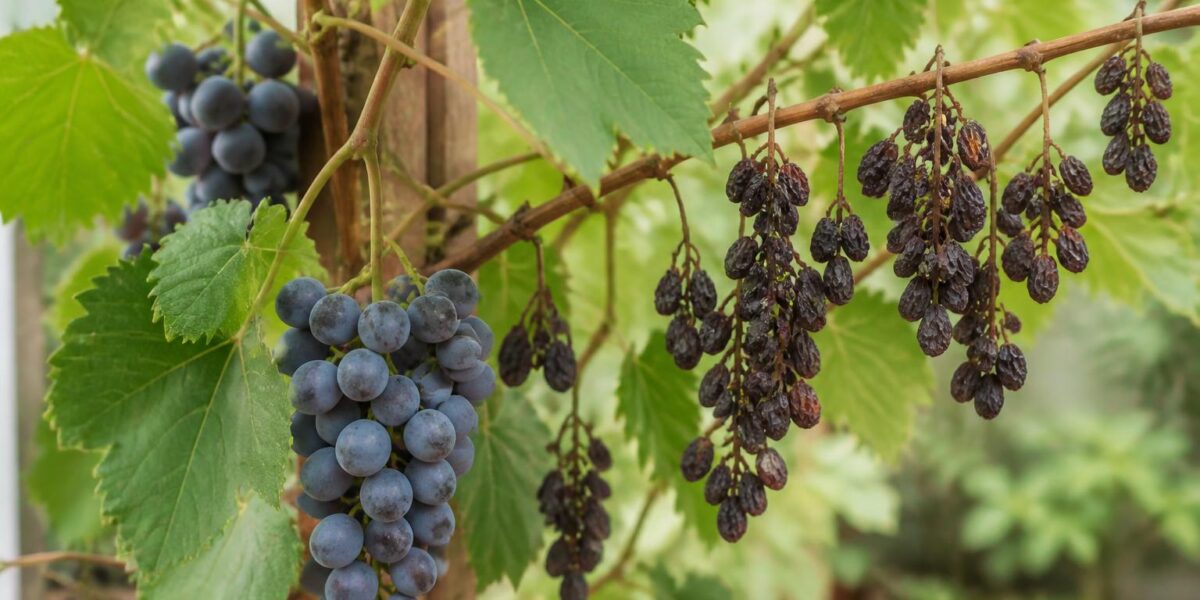
Grape and raisin toxicity in dogs is a clinical syndrome that produces acute kidney injury, sometimes severe enough to be fatal, after the ingestion of grapes, raisins, currants, sultanas, or grape-derived products like grape juice, wine must, and certain trail mixes and baked goods. Toxicity has been confirmed across red, green, seedless, and seeded grapes, and across all of the dried-fruit forms.
The mechanism was a mystery for decades, and “idiopathic grape toxicosis” was the standard label. The leading current hypothesis points to tartaric acid and its potassium bitartrate salt as the toxic agent, which would explain why the same compounds are also implicated in cream-of-tartar toxicity and certain home-baked playdough exposures. Research is ongoing, and the practical clinical message has not changed: any grape or raisin ingestion in a dog is treated as a true emergency.
The defining feature of grape and raisin toxicity is that the dose-response relationship is idiosyncratic and unpredictable. One dog can eat a handful of grapes and never develop a clinical sign; another dog of the same size can eat three grapes and develop fatal kidney failure. There is no safe number, no breed pattern, and no way to predict in advance which dog will react. Decontamination and aggressive IV fluid therapy are the standard of care for every confirmed exposure regardless of the amount.
Call APCC and Pet Poison Helpline Right Away
The first move after a known or suspected grape ingestion is a phone consult with a veterinary toxicology service:
- ASPCA Animal Poison Control Center (APCC): 888-426-4435
- Pet Poison Helpline: 855-764-7661
Both services charge a per-incident consultation fee, and both are staffed by board-certified veterinary toxicologists. They will not give you a “safe amount” — there isn’t one — but they will help you and your treating veterinarian decide on the right decontamination protocol, the right monitoring schedule, and whether your specific case needs ICU-level support. The toxicologist will also communicate directly with your treating veterinarian to provide a case file and recommendations.
If your dog is already vomiting, lethargic, or showing signs of dehydration, drive to your pet poisoning emergency clinic and call from the car.
Why the Mechanism Matters
Whatever the precise toxin — current best evidence points to tartaric acid and bitartrate — the target organ is the kidney, specifically the proximal tubular epithelium. The result is acute tubular necrosis with oliguria or anuria (decreased or absent urine production) developing 24 to 72 hours after ingestion. Some dogs progress through this phase to chronic kidney disease; others recover renal function fully if treated early.
The unpredictability of dose-response is the central clinical fact. Until reliable predictive testing exists, the only safe approach is to treat every exposure as potentially life-threatening, decontaminate promptly, and run aggressive IV fluid therapy with renal panel monitoring for at least 72 hours. This is more aggressive than the protocol for many other toxins, and is justified by how irreversible an acute kidney injury can become if missed early.
Clinical Signs to Watch For
Initial clinical signs typically begin within 6 to 12 hours of ingestion and progress in a fairly recognizable order:
- Vomiting — often the first sign, sometimes with grape or raisin pieces visible
- Diarrhea
- Anorexia and lethargy
- Abdominal pain
- Increased thirst followed by decreased urine output
- Dehydration on physical exam
- Weakness and reluctance to move
- Tremors or ataxia in advanced cases
- Anuria — no urine production at all in severe cases
The most important early warning is the change in urine output. Owners who pay close attention often notice that the dog stops urinating during walks, or that the litter pan or grass area is empty for a 12-to-24-hour stretch. By the time anuria is established, kidney injury is severe and prognosis worsens rapidly.
How Veterinarians Diagnose and Stage the Case
Diagnosis is largely historical: a known or suspected ingestion plus compatible clinical signs. Bring the bag, the box, or photographs of the product if you can. For trail mixes, baked goods, and breakfast cereals, the toxicology helpline can estimate exposure based on the product formulation.
Your veterinarian will run a baseline bloodwork panel including a complete blood count and a chemistry panel — the BUN, creatinine, phosphorus, and SDMA values are the renal markers of greatest interest. A urinalysis is run in parallel; the urine specific gravity and the presence of glucose, casts, or protein in the urine help stage the injury. Repeat panels at 24, 48, and 72 hours catch the delayed renal phase.
The clinical syndrome to anchor on is acute kidney injury in dogs. The framework for staging and managing AKI is the same regardless of whether the cause is grapes, ethylene glycol, lily ingestion in cats, NSAIDs, or other toxins — the differences are mostly in the antidote, if any exists, and the time-course.
Decontamination — The Time-Critical Step
If ingestion is recent — typically within the last two hours — your veterinarian will start with decontamination. Emesis is induced in the clinic with apomorphine in dogs, never with hydrogen peroxide at home unless your veterinarian or the toxicology service explicitly tells you to. Self-induced emesis can cause severe gastritis, aspiration pneumonia, or worse if your dog is already unsteady.
Once the stomach is empty, activated charcoal is given by mouth or stomach tube. A cathartic such as sorbitol may be combined with the first dose to push the charcoal-bound toxin through the bowel. Repeat-dose charcoal is sometimes used for high-volume ingestions because grapes can sit in the stomach for hours.
The Aggressive IV Fluid Protocol
The cornerstone of grape and raisin toxicity treatment is aggressive intravenous fluid therapy for at least 48 to 72 hours. The goal is twofold: maintain renal perfusion to dilute the toxin’s effect on the tubules, and induce diuresis to flush out the toxin. Your dog will be hospitalized on a continuous IV line during this window.
Common categories of treatment your veterinarian may use include:
- IV crystalloid fluids at twice or three times maintenance rate
- Antiemetics such as maropitant or ondansetron
- Diuretics such as furosemide or mannitol if urine production drops
- Phosphate binders if phosphorus rises
- Antihypertensive therapy in dogs who develop hypertension
- Blood pressure monitoring
- Hemodialysis or peritoneal dialysis at referral hospitals for dogs who become anuric and unresponsive to medical management
Your vet will not give an mg/kg drug-dosing chart over the phone. Protocols are individualized to severity and response. The framing is that dosing happens in the hospital, by a clinician watching the renal panel and the urine output in real time.
Prognosis and Recovery
Prognosis depends almost entirely on how early treatment begins and how severe the kidney injury becomes before stabilization. Dogs presented within hours of ingestion and started on prompt decontamination plus 48 to 72 hours of IV fluids generally have a good prognosis, with full recovery of renal function in most cases.
Dogs presenting after the kidney injury has already developed — typically 24 to 72 hours post-ingestion, with rising creatinine and decreasing urine output — have a guarded prognosis. Anuric dogs who do not respond to medical management may require dialysis and carry a poor prognosis at any clinic without specialized capability. Survivors of significant AKI sometimes recover with residual chronic kidney disease in dogs that requires lifelong management.
ICU costs for severe cases readily climb into the thousands of dollars. Reviewing your pet insurance decision for dogs early helps with worst-case decision-making, and the realities of emergency vet cost realism are worth understanding before an emergency arrives.
Are Cats Affected?
Cats appear to be far less commonly affected than dogs, possibly because they rarely eat grapes voluntarily. There are scattered reports of acute kidney injury in cats following grape ingestion, but the literature is much thinner. Out of caution, treat any feline grape ingestion as a potential emergency and call a poison helpline. Our pillar on can cats eat grapes covers the food-safety angle for cats specifically.
Prevention — The Easiest Part of the Plan
Most grape and raisin toxicity is preventable with simple household awareness. Common exposure scenarios include:
- Trail mix, granola, and breakfast cereals containing raisins or sultanas
- Baked goods — fruitcake, scones, cinnamon raisin bagels, banana bread variants
- School lunches and packed snacks dropped within reach
- Hanukkah and holiday food platters
- Wine grapes and wine pomace in households that home-make wine
- Fallen fruit from backyard or neighbor’s grapevines
Store grapes, raisins, and grape products where your dog cannot reach them. Be especially cautious with countersurfing dogs and with dogs in households where children carry fruit-containing snacks. Brief visiting houseguests with the same care you would brief them about chocolate. Our pillars on can dogs eat grapes and can dogs eat raisins answer the everyday questions that come up before an ER ever becomes relevant.
The Newly Adopted Dog
Newly adopted dogs are at elevated risk in their first weeks at home — they may not yet understand household rules, and the home may not yet have rehearsed pet-proofing. Walk through your kitchen, dining room, and pantry at dog level on day one, and treat grapes and raisins with the same caution as chocolate. Visit the broader adopt a dog hub for pet-proofing checklists worth working through before bring-home day.
Frequently Asked Questions
How many grapes are dangerous for a dog?
There is no safe amount. The dose-response is idiosyncratic — some dogs tolerate large amounts and others develop fatal kidney failure from a small ingestion. Any confirmed grape, raisin, currant, or sultana ingestion in a dog warrants an immediate call to APCC at 888-426-4435 or Pet Poison Helpline at 855-764-7661.
Are seedless grapes safer than seeded grapes?
No. Toxicity has been confirmed across all varieties — red, green, seedless, seeded, organic, and conventional — and across all dried forms. The risk does not appear to depend on the seeds or the skin. Treat every grape exposure as a potential emergency.
What about grape juice or wine?
Grape-derived products carry the same potential for toxicity, plus alcohol toxicity in the case of wine. Grape juice, jellies, jams, and wine pomace should all be considered toxic and reported when calling a poison helpline.
How long will my dog be in the hospital?
The standard protocol is 48 to 72 hours of IV fluids with renal panel monitoring. Dogs who develop AKI may need longer stays, and dogs who become anuric may require referral for dialysis at a specialty hospital with ICU capability.
Will my dog have lasting kidney damage?
Most dogs treated promptly recover full kidney function. Dogs who develop significant AKI before treatment begins may recover with residual chronic kidney disease that requires lifelong management — a special-diet plan, periodic monitoring of bloodwork, and sometimes blood pressure medication. Your veterinarian will discuss long-term plans once renal values stabilize.


