Last updated: May 4, 2026
In this article
Hokkaido Overview
This hokkaido breed profile introduces one of Japan’s six native breeds and one of the most cold-hardy of the Nihon Ken. The Hokkaido — also called the Ainu Ken or Ainu Dog — is a medium-sized spitz from Hokkaido, Japan’s northernmost main island. The breed has been kept for centuries by the Ainu, the indigenous people of Hokkaido, who used the dogs for hunting bears and other large game in heavy snow and dense forest. The breed is held in cultural reverence by the Ainu people and was designated a Japanese national monument in 1937.
Outside Japan the Hokkaido is rare. Most North American and European specimens come from small breeder networks, and the breed is essentially unknown in general rescue. Adopters drawn to the Hokkaido often compare it to other Nihon Ken — the Akita, Shiba Inu, and Kai Ken. The Hokkaido sits between these in size and temperament, with a particularly dense double coat reflecting its cold-climate origins.
Quick facts: Group: spitz / primitive. Origin: Hokkaido Island, Japan. Size: 18–22 inches, typically 45–65 pounds. Coat: dense double coat, white, red, brindle, sesame, or black most common. Energy: moderate to high, working drive. Lifespan: 12–15 years. Grooming: weekly brushing, heavy seasonal coat blow. Best for: experienced primitive-breed owners, cool climates, active homes.
History and Origin
The Hokkaido is one of the oldest of the Japanese native breeds, with archaeological and cultural evidence linking the dogs to the Ainu people of Hokkaido for centuries. The Ainu used these dogs for hunting bears (a famously demanding task), boar, deer, and smaller game in deep winter snow. The breed adapted physically to cold, deep snow, and rough terrain — the dense double coat, sturdy proportions, and powerful build all reflect this working environment.
Modern breed development began in the early twentieth century, with Japanese cynologists working to formalize the type and preserve the gene pool. The 1937 national monument designation underscored cultural importance. International recognition has been partial; the breed is uncommon outside Japan and most working dogs remain on the island. The Ainu cultural connection is significant and modern breed clubs typically acknowledge it explicitly.
Temperament and Personality
Expect alert, faithful, dignified, and reserved with strangers. The Hokkaido bonds tightly to its family, including children raised in the household, and shows real affection inside that circle. Outside the family the default is watchful caution. They are not casual social dogs and they do not greet strangers eagerly.
Courage is part of the breed’s working heritage. The Hokkaido was bred to face down bears, and the modern breed retains a calm, steady response to perceived threats — they do not panic and they do not run from challenges. This is a desirable trait in a working dog and a complicating one in a pet, because a Hokkaido that decides another dog is a threat will not back down easily.
Force-free training works well. Build trust slowly. The breed has a long memory for both kind and harsh handling, and harsh methods damage the relationship in ways that take a long time to repair.
Size and Appearance
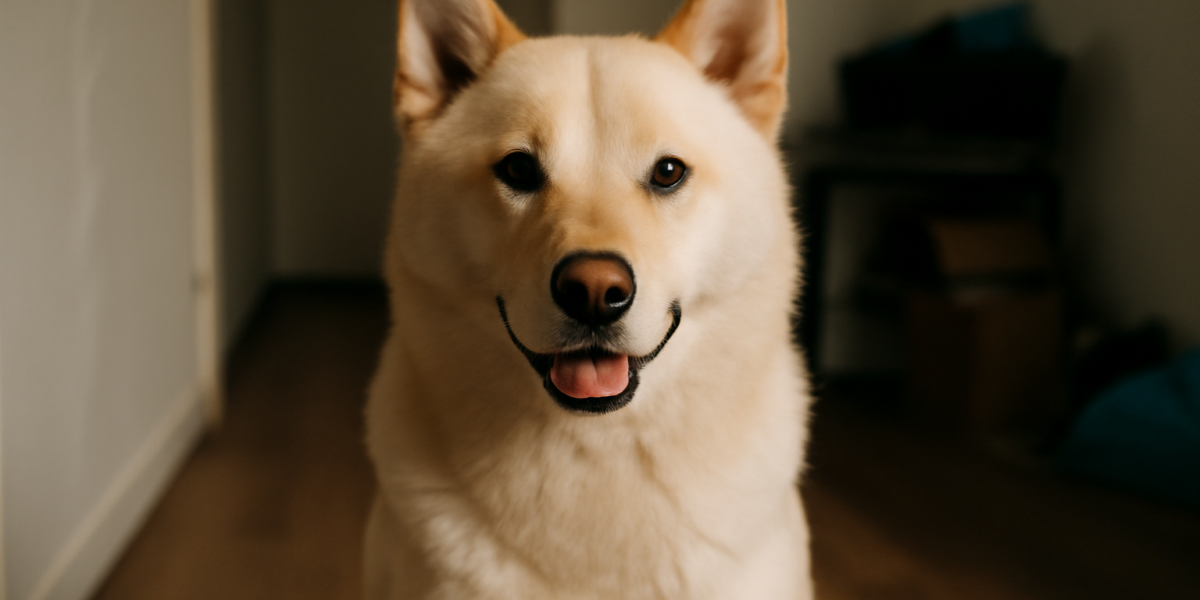
The Hokkaido is medium-sized and sturdily built. Males typically stand 19–22 inches at the shoulder and weigh 50–65 pounds; females run smaller. The build is well-muscled and balanced — heavier than a Shiba, lighter than an Akita, with a deep chest and strong legs suited to deep snow.
The coat is the breed’s defining feature: a dense double coat with a harsh outer layer and an exceptionally thick soft undercoat. Common colors include white, red, brindle, sesame, and black. The tail curls over the back in classic spitz fashion. The ears are pricked, triangular, and small. The face is broader than a Shiba’s, with the kind of structure that supports the breed’s working heritage.
Exercise and Activity Needs
The Hokkaido needs real daily exercise — long walks, hiking, and ideally off-leash work in safe fenced areas. A young adult who is under-exercised becomes destructive and vocal. The breed enjoys cold weather and snow play; in warm climates plan exercise for early morning or evening to avoid heat stress.
Off-leash work outside secure fencing requires caution. The breed has a strong hunting drive and may chase prey across long distances. Six-foot secure fencing is the standard recommendation. The Hokkaido is athletic enough for hiking, jogging, sled work in some lines, and structured tracking — having a job grounds the temperament.
Grooming and Care
Plan for weekly brushing during normal months and daily brushing during the dramatic seasonal coat blow, which happens twice a year. Use a slicker brush and undercoat rake to reach the dense undercoat. Never shave a double-coated spitz — the coat insulates against both cold and heat, and shaving disrupts that system.
The breed is generally clean by nature and bathes only occasionally. Trim nails monthly, clean ears as needed, brush teeth regularly. In humid climates monitor for skin issues under the dense coat — air circulation matters and a properly groomed Hokkaido stays cleaner and cooler than an unbrushed one.
Health and Lifespan
The Hokkaido is a generally healthy breed with a small but reasonably stable gene pool. Concerns to discuss with a vet include hip dysplasia, occasional eye conditions, and the heat sensitivity that follows from a dense cold-climate coat. Cardiac and thyroid screening is reasonable in adult dogs. Outside Japan vet familiarity will be limited.
Lifespan is typically 12–15 years. Annual wellness exams, parasite prevention, weight management, and a quality diet appropriate for an active medium dog cover most needs. The breed handles cold weather superbly and warm weather poorly; plan for that across seasons.
Living With a Hokkaido
The functional setup is a home with secure fencing, a cool to moderate climate, and an owner who understands primitive Japanese breeds. The Hokkaido is not a casual pet — they require space, exercise, and a household that values an independent watchful dog. Apartments can work but the breed thrives with a yard and varied terrain.
The breed is not naturally dog-park friendly. Same-sex aggression is common in adults. Cats and small pets are case-by-case, with better outcomes when raised together from puppyhood. Children inside the family are generally fine, especially if raised with the dog; visiting children should be supervised.
Training and Socialization
Start socialization early. Calm, controlled exposure to people, environments, sounds, and other dogs through puppyhood lays the foundation. Force-free methods build engagement and trust. Do not expect retriever-style biddability — the Hokkaido thinks for itself and applies that thinking to whether it agrees with your cue in any given moment.
Realistic obedience expectations: solid sit, down, stay, leave-it, and recall in low-distraction environments. Do not expect the dog to ignore game in full sight. Read dog body language well so you catch warning signs early. Compare with the related Kai Ken for temperament context.
Is the Hokkaido Right for You?
The Hokkaido is a primitive working breed that fits experienced primitive-breed adopters with cool climates, secure fencing, and patience for an independent thinker. They do not suit first-time owners, hot climates, or households that need a casual social pet.
If you are drawn to Japanese breeds, the more readily available Akita or Shiba Inu may be a better starting point. If you are committed to the Hokkaido specifically, expect a long search through specialty breeders and Japanese-breed rescues. Read the 3-3-3 rule before bringing one home, and visit the adopt a dog hub to start.
Frequently Asked Questions
What is the difference between the Hokkaido and the Ainu Dog?
They are the same breed. “Hokkaido” refers to the island of origin and “Ainu Dog” or “Ainu Ken” reflects the breed’s connection to the Ainu indigenous people. Modern breed clubs use both names.
Is the Hokkaido good for first-time dog owners?
Generally no. The breed’s independence, hunting drive, and reserved temperament make it a poor first dog. Experience with primitive or spitz breeds matters.
Can a Hokkaido live in a hot climate?
It is workable but not ideal. The dense double coat is built for cold and snow. In hot climates plan exercise for early morning or evening, provide shade and air conditioning, and never shave the coat.
Are Hokkaidos good with other dogs?
Same-sex aggression is common in adults. Dogs they are raised with are usually fine, but unfamiliar dogs are case-by-case. Dog parks are generally not recommended.
Where can I adopt a Hokkaido?
The breed is rare in general rescue. Look at Japanese-breed specialty rescues and breed clubs internationally. Most placements come from small breeder networks. Start at the adopt a dog hub.
Looking to adopt a Hokkaido Breed Profile?
Browse Hokkaido Breed Profile dogs and mixes available for adoption from shelters and rescues near you.
Find Hokkaido Breed Profile Dogs for Adoption