Last updated: May 4, 2026
In this article
- Pembroke vs Cardigan Corgi at a Glance
- History and Origin
- Size and Appearance
- Temperament and Personality
- Trainability and Mental Stimulation
- Exercise and IVDD Prevention
- Grooming and Coat Care
- Health and Lifespan
- Rescue Availability and Cost
- Living Day-to-Day with a Welsh Corgi
- Compared with Other Long-Body Breeds
- Which Is Right for You
- Adoption Process and IVDD Preparation
- Frequently Asked Questions
Pembroke vs Cardigan Corgi at a Glance
The pembroke vs cardigan corgi comparison is the most common confusion among Welsh-corgi adopters. The two breeds share a herding-dog Welsh heritage and the famous low-slung body, but they have been recognized as separate breeds since 1934 and they differ in body size, tail, ear shape, coat color range, and temperament. Both are wonderful family dogs in the right home; both are at meaningful IVDD risk and need long-body short-leg management.
In short: the Pembroke Welsh Corgi is the smaller, more popular, often-docked-tail breed beloved by Queen Elizabeth II — the corgi most people picture. The Cardigan Welsh Corgi is the older, slightly larger and heavier breed with a full long tail, rounded ear tips, and a wider color range including merle. Both descend from herding stock used to drive cattle in Wales.
Below we compare them across origin, build, temperament, training, exercise, health (IVDD section is essential), grooming, and rescue realities so you can pick the right Welsh corgi for your home.
History and Origin
Both breeds originated in Wales as herding dogs used to drive cattle by nipping at heels and ducking kicks. The short legs are a working feature: low to the ground keeps the dog under the path of a cow’s hoof.
The Cardigan Welsh Corgi is the older of the two breeds, with origins traced back over 1,000 years to South Wales, particularly Cardiganshire. The Cardigan likely descended from the Teckel family of dogs (the same root stock as the Dachshund), which explains the longer body and full tail.
The Pembroke Welsh Corgi appeared later in Wales, descended from spitz-family dogs brought by Flemish weavers in the twelfth century. The Pembroke became the famous favorite of Queen Elizabeth II, who owned more than 30 Pembrokes during her reign. The two breeds were officially separated by the Kennel Club in 1934.
Size and Appearance
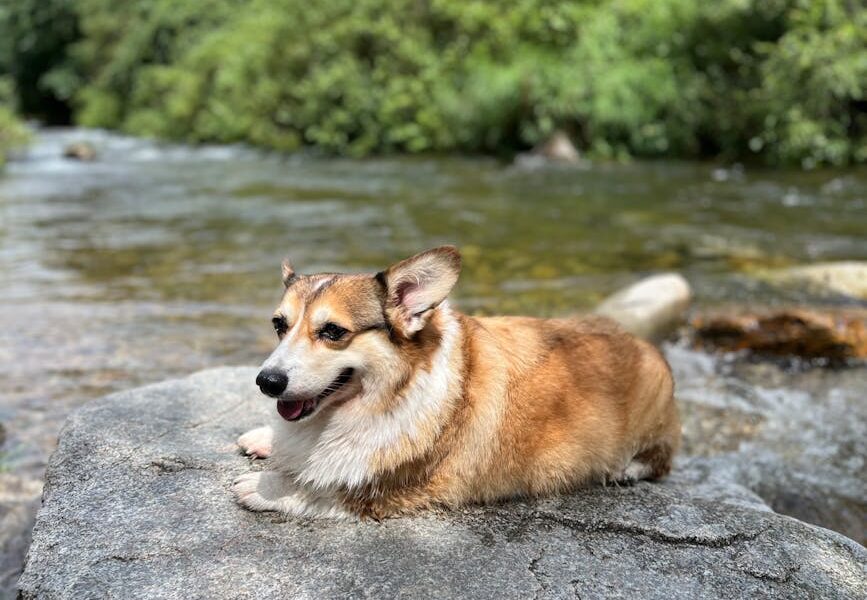
Pembrokes stand 10 to 12 inches at the shoulder and weigh 22 to 30 pounds. The double coat is medium length and weather-resistant, with red, sable, fawn, or black-and-tan coloring, often with white markings. The tail is traditionally docked very short or naturally bobbed (docking is banned in many countries). Ears are pricked with pointed tips.
Cardigans are larger and heavier — 10 to 13 inches at the shoulder, 25 to 38 pounds. The body is slightly longer than the Pembroke’s, the bone heavier, and the tail is full, long, and carried low (never docked). Ears are large, pricked, and rounded at the tips. Coat colors include all Pembroke colors plus brindle, blue merle, and black-and-white.
The simplest visual rule: Cardigan has a tail and rounded ears; Pembroke does not. Read the corgi breed profile for the full Welsh corgi background.
Temperament and Personality
Pembrokes are outgoing, friendly, and active. They greet strangers with enthusiasm, are vocal alert-barkers, and bond closely with family. They retain strong herding instincts and may try to herd kids, other dogs, or the family cat by circling and nipping. They are more confident and bold than the Cardigan generally.
Cardigans are slightly more reserved and steadier. They are loyal and affectionate with family but more cautious with strangers — closer in temperament to a working farm dog. Cardigans tend to be quieter than Pembrokes and slightly more thoughtful in new situations.
Both breeds need real socialization to prevent the herder’s protective instinct from becoming reactivity in adult dogs.
Trainability and Mental Stimulation
Both breeds are highly trainable, food-motivated, and excel at agility, obedience, herding, and trick titles when their structural limits are respected. Force-free, reward-based training produces the most stable adults. Sessions should be short, varied, and reward-rich.
Pembrokes tend to be slightly more biddable and quicker to learn novel cues; Cardigans are slightly more independent thinkers. Both breeds need 20 to 30 minutes of daily mental work — puzzle feeders, training sessions, scent games — on top of physical exercise.
House-training is generally straightforward for both breeds.
Exercise and IVDD Prevention
Both breeds need 60 minutes of daily moderate exercise — leash walks, off-leash play in safe areas, and structured training. They are athletic for their size and many compete successfully in dog sports.
The critical caveat: protect the spine. Long-body short-leg biomechanics put significant stress on intervertebral discs, and IVDD risk is meaningful for both Welsh corgis. Daily prevention rules:
- No jumping on or off furniture — ramps or steps mandatory.
- No stairs — carry the dog or block stairs entirely, especially in young dogs.
- Use a harness, never a neck collar, for leash walks.
- Keep the dog at a healthy lean weight; obesity dramatically increases IVDD risk.
- Avoid rough play and sudden directional changes on slick floors.
Read our IVDD in dogs guide for the full prevention and recognition framework.
Grooming and Coat Care
Both breeds need brushing two to three times weekly, with daily brushing during the spring and fall coat blow when they shed heavily. The double coat is weather-resistant and self-regulating — never shave a corgi. Bathe every two to three months.
Cardigans typically have slightly more coat than Pembrokes given their working-dog heritage. Both breeds need standard nail, dental, and ear care.
Health and Lifespan
Both breeds typically live 12 to 15 years. Common health concerns include:
- IVDD in both breeds — see prevention guides above. The dachshund breed profile and IVDD literature on long-body breeds applies directly.
- Hip dysplasia in both breeds.
- Degenerative myelopathy — meaningful in Pembrokes especially, see our degenerative myelopathy in dogs guide.
- Progressive retinal atrophy in both breeds.
- Obesity — corgis love food and gain weight easily; weight is the single most controllable health variable.
Cardigans face slightly higher rates of merle-related vision and hearing issues when bred merle-to-merle. Reputable rescues will share known medical history; an early vet baseline is essential.
Rescue Availability and Cost
Pembrokes turn up in rescue more frequently than Cardigans, largely because their popularity (driven by social media and Royal Family association) generates more uninformed pet-home adoptions. Cardigans are rarer overall and rarer in rescue. Adoption fees run $250 to $500 through breed-specific or all-breed rescues.
Read the all-breed vs breed-specific rescue comparison for what to expect, and browse current listings at adopt a dog.
Foster-based rescues commonly handle Welsh corgis and produce the most reliable placement information. A foster home that has lived with the dog for weeks knows whether the dog tolerates cats, kids, alone time, vet visits, and grooming. Read our foster-based rescue explained walkthrough and the adopting from a foster guide.
Living Day-to-Day with a Welsh Corgi
The daily reality of living with either Welsh corgi is that the herding brain runs constantly. A corgi that has not been engaged by mid-morning will start herding household members — circling kids, nipping at heels, fixating on the vacuum or kitchen activity. Channeling that drive into appropriate outlets (training sessions, agility, scent games, structured fetch) before the dog channels it inappropriately is the daily owner’s job.
Both breeds are extraordinarily food-motivated and prone to weight gain. Daily measured feeding and treat moderation are essential — obesity dramatically worsens IVDD risk and the breed’s already-elevated joint stress. Most rescue corgis arrive at or above ideal weight; a structured weight-loss plan with the rescue’s vet input is often part of the first months home.
Both breeds shed heavily, especially during the twice-a-year coat blow. Daily brushing during shed seasons and weekly otherwise is the realistic baseline. Vacuum frequency goes up. Both breeds are also vocal alert-barkers; training a quiet cue helps but acceptance of moderate vocal output is the realistic standard.
Compared with Other Long-Body Breeds
Welsh corgis get cross-shopped against other long-body short-leg breeds, particularly the Dachshund. Compare in our Dachshund vs Corgi guide for the long-body short-leg breakdown. The IVDD prevention rules apply identically across both Welsh corgi varieties and the dachshund.
Welsh corgis sit at the crossroads of “small dog” and “working herder” categories. Owners who treat them as small lap dogs without herding-instinct management get nipping and reactivity; owners who treat them as full-scale herders without IVDD prevention get spinal injuries. The successful balance is somewhere in the middle — real exercise, real training, real prevention rules. Use the 3-3-3 rule framework when settling in any rescue and the dog body language guide to read pain and stress signals.
Which Is Right for You
Choose a Pembroke if you want the smaller, more outgoing, more popular Welsh corgi — and you are ready for a vocal, active, herding-instinct dog with serious shedding. Pembrokes suit families with active routines and patient training expectations.
Choose a Cardigan if you want a slightly larger, slightly steadier, less-common Welsh corgi with a full tail and broader color range. Cardigans suit calmer households and owners who appreciate the working-dog heritage.
For both breeds, IVDD prevention is non-negotiable. Use the 3-3-3 rule framework when settling in any rescue.
Adoption Process and IVDD Preparation
Adopting either Welsh corgi is a multi-step process that typically takes two to six weeks. Reputable rescues require an application, references (including a vet reference for any other animals), a phone screening, and often a home check. Many corgi-specific rescues include questions about stair management and ramp readiness because IVDD prevention is breed-defining.
Preparation before bringing the dog home includes: installing ramps at furniture transitions, blocking stairs with baby gates (especially during the first months), sourcing a properly-fitted Y-shaped harness, and budgeting for higher-than-average grooming during shed seasons. Pet insurance is worth pricing early — IVDD and degenerative myelopathy are both meaningful breed risks with significant treatment costs. Read our rescue adoption application walkthrough for the application side of the process.
Frequently Asked Questions
How can I tell a Pembroke from a Cardigan at a glance?
Look at the tail and ears. Cardigans have a full long tail and rounded ear tips; Pembrokes have a docked or naturally short tail and pointed ear tips. Cardigans are also slightly larger overall.
Are they the same breed?
No. They were officially separated by the Kennel Club in 1934 and have distinct genetic origins — Cardigans from Teckel-family stock, Pembrokes from spitz-family stock.
Which is better with kids?
Both are typically good with children. Pembrokes are more outgoing and may herd-nip running kids; Cardigans are steadier with calm children. Supervised handling is essential for either breed.
Do they shed a lot?
Yes — both breeds shed heavily, especially during the twice-a-year coat blow. Daily brushing during shed seasons is the realistic baseline.
Can they live in apartments?
Both can with daily exercise and stair management. Corgis bark — apartment neighbors will hear them. The bigger concern is the no-stairs IVDD rule, which can be tricky in walk-up buildings.
Looking to adopt a Pembroke vs Cardigan Welsh Corgi Comparison?
Browse Pembroke vs Cardigan Welsh Corgi Comparison dogs and mixes available for adoption from shelters and rescues near you.
Find Pembroke vs Cardigan Welsh Corgi Comparison Dogs for Adoption